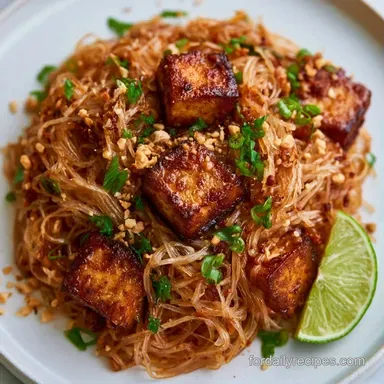
Quick Vegetarian Pad Thai with Tofu
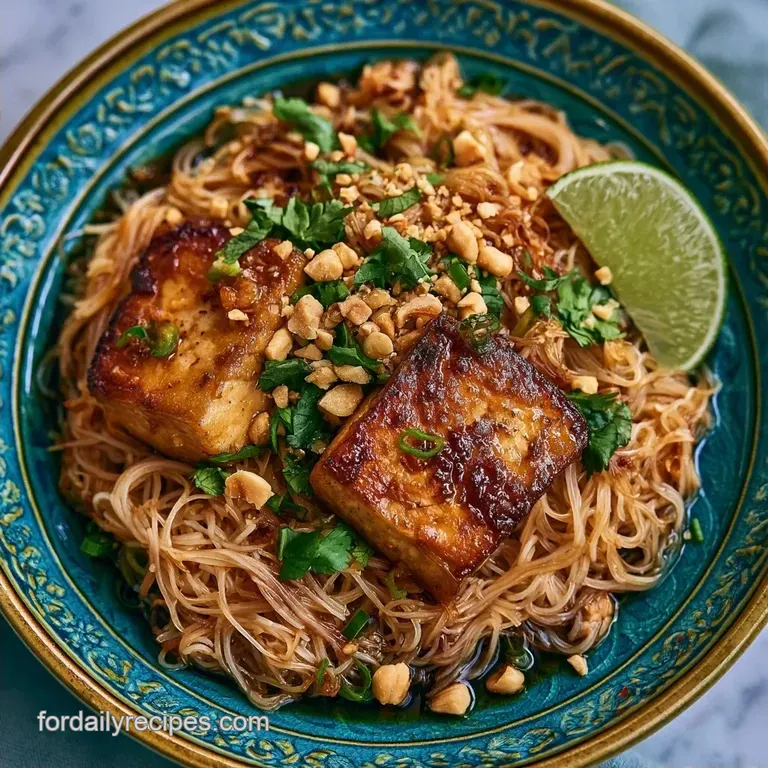
- Time: 15 min active + 30 min soaking
- Flavor/Texture Hook: Tangy, glossy noodles with crunchy peanuts
- Perfect for: A fast weeknight dinner or a vibrant party platter
- Why You'll Love This Vegetarian Pad Thai
- The Quick Recipe Stats
- What Each Ingredient Does
- The Best Kitchen Tools
- Step by Step Cooking
- Fixing Common Issues
- Troubleshooting Common Issues
- Ingredient Swaps and Twists
- Storage and Reheating
- What to Serve With It
- Kitchen Myths
- High in Sodium
- Recipe FAQs
- 📝 Recipe Card
Imagine the scent of tamarind concentrate hitting a scorching wok, that sharp, fruity tang filling the kitchen in seconds. It's a smell that takes me straight back to the street markets of Bangkok, where the air is thick with steam and the sound of metal spatulas clanking against iron.
There's something about that specific aroma that tells you the meal is going to be bright and bold.
Pad Thai isn't just a dish, it's actually a piece of history. It was popularized in the 1930s by the Thai government to create a national identity and encourage people to eat rice noodles. For many who grew up with it, it represents a bridge between traditional flavors and a modern, fast paced way of eating.
When you make this Vegetarian Pad Thai, you're looking for a specific harmony of flavors. It shouldn't be just sweet or just salty. You want that push and pull between the acidity of the lime and the richness of the toasted peanuts. Trust me, once you get the sauce balance right, you'll never go back to the bland versions found in some takeout spots.
Why You'll Love This Vegetarian Pad Thai
The beauty of this dish is how it handles textures. You have the chew of the rice noodles, the crisp edges of the seared tofu, and the fresh snap of bean sprouts. It's a complete sensory experience in one bowl. Plus, it's a great way to introduce plant based proteins to people who think tofu is boring.
I've found that most people struggle with the noodles becoming a clump of glue. The trick is in the soak, not the boil. By using warm water instead of boiling, the noodles stay flexible but keep a bit of "tooth," which allows them to absorb the sauce without breaking down during the stir fry.
This Vegetarian Pad Thai also works because it's customizable. If you like it spicier, you can easily toss in more sriracha or some fresh bird's eye chilies. It's a forgiving recipe that allows you to tweak the flavor profile to match your own palate while staying true to the spirit of the dish.
The Quick Recipe Stats
Before we jump in, let's look at the logistics. Since this is a stir fry, the actual cooking happens incredibly fast, but the prep is where the work is.
| Detail | Requirement |
|---|---|
| Prep Time | 15 minutes |
| Cook Time | 10 minutes |
| Total Time | 45 minutes |
| Servings | 4 servings |
To help you decide on your ingredients, I've put together a comparison between using fresh, traditional items and the common shortcuts.
| Ingredient | Fresh/Traditional | Shortcut/store-bought | Impact on Taste |
|---|---|---|---|
| Tamarind | Fresh pulp/pods | Concentrated paste | Paste is more consistent and faster |
| Sugar | Palm sugar discs | Brown sugar | Brown sugar is sweeter, less earthy |
| Tofu | Fresh firm tofu | Pre marinated tofu | Pre marinated adds salt, loses purity |
What Each Ingredient Does
Understanding the "why" behind the ingredients helps you adjust the taste on the fly. In a Vegetarian Pad Thai, we have to replace the funk of fish sauce with other umami rich options.
The Balance of Flavors: The sauce is a triad of sour (tamarind), sweet (palm sugar), and salty (soy sauce). If the dish tastes too flat, it usually means one of these three is missing.
Umami Boosters: Since we aren't using shrimp paste, the toasted sesame oil and soy sauce provide that deep, savory base. For those who want an even deeper flavor, you could use a vegan fish sauce substitute to get closer to the original street food profile.
| Ingredient | What It Does | Best Swap |
|---|---|---|
| Tamarind | Provides a fruity, sharp sourness | Lime juice (more citrusy, less deep) |
| Palm Sugar | Adds a mellow, caramel sweetness | Coconut sugar (similar earthy notes) |
| Rice Noodles | The chewy, neutral base | Brown rice noodles (nuttier, denser) |
| Extra Firm Tofu | Adds protein and a meaty chew | Tempeh (stronger, fermented taste) |
The Best Kitchen Tools
You don't need a professional kitchen, but a few specific tools make this process much smoother.
A wok is the gold standard because its high walls and tapered bottom allow you to toss ingredients rapidly over high heat. If you don't have one, a large stainless steel skillet works fine. Just make sure it's large enough that the noodles aren't piled too high, or they'll steam instead of fry.
A good chef's knife is essential for the shallots and garlic. You want these minced finely so they distribute evenly throughout the dish. I also recommend a large mixing bowl for the noodle soak, as they expand significantly and need room to move.
Step by step Cooking
Right then, let's get into the heat. The key here is preparation. Stir frying happens so fast that if you're still chopping garlic while the oil is hot, you'll burn your aromatics.
The Prep Phase
First, place your 8 oz of dried flat rice noodles in a large bowl. Cover them with very warm water. Not boiling, just warm. Let them sit for 15 to 20 minutes. You want them flexible, but they should still feel firm to the touch. Drain them and set them aside.
While the noodles soak, whisk your sauce together. Combine 1/3 cup tamarind concentrate, 3 tbsp soy sauce, 3 tbsp palm sugar, 1 tsp sriracha, and 1/2 tsp toasted sesame oil. Stir until the palm sugar has completely dissolved into a smooth liquid.
The Searing Phase
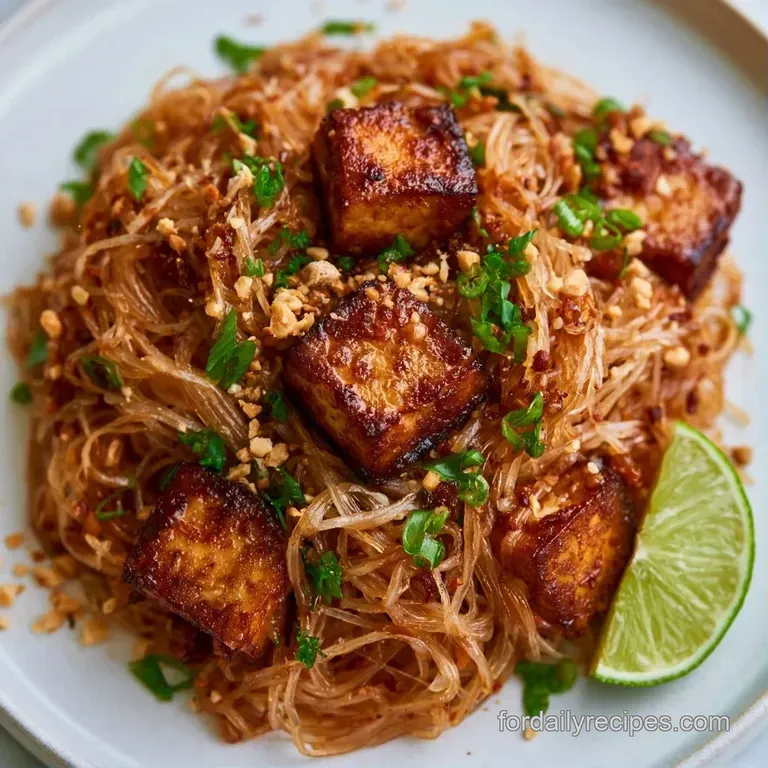
Heat 1 tbsp of neutral oil in your wok over medium high heat. Add your cubed, pressed tofu. Spread them in a single layer and fry for 2 minutes per side. You're looking for a golden brown crust that resists the press of a spatula. Once they're browned, move them to a plate.
Add the second tbsp of oil to the same wok. Toss in your minced garlic and diced shallots. Sauté these for 30 to 60 seconds. You'll know they're ready when the aroma becomes fragrant and the shallots turn translucent.
The Assembly Phase
Turn the heat up to high. Throw in the drained noodles. Stir fry them for 1 to 2 minutes. Now, pour your sauce over the noodles. Toss them rapidly. The sauce should bubble and thicken, turning into a glossy glaze that clings to every strand of noodle.
Fold in your seared tofu, 2 cups of bean sprouts, and the garlic chives. Toss for another 30 to 60 seconds. Stop as soon as the greens are slightly wilted but still bright. If you overcook the sprouts, they'll lose their crunch and turn watery.
Finally, plate the dish and garnish with 1/4 cup of crushed roasted peanuts and fresh cilantro. Serve with lime wedges on the side so everyone can add their own final hit of acidity.
Fixing Common Issues
Even with a plan, things can go sideways in a hot wok. Most Vegetarian Pad Thai issues come down to temperature or timing.
Troubleshooting Common Issues
| Issue | Solution |
|---|---|
| Why Your Noodles Are Mushy | This usually happens because the noodles were soaked in water that was too hot, or they were left in the wok too long. |
| Why Your Sauce Is Too Sour | Tamarind concentrates vary in strength between brands. If the sauce tastes too sharp, it means the acid is overpowering the sugar. A pinch more palm sugar or a splash of water can mellow it out. |
| Why The Tofu Is Soggy | Soggy tofu is the result of excess moisture. If you don't press the tofu to remove the water, it will steam in the pan rather than sear. This prevents that golden crust from forming. |
Ingredient Swaps and Twists
If you don't have everything on the list, don't sweat it. This dish is quite flexible. For a vegan version, this recipe is already almost there. Just ensure your soy sauce and palm sugar are certified vegan.
For a gluten-free option, simply swap the soy sauce for tamari. The taste is very similar, though tamari is slightly richer. If you want to add more nutrient density, you can toss in shredded carrots or thinly sliced red bell peppers during the stir fry phase.
If you're craving something with a different kind of heat, you could actually serve a side of Buffalo Sauce for dipping the tofu. It's a wild fusion, but the vinegar in the buffalo sauce complements the tamarind surprisingly well.
| Original Ingredient | Substitute | Why It Works |
|---|---|---|
| Garlic Chives | Green Onions | Similar onion flavor, though slightly less pungent |
| Palm Sugar | Maple Syrup | Good sweetness, though adds a distinct woody note |
| Peanuts | Cashews | Similar crunch and richness, just a milder taste |
Storage and Reheating
Vegetarian Pad Thai is best eaten immediately, but leftovers are still great if handled correctly. Store any remaining portions in an airtight container in the fridge for up to 3 days.
When reheating, avoid the microwave if possible, as it can make the noodles rubbery. Instead, toss them back into a hot pan with a teaspoon of water or oil. Heat for 2 to 3 minutes just until warmed through. This helps revive the texture of the noodles.
To avoid waste, use any leftover tofu scraps as croutons for a salad. If you have leftover tamarind paste, it makes a great base for a tangy dipping sauce for spring rolls. If you're planning a larger party, you might start with a Charcuterie Board as an appetizer to keep guests happy while you handle the over high heat wok work.
What to Serve With It
Since this dish is quite rich and tangy, it pairs well with something cooling. A simple cucumber salad with rice vinegar and a pinch of sugar provides a crisp contrast.
For something more substantial, a side of steamed bok choy or sautéed morning glory works well. If you're looking for a traditional dessert to round out the meal, mango sticky rice is the gold standard. The creamy coconut milk and sweet mango cleanse the palate after the bold flavors of the noodles.
Kitchen Myths
You might hear that you need to boil rice noodles to get them right. This is a myth. Boiling often leads to overcooking, which creates that gluey texture. Soaking in warm water is the real way to maintain the bite.
Another common belief is that searing tofu "seals in" the flavor. In reality, searing is about creating a texture contrast and adding a toasted flavor through browning. It doesn't actually lock any nutrients or flavors inside, but it makes the dish far more satisfying to eat.
Finally, some say you need a professional grade wok to get "wok hei" (the breath of the wok). While a carbon steel wok helps, you can achieve a similar result in any over high heat pan by not overcrowding the surface.
If you put too many noodles in at once, the temperature drops and you lose that charred, smoky quality.
High in Sodium
940 mg 940 mg of sodium per serving (41% 41% of daily value)
The American Heart Association recommends a daily limit of 2,300mg of sodium for most adults to maintain heart health.
Tips to Reduce Sodium
-
Swap Soy Sauce-30%
Replace the regular soy sauce with low-sodium soy sauce or coconut aminos to significantly lower the salt content.
-
Adjust Sriracha-15%
Substitute sriracha with fresh red chili flakes or a dash of low-sodium hot sauce to maintain heat without the extra salt.
-
Check Tamarind Source-10%
Use salt free tamarind concentrate or fresh tamarind pulp, as some commercial concentrates contain added salt.
-
Rinse Your Tofu-5%
Thoroughly rinse the cubed tofu under cold water after pressing to remove excess sodium from the packaging brine.
-
Enhance with Aromatics
Increase the amount of fresh cilantro, lime wedges, and minced garlic to boost flavor profiles without adding sodium.
Recipe FAQs
How to cook a pad thai noodle disk at home?
Cover dried rice noodles in very warm water for 15 20 minutes. Drain once they are flexible but still firm to ensure they don't become mushy during stir frying.
How to make a 30-minute authentic Pad Thai?
Prep all ingredients before heating the wok. Sear the tofu and stir fry the noodles over high heat for just 1 2 minutes to achieve an authentic texture in a short window.
What ingredients do we add to make authentic Pad Thai?
Combine rice noodles, tofu, tamarind concentrate, soy sauce, palm sugar, sriracha, and sesame oil. Sauté with garlic, shallots, bean sprouts, and garlic chives, then garnish with peanuts, lime, and cilantro. If you enjoy these bold flavor profiles, you might like the sweet salty balance used in our hoisin sauce recipe.
How to keep Pad Thai noodles from becoming mushy?
Avoid using boiling water for the initial soak. Use very warm water instead and limit the time the noodles spend in the hot wok to prevent them from breaking down.
Why is my Pad Thai sauce too sour?
Add a pinch more palm sugar or a splash of water. This happens when the tamarind acid overpowers the sugar, as concentrate strength varies between brands.
How to ensure the tofu doesn't turn out soggy?
Press the tofu firmly to remove excess moisture before cubing. Fry the cubes in a single layer for 2 minutes per side until they are golden brown.
Is it true that Pad Thai must be reheated in the microwave?
No, this is a common misconception. Toss leftovers back into a hot pan with a teaspoon of water or oil for 2-3 minutes to keep the noodles from becoming rubbery.
Vegetarian Pad Thai