Velvety Chicken Gravy Recipe
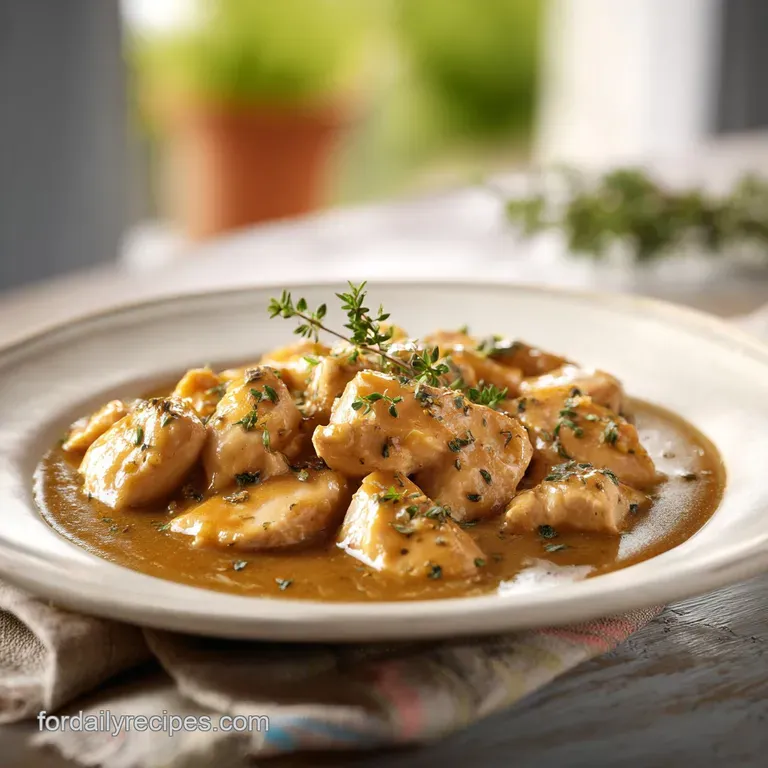
- Time: Active 10 mins, Passive 5 mins, Total 15 minutes
- Flavor/Texture Hook: Silky, savory, and deeply umami with a velvety finish.
- Perfect for: Family Sunday roasts, holiday gatherings, or brightening up weeknight leftovers.
- The Secret to This Chicken Gravy Recipe
- The Physics of the Velvety Emulsion
- Vital Specs for Every Cook
- Essential Pantry Staples to Gather
- Tools for a Smooth Sauce
- Simmering Your Way to Perfection
- Common Errors and Clever Fixes
- Adjusting for a Crowd
- Creative Twists on the Classic
- Debunking Gravy Myths
- Preserving That Rich Flavor Later
- The Best Ways to Serve
- Recipe FAQs
- 📝 Recipe Card
The Secret to This Chicken Gravy Recipe
There is a specific sound that lives in my childhood memories, a gentle, rhythmic whisking against a heavy cast iron skillet while the house filled with the aroma of roasting poultry. My grandmother never used a packet or a jar, she believed that a proper meal deserved a sauce made with intention.
I remember standing on a wooden stool, watching her transform a simple knob of butter and a scoop of flour into a liquid gold that we’d pour over everything from fluffy mashed potatoes to warm, flaky biscuits.
The beauty of this chicken gravy recipe lies in its simplicity and the patience of the cook. It is about the contrast between the pale, raw flour and the toasted, nutty scent it releases as it bubbles in the butter.
I’ve made the mistake of rushing it before, ending up with a sauce that tasted like wet dough, but once you learn to wait for that perfect golden hue, you’ll never go back. It's a heritage skill that feels like a warm embrace on a plate.
We are going to focus on getting that texture just right, ensuring it’s thick enough to coat the back of a spoon but fluid enough to pool beautifully on your plate. Whether you are using drippings from a Sunday bird or high-quality stock, the technique remains the same.
It's about building layers of flavor, starting with that essential roux and finishing with a touch of cream if you're feeling indulgent. Let's get that skillet warming up.
The Physics of the Velvety Emulsion
Understanding the "how" behind the thicken is what separates a home cook from a kitchen scientist. When we heat the butter and flour, we are creating a foundation that dictates the entire structure of the sauce.
- Starch Gelatinization: As the chicken stock hits the hot flour, the starch granules swell and eventually burst, releasing amylose molecules that trap the liquid into a thick, stable web.
- Maillard Complexity: Toasting the roux doesn't just cook out the raw flour taste; it creates new flavor compounds through the Maillard reaction, giving the gravy its characteristic savory depth.
- Fat Suspension: The butter coats the individual flour particles, acting as a barrier that prevents them from clumping together the moment they touch the cold or room temperature stock.
| Method | Time | Texture | Best For |
|---|---|---|---|
| Stovetop Skillet | 10 minutes | Very silky/concentrated | Quick meals & precise control |
| Oven Roasting Pan | 15 minutes | Deeply roasted/smoky | Integrating actual pan drippings |
| Slow Cooker | 4 hours | Thin/brothy | Set it and forget it pot roasts |
Cooking on the stovetop allows you to monitor the color of the roux in real time, which is why I prefer it for this specific chicken gravy recipe. The oven method is fantastic when you have a bird already roasting, as it picks up those caramelized bits from the bottom of the pan, but it requires a bit more finessing to get the lumps out.
Vital Specs for Every Cook
Before we start the stove, let's look at the numbers that guarantee a win. Precision is your best friend when you're dealing with thickeners. I always tell my friends that gravy is a game of ratios; once you know the 1:1:8 rule (1 part fat, 1 part flour, 8 parts liquid), you can scale this up for a crowd without breaking a sweat.
We are aiming for a final volume of about 2 cups, which serves 8 people generously. If you find yourself with a larger bird or a massive pile of potatoes, you can easily double this. Just remember that the larger the batch, the more whisking power you'll need to keep things smooth and velvety.
| Component | Science Role | Pro Secret |
|---|---|---|
| Unsalted Butter | Fat medium for roux | Use high fat European butter for a richer mouthfeel. |
| All Purpose Flour | Primary thickening agent | Sift the flour first to ensure no stubborn clumps remain. |
| Chicken Stock | Liquid body & flavor | Use a low sodium version so you can control the final saltiness. |
| Soy Sauce | Umami & color booster | Adds a dark, rich hue without needing to burn the flour. |
When selecting your stock, look for one that has a deep golden color. If you are using leftovers from another meal, this pairs excellently with a Chicken Recipe with roasted poultry. The natural gelatin in homemade stock will give you an even more luxurious finish than store-bought versions.
Essential Pantry Staples to Gather
Gathering your ingredients beforehand is the only way to prevent the dreaded burnt roux. Once that butter is melted, things move fast. I once tried to find the Worcestershire sauce while my flour was browning, and let’s just say the kitchen smelled like a campfire for two days.
Don't be like me; get everything on the counter first.
- 1/4 cup Unsalted Butter (57g): Why this? Provides the fat base for the roux and essential creamy flavor.
- 1/4 cup All Purpose Flour (32g): Why this? The perfect protein content for stable, reliable thickening.
- 1/2 tsp Garlic Powder: Why this? Adds a subtle aromatic baseline without the texture of fresh garlic.
- 1/2 tsp Onion Powder: Why this? Provides sweetness and depth that mimics long simmered vegetables.
- 2 cups Chicken Stock (480ml): Why this? The main flavor carrier; use the best quality you can find.
- 1 tsp Soy Sauce: Why this? The secret for a "brown" gravy look and salty umami punch.
- 1/4 tsp Worcestershire Sauce: Why this? Adds a fermented tang that cuts through the richness of the fat.
- 1/4 tsp Freshly Cracked Black Pepper: Why this? Adds a necessary bite to balance the savory notes.
- 1/4 tsp Fine Sea Salt: Why this? Enhances all other flavors; adjust at the very end.
- 1 tbsp Heavy Cream (optional): Why this? For a "creamy chicken gravy recipe" style finish that feels extra special.
| Original Ingredient | Substitute | Why It Works |
|---|---|---|
| Unsalted Butter | Chicken Drippings | Uses the fat from the roasted bird for intense poultry flavor. |
| All Purpose Flour | Cornstarch (half amount) | gluten-free option. Note: Result is more translucent/glossy. |
| Chicken Stock | Vegetable Stock | Makes it vegetarian friendly while keeping a savory profile. |
| Soy Sauce | Tamari | A great gluten-free alternative that provides similar color/umami. |
If you happen to be out of stock, you can use a Brown Gravy Recipe base or even bouillon. However, if you're using stock cubes, be very careful with the added salt. Those cubes are often salt bombs, so I usually skip the fine sea salt entirely until the very last taste test.
Tools for a Smooth Sauce
You don't need a professional kitchen, but a few specific tools make this chicken gravy recipe much easier to manage. A heavy bottomed saucepan or a cast iron skillet is non negotiable for even heat distribution. Thin pans have "hot spots" that will scorch your flour before the rest of it even begins to toast.
A balloon whisk is your best friend here. You want something with enough wires to break up any flour pockets instantly. If you're working in a non stick pan, make sure your whisk is silicone coated so you don't ruin the finish.
Finally,, a fine mesh strainer is a great "insurance policy" just in case a few lumps decide to gatecrash your dinner party.
Chef Tip: Keep a small measuring cup of extra stock near the stove. If the gravy thickens too quickly while you're whisking, a splash of liquid can save the texture before it turns into a paste.
Simmering Your Way to Perfection
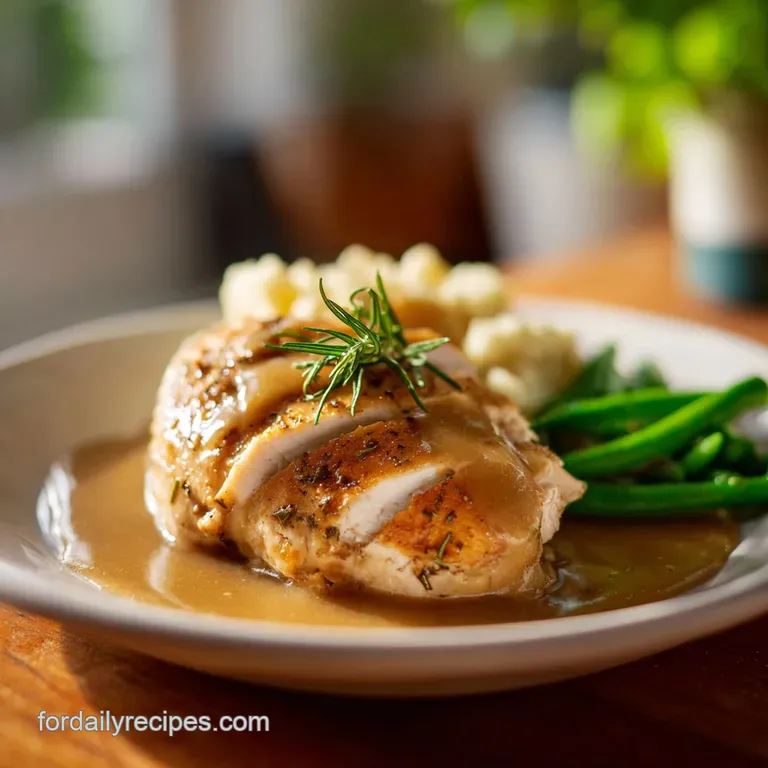
Right then, let's get to work. This process takes about 15 minutes from start to finish, but those minutes require your full attention. We are going for a smooth, velvety consistency that would make any grandmother proud.
- Melt the butter. Place your saucepan over medium heat and add the 1/4 cup butter. Note: Wait until the foaming subsides but before it starts to brown.
- Create the roux. Whisk in the 1/4 cup flour until a smooth paste forms. Note: This is the foundation of your chicken gravy recipe.
- Toast the flour. Cook the mixture for 2 minutes, whisking constantly, until it smells nutty and looks slightly golden.
- Add aromatics. Stir in the garlic powder, onion powder, and black pepper. Note: Toasting the spices for 30 seconds awakens their oils.
- Incorporate liquid slowly. Pour in about 1/4 cup of the chicken stock. Whisk vigorously until a thick, smooth paste forms.
- Stream in remaining stock. Gradually add the rest of the 2 cups of stock while whisking. Note: This prevents lumps from forming in the first place.
- Season for depth. Stir in the soy sauce and Worcestershire sauce. Watch as the color transforms to a rich tan.
- Simmer and thicken. Bring the mixture to a gentle boil, then reduce heat to low. Cook for 3-5 minutes until it coats a spoon.
- The final touch. Taste and add fine sea salt if needed. Whisk in the optional heavy cream until the sauce looks glossy and velvety.
- Check the texture. If it's too thick, add a tablespoon of stock; if too thin, simmer for another 2 minutes.
Common Errors and Clever Fixes
Even the best of us run into trouble occasionally. The most common heartbreak in a chicken gravy recipe is the discovery of lumps. Usually, this happens when the liquid is added too fast or the roux isn't whisked thoroughly at the start. Don't panic; it's almost always fixable.
Another issue is the "raw flour" taste. This happens when the roux isn't cooked long enough before adding the stock. If you've already added the liquid, you can't really go back and "toast" the flour, but simmering it for an extra 5-7 minutes can help mellow out that starchy flavor.
Solving the Lumpy Sauce Struggle
If you see little beads of flour floating in your sauce, it’s usually because the roux didn't incorporate the liquid evenly. The best fix is to keep whisking aggressively, but if that fails, grab your blender.
| Problem | Root Cause | Solution |
|---|---|---|
| Stubborn Lumps | Liquid added too fast | Pour through a fine mesh strainer or use an immersion blender. |
| Greasy Surface | Too much fat/broken roux | Whisk in a splash of cold stock or milk to re emulsify. |
| Bland Flavor | Under seasoned stock | Add a pinch more poultry seasoning or a drop of lemon juice. |
Handling the Salt Overload
It happens to the best of us a slip of the hand or a particularly salty stock cube. Since we can't "un salt" a sauce, we have to balance it. Adding a teaspoon of sugar or a splash of heavy cream can help mask the saltiness by providing a different flavor profile for your tongue to focus on.
Fixing a Thin Consistency
If your gravy looks more like soup than sauce, it likely hasn't simmered long enough for the starches to fully activate. Give it more time. If you're in a rush, a "slurry" (1 tsp cornstarch mixed with 1 tsp cold water) can be whisked in and boiled for one minute to tighten things up instantly.
Common Mistakes Checklist: ✓ Never add hot stock to a hot roux all at once; it creates instant clumps. ✓ Don't leave the stove roux can go from golden to burnt in 20 seconds. ✓ Avoid using cold butter; it takes longer to melt and can lead to uneven cooking.
✓ Always taste before adding salt, especially if using store-bought stock. ✓ Use a whisk, not a spoon, to ensure the flour and fat are perfectly bonded.
Adjusting for a Crowd
Scaling this recipe is straightforward, but it requires a bit of common sense regarding spice levels. If you are doubling the recipe for a big holiday turkey, you don't necessarily need to double every single spice.
- Scaling Down (½ batch): Use 2 tbsp butter, 2 tbsp flour, and 1 cup stock. Use a smaller skillet so the liquid doesn't evaporate too quickly.
- Scaling Up (2x-4x batch): Double the butter, flour, and stock. However, start with 1.5x the salt and spices, then taste and adjust. Large volumes of liquid don't always need a linear increase in seasoning.
- Batch Cooking: If making a 4x batch, work in a large Dutch oven. The high sides prevent splashing while you whisk your heart out.
Creative Twists on the Classic
While this heritage version is my go to, sometimes the occasion calls for something a bit different. You can easily adapt this base into an Indian chicken gravy recipe style by swapping the butter for oil and adding ginger garlic paste, turmeric, and cumin to the roux stage.
It won't be a traditional curry, but it creates a wonderful fusion sauce for roasted meats.
If you are looking for that specific KFC style chicken gravy flavor, the secret is a heavy hand with the black pepper and a tiny pinch of MSG (or a bit of extra bouillon).
For a slow cooker chicken gravy, you'll want to whisk the flour and a bit of butter into a paste at the very end of the cooking cycle, then stir it into the hot crockpot juices and let it cook on high for 30 minutes to thicken.
| Style | Key Addition | Flavor Profile |
|---|---|---|
| Herbed | Fresh Sage & Thyme | Earthy and perfect for Thanksgiving. |
| Spicy | Cayenne & Smoked Paprika | Adds a kick and a beautiful reddish tint. |
| Mushroom | Sautéed Cremini | Adds texture and a massive boost of umami. |
For a really classic flavor, I highly recommend adding a pinch of your own Poultry Seasoning recipe blend during the aromatic stage. It adds those nostalgic notes of rosemary and marjoram that we all associate with a big family dinner.
Debunking Gravy Myths
A lot of people think you must have pan drippings to make a good gravy. That is simply not true. While drippings add a lovely depth, a well toasted roux combined with high-quality stock and umami boosters like soy sauce will produce a result that is 95% as good with 100% less stress.
Another common myth is that you should use milk for a "creamy" gravy. While milk works, a true chicken gravy is stock based. If you want that creamy mouthfeel, a single tablespoon of heavy cream at the end provides more luxury than a whole cup of milk ever could, without diluting the intense chicken flavor.
Preserving That Rich Flavor Later
Gravy is one of those things that actually keeps quite well if you handle it with care. Because of the fat and starch content, it can thicken significantly as it cools, sometimes turning into a jelly like consistency in the fridge. This is normal! It’s just the gelatin and starches doing their thing.
- Storage: Keep in an airtight container in the fridge for up to 4 days.
- Freezing: You can freeze this for up to 3 months. I like to freeze it in silicone ice cube trays so I can pop out just a little bit to brighten up a single portion of leftovers.
- Zero Waste: If you have leftover gravy that isn't enough for another meal, stir it into a soup base or use it as the "glue" for a Ritz Chicken Casserole recipe.
- Reheating: Always reheat on the stovetop over low heat. You will likely need to whisk in a splash of water or stock to bring it back to that silky, pourable state.
The Best Ways to Serve
This chicken gravy recipe is remarkably versatile. While we naturally think of it for mashed potatoes, try it over roasted root vegetables or even as a dipping sauce for crusty sourdough bread. There is something deeply satisfying about a piece of bread "shattering" into a pool of warm, savory sauce.
If you’re doing a full Sunday spread, this is the crowning jewel. It brings the whole plate together, bridging the gap between the meat and the sides. Trust me, once you master this 15 minute technique, you'll find reasons to make it every week. It’s not just a sauce; it’s the heart of the meal.

Recipe FAQs
What is the 3 2 1 rule for gravy?
No, this rule does not strictly apply to stovetop chicken gravy. The 3-2-1 rule often relates to BBQ ribs or specific slow cooking timelines, not the fat, flour, and liquid ratio needed for a roux based sauce.
What are the ingredients in simple chicken gravy?
You need butter, all-purpose flour, chicken stock, and seasonings. For an easy, deep flavor profile, use soy sauce or Worcestershire to add color and umami without burning the roux.
What is the secret ingredient for good gravy?
The secret is adequately toasting the flour in the fat until it smells nutty. This step cooks out the raw flavor; if you master this, you've mastered the core technique used in our Slow Cooker Crockpot recipe.
What are common mistakes when making chicken and gravy?
The most common mistake is adding cold stock too quickly to a hot roux. This causes instant clumping; always stream the liquid in slowly while whisking constantly to ensure smooth starch gelatinization.
How to thicken gravy if it turns out too thin?
Create a slurry using equal parts cornstarch and cold water. Whisk this slurry into the simmering gravy until it reaches your desired consistency, which should take less than a minute to activate.
Can I use milk instead of chicken stock for this recipe?
No, substitute stock or broth for the primary liquid. Using only milk results in a cream gravy, not a rich chicken gravy; use stock for depth, and save milk or cream for a final swirl at the end for added richness.
What should I serve this gravy with besides mashed potatoes?
Serve it over biscuits or alongside roasted vegetables. This velvety sauce pairs wonderfully with freshly baked Dinner Rolls Recipe to soak up every last drop.
Velvety Chicken Gravy Recipe
Ingredients:
Instructions:
Nutrition Facts:
| Calories | 71 kcal |
|---|---|
| Protein | 0.7 g |
| Fat | 6.0 g |
| Carbs | 3.6 g |
| Fiber | 0.1 g |
| Sugar | 0.3 g |
| Sodium | 185 mg |
