Ultimate Thai Mango Sticky Rice with Coconut Milk

- Total4 Hrs 45 Mins
- Servings3 people
- Calories870 kcal
- Time:4 hours soaking + 20 minutes cooking
- Flavor & Texture: Chewy, rich, and floral
- Perfect for: A dinner party finale or weekend treat
Ultimate Thai Mango Sticky Rice
The scent of steaming coconut milk and ripe mangoes is one of those smells that instantly transports you to a street market in Bangkok. This dish isn't just a dessert; it's a cultural staple that captures the balance of salt and sugar that defines Thai cuisine.
This is the only recipe you need for Mango Sticky Rice: The Ultimate Restaurant Quality Khao Niao Mamuang.
The goal is a specific contrast. You want grains that are distinct and chewy, coated in a glossy coconut cream, paired with mangoes that are so ripe they almost melt. It's a combination that transcends borders, bringing a taste of Southeast Asia into your kitchen.
You'll find that the process is more about patience than complex skill. The long soak is what allows the rice to cook evenly through to the center, ensuring every bite is tender.
Why the Method Works
- Glutinous Starch: The high amylopectin in sweet rice creates a cohesive, chewy texture that holds onto the coconut milk.
- Heat Absorption: Folding the coconut reduction into the rice while both are steaming hot allows the grains to drink up the liquid rather than just being coated by it.
| Method | Time | Texture | Best For |
|---|---|---|---|
| Bamboo Steamer | 20 mins | Distinct, bouncy grains | Authentic results |
| Stovetop Pot | 25 mins | Softer, denser grains | No steamer available |
Choosing the Right Ingredients
The rice is the essential base. Use Thai glutinous rice, commonly known as "sweet rice." Regular jasmine rice doesn't have the necessary starch for that signature chewy pull and will end up resembling coconut-flavored porridge.
For the fruit, Nam Dok Mai or Ataulfo mangoes are the ideal choice. They are prized for their concentrated sweetness and smooth, buttery texture. This dish serves as a perfect conclusion to a traditional Thai dinner.
Gathering Your Essentials
For the Sticky Rice
- 1.5 cups (300g) Thai glutinous rice The secret to a chewy, cohesive texture
- 1 cup (240ml) full fat coconut milk The source of the rich, creamy base
- 0.5 cup (100g) granulated sugar To balance the coconut's richness
- 0.5 tsp (3g) fine sea salt To cut through the sweetness
For the Coconut Cream Sauce
- 0.5 cup (120ml) full fat coconut milk To create the final glossy drizzle
- 2 tbsp (25g) granulated sugar To add a touch of sweetness to the topping
- 0.25 tsp (1.5g) fine sea salt To enhance the natural mango flavor
- 1 tsp (5ml) cornstarch To thicken the sauce
- 1 tbsp (15ml) water The base for the starch slurry
For the Assembly
- 2 large (approx. 800g) ripe Nam Dok Mai or Ataulfo mangoes Chosen for their low fiber and high sweetness
- 1 tbsp (8g) toasted mung beans or sesame seeds For a necessary nutty crunch
Gear for the Kitchen
- Bamboo steamer (or a metal steamer basket)
- Cheesecloth or a fine muslin cloth
- Small saucepan
- Large mixing bowl with a tight lid
- Fine mesh strainer
The Cooking Process
- Rinse the rice. Wash the glutinous rice under cold water 3-4 times until the rinse water is transparent. This step eliminates surface starch to keep the rice from becoming overly gummy.
- Soak the grains. Place the rinsed rice in fresh water and let it soak for at least 4 hours or overnight.
- Steam the rice. Line your steamer with cheesecloth, spread the rice in an even layer, and steam over boiling water for 20-25 minutes until the grains appear translucent and tender.

- Simmer the reduction. While the rice steams, combine 1 cup coconut milk, 0.5 cup sugar, and 0.5 tsp salt in a pan over medium heat. Stir until the sugar dissolves and the liquid simmers.
- Combine everything. Immediately fold the hot coconut reduction into the steaming rice. Stir gently, cover the bowl with a lid, and let it rest for 20 minutes.
- Prepare the sauce. In another pan, heat 0.5 cup coconut milk, 2 tbsp sugar, and 0.25 tsp salt. Stir in a cornstarch water slurry and heat until the sauce becomes thick and velvety.

- Slice the mangoes. Peel the ripe fruit and cut it into wedges.
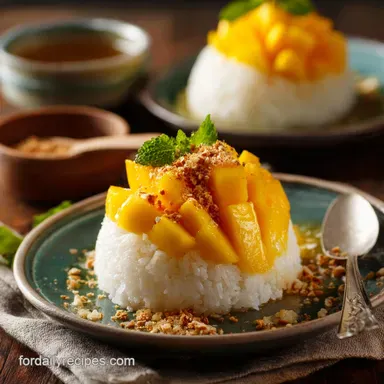
- Plate and garnish. Scoop the coconut-infused rice onto a plate, arrange the mango slices alongside, drizzle with the cream sauce, and top with toasted mung beans.
Fixing Common Issues
If your rice feels grainy, it usually means it didn't soak long enough. The core of the grain stays hard while the outside overcooks. If you catch this after adding the coconut milk, you can try steaming the finished rice for another 5 minutes.
Another issue is the sauce separating. This happens if the heat is too high and the coconut milk "breaks," separating the oil from the solids. Keep the heat medium low and stir constantly.
Rice is too hard
Sauce is too thin
Mangoes are sour
| Problem | Fix |
|---|---|
| Hard/grainy rice | Sprinkle 2 tbsp hot water over rice, cover tightly, and steam 5 mins |
| Runny sauce | Simmer for 2 more mins or add a pinch more cornstarch slurry |
| Sour mangoes | Dust the fruit with a tiny bit of sugar 10 mins before serving |
Adaptations and Swaps
For those who love that coconut salty balance in other dishes, you'll probably like this Thai stir fry sauce. If you want a different flavor profile, you can swap the mangoes for ripe Ataulfo papayas.
If you want a vegan version, this recipe already is, provided you use full fat canned coconut milk. Avoid "light" versions, as they lack the fat needed for the rice to absorb the flavor.
| Goal | What to change |
|---|---|
| Nuttier flavor | Use toasted sesame seeds instead of mung beans |
| Less sweet | Reduce sugar in the coconut reduction by 1 tbsp |
| Different fruit | Swap mango for ripe papaya or durian |
Storage and Waste
Keep the coconut rice chilled in an airtight bowl for no more than 2 days. The rice will firm up as it cools. To restore its texture, steam it for 5 minutes or microwave it for 30 seconds with a damp paper towel draped over the top.
Slice the mangoes just before serving to prevent oxidation. For a fragrant, light tea, try steeping leftover mango peels in hot water with a touch of ginger.
Serving Your Platter

The appeal of this dish lies in the temperature contrast. Serve the rice warm while keeping the mangoes chilled. Use a flat platter to allow the coconut cream sauce to pool around the base of the rice.
For a more sophisticated look, press the rice into a small ring mold to create a cylinder, then arrange the mango wedges in a fan beside it.
Recipe FAQs
How do I make authentic Thai mango sticky rice?
Rinse and soak glutinous rice for at least 4 hours, steam for 20 minutes, and fold in a warm coconut milk syrup.
Tip: ensure the rice is still steaming hot when you add the coconut mixture for maximum absorption.
Is mango sticky rice healthy or unhealthy?
It is a rich dessert high in calories and sugar, primarily from the coconut milk and ripe fruit.
Tip: portion it carefully since the full-fat coconut milk is very dense.
Is it true that Thai people don't actually eat mango sticky rice?
This one's false: it is a staple traditional dessert widely enjoyed throughout Thailand.
Tip: Ataulfo mangoes are a great alternative if Nam Dok Mai isn't available.
Who makes the best mango sticky rice?
The highest quality versions rely on long-grain glutinous rice and perfectly ripe, non-fibrous mangoes.
Tip: use a cornstarch slurry in the topping sauce for a professional, glossy thickness.
What defines an ultimate Thai mango sticky rice recipe?
The balance between the salty-sweet coconut cream and the natural tartness of the mango is key.
Tip: toasted sesame seeds provide a nutty contrast to the creamy rice.
Where can I find mango sticky rice near me?
Search for authentic Thai eateries or specialty Asian markets in your local area.
Tip: slicing the mango just before plating prevents oxidation and keeps the fruit bright.
Ultimate Thai Mango Sticky Rice for 3
Ingredients:
Instructions:
Keep Cooking

Gluten Free Pizza Dough: Chewy Crispy Psyllium Crust
This Gluten Free Pizza Dough recipe uses psyllium husk to create a surprisingly chewy and crispy…

Classic Chili Mac with Beef
Learn to make the best classic Chili Mac featuring rich beef and sharp cheddar.

Hoisin Sauce Recipe: The Ultimate Sweet Salty Homemade Condiment
Hoisin Sauce is easy to make at home! Skip the store-bought jar with this simple homemade hoisin…

Traditional Thai Dinner Recipe
Creamy and spicy Traditional Thai Dinner Recipe. It includes a table on ingredient roles and…

Universal Thai Stir Fry Sauce
This Universal Thai Stir Fry Sauce brings authentic Thai stir fry sauce flavors to your kitchen.
