Creamy Mashed Potatoes Recipe
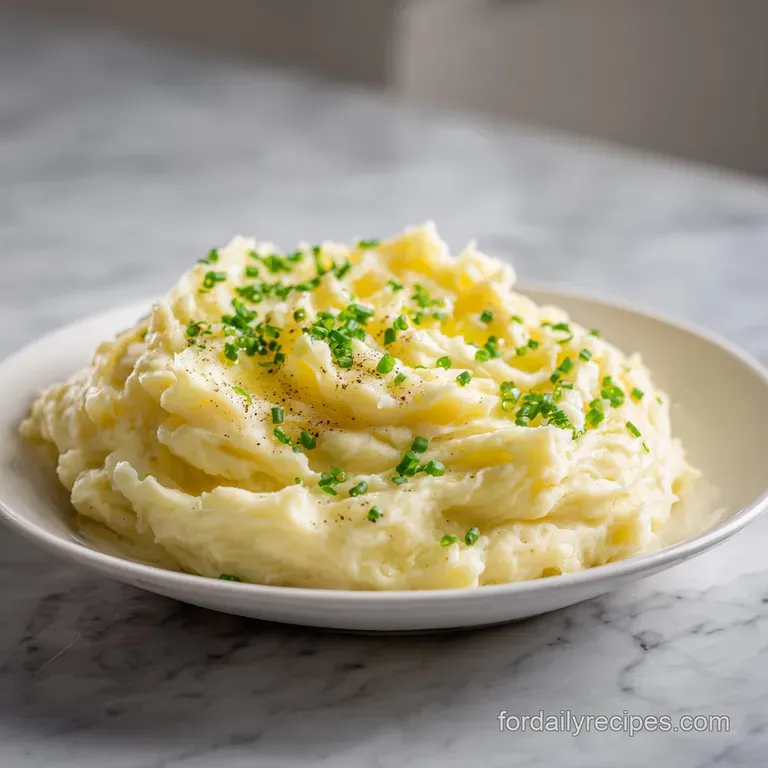
- Time: Active 10 minutes, Passive 15 minutes, Total 25 minutes
- Flavor/Texture Hook: Buttery, velvety, and deeply savory with a hint of garlic
- Perfect for: Holiday gatherings, Sunday roasts, or beginner friendly weeknight comfort
- Achieving the Ultimate Mashed Potatoes Recipe
- The Molecular Starch Trap
- Recipe Metrics and Success Standards
- Ingredient Deep Dive
- Essential Ingredients and Smart Substitutions
- Necessary Gear for Silky Results
- Step by Step Mash Instructions
- Precision Checkpoints
- Solving Common Preparation Hurdles
- Customizing Your Potato Flavor
- Storage and Sustainable Leftover Tips
- Ideal Pairings for Any Occasion
- Debunking Potato Traditions
- Recipe FAQs
- 📝 Recipe Card
Achieving the Ultimate Mashed Potatoes Recipe
The steam rises in thick, earthy clouds as the potatoes hit the colander, filling the kitchen with that unmistakable scent of home. I remember watching my grandmother stand over a pot just like this, her movements rhythmic as she used an old wooden masher that had seen decades of Sunday dinners.
She never looked at a clock; she just knew by the way the starch broke apart that it was time to add the butter. It was a heritage of intuition, a quiet kitchen ritual that turned humble tubers into something that felt like a warm embrace.
There is a specific kind of magic in getting this mashed potatoes recipe just right the way the butter pools in little golden rivers and the cream cheese adds a tang that cuts right through the richness.
We have all had those versions that are either too thin and watery or, even worse, have that sticky, gluey texture that feels like wallpaper paste. But when you hit that sweet spot of fluffiness, it is the kind of dish that people keep coming back to for seconds, even before they touch the main course.
We are going to focus on the layers of flavor and the specific physics of the potato cell here. By the time we are done, you will have a bowl of potatoes that are not just a side dish, but a centerpiece of comfort.
Trust me, the secret lies as much in how you treat the potatoes after they are cooked as it does in the boiling process itself. We are aiming for a texture that is light enough to feel airy but rich enough to satisfy that deep craving for something soul warming.
The Molecular Starch Trap
Starch Retrogradation Control: Drying the cooked potatoes over low heat for 2 minutes forces excess moisture to evaporate, preventing a watery mash. This creates a thirsty starch molecule that readily absorbs fat instead of water, leading to a silkier mouthfeel.
Emulsion Stability: Adding softened fats like butter and cream cheese before the liquid milk coats the starch granules in a protective layer. This prevents the proteins in the milk from binding too tightly with the starch, which is the primary cause of a gummy, elastic texture.
Recipe Metrics and Success Standards
| Method | Time | Texture | Best For |
|---|---|---|---|
| Stovetop | 25 minutes | Classic & Fluffy | Total texture control |
| Instant Pot | 20 minutes | Dense & Creamy | Busy weeknight efficiency |
| Slow Cooker | 4 hours | Rich & Deep | Large holiday gatherings |
Making sure the internal temperature of your potato cubes reaches roughly 95°C is the first secret to success. At this point, the pectin that holds the cell walls together has broken down sufficiently to allow for a smooth breakdown without heavy mechanical force.
We also need to be mindful of the weight; 1.4 kg (approx. 3 lbs) of potatoes serves a family of seven perfectly, providing enough for everyone to have a generous heap.
Chef Tip: Never use a food processor or blender for your potatoes. The high speed blades tear the starch cells apart, releasing a massive amount of "glue" that turns your beautiful mash into a sticky mess. Stick to a ricer or a hand masher for that heritage texture.
Ingredient Deep Dive
| Ingredient | Science Role | Pro Secret |
|---|---|---|
| Russet Potatoes | High starch content | Provides the airy, "fluffy" structure |
| Yukon Gold | Medium starch/wax | Adds a buttery color and natural creaminess |
| Cream Cheese | Acid & Fat stabilizer | Prevents the mash from separating when reheated |
| White Pepper | Fine spice | Adds heat without dark "specks" in the white mash |
While many people stick to one type of potato, the real secret to a multi dimensional flavor is the blend. We are using 680g (1.5 lbs) of Russet potatoes for that classic fluff and 680g (1.5 lbs) of Yukon Gold for their naturally creamy, almost buttery interior.
This combination ensures you get the best of both worlds structure and silkiness.
Essential Ingredients and Smart Substitutions
To make this mashed potatoes recipe, you will need to gather your elements. We use fine sea salt for the boiling water because it dissolves instantly and seasons the potato from the inside out. Don't skimp on the butter; 113g (0.5 cup) of unsalted butter allows you to control the final salt level perfectly.
- 1.5 lbs Russet potatoes: Peeled and cubed into 2.5 cm pieces. Why this? High starch ensures a light, non waxy texture.
- 1.5 lbs Yukon Gold potatoes: Peeled and cubed. Why this? Provides a rich, yellow color and inherent creaminess.
- 1 tbsp fine sea salt: For the boiling water.
- 0.5 cup unsalted butter: Softened and cubed.
- 4 oz full fat cream cheese: Softened at room temperature.
- 0.75 cup whole milk: Warmed slightly before adding.
- 1 tsp garlic powder: For a subtle savory background note.
- 0.5 tsp salt: For the final seasoning adjustment.
- 0.25 tsp white pepper: For heat without the visual of black specks.
| Original Ingredient | Substitute | Why It Works |
|---|---|---|
| Whole Milk | Heavy Cream | Creates an even richer, more luxurious mouthfeel |
| Cream Cheese | Sour Cream | Adds a similar tang but with a slightly thinner consistency |
| Butter | Ghee | Provides a deeper, nutty flavor and is lactose friendly |
If you are looking for a slightly different profile, you could certainly try a Buttermilk Mashed Potatoes recipe which offers a sharp, bright acidity that pairs beautifully with heavier meats. It's all about how you balance the fats against the starch.
Necessary Gear for Silky Results
You don't need a kitchen full of gadgets, but a few specific tools make a world of difference. A large heavy bottomed pot (at least 5 liters) is essential for even heat distribution.
If you really want that restaurant quality finish, a potato ricer is your best friend it pushes the potato through tiny holes, ensuring zero lumps without overworking the starch.
A sturdy silicone spatula is better than a spoon for the final "fold." It allows you to incorporate the warm milk and butter gently. Also, having a small saucepan to warm your milk and melt your butter together is a game changer.
Cold dairy hitting hot potatoes causes the starch to seize, which leads to a grainy texture. We want everything to be roughly the same temperature when they meet.
step-by-step Mash Instructions
- Prep the potatoes. Peel and cube 1.4 kg of potatoes into uniform 2.5 cm pieces. Note: Uniformity ensures every piece cooks at the same rate.
- Start in cold water. Place potatoes in the pot and cover with cold water by at least 2 inches. Note: Starting in hot water cooks the outside too fast, leaving a hard center.
- Season the water. Add 1 tbsp of sea salt and bring to a boil over high heat.
- Simmer until tender. Reduce heat to medium low and simmer for 15 minutes until the potatoes shatter when pressed with a fork.
- Drain and dry. Drain the water thoroughly, then return the pot to the warm burner for 2 minutes until the potato surfaces look dusty and dry.
- Mash the base. Use a ricer or masher to break down the potatoes while they are still steaming hot.
- Incorporate the fats. Fold in 113g of softened butter and 113g of cream cheese until no white streaks remain and the mixture looks glossy.
- Add the liquids. Slowly pour in 180ml of warm whole milk while stirring gently with a spatula.
- Season the mash. Stir in the garlic powder, white pepper, and the remaining 0.5 tsp of salt.
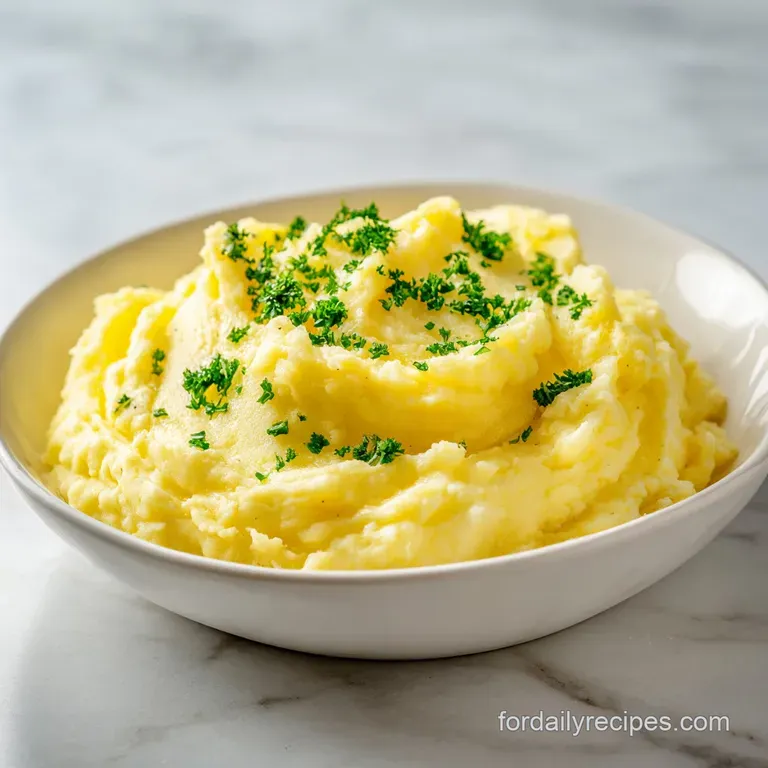
- Final fluff. Give the potatoes one last vigorous stir until they are velvety and hold a soft peak.
Precision Checkpoints
- Weight: Exactly 1.4 kg (3 lbs) of peeled potatoes for the liquid ratios to be accurate.
- Temperature: Warm the milk to approximately 45°C (110°F) before adding to the mash.
- Time: Do not exceed 18 minutes of boiling; overcooked potatoes absorb too much water.
Solving Common Preparation Hurdles
Your Potatoes Are Too Gluey
This usually happens because the starch was overworked. If you used a hand mixer or a food processor, the starch cells ruptured and turned into a sticky paste. It can also happen if you worked the potatoes for too long after adding the milk.
| Problem | Root Cause | Solution |
|---|---|---|
| Lumpy Mash | Undercooked centers | Boil until the potato truly shatters, not just softens |
| Watery Base | Excess moisture | Ensure you dry the potatoes in the hot pot after draining |
| Bland Flavor | Lack of salt in water | Season the boiling water heavily; it's the only time the potato "eats" salt |
Your Potatoes Are Cold Too Fast
Potatoes lose heat rapidly once mashed. If you find your mash is lukewarm by the time it hits the table, it's likely because your dairy was cold. Always warm the milk and butter together before they touch the potato.
Common Mistakes Checklist
- ✓ Never start potatoes in boiling water; always start cold.
- ✓ Don't skip the drying step after draining.
- ✓ Avoid over mashing; stop as soon as it is smooth.
- ✓ Do not add cold cream cheese; it must be room temperature to blend.
- ✓ Use a heavy pot that retains heat during the mashing process.
Customizing Your Potato Flavor
If you want to deviate from the heritage style, there are endless things to add to mashed potatoes. For a sharp, savory kick, you can fold in 100g of freshly grated sharp cheddar and some chopped chives.
If you're looking for a mashed potatoes recipe without milk, you can substitute the milk and cream cheese with a high-quality chicken bone broth and extra virgin olive oil for a Mediterranean twist.
For those who want a bit more texture, try a Patates Salatasi Turkish recipe style, where the potatoes are kept in larger chunks and tossed with herbs. However, for this specific mash, a "loaded" version is always a hit add crispy bacon bits, a dollop of sour cream, and a handful of green onions right before serving.
- If you want more garlic, roast a whole head of garlic in the oven and squeeze the softened cloves into the mash.
- If you want a lighter texture, whip two egg whites to soft peaks and gently fold them in (note: only do this if you are baking the mash as a casserole afterward).
- If you want a smoky flavor, replace the sea salt with smoked Maldon salt.
Storage and Sustainable Leftover Tips
Leftover mashed potatoes are a treasure in the kitchen. Store them in an airtight container in the fridge for up to 4 days. When reheating, the starch will have tightened up, so you'll need to add a splash of milk or a knob of butter to bring back that silky texture.
Avoid the microwave if possible; reheating gently in a saucepan over low heat results in a much better consistency.
For long term storage, you can freeze these potatoes for up to 2 months. Because we used cream cheese and butter, the high fat content helps protect the texture during the freezing process. To freeze, scoop portions onto a baking sheet, freeze until solid, then transfer to a freezer bag.
Zero Waste Tip: Don't throw away those potato peels! Toss them in a bowl with a little olive oil, salt, and smoked paprika, then bake at 200°C (400°F) for 15 minutes.
They turn into the most incredible crispy potato skin chips that are perfect for snacking or as a garnish for the mash itself.
Ideal Pairings for Any Occasion
These potatoes are the ultimate canvas for a rich sauce. I love serving them alongside a Swedish Meatballs Recipe because the cream gravy seeps into the mash in the most delightful way. The earthy potatoes balance the spiced meat perfectly.
| Feature | Fresh Mash | Shortcut Flakes |
|---|---|---|
| Flavor | Deep, earthy, buttery | Often metallic or overly salty |
| Texture | Varied, velvety, rich | Uniformly grainy or "foam like" |
| Effort | 25 minutes | 5 minutes |
If you are looking for something even more decadent for a steak night, try drizzling a bit of Garlic Parmesan Sauce recipe over the top of your bowl. The extra garlic and parmesan notes play off the cream cheese in this recipe beautifully, creating a side dish that honestly might outshine the main protein.
Debunking Potato Traditions
One common misconception is that you should peel potatoes after boiling to "save flavor." In reality, peeling them first allows the salt in the water to penetrate the flesh, resulting in a much better seasoned end product.
The skin also doesn't provide enough flavor protection to justify the burnt fingers you'll get trying to peel a hot potato.
Another myth is that "any potato will do." Using only waxy potatoes like Red Bliss will almost always result in a gummy mash because they don't have enough starch to create that fluffy, separated structure. The blend of Russet and Yukon Gold is non negotiable if you want the specific texture we have discussed today.
Trust the heritage methods they have lasted for generations for a reason.
Recipe FAQs
What is the secret to really good mashed potatoes?
Drying the potatoes after draining. Return the drained potatoes to the hot empty pot over low heat for two minutes until the surfaces appear dusty; this removes excess water so the starch can absorb butter instead of turning gummy.
How to make the best mashed potatoes?
Use a blend of starchy and waxy potatoes. Combine Russets for fluffiness with Yukon Golds for natural creaminess, and always rice or mash immediately after drying to maintain a velvety texture.
Is milk or cream better for mashed potatoes?
Whole milk is recommended for balance, but cream yields richer results. Whole milk is sufficient when using added fats like cream cheese and butter, but if you prefer pure decadence, heavy cream is acceptable.
What is a common mistake when making mashed potatoes?
Overworking the cooked potato starch is the biggest error. Using a high speed mixer tears the starch cells, releasing the gluey interior, which ruins the light texture; use a ricer or a simple hand masher instead.
Should I use room temperature or cold butter?
Use softened, room temperature butter. Cold fat will lower the temperature of the potatoes too quickly, causing the starch to seize and clump; softened fat coats the starch granules better, ensuring a smoother incorporation.
Can I skip the cream cheese in this recipe?
No, the cream cheese is crucial for structure and tang. It adds stabilizing acid and fat that prevents the mash from separating when reheated; without it, you might need to use sour cream for that necessary acidity.
How do I season mashed potatoes correctly?
Season the water heavily before boiling and adjust salt at the end. Potatoes absorb seasoning best while cooking, so salt the water liberally; this technique for deep seasoning is similar to how we build flavor in stocks, as seen in our Butter Poached Lobster recipe.
Creamy Mashed Potatoes Recipe
Ingredients:
Instructions:
Nutrition Facts:
| Calories | 358 kcal |
|---|---|
| Protein | 5.5 g |
| Fat | 19.7 g |
| Carbs | 40.1 g |
| Fiber | 4.3 g |
| Sugar | 3.2 g |
| Sodium | 780 mg |
