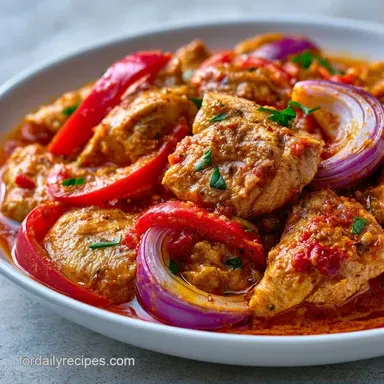
Coconut Red Curry Chicken with Tender Thighs
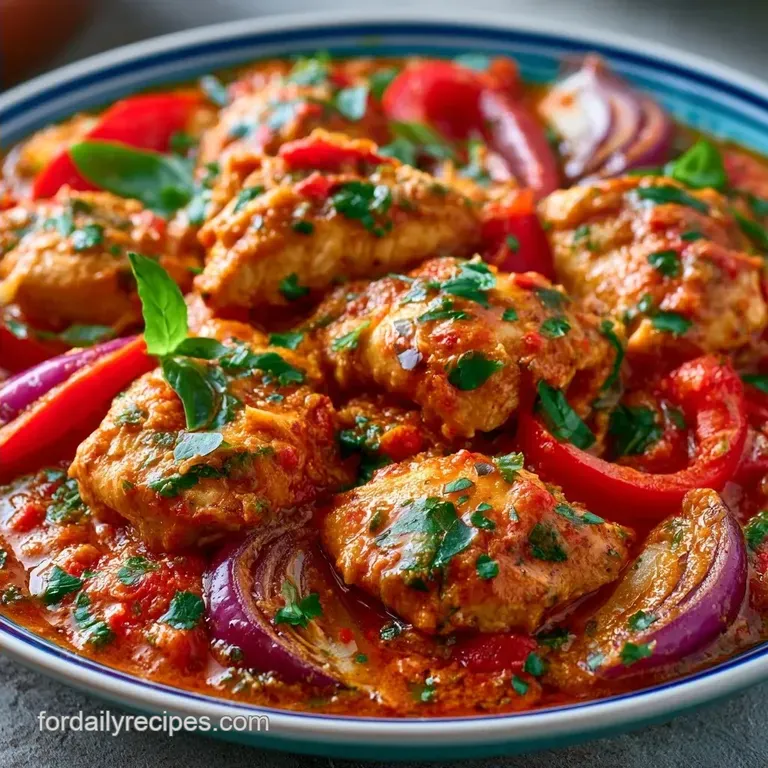
- Time: 15 min active + 15 min cooking
- Flavor/Texture Hook: Rich, creamy sauce with tender chicken and crisp peppers
- Perfect for: A high flavor weeknight dinner that feels like a weekend treat
Coconut Red Curry Chicken
That sharp, pungent scent of red curry paste hitting hot oil is the best part of this whole process. It fills the kitchen instantly, moving from a raw, spicy smell to something nutty and toasted. I remember the first time I tried this, I just stirred everything into a pot of coconut milk and simmered it.
The result tasted flat, almost raw, like the spices never actually woke up.
The difference comes down to the sear and the bloom. When you fry the paste and brown the chicken separately, you create layers of flavor that a one pot dump method just can't touch. It turns a simple dinner into something that feels global and extraordinary.
You can expect a sauce that's bright, creamy, and hits that specific Thai balance of sweet, salty, and sour. It's the kind of meal that makes you want to clear the table and just focus on the bowl in front of you.
The Quick Breakdown
Since this is a stovetop dish, it's all about heat management. If you're wondering whether to do this in the oven, here's the deal: the stovetop gives you a better sear and more control over the sauce reduction.
| Method | Time | Texture | Best For |
|---|---|---|---|
| Stovetop | 30 min | Crisp veg, rich sauce | Weeknight speed |
| Oven | 45 min | Softer veg, mellow sauce | Hands off cooking |
Right then, let's look at the basics. This recipe serves 4 people and takes exactly 30 minutes from the moment you start chopping to the moment it hits the plate.
What Makes the Flavor Pop
The balance here relies on the "Thai Trifecta": fish sauce for salt, brown sugar for sweetness, and lime for acidity. If one is missing, the whole dish feels lopsided.
The Blooming Process: Frying the curry paste in oil releases fat soluble flavors that don't dissolve in water or milk. This is why the sauce tastes deep rather than thin.
The Flavor Balance: Lime juice is added at the very end. If you boil it, the bright citrus notes vanish, leaving the sauce tasting heavy.
Chicken Thighs Advantage: Thighs stay juicy even when simmered. Breasts tend to dry out and get stringy in a curry.
| Ingredient | What It Does | Best Swap |
|---|---|---|
| Thai Red Curry Paste | Base spice and heat | Red curry powder (add 1 tbsp oil) |
| Full Fat Coconut Milk | Creaminess and body | Cashew cream (for dairy-free richness) |
| Fish Sauce | Salty, umami depth | Soy sauce (adds a different, soy like salt) |
| Thai Basil | Peppery, anise finish | Regular basil or cilantro (less punchy) |
Gear for the Kitchen
You don't need a fancy setup for this. A wide skillet or a wok is best because it gives the chicken plenty of room to brown without crowding the pan. If you crowd the pan, the chicken steams instead of searing, and you lose that golden crust.
I usually use a stainless steel skillet, but a non stick one works fine too. You'll also need a whisk or a sturdy spoon to blend the coconut cream into the paste. A sharp chef's knife is a must for getting those bell pepper strips uniform, so they all cook at the same rate.
Steps for a Rich Sauce
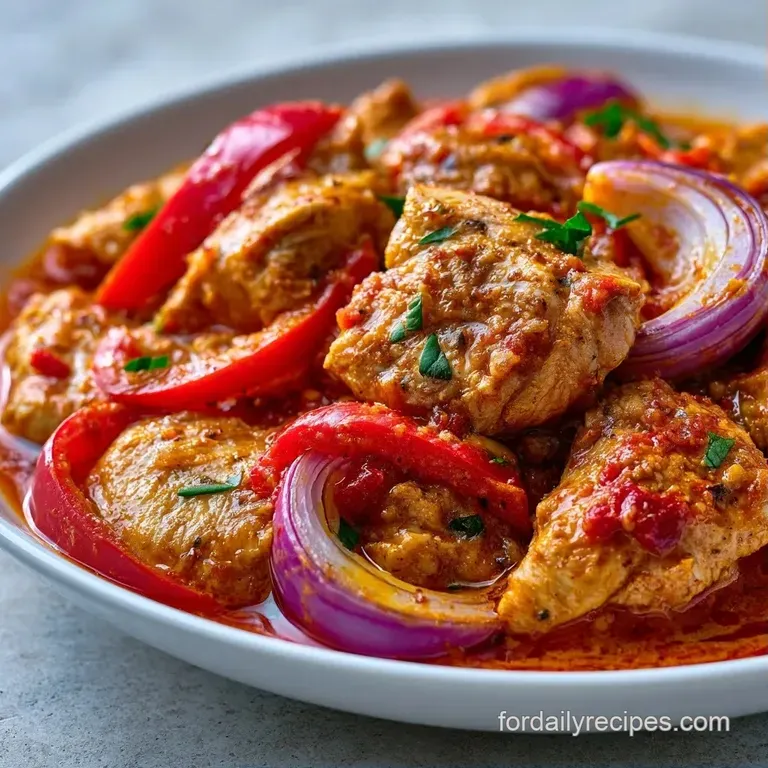
Let's crack on with the cooking. Make sure your coconut milk is not shaken too vigorously if you want to scoop that thick cream off the top.
Phase 1: Searing & Blooming
- Heat 2 tbsp neutral oil in the skillet over medium high heat until shimmering.
- Add 1.5 lb chicken pieces in a single layer. Sear until golden brown on all sides (about 3-4 minutes). Note: Don't stir too often or they won't brown.
- Remove chicken from the pan and set aside on a plate.
- Lower heat to medium. Add 3 tbsp Thai red curry paste to the remaining oil. Stir constantly for 2 minutes until the paste smells nutty and turns a deep, dark red.
Phase 2: Building the Sauce
- Scoop the thick coconut cream from the top of the can and stir it into the paste. Whisk until the oil separates slightly from the cream.
- Pour in the remaining coconut milk, 1 tbsp brown sugar, and 2 tbsp fish sauce. Stir until the sauce is a uniform, velvety orange.
Phase 3: The Final Simmer
- Add the seared chicken, 1 sliced yellow onion, and 1 sliced red bell pepper to the sauce.
- Simmer for 5-7 minutes until the chicken is cooked through and vegetables are tender.
- Stir in 1 tbsp fresh lime juice and 1 cup fresh Thai basil leaves. Garnish with 1 tsp lime zest before serving.
Common Pitfalls to Avoid
One mistake I see often is adding the basil too early. If the basil boils for five minutes, it turns brown and loses its fragrance. Stir it in at the very last second, just before the heat goes off.
Another issue is the "split" sauce. If your heat is too high when you add the coconut milk, the fat can separate. Keep it at a gentle simmer. If you're looking for other ways to get a rich, creamy texture in your chicken dishes, my Mushroom Chicken recipe uses a different technique that's just as satisfying.
Fixing Salty Sauce
If you accidentally heavy handed the fish sauce, don't panic. Add a pinch more brown sugar or an extra squeeze of lime. The acid and sweet cut through the salt.
Fixing Thin Sauce
If the sauce feels too watery, simmer it for an extra 3-5 minutes without a lid. This evaporates the excess water and thickens the coconut fats.
Avoiding Burnt Paste
Curry paste has sugar and garlic in it, which burn quickly. Keep the heat at medium and keep it moving. If it starts to stick, add a splash of coconut milk immediately.
| Problem | Root Cause | Solution |
|---|---|---|
| Sauce tastes raw | Paste wasn't fried | Fry paste in oil for 2 mins first |
| Chicken is tough | Overcooked simmer | Remove chicken as soon as it hits 74°C |
| Sauce is too spicy | Too much paste | Stir in 2 tbsp more coconut milk |
Ways to Customize
This Coconut Red Curry Chicken is a great base. If you want to move away from chicken, shrimp or firm tofu work brilliantly. Just sear them quickly and add them back at the end so they don't overcook.
Decision Shortcut: If you want more heat, add 2 sliced bird's eye chilies with the paste. If you want more texture, add sliced bamboo shoots or baby corn. If you want a lighter version, use light coconut milk, but expect a thinner sauce.
For scaling, keep these rules in mind: Scaling Down (½): Use 0.75 lb chicken. Use a smaller pan so the sauce doesn't evaporate too fast. Reduce the simmer time by about 2 minutes. Scaling Up (2x): Work in batches when searing the chicken.
Do not double the fish sauce and salt immediately - start with 1.5x and taste before adding more.
Storage and Zero Waste
This dish actually tastes better the next day. The spices have more time to penetrate the chicken. Store it in an airtight container in the fridge for up to 3 days.
When reheating, do it slowly on the stove over medium low heat. Add a splash of water or coconut milk if the sauce has thickened too much in the fridge. It freezes okay for up to 2 months, but the bell peppers will lose their snap and become soft.
If you have leftover coconut milk in the can, don't toss it. Freeze it in ice cube trays to use in smoothies or other curries. If you have extra chicken and vegetables but are tired of curry, you could pivot and make a chicken noodle soup for a lighter meal.
Plate for the Table
Since the sauce is a rich orange, you need contrast on the plate. Serve this in a wide bowl over a bed of steamed jasmine rice. The white rice soaks up the sauce and balances the heat.
Top the dish with a few fresh basil leaves and a wedge of lime on the side. The bright green of the basil and the yellow of the lime zest make the colors pop. If you have some toasted sesame seeds or sliced red chilies, sprinkle those on top for a professional finish.
Trust me, the visual contrast makes the meal feel much more special.
High in Sodium
1120 mg 1,120 mg of sodium per serving (49% 49% of daily value)
The American Heart Association recommends a daily sodium limit of no more than 2,300 mg for most adults to maintain heart health.
Tips to Reduce Sodium
-
Substitute Fish Sauce-30%
Replace regular fish sauce with low-sodium fish sauce or coconut aminos to drastically lower the salt content.
-
Low-Sodium Curry Paste-20%
Use a low-sodium variety of Thai red curry paste or make your own paste from scratch to control the salt level.
-
Amplify Citrus-10%
Increase the lime juice and lime zest to add a sharp, acidic punch that mimics the flavor of salt.
-
Enhance with Fresh Herbs
Add extra fresh Thai basil or a pinch of ground ginger to increase aromatic depth without adding sodium.
Recipe FAQs
Can I use leftover roast chicken in this red curry?
Yes, it works well. Simply add the cooked chicken during the final simmer instead of searing it at the start.
How to make this red curry milder?
Reduce the red curry paste quantity. Balance the remaining heat with a touch more brown sugar; if you enjoyed balancing contrasting flavors here, see how we do it in our Mexican sweet bread.
Which is better for this dish, red or green curry paste?
Stick with red curry paste. It provides a nuttier, deeper flavor profile that complements the chicken thighs better than the herbal notes of green curry.
Is it true that I can skip searing the chicken?
No, this is a common misconception. Searing the chicken in shimmering oil first creates a golden crust that adds essential depth to the overall sauce.
How to keep the coconut sauce velvety?
Whisk the thick coconut cream into the paste first. This ensures the oil separates slightly and creates a stable emulsion before the rest of the coconut milk is added.
Is Thai curry typically made without meat?
No, but it is versatile. While this recipe uses chicken, you can easily substitute the meat with tofu or extra vegetables.
How to store and reheat the leftovers?
Store in an airtight container for up to 3 days. Reheat slowly over medium low heat on the stove, adding a splash of water or coconut milk if the sauce has thickened.
Coconut Red Curry Chicken