Authentic Persian Koobideh Kabobs
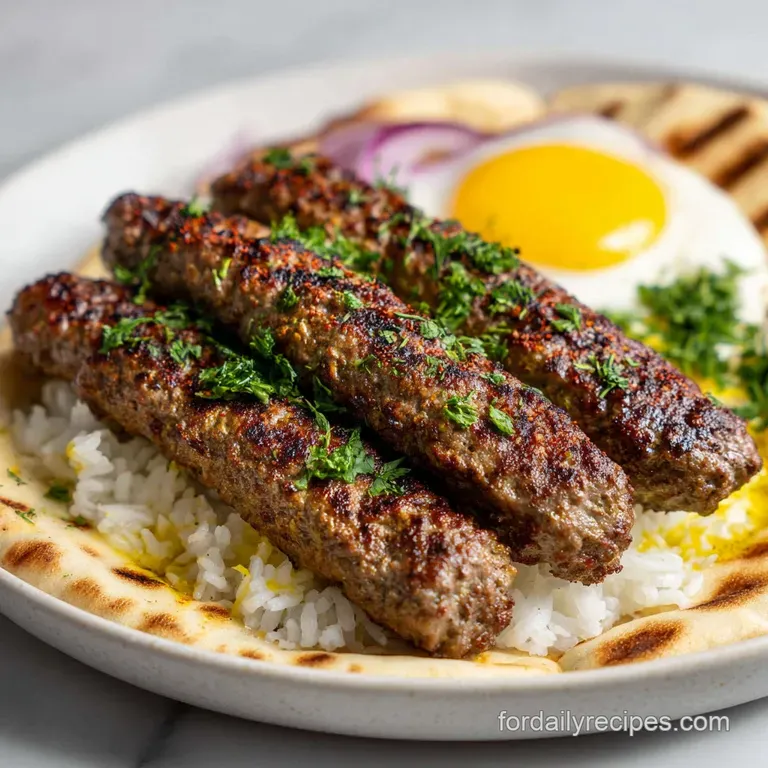
- Time: Active 30 minutes, Passive 1 hours 10 mins, Total 1 hours 40 mins
- Flavor/Texture Hook: Smoked fat and tangy sumac with a velvety, melt in-the mouth texture.
- Perfect for: Weekend gatherings and enthusiasts of extraordinary global flavors.
- Master the Art of Authentic Persian Koobideh Kabobs
- The Hidden Physics of Meat and Onion Chemistry
- Component Analysis of the Koobideh Mixture
- Selecting the Elements for a Transcendent Flavor Profile
- Essential Tools for Achieving That Charred Finish
- The Narrative Flow of Skewering and Searing Meat
- Navigating the Challenges of Skewer Based Meat Preparation
- Adjusting for the Crowd
- Adapting Traditional Flavors for Different Cooking Environments
- Debunking Kitchen Myths
- Preserving the Integrity of Your Grilled Masterpiece
- Complementary Sides that Celebrate Middle Eastern Heritage
- High in Sodium
- Recipe FAQs
- 📝 Recipe Card
Master the Art of Authentic Persian Koobideh Kabobs
The air in the Tehran bazaar doesn't just smell like food; it smells like history. I remember standing near a small stall where the blue smoke from natural charcoal rose in thick ribbons, carrying the scent of rendered beef fat and the sharp, citrusy punch of sumac.
There was a specific rhythmic "thwack" sound the sound of a chef throwing a massive ball of minced meat onto a wooden board to develop the protein. It was a sensory overload that I knew I had to recreate in my own kitchen, even if it took me a dozen failed attempts where the meat stubbornly slid off the skewers into the coals.
We’ve all been there staring at a pile of expensive ground beef that won't stick to the metal, wondering if we should just give up and make burgers. But authentic Persian Koobideh Kabobs are not just long burgers. They represent a delicate balance of moisture, fat, and temperature.
This dish transcends borders and brings that extraordinary street food vibe right to your backyard or kitchen. I've spent weekends obsessing over the exact onion to meat ratio and the cold kneading process that makes the difference between a dry kebab and a succulent masterpiece.
You can expect a recipe that focuses on the architecture of the meat. We are going to treat the ingredients with the respect they deserve, focusing on the tactile feel of the mixture and the specific aroma cues that tell you the meat is ready.
By the end of this, you’ll understand the "how" and the "why," turning what seems like a difficult task into a repeatable weekend ritual. Let’s get that charcoal ready, because the sizzle is about to be real.
The Hidden Physics of Meat and Onion Chemistry
Myosin Bonding: Kneading the cold meat for at least 10 minutes develops myosin proteins, creating a tacky, elastic structure that grips the skewer.
Osmotic Pressure: Removing every drop of onion juice prevents the liquid from turning into steam inside the meat, which would otherwise cause the kabob to crumble and fall.
Fat to Lean Ratio: The 20% fat content acts as a thermal buffer, melting slowly to self baste the meat while creating those characteristic velvety pockets of juice.
Conductive Heat Transfer: Using wide, flat metal skewers (varesh) allows heat to travel into the center of the meat from the inside out, ensuring even cooking without drying the exterior.
| Thickness | Internal Temp | Rest Time | Visual Cue |
|---|---|---|---|
| 2 cm flat | 71°C | 5 minutes | Surface is golden brown with visible fat bubbles |
| 1.5 cm flat | 68°C | 3 minutes | Juices run clear when pressed lightly |
| 2.5 cm thick | 74°C | 7 minutes | Firm to the touch with charred edges |
The key to knowing when your Persian Koobideh Kabobs are ready lies in the surface tension of the meat. When the fat begins to bubble and the meat contracts slightly around the metal, you’ve reached the sweet spot of flavor and safety.
Component Analysis of the Koobideh Mixture
| Ingredient | Science Role | Pro Secret |
|---|---|---|
| Ground Beef (80/20) | Provides the structural framework and essential lipids. | Use meat that has been ground twice for a finer, more cohesive texture. |
| Grated Onion | Acts as a natural tenderizer and primary aromatic. | The "dryness" of the pulp is more important than the quantity of the onion. |
| Ground Sumac | Lowers the pH slightly to brighten the heavy fat profile. | Sprinkle extra sumac immediately after grilling to catch the rising steam. |
| Saffron Infusion | Provides the "floral" top note and a distinct golden hue. | Always bloom saffron in hot water (not boiling) to preserve volatile oils. |
Selecting the Elements for a Transcendent Flavor Profile
- 1 kg ground beef (80/20 lean to fat ratio): Why this? The fat is non negotiable for the required "sizzle" and moisture retention.
- 2 large yellow onions: Why this? They provide the base sweetness and moisture that characterizes this kabob.
- 2 tbsp ground sumac: Why this? Its tartness cuts through the richness of the 20% fat beef.
- 1 tsp ground turmeric: Why this? It adds an earthy depth and helps the golden color of the saffron pop.
- 2 tsp kosher salt: Why this? Vital for protein extraction; use Diamond Crystal for best control.
- 1 tsp cracked black pepper: Why this? Provides a subtle heat that lingers without overpowering the saffron.
- 1/2 tsp saffron threads: Why this? This is the soul of the dish, providing an aroma that transcends borders.
- 2 tbsp hot water: Why this? Necessary for blooming the saffron to its full potency.
- 50g unsalted butter: Why this? Used for the final glaze to create a velvety mouthfeel.
Chef's Tip: If you can't find 80/20 beef, ask your butcher to grind 800g of chuck with 200g of beef fat (suet). The quality of the fat dictates the quality of the aroma.
Essential Tools for Achieving That Charred Finish
To get these right, you really need wide, flat skewers, often called "Varesh" in Persian markets. Round skewers are the enemy here; the meat will simply spin around them like a tire on a rim. If you don't have a charcoal grill, a heavy cast iron griddle can work, but you'll miss that smoky essence.
A fine mesh strainer or a clean tea towel is also essential for dealing with the onions trust me, you don't want to skip the "dehydration ritual" if you want your meat to stay on the stick.
If you’re just starting your journey into Middle Eastern cooking, you might also want to try a warming starter like an Adasi Recipe Persian which sets a wonderful tone for the meal. Having the right tools makes the process feel like a weekend hobby rather than a chore.
The Narrative Flow of Skewering and Searing Meat
- Extract onion moisture. Grate the 2 large yellow onions and place the pulp into a fine mesh strainer or cheesecloth. Squeeze with all your might until the pulp is bone dry and the juice is collected in a separate bowl (discard the juice or save for marinades).
- Bloom the saffron. Grind the 1/2 tsp saffron threads with a tiny pinch of sugar and mix with 2 tbsp hot water. Note: This ensures the color is uniform throughout the meat.
- Combine the elements. In a large chilled bowl, add the 1 kg ground beef, the dry onion pulp, 2 tbsp sumac, 1 tsp turmeric, 2 tsp salt, and 1 tsp pepper.
- Perform the long knead. Pour in half of the saffron liquid. Work the mixture with your hands for 10 minutes until the meat becomes pale and incredibly tacky. You should see "threads" of protein forming.
- Chill the mixture. Cover and refrigerate the meat for at least 1 hours. Note: This allows the fat to firm up, making the skewering process much easier.
- Shape the kabobs. Take a handful of meat (about the size of an orange). Wet your hand with cool water and mold the meat onto the wide skewers.
- Apply the C grip. Use your thumb and forefinger to create indentations along the length of the meat. Press firmly to seal the top and bottom of the meat to the skewer.
- Prepare the glaze. Melt the 50g butter and mix it with the remaining saffron water. This will be your basting liquid.
- Sear on high heat. Place skewers over hot coals or a preheated broiler. Let the meat sit for 30 seconds, then flip immediately. Wait for the sizzle and the first signs of fat dripping.
- Baste and finish. Continue flipping every minute for about 8-10 minutes. In the last 2 minutes, brush the kabobs with the saffron butter until they are glossy and deep golden brown.
Navigating the Challenges of Skewer Based Meat Preparation
Meat Falling from the Metal
The most common heartbreak is watching your hard work fall into the fire. This usually happens because the meat was too warm or the onion pulp was too wet. If the mixture feels soft or greasy, it’s not ready for the heat.
Tough or Rubbery Texture
If the kabobs feel like bouncy balls, you might have over processed the meat in a food processor rather than kneading by hand. Hand kneading creates the perfect "chew" without making it dense like a sausage.
| Problem | Root Cause | Solution |
|---|---|---|
| Meat slides off | Excess moisture from onions | Squeeze onion pulp through a tea towel until no liquid remains. |
| Meat is dry | Lean meat used (too little fat) | Ensure a strict 80/20 ratio or add chilled grated butter to the mix. |
| Uneven cooking | Round or thin skewers | Switch to wide, flat "Varesh" skewers to conduct heat internally. |
Common Mistakes Checklist
- ✓ Never use "pre packaged" ground beef that has high water content; go for fresh ground if possible.
- ✓ Ensure the meat is cold when you start skewering heat is the enemy of the grip.
- ✓ Don't forget to wet your hands with cold water between each kabob to prevent sticking.
- ✓ Avoid over salting the mixture too early, as it can draw out moisture before you're ready to knead.
- ✓ Make sure your grill is extremely hot before the skewers touch the rack to "set" the meat instantly.
Adjusting for the Crowd
When you're scaling this recipe down for two people, it's easier to use a kitchen scale to ensure the 80/20 ratio stays consistent. If you only need half a kg of meat, still use one whole onion, but be even more aggressive with the squeezing process.
The cook time remains the same since the thickness of the kabob on the skewer shouldn't change.
Scaling up for a large party (2x or 3x) is where the real work happens. I suggest kneading the meat in batches of 1 kg to ensure you’re getting that protein development right. For a 2 kg batch, you only need about 1.5x the salt and spices, as flavors tend to amplify in larger volumes.
If you're cooking for 15 people, work in shifts at the grill so the kabobs stay hot for everyone.
| Fresh Meat | Shortcut (Pre Ground) | Flavor Impact |
|---|---|---|
| Butcher Ground (2x) | Grocery Store Pack | Fresh is much more velvety and cohesive |
| Hand Grated Onion | Food Processor Onion | Hand grated yields better pulp texture |
| Bloomed Saffron | Saffron Powder | Threads offer a more complex, floral aroma |
Adapting Traditional Flavors for Different Cooking Environments
Iranian Kebab Recipe Oven
If you don't have a grill, don't worry. You can make Persian Koobideh Kabobs in the oven. Set your oven to the highest broiler setting. Place a wire rack over a baking sheet and arrange your skewers (or long strips of meat) on the rack. Position them about 10 cm from the heating element.
Broil for 4-5 minutes per side, basting with the saffron butter halfway through. It won't have the charcoal smoke, but the flavor will still be extraordinary.
Variations and Decisions
- If you want a lighter version, use ground lamb or a 50/50 beef lamb mix for a more traditional, gamier profile.
- If you want to skip skewers entirely, press the meat into a flat tray and score it into long strips before broiling (this is called "Kabob Tabei").
- If you want a more aromatic kick, add a teaspoon of ground dried lime (limoo amani) to the meat mixture.
Debunking Kitchen Myths
One common myth is that you need to add eggs or breadcrumbs to keep the meat together. This is a total misconception! Adding binders changes the texture from a succulent kabob to a meatloaf. The only binder you need is the natural myosin developed through 10 minutes of vigorous kneading.
Another myth is that you should salt the onions and let them sit for hours. While this draws out water, it can also make the onion pulp too salty. It is much more effective to grate and squeeze immediately. The mechanical pressure does more for moisture removal than osmosis ever could in a short timeframe.
Preserving the Integrity of Your Grilled Masterpiece
Storage: Keep leftover Persian Koobideh Kabobs in an airtight container in the fridge for up to 3 days. They actually make for a great cold snack, but they're best when gently reheated.
Freezing: You can freeze the raw meat mixture for up to 2 months. However, once cooked, the texture can become a bit grainy if frozen and thawed. If you must freeze cooked kabobs, wrap them tightly in foil and then a freezer bag for up to 1 month.
Zero Waste: Don't throw away that leftover onion juice! It makes an incredible marinade for chicken or steak. Also, if you have broken bits of kabob, crumble them into a pan with some eggs for a "Sosis Bandari" style breakfast the next morning.
Complementary Sides that Celebrate Middle Eastern Heritage
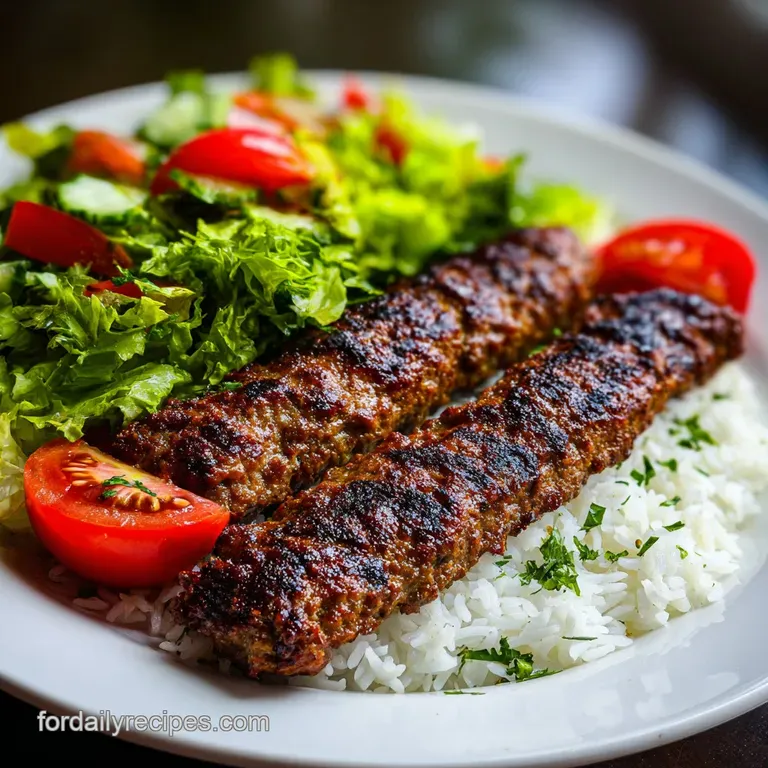
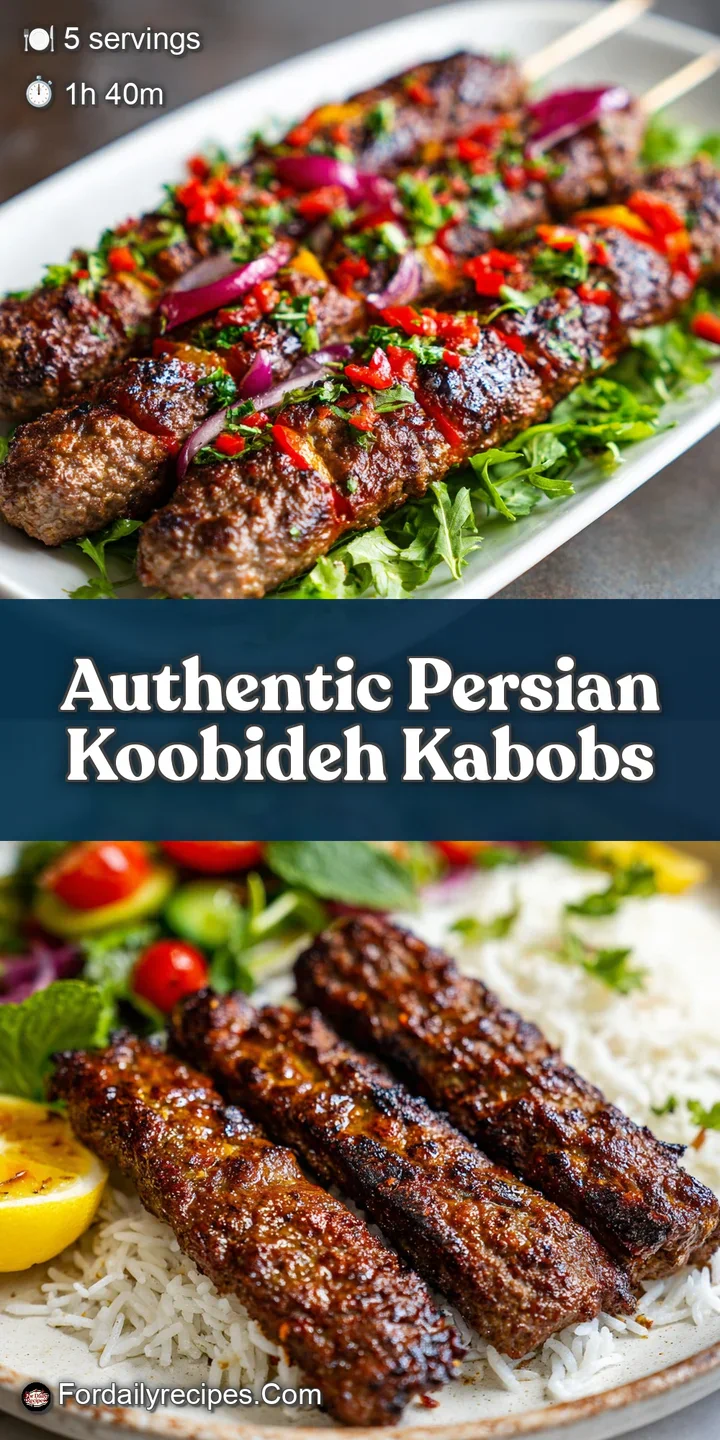
The classic way to serve this is over a bed of fluffy saffron basmati rice (Chelow). Make sure you have a knob of butter to melt into the hot rice and a grilled tomato on the side. The acidity of the tomato is the perfect partner for the rich meat.
I also highly recommend pairing this with a Persian Shirazi Salad recipe for a hit of crunchy, lime dressed freshness. The contrast between the hot, fatty meat and the cold, crisp cucumbers is what makes a Persian feast truly balanced. If you’re feeling ambitious and want to end the night on a high note, a slice of Persian Love Cake Recipe provides a floral, cardamom scented finish that your guests won't forget. Trust me, these flavors are meant to be together.
High in Sodium
965 mg mg of sodium per serving (42% % of daily value)
The American Heart Association recommends limiting sodium intake to about 2,300mg per day for overall cardiovascular health.
Tips to Reduce Sodium in Your Ground Beef Recipe
-
Reduce Salt-25%
Halve the amount of kosher salt from 2 teaspoons to 1 teaspoon. This significant reduction will noticeably lower the sodium content without drastically affecting the flavor profile. Remember to taste and adjust later, if needed. Consider using a low-sodium salt substitute.
-
Choose Leaner Beef-10%
Opt for ground beef with a lower fat content (e.g., 90/10 instead of 80/20). While this primarily impacts fat content, some lower fat ground beef options may have slightly lower sodium content depending on the processing.
-
Unsalted is Key-5%
Continue using unsalted butter. Avoid salted butter entirely as it contributes unnecessary sodium to the dish. The recipe already contains added salt so additional sources should be avoided.
-
Spice It Up!
Enhance the flavor with a variety of fresh and dried herbs and spices. Experiment with different combinations to find your favorite flavor profile. The Sumac, Turmeric, Saffron threads and Black Pepper already add a lot of flavour without adding sodium.
Recipe FAQs
Is it true that I should use breadcrumbs or eggs to bind the Koobideh meat?
No, this is a total misconception. Adding binders changes the texture from a succulent kabob to a meatloaf consistency; the only necessary binder is the natural myosin developed through vigorous kneading.
What is the minimum kneading time required for the meat mixture?
Knead the mixture for at least 10 minutes. This extended, cold kneading process develops the myosin proteins, creating the tacky, elastic structure required to grip the skewer.
How do I prevent the grated onion from making the meat fall off the skewer?
Squeeze the pulp through a fine mesh strainer or cheesecloth until bone dry. Excess moisture turns to steam during grilling, which causes internal pressure that pushes the meat off the skewer.
What internal temperature signifies that my Koobideh kabobs are perfectly cooked?
Aim for 71°C (160°F) for a safe and juicy result. At this temperature, the fat has rendered beautifully, creating a velvety texture while retaining maximum moisture.
Why must I use wide, flat metal skewers instead of thin, round ones?
Wide, flat skewers conduct heat into the center of the meat. Round skewers allow the meat to spin, leading to uneven searing and potential breakage.
Can I use a food processor to grind the beef for Koobideh?
No, using a food processor risks overworking the meat, making it dense. For the best texture, ask your butcher to grind the meat twice, or process in short pulses and finish the binding by hand.
What is the best way to serve Koobideh for an authentic presentation?
Serve immediately over hot saffron basmati rice with grilled tomatoes. This classic pairing balances the richness of the meat; the process of achieving this flavor complexity is similar to our guide for mastering the Ghormeh Sabzi Recipe base flavors.
Authentic Persian Koobideh Kabobs
Ingredients:
Instructions:
Nutrition Facts:
| Calories | 528 calories |
|---|---|
| Protein | 35 g |
| Fat | 38 g |
| Carbs | 8 g |
| Fiber | 2 g |
| Sugar | 3 g |
| Sodium | 965 mg |
