Lemon Sugar Snap Pea Salad Recipe
- Time: Active 15 minutes, Passive 0 minutes, Total 15 minutes
- Flavor/Texture Hook: A shatter crisp crunch with velvety feta and zesty lemon
- Perfect for: Quick weeknight sides or wholesome meal prep
- A Fresh and Zesty Lemon Sugar Snap Pea Salad
- The Engineering of the Crunch
- Essential Specs for Your Kitchen Planning
- Component Analysis of Your Fresh Ingredients
- Simple Tools for Precise Slicing
- A Step-by-Step Flow for the Perfect Toss
- Solving Common Texture and Flavor Hurdles
- Wholesome Variations to Suit Every Table
- Guidelines for Scaling and Adjustments
- Smart Storage for Lasting Crispness
- The Truth About Raw Peas and Radishes
- Wholesome Pairings to Complete Your Meal
- Recipe FAQs
- 📝 Recipe Card
A Fresh and Zesty Lemon Sugar Snap Pea Salad
The first time I really understood the beauty of a snap pea was in my backyard, standing over a tangled mess of green vines. I plucked one, heard that unmistakable crack as I bit into it, and realized I had been overcooking them my entire life.
That raw, sweet, and slightly grassy flavor doesn't need much, but when you pair it with the peppery bite of a radish and the creamy saltiness of feta, it becomes something transformative.
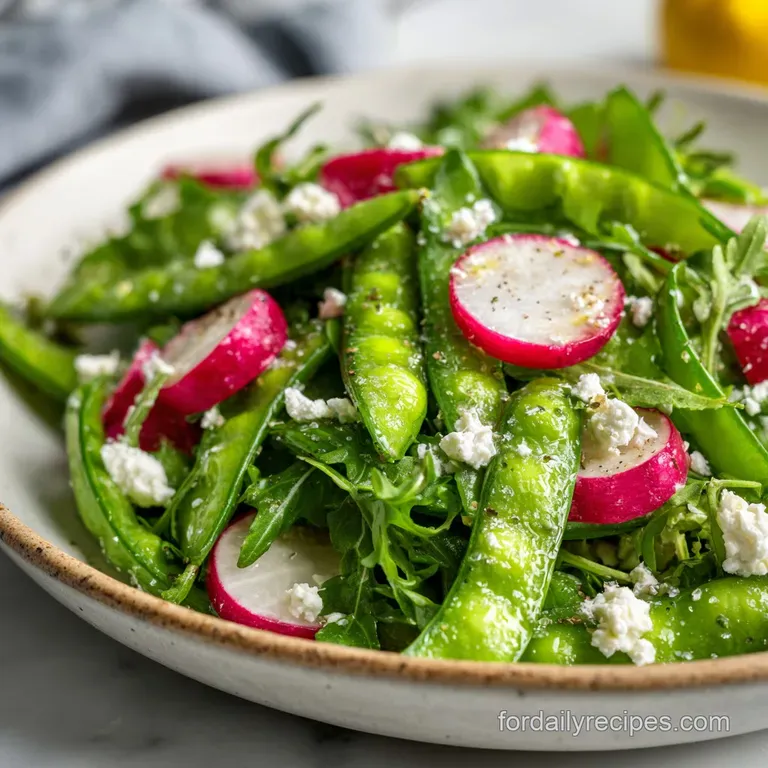
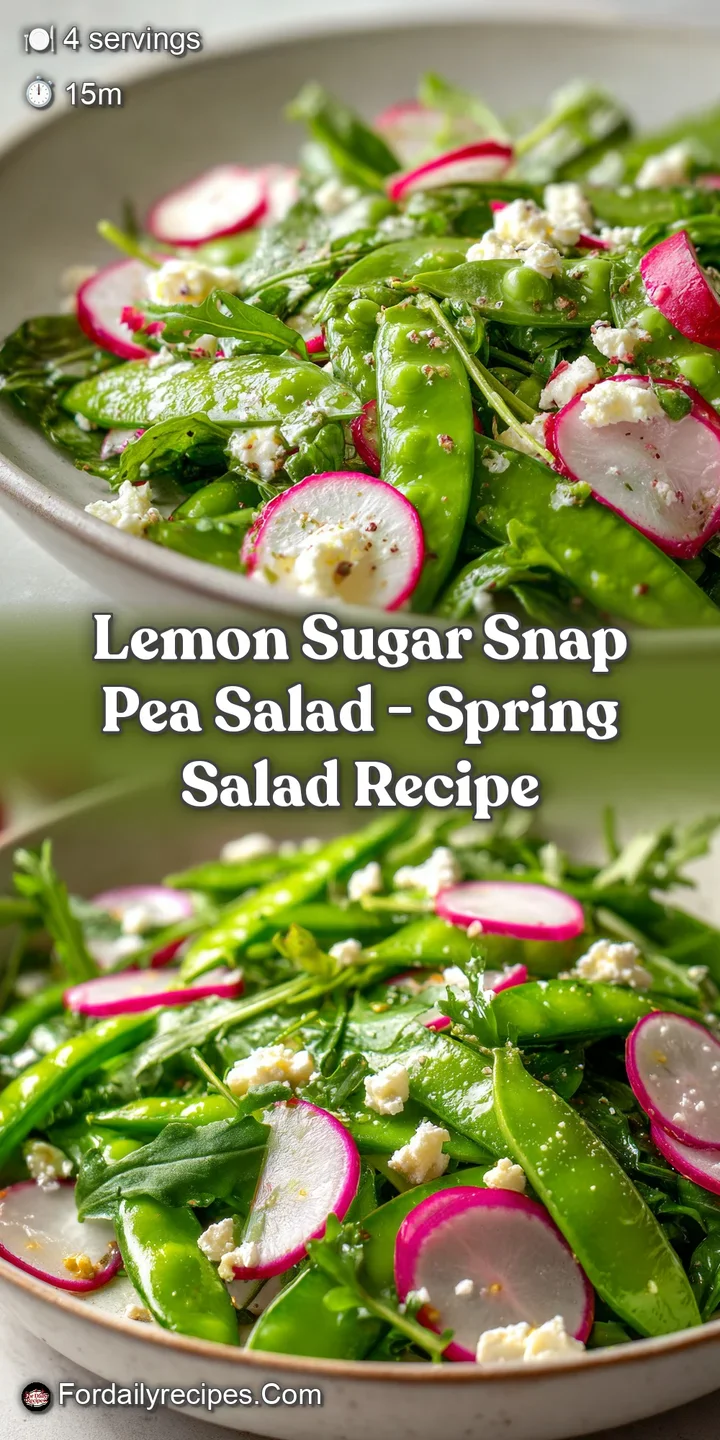
This Lemon Sugar Snap Pea Salad with Radishes, Feta, and Arugula recipe is a vibrant, flavorful dish you'll want to make again and again. It focuses on the integrity of the vegetables, ensuring that every bite feels like a wholesome necessity rather than just another side dish.
We’ve all had those salads that turn into a soggy heap by the time they hit the table, but this version uses a few structural tricks to keep everything bright and firm.
In my kitchen, I prioritize plant forward meals that actually satisfy without feeling heavy. This salad hits that sweet spot where the acid from the lemon cuts through the fat of the cheese, and the arugula provides a delicate, leafy base.
Whether you’re dealing with dietary restrictions or just looking for a way to use up those beautiful spring radishes, this recipe is a sturdy addition to your rotation.
The Engineering of the Crunch
Turgor Pressure: The "snap" in the peas comes from high internal water pressure against the cell walls, which we protect by keeping them raw and cold. Acid Interaction: Lemon juice brightens the chlorophyll but can soften cell walls over time, so we dress this right before serving to maintain that structural "shatter" texture.
| Preparation Method | Time | Texture Result | Best For |
|---|---|---|---|
| Raw & Sliced | 5 minutes | Maximum shatter crisp snap | Fresh summer lunches |
| Quick Blanch | 2 minutes | Vibrant green, slightly tender | Sensitive digestions |
| Charred Stovetop | 4 minutes | Smoky and velvety edges | Warm dinner pairings |
Choosing the right method depends on your texture preference, though I always lean toward raw for that characteristic Sugar Snap Pea Salad with Radishes Feta and Arugula experience. If you are serving this alongside a heavier main, like my Double Bean Mediterranean recipe, the raw crunch provides a much needed contrast to the softer beans.
Essential Specs for Your Kitchen Planning
When you're aiming for a wholesome result, timing and precision matter more than fancy techniques. This recipe yields 4 servings and relies heavily on the freshness of your produce.
Because there is zero cook time involved, your focus should be entirely on the "prep flow" getting your slices thin and your dressing properly emulsified.
Planning this out is straightforward since the total time is only 15 minutes. However, if you're doubling the recipe for a larger crowd, remember that slicing radishes takes more time than you think. Using a mandoline can speed things up, but always prioritize safety over speed.
This dish is best served immediately, but you can prep the individual components ahead of time to keep the assembly quick.
The balance of fats and acids here is calculated to complement the natural sugars in the peas. With 200 calories and 6.3 g of protein per serving, it’s a nutritionally dense way to fill half your plate.
I often find that focusing on these wholesome metrics helps me stay on track with my plant forward goals without sacrificing the joy of a well made meal.
Component Analysis of Your Fresh Ingredients
| Ingredient | Science Role | Pro Secret |
|---|---|---|
| Sugar Snap Peas | Provides structural "snap" and sweetness | Remove the "string" from both sides for a seamless bite |
| Extra Virgin Olive Oil | Emulsification base and mouthfeel | Use a cold pressed oil to keep the grassy notes intact |
| Lemon Juice | Denatures proteins in feta and brightens greens | Roll the lemon on the counter first to maximize juice yield |
| Fresh Mint | Adds aromatic cooling effect | Tear the leaves by hand to avoid bruising and browning |
Understanding how these elements interact helps you appreciate why we don't just throw things in a bowl. The oil isn't just for flavor; it coats the arugula to prevent the lemon juice from wilting the leaves too quickly.
Simple Tools for Precise Slicing
You don't need a professional kitchen to make a great Snap Pea Salad with Radishes Feta and Arugula, but a few specific tools make the process much smoother. A sharp chef’s knife is non negotiable for slicing those peas on a bias.
If your knife is dull, you’ll end up crushing the peas rather than cutting them, which leads to a watery mess.
A small glass jar with a tight fitting lid is my favorite "equipment" for the dressing. It’s far more effective than a whisk for creating a stable emulsion between the 3 tbsp extra virgin olive oil and the 2 tbsp lemon juice. I also recommend a microplane for the 1 tsp lemon zest and the garlic clove.
Grating the garlic into a paste ensures it distributes evenly so no one gets a harsh, spicy chunk of raw garlic in their bite.
Finally,, a large stainless steel or ceramic mixing bowl gives you enough room to toss the 2 cups of baby arugula without crushing the leaves. When you work with delicate greens, space is your friend. If the bowl is too small, you’ll end up over mixing, which leads to bruising.
A step-by-step Flow for the Perfect Toss
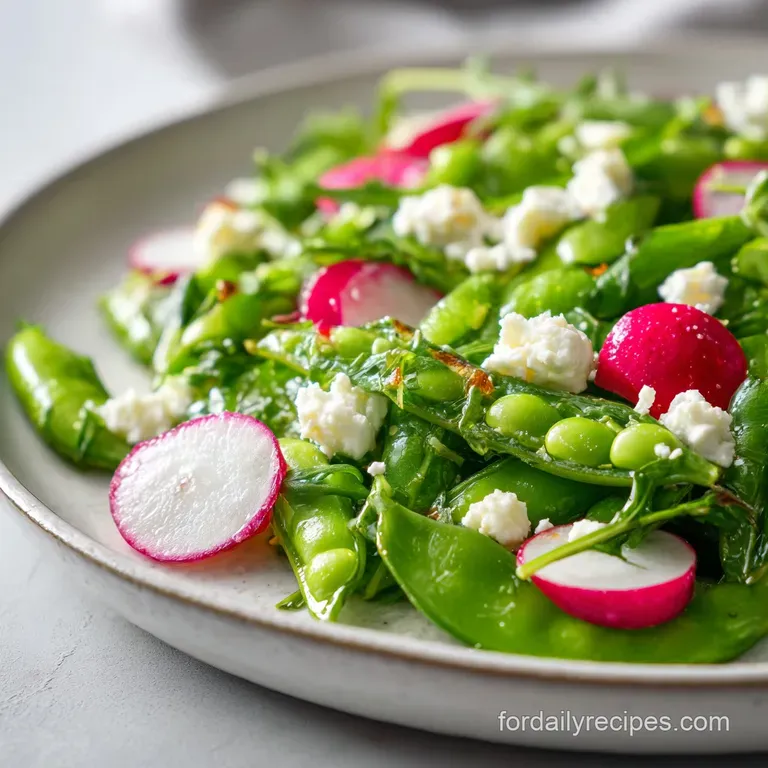
- De string the peas. Pull the tough fiber from both sides of the 1 lb sugar snap peas to ensure a tender bite. Note: Skipping this makes the salad difficult to chew.
- Bias cut the peas. Slice them diagonally into two or three pieces until they look elegant and bite sized.
- Prep the radishes. Thinly slice the bunch of radishes (approx. 6-8) until they are translucent and wafer thin.
- Grate the aromatics. Use a microplane for the 1 tsp lemon zest and 1 clove of garlic.
- Shake the dressing. Combine the oil, 2 tbsp lemon juice, 1 tsp honey, garlic, 0.5 tsp salt, and 0.25 tsp pepper in a jar and shake until thick and opaque.
- Layer the base. Place the washed and dried 2 cups baby arugula in your large mixing bowl.
- Incorporate the crunch. Add the peas and radishes to the greens.
- Drizzle and toss. Pour the dressing over the vegetables and toss gently until every leaf glistens.
- Add the finish. Top with 0.5 cup crumbled feta and 0.25 cup torn mint leaves.
- Final Zest. Sprinkle the remaining lemon zest over the top until the aroma fills the kitchen.
Chef’s Tip: If your radishes feel a bit limp, soak the slices in ice water for 10 minutes before adding them to the salad. This "shocks" the cells and makes them incredibly crisp.
Solving Common Texture and Flavor Hurdles
The most common issue with any Snap Pea Salad with Radishes Feta and Arugula is moisture management. If the arugula isn't bone dry after washing, the dressing won't stick, and you'll end up with a pool of watery liquid at the bottom of the bowl.
I always use a salad spinner or pat the leaves between two clean kitchen towels to ensure they are perfectly dry.
Why the arugula wilts too fast
Arugula is a delicate leaf. When salt and acid are applied, they draw moisture out of the greens via osmosis. If you dress the salad more than 20 minutes before eating, the leaves will lose their structure and turn "velvety" in a way that isn't pleasant.
Handling bitter radishes
Sometimes radishes can have an overwhelming "bite" that masks the sweetness of the peas. This usually happens with older radishes or those grown in very hot weather. Slicing them paper thin helps distribute that heat, or you can swap them for a milder variety like breakfast radishes.
| Problem | Root Cause | Solution |
|---|---|---|
| Watery base | Wet greens or salt sitting too long | Dry arugula thoroughly and salt just before serving |
| Dressing separates | Poor emulsion or too much oil | Shake the dressing vigorously in a jar with honey as a stabilizer |
| Bland flavor | Not enough acid or seasoning | Add an extra squeeze of lemon or a pinch of salt to brighten the peas |
Common Mistakes Checklist
- ✓ Forgetting to remove the pea strings (creates a "woody" texture)
- ✓ Using bottled lemon juice (lacks the volatile oils found in fresh zest)
- ✓ Over dressing the greens (makes the salad heavy and greasy)
- ✓ Slicing radishes too thick (they should be delicate accents, not chunks)
Wholesome Variations to Suit Every Table
If you need to adjust this for dietary restrictions or just based on what's in your pantry, there are several ways to keep the spirit of the recipe intact. While the feta adds a necessary salty component, you can achieve a similar effect with other plant forward options. For those looking for more substance, I often suggest looking at my Dense Bean Salad Recipe for inspiration on adding legumes.
| Original Ingredient | Substitute | Why It Works |
|---|---|---|
| Feta Cheese | Shaved Parmesan | Similar saltiness but a firmer, nuttier texture |
| Honey | Maple Syrup | Provides the same sweetness with a slightly deeper, vegan friendly flavor |
| Mint Leaves | Fresh Basil | Changes the profile from "cool" to "sweet and peppery" |
Decision Shortcut: Adjusting for Your PalateIf you want more protein, add 1 cup of chilled, cooked chickpeas or grilled chicken strips. If you want less spice, swap the arugula for baby spinach or butter lettuce.
If you want a vegan version, use dairy-free feta or toasted sunflower seeds for that salty crunch.
Guidelines for Scaling and Adjustments
When you need to feed a larger group, scaling this salad requires a bit of care. If you double the recipe (2x), do not simply double the salt and garlic. I find that 1.5x the salt and 1.5x the garlic is usually enough, as raw garlic can quickly become overpowering in large quantities.
For smaller portions (1/2 or 1/4), the dressing can be tricky to emulsify in such small amounts. It’s often better to make the full batch of dressing and keep the extra in the fridge for another day. This ensures you get the right ratio of lemon to oil for that perfect coating. If you're looking for another quick option to serve alongside a smaller portion, our Parmesan Chopped Salad recipe is another 10 minute wonder that scales beautifully.
Smart Storage for Lasting Crispness
This salad is a bit of a "live in the moment" dish because of the arugula. However, if you have leftovers, they will stay edible in the fridge for about 24 hours. The peas and radishes will hold their crunch, but the arugula will definitely soften.
It won't have that same "shatter" effect, but the flavors will have melded nicely.
Storage: Store in an airtight glass container in the coldest part of your fridge. Do not freeze this salad; the high water content in the peas and radishes will cause the cell walls to burst, leaving you with a mushy mess once thawed.
Zero Waste Tip: Don't throw away the radish tops! If they are fresh and green, they can be blended into a pesto or sautéed with a little garlic and olive oil. Even the lemon rinds can be tossed into a jar of white vinegar to create a natural, citrus scented kitchen cleaner.
The Truth About Raw Peas and Radishes
A common misconception is that snap peas must be blanched to be digestible. In reality, raw snap peas are perfectly fine for most people and actually retain more of their Vitamin C and folate when heat isn't applied. The sweetness is also much more pronounced in its raw state.
Another myth is that radishes must be peeled. The skin of a radish contains most of its color and a significant portion of its nutritional value. As long as they are scrubbed clean, there is no reason to remove that beautiful red hue.
It provides the visual contrast that makes the with Radishes Feta and Arugula components pop against the green base.
Wholesome Pairings to Complete Your Meal
This Lemon Sugar Snap Pea Salad is incredibly versatile. It acts as a bright counterpoint to roasted salmon or a simple roast chicken. Because it’s so light, I often serve it as a first course to wake up the palate before a heavier main dish.
If you're aiming for a completely plant forward spread, try pairing this with a grain bowl or a hearty lentil soup. The acidity in the salad helps break down the starches in grains, making for a more balanced digestive experience. It also looks beautiful on a brunch table next to a vegetable frittata.
No matter how you serve it, the key is to keep the other elements simple so the fresh, seasonal flavors of the peas and radishes can truly take center stage.
Recipe FAQs
Can I blanch the sugar snap peas instead of serving them raw for a softer texture?
Yes, a very brief blanch is acceptable. Dip them in boiling water for only 30 seconds then immediately shock them in ice water to retain color and crispness.
How to prevent the arugula from wilting if I need to dress the salad ahead of time?
Dress the components separately until just before serving. Keep the greens, peas/radishes, and dressing apart, and only toss the hardy ingredients first if necessary.
What can I substitute for feta cheese if I need a dairy-free option that still provides saltiness?
Toasted and salted sunflower seeds work wonderfully as a replacement. They provide the necessary fat and salt contrast without dairy, similar to how nuts function in our La Scala Chopped recipe.
Is it true that using honey in the vinaigrette stabilizes the emulsion?
Yes, honey acts as a mild emulsifier due to its slight viscosity. It helps bind the lemon juice and olive oil together, preventing immediate separation.
How long can I store the leftovers before the peas lose their signature snap?
Store leftovers for up to 24 hours for best results. The snap will diminish slightly after the first 12 hours as the acid continues to affect the cell structure of the vegetables.
How to thinly slice the radishes uniformly without crushing them?
Use a mandoline set to its thinnest setting or a very sharp knife. Ensure the radishes are scrubbed clean and dry before slicing them directly onto your serving bowl.
What is the best way to ensure the raw garlic flavor is distributed evenly and not overwhelming?
Grate the garlic clove finely using a microplane directly into the dressing. This breaks down the cell walls, releasing the allicin into the oil rather than leaving harsh chunks.
Lemon Sugar Snap Pea Salad
Ingredients:
Instructions:
Nutrition Facts:
| Calories | 200 calories |
|---|---|
| Protein | 6.3 g |
| Fat | 14.4 g |
| Carbs | 12.6 g |
| Fiber | 3.5 g |
| Sugar | 6.0 g |
| Sodium | 456 mg |
