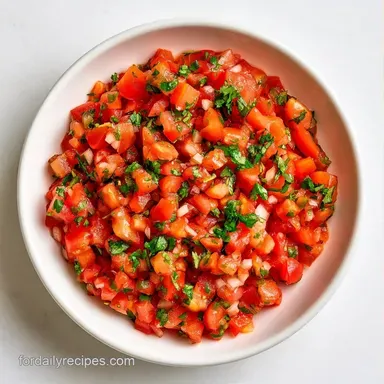
Fresh Tomato Salsa: Chunky and Zesty
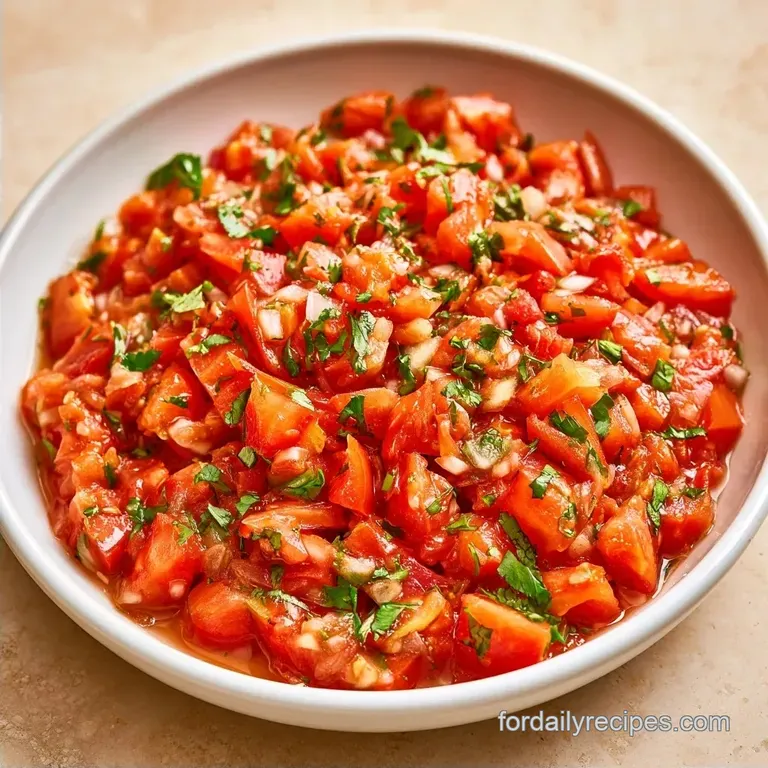
- Time: 10 min active + 30 min resting
- Flavor/Texture Hook: Chunky, zesty, and bright
- Perfect for: Weekend gatherings, taco nights, or beginner friendly meal prep
The smell of fresh cilantro hitting a cutting board, mixed with the sharp, citrusy spray of a squeezed lime, always takes me back to the street markets in Oaxaca. In Mexico, a real salsa isn't just a dip, it's the heartbeat of the meal.
I remember watching a vendor chop tomatoes with a speed that seemed impossible, his knife clicking against the wood in a steady rhythm. He told me that the soul of the dish isn't in the heat, but in the balance between the acidity of the fruit and the earthiness of the seed.
That experience changed how I look at condiments. I realized that most of us treat salsa as an afterthought, something we buy in a jar and heat up. But when you make a Fresh Tomato Salsa from scratch, you're playing with textures and temperatures. It's about the contrast of a cold, crisp onion against the soft, juicy weight of a vine ripened tomato.
This recipe is my way of bringing those global flavors into a home kitchen without needing a professional setup. We're focusing on building layers of taste, starting with the raw crunch of vegetables and finishing with a chemical reaction that happens while the salsa rests.
You'll get a result that transcends borders, bringing that extraordinary market style vibrance to your table.
Everything About Fresh Tomato Salsa
- The Salt Draw: Salt doesn't just season the vegetables, it pulls water out of the tomatoes through osmosis. This creates a savory liquid that binds the onion and garlic together.
- Lime Bridge: The citric acid in lime juice acts as a bridge. It connects the sharp, pungent notes of raw onion with the warm, smoky scent of ground cumin.
- Roma Advantage: Using Roma tomatoes is a specific choice because they have thicker walls and fewer seed cavities, which keeps the mix from becoming a soup.
| Method | Time | Texture | Best For |
|---|---|---|---|
| Raw | 10 mins | Chunky | Fresh corn chips |
| Roasted | 30 mins | Jammy | Eggs or Tacos |
The Flavor Logic
The goal here is a layered build. First, we have the base of the tomatoes, which provide a mild, sweet acidity. Then comes the "punch" from the white onion and garlic, which adds a sharp, savory depth. Finally, the lime and salt tie everything together during the resting phase.
If you're curious about how tomatoes behave when they're cooked versus raw, you might find that a cherry tomato sauce offers a completely different, concentrated sweetness. In this raw version, however, we want to preserve the brightness and the "snap" of the produce.
Essential Ingredients
When choosing your produce, look for Roma tomatoes that are firm to the touch. If they're too soft, they'll collapse into a mush. White onion is preferred over red for this version because it provides a cleaner, sharper bite that doesn't overpower the cilantro.
- 6 medium Roma tomatoes, seeded and diced (approx. 1.5 lbs) Why this? Less water, more flesh for a chunky texture
- 1/2 cup white onion, finely diced Why this? Sharp contrast to the sweet tomatoes
- 1/2 cup fresh cilantro, chopped Why this? Essential herby brightness
- 1-2 jalapeño peppers, seeded and minced Why this? Controlled heat and green flavor
- 2 tbsp lime juice, freshly squeezed Why this? Fresh acidity beats bottled juice every time
- 3/4 tsp sea salt Why this? Draws out the natural tomato juices
- 1/4 tsp ground cumin Why this? Adds an earthy, smoky undertone
- 2 cloves garlic, minced Why this? Pungent depth that rounds out the lime
Substitution Options:
| Original Ingredient | Substitute | Why It Works |
|---|---|---|
| Roma Tomatoes | Heirloom Tomatoes | More flavor variety. Note: Much juicier, so seed them heavily |
| White Onion | Red Onion | Sweeter, milder flavor but changes the color |
| Lime Juice | Lemon Juice | Similar acidity. Note: Lacks the specific "Mexican" citrus profile |
The Gear List
You don't need a fancy gadget to make this. A sharp chef's knife is your most important tool here. Since we aren't blending, the size of your dice determines the experience. Use a medium sized glass mixing bowl so you can see the colors as they meld.
I usually use a small citrus press for the lime to ensure no seeds get into the mix. If you don't have one, just a simple fork for squeezing will do. A silicone spatula is great for the final fold, as it doesn't bruise the cilantro leaves.
Step by step Process
Phase 1: Preparation
- Chop Roma tomatoes into uniform 1/4 inch cubes. Note: Remove seed pods and excess liquid to prevent the salsa from becoming watery.
- Finely mince the white onion and jalapeño peppers. Note: Using smaller pieces helps distribute the heat more effectively.
Phase 2: Mixing the Ingredients
- Combine the diced tomatoes, onion, jalapeño, and minced garlic in a medium sized bowl.
- Scatter the sea salt and ground cumin over the vegetables. Note: Use your fingertips to distribute the spices for better coverage.
- Stir in the lime juice.
- Gently fold in the chopped cilantro until the herbs are evenly mixed without crushing them.
Phase 3: Developing the Flavor
- Let the Fresh Tomato Salsa sit at room temperature for 15 to 30 minutes before serving.
- Give it a final light stir until the juices have pooled slightly at the base, creating a natural brine.
Fixing Common Issues
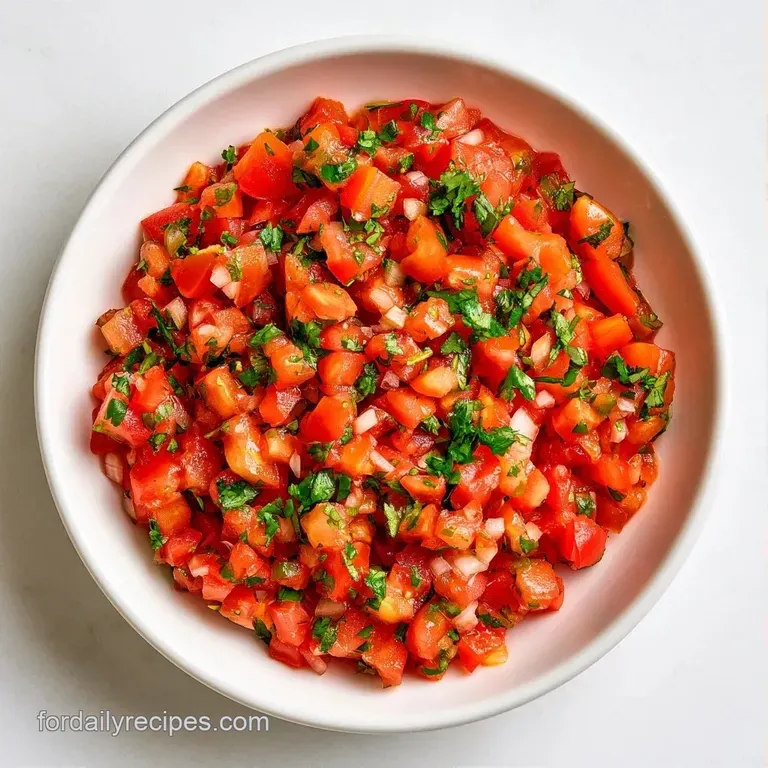
Dealing With Watery Salsa
This often occurs if the tomatoes are overripe or if the seeds weren't removed. To remedy this, strain the mixture through a coarse sieve for about 60 seconds. You could also stir in an additional tablespoon of finely diced onion to soak up the extra liquid. For a thicker, cooked texture, you may prefer a fresh tomato sauce method.
Managing Excessive Heat
If you've gone too heavy on the jalapeño, there's no need to worry. The most effective way to temper the heat is by increasing the volume and acidity. Mix in an extra diced Roma tomato along with another squeeze of lime. Adding more bulk dilutes the capsaicin, while the acid helps balance the spice.
Fixing Flat Flavors
A "flat" tasting salsa typically needs more salt or acid. Try adding a pinch of sea salt and letting it rest for an additional 5 minutes. If it still lacks punch, stir in another teaspoon of lime juice. This acidity works like a volume knob, amplifying the notes of garlic and cumin.
Ways to Adapt
If you want to move beyond the classic, you can easily tweak this Fresh Tomato Salsa Recipe to suit different moods. For those who love a deeper, smokier profile, try a Chipotle Tomato Salsa by swapping the fresh jalapeño for a minced chipotle pepper in adobo.
For a Blender Tomato Salsa Recipe, you can pulse the ingredients for 5 seconds. Just be careful not to over process it, or you'll end up with a smoothie. If you prefer a Homemade Chunky Salsa but want a bit more sweetness, add a finely diced mango or pineapple to the mix.
For those wondering about the difference between Fresh Tomato Salsa vs Pico de Gallo, they are very similar, but this version includes cumin and garlic for a more complex, savory depth.
If you're looking for an Easy Fresh Tomato Salsa for a crowd, you can double the batch, but remember to only increase the salt and cumin by 1.5x to avoid over seasoning.
Finally, if you are considering Fresh Tomato Salsa for Canning, please be careful. This raw recipe is not acidified enough for shelf stability. You would need to follow USDA guidelines for pH levels and processing times to make it safe for jars.
| Goal | What to change |
|---|---|
| More Heat | Add second jalapeño |
| Thicker Base | Remove more seeds |
| Tangier Taste | Add extra lime |
Adjusting the Batch
If you're making this for a party, doubling the recipe is simple, but don't just double everything blindly.
For a 2x batch, use 12 tomatoes and a full cup of onion and cilantro. However, only increase the salt and cumin to 1.125 tsp and 3/8 tsp respectively. Spices can become overwhelming when scaled linearly.
If you're cutting the recipe in half, be very careful with the garlic. One large clove is usually enough for a half batch; two might be too pungent. Work with smaller bowls to ensure the lime juice covers all the vegetables evenly.
Busting Salsa Myths
One common misconception is that you need a food processor to get a "restaurant style" result. The truth is that hand chopping preserves the integrity of the tomato. A blender breaks the cell walls, releasing too much water and creating a pinkish hue that lacks the vibrant red of a hand cut salsa.
Another myth is that you should salt the tomatoes only at the end. Actually, salting early is what creates the "sauce" part of the salsa. Without that initial draw of moisture, you just have a bowl of chopped salad.
Keeping it Fresh
Refrigeration
Store your Fresh Tomato Salsa in a glass jar or an airtight container. It stays fresh for about 3 to 5 days. Keep in mind that the flavors will continue to meld, so it often tastes even better on day two.
Freezing
I don't recommend freezing this recipe. The freezing process breaks down the cell walls of the raw tomatoes, and once thawed, the texture becomes mushy and the cilantro loses its bright flavor.
Zero Waste
Don't toss your tomato seeds and the liquid you strained out. This "tomato water" is packed with flavor. Pour it into a pan with a little olive oil and simmer it down to create a concentrated base for a quick soup or a poaching liquid for fish.
What to Serve With
Corn tortilla chips are the traditional pairing, but this Fresh Tomato Salsa is also spectacular as a topping for grilled shrimp or white fish. Its bright, tangy profile balances the richness of the seafood perfectly.
You can also use it as a vibrant base for a breakfast bowl with avocado and poached eggs. The warmth from the eggs gently mellows the raw onion, creating a savory harmony. For a main course, spoon it over grilled chicken or use it as a zesty contrast to a hearty plate of carnitas.
Recipe FAQs
Do I need to peel the tomatoes for this salsa?
Actually, no. Keeping the skin on Roma tomatoes provides better texture and maintains the structure of the dice.
Tip: Use a sharp knife to get clean 1/4 inch cubes for a professional look.
Is it true I must boil tomatoes to make a fresh salsa?
That's a myth. This recipe uses raw ingredients to preserve a bright, crisp flavor and fresh crunch.
Tip: If you loved the fresh acidity here, see how we use a similar balancing technique in our seafood sauce.
Why does restaurant salsa often taste different?
They often roast their vegetables first or use large industrial blenders for a smoother emulsion.
Tip: Let your salsa sit for 30 minutes to develop that deep, restaurant style flavor profile.
How to prevent the salsa from becoming too watery?
Discard the seed pods and excess liquid from the Roma tomatoes before dicing.
Tip: Pat your diced onions dry if they seem overly moist before mixing.
What secret ingredients make the flavor pop?
A touch of ground cumin and freshly squeezed lime juice provide the essential earthy and tart notes.
Tip: Use sea salt rather than table salt to enhance the natural vegetable flavors.
How to incorporate the cilantro without bruising it?
Gently fold the chopped herbs into the mixture using a light stirring motion.
Tip: Add the cilantro as the very last step to keep the leaves vibrant and green.
Do I have to remove the seeds from jalapeños?
Not true. You only need to remove them if you prefer a milder heat level.
Tip: Keep the seeds in for a more authentic, spicy kick.
Fresh Tomato Salsa