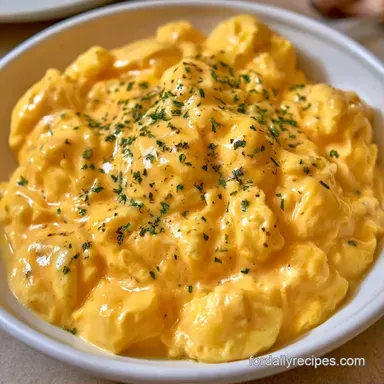
Creamy Scrambled Eggs with Heavy Cream
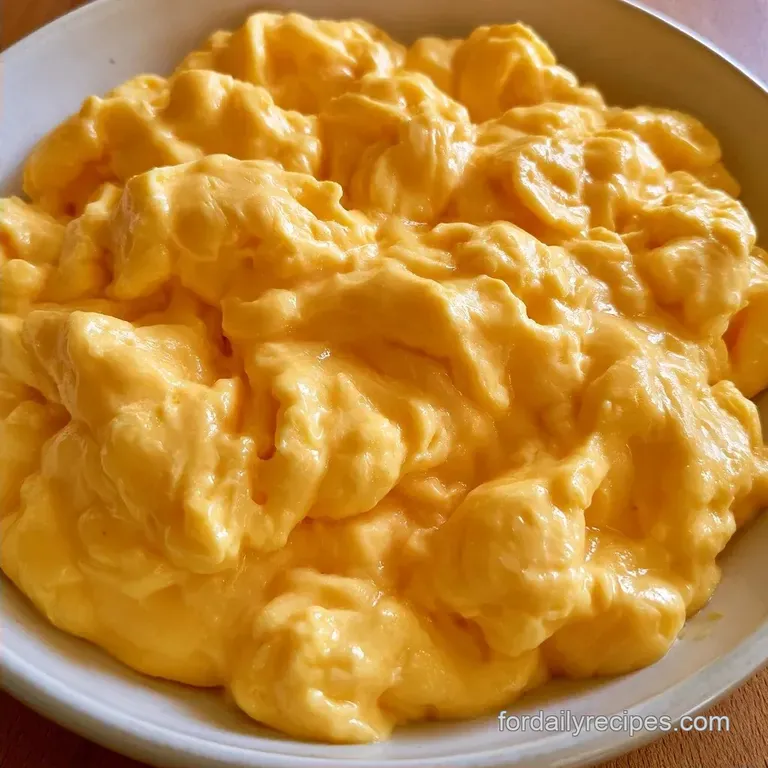
- Duration: 5 min active + 5 min cook
- Key Texture: Soft, custardy folds
- Ideal for: A relaxing Sunday brunch
Making Simple Creamy Scrambled Eggs
The smell of foaming butter always takes me back to Sunday mornings at my grandmother's house. I can still hear the rhythmic scrape of her spatula against the pan, a sound that meant breakfast was almost ready. She never rushed the process, treating the eggs with a patience that felt almost like a ritual.
Those mornings were all about the texture. The eggs didn't just sit on the plate, they practically melted. I spent years trying to replicate that silky feel, only to realize I was using heat that was far too high.
Now, these are my go to Creamy Scrambled Eggs. They aren't the rubbery piles you find at a diner, but something much more indulgent. Trust me, once you slow down the heat, you'll never go back to the fast way.
Quick Recipe Details
Right then, let's look at the basics. This recipe focuses on temperature control and gentle movements to keep things soft.
It's a small batch approach, meaning you get a concentrated amount of richness in every bite. You don't need a professional kitchen, just a bit of patience and a non stick pan.
The Essential Ingredients
The quality of your butter and eggs makes a huge difference here. I prefer farm fresh eggs with deep orange yolks for a richer color.
| Component | Purpose | Substitute Notes |
|---|---|---|
| Large Eggs | Main structure | Duck eggs: Richer and fattier, but denser |
| Unsalted Butter | Fat and flavor | Ghee: Similar flavor, higher smoke point |
| Heavy Cream | Texture boost | Whole milk: Lighter, less stable curds |
| Sea Salt | Flavor enhancer | Kosher salt: Use a slightly larger pinch |
The Base
4 large eggs (200g). Why this? Standard size ensures consistent cook times. 1/4 tsp fine sea salt (1.5g). Why this? Fine grain dissolves faster in cold eggs.
The Creamy Boost
1 tbsp heavy cream (15ml). Why this? High fat prevents the eggs from drying out. 1 tbsp unsalted butter (14g). Why this? Adds a nutty, rich aroma as it foams.
Required Kitchen Tools
You don't need much, but a few specific tools help avoid the dreaded "dry egg" syndrome.
- 8 inch non stick skillet (essential for easy sliding)
- Silicone spatula (gentle on the eggs and the pan)
- Medium mixing bowl
- Whisk or fork
Step by step Cooking
It's time to begin the process. The key is to prepare these Creamy Scrambled Eggs without allowing them to "fry" in the pan.
- In a bowl, whisk the eggs, salt, and heavy cream. Continue whisking until no white streaks remain for a perfectly uniform color.
- Melt the butter in a skillet over medium low heat. Wait until it foams, ensuring it doesn't brown.
- Add the egg mixture. Let it sit for 30 seconds until the edges just begin to set.
- Using a silicone spatula, push the eggs from the sides toward the center. Use slow, sweeping motions to create large, velvety folds.
- Keep the heat low and continue the sweeping and folding for 3-4 minutes.
- Remove the skillet from the heat while the eggs still seem slightly wet. Note: They will finish cooking on the plate.
- Immediately slide the eggs onto a warm plate.
The Logic Behind It
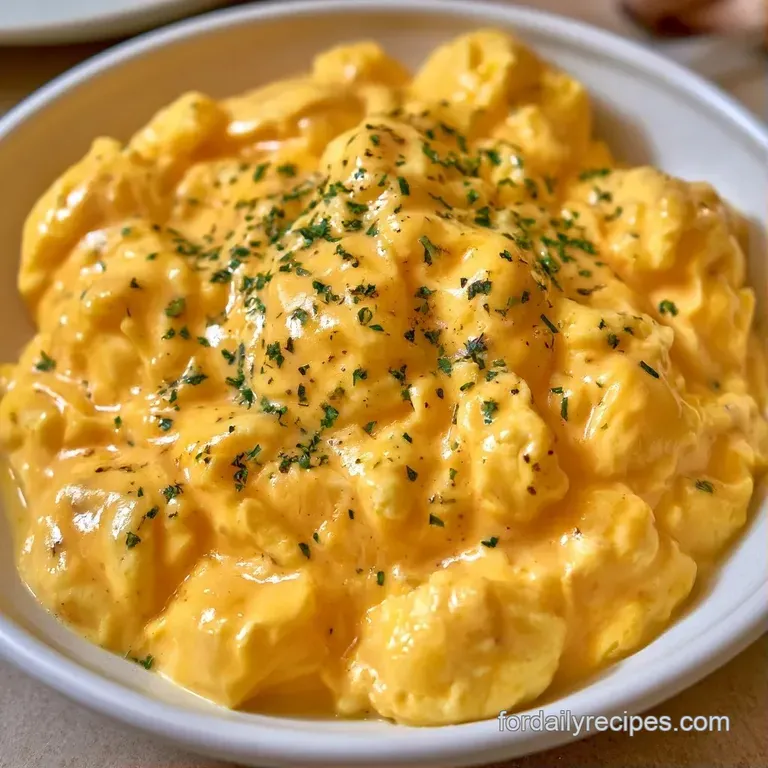
Low heat keeps egg proteins from bonding too tightly, which prevents them from squeezing out moisture. This keeps the curds soft instead of rubbery.
| Aspect | Fast Method | Classic Soft Method |
|---|---|---|
| Heat | High | Medium Low |
| Curd Size | Tiny and dry | Large and custardy |
| Result | Rubbery |
Fixing Texture Issues
Even with a guide, things can go sideways. Here is how to handle it when fixing your Creamy Scrambled Eggs.
Handling Watery Eggs
This happens when eggs are overcooked and the protein network collapses, pushing out water. To fix this, pull the pan off the heat 30 seconds earlier next time.
Avoiding Brown Edges
Brown edges mean your pan is too hot. If you see the butter sizzling aggressively, lift the pan off the burner for a minute to cool down before adding eggs.
Fixing Grainy Texture
A grainy feel usually comes from over whisking in the pan. Stick to the slow "sweep and fold" motion instead of stirring rapidly.
Changing the Batch Size
Adjusting the amount is easy, but you have to watch your pan space.
- Scaling Down (1 serving): Beat 2 eggs, then use half if you need a tiny portion. Reduce cook time by about 20%.
- Scaling Up (4 servings): Work in batches. If you crowd the pan, the eggs will steam instead of folding, and you'll lose that texture.
- Seasoning Tip: If doubling the recipe, only increase the salt to 1.5x. Too much salt can break down the proteins too early.
Pro Adjustments
- Extra richness? → add 1 tbsp mascarpone.
- Sharper flavor? → use salted butter.
- Thicker curds? → cook 30 seconds longer.
Fridge and Freezer Tips
Honestly, storing Creamy Scrambled Eggs is a gamble. They are best eaten the second they hit the plate.
If you must save some, put them in a container for up to 2 days in the fridge. To reheat, use a microwave on 50% power in 20 second bursts. This prevents them from turning into rubber.
For zero waste, don't toss your eggshells. Crush them up and toss them in your garden soil for a calcium boost.
Flavor Swaps and Add ins
You can easily customize this recipe to fit your mood. For a savory twist, try making Creamy Scrambled Eggs with cheese by folding in 2 tbsp of grated Gruyère during the last 30 seconds of cooking.
If you prefer Creamy Scrambled Eggs without milk, swap the cream for a teaspoon of Greek yogurt or just an extra pat of butter.
For those who love egg based dishes, this soft technique also works well if you're prepping the base for a Classic Egg Salad that needs a richer feel.
Best Side Dish Pairings
To balance the richness of Creamy Scrambled Eggs, try serving them with tangy sourdough toast or some lemon dressed arugula.
For a complete brunch spread, these pair wonderfully with Mini Muffins to create a delicious sweet and salty combination.
Serving Suggestions
- The Classic: Sourdough toast and avocado slices.
- The Hearty: Sautéed spinach and crispy hash browns.
- The Simple: Fresh chives and a dash of black pepper.
Egg Truths
Many believe that milk is the secret to fluffier eggs, but that isn't the case. The lightness actually comes from the air you whisk into the eggs, regardless of the liquid.
Others suggest that whisking directly in the pan produces better curds. In reality, stirring too aggressively breaks the eggs into tiny, dry fragments. A slow, gentle fold is the best approach.
Savor your Creamy Scrambled Eggs!
Recipe FAQs
How do restaurants make such creamy scrambled eggs?
Use medium low heat and remove the pan from the stove while the eggs still look slightly wet.
Tip: Use a silicone spatula to create large, velvety folds instead of small curds.
Is milk better than heavy cream for a creamy texture?
Surprisingly, no. Heavy cream provides a richer, more stable emulsion that prevents the eggs from weeping.
Tip: Whisk the cream and eggs until no white streaks remain for a uniform color.
How to make soft scrambled eggs like the restaurants do?
Pour the mixture into foaming butter and let it sit undisturbed for 30 seconds before stirring.
Tip: Push the eggs from the edges toward the center in slow, sweeping arcs.
Do professional chefs add cream to their scrambled eggs?
Many do to ensure a silky mouthfeel and prevent the eggs from drying out.
Tip: If you nailed the stable emulsion in this recipe, the same whisking method works in our homemade mayo.
What is the best way to cook scrambled eggs for maximum creaminess?
Cook over medium low heat to avoid frying the eggs.
Tip: Remove the skillet from the heat before the eggs appear fully done to let residual heat finish them.
Which simple ingredients make for a healthy breakfast egg?
Combine fresh eggs, a touch of heavy cream, and sea salt.
Tip: Use unsalted butter to better control the overall sodium level of the dish.
Is it true that high heat is necessary to cook eggs quickly?
Actually, no. High heat causes the proteins to tighten and squeeze out moisture, resulting in rubbery eggs.
Tip: Wait for the butter to foam but not brown before adding the eggs.
What makes scrambled eggs taste like a professional breakfast?
Whisk the eggs, salt, and cream together before cooking them in melted butter.
Tip: Let the eggs sit for 30 seconds to set the edges before you begin folding.
Creamy Scrambled Eggs