Phyllo Dough Recipe with Spinach and Feta
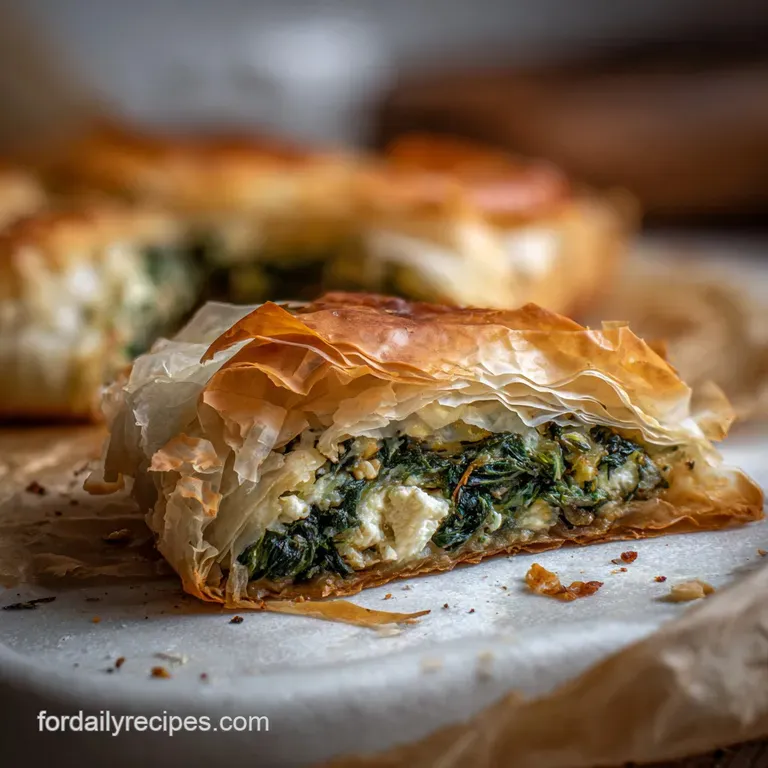
- Time: Active 40 minutes, Passive 45 minutes, Total 1 hour 25 mins
- Flavor/Texture Hook: Shattering, buttery layers with a velvety, zesty green center
- Perfect for: Sunday brunch, heritage dinner parties, or impressive meal prep
- Make This Phyllo Dough Recipe with Spinach and Feta
- Crisp Pastry and Velvety Filling Contrast
- Official Preparation and Cooking Metrics
- Essential Heritage Elements for Filling
- Necessary Tools for Flawless Layers
- Stepwise Guide to Golden Perfection
- Resolving Common Texture and Moisture Issues
- Modern Substitutions for Dietary Restrictions
- Preserving Freshness and Proper Reheating
- Complementary Pairings for Savory Slices
- Debunking Myths About Working Phyllo
- Recipe FAQs
- 📝 Recipe Card
Listen, if you've ever stood in your kitchen, frustrated because your pastry turned into a soggy mess or your greens tasted like nothing, I hear you. We’ve all been there, staring at a tray of limp dough wondering where it went wrong.
This phyllo dough recipe with spinach and feta creates a delicious, savory pie that actually holds its structure and delivers that iconic crunch you crave.
I remember the first time I tried making this; I didn't dry the spinach enough and ended up with something closer to soup than a pie. It was a disaster, but it taught me the most important lesson in Mediterranean baking: moisture is the enemy of the shatter.
Since then, I’ve refined the process to ensure every single bite is a symphony of textures.
We're going to treat these delicate sheets of dough with the respect they deserve, layering them with liquid gold (extra virgin olive oil) and a filling that’s been passed down through generations.
You’re not just making dinner; you’re crafting a piece of heritage that smells like dill, lemon, and toasted pastry. Let's get into the "why" and the "how" so you can nail this on your first try.
Make This Phyllo Dough Recipe with Spinach and Feta
The secret to a truly magnificent spinach and feta pie lies in the architecture of the layers. When you brush that olive oil between the paper thin sheets of phyllo, you aren't just adding fat; you're creating thousands of tiny air pockets. Much like the technique used in my 3 Ingredient Biscuit recipe, the goal is separation and lift through moisture control.
The Science of Why it WorksSteam Leavening: High heat transforms the trace moisture between oiled phyllo sheets into steam, physically forcing the layers apart to create a "shatter" texture.
Protein Denaturation: The eggs in the filling coagulate during baking, binding the loose spinach and crumbled feta into a stable, sliceable custard like matrix.
When you work with a full kilogram of spinach, the volume can be intimidating, but the science of wilting is your friend. As the cell walls of the spinach break down under heat, they release a massive amount of water.
If you don't extract that water before it hits the pastry, the steam will move downward instead of upward, ruining the bottom crust. That’s why we focus so heavily on the "dry squeeze" method it’s the difference between a soggy bottom and a golden, crispy base.
The acidity from the lemon zest and the sharp feta also plays a functional role. It cuts through the richness of the olive oil, ensuring the palate doesn't get overwhelmed by the fat content. This balance is what makes you reach for a second (or third) slice.
It’s a delicate dance of chemistry and heritage that has worked for centuries.
Crisp Pastry and Velvety Filling Contrast
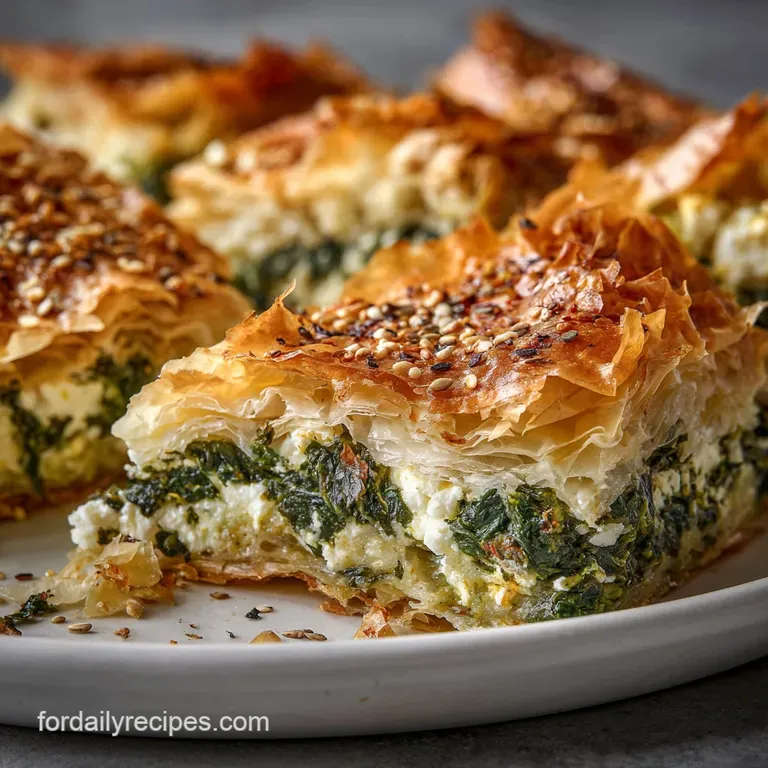
When we talk about this dish, we have to talk about the sensory experience. The contrast is everything. You want a top layer that sounds like dry leaves underfoot when you cut into it, followed by a center that feels like velvet against your tongue.
- Top Note
- Zesty lemon and aromatic fresh dill.
- Heart
- Briny, tangy Greek feta and earthy, mineral rich spinach.
- Base
- Rich, fruity extra virgin olive oil and toasted, nutty pastry.
| Component | Stovetop Sauté | Oven Baking |
|---|---|---|
| Spinach Texture | Wilts and releases moisture | Concentrates flavors and sets |
| Dough Quality | Not applicable (filling only) | Develops hundreds of flaky layers |
| Aroma Profile | Sharp herb and onion notes | Deep, toasted grain and savory fat |
The olive oil we use here is a modern twist on the heavy butter versions often found in Western adaptations. While butter is lovely, the high-quality extra virgin olive oil provides a lighter, more floral finish that complements the greens perfectly.
It’s how it’s been done in village kitchens for generations, and honestly, don't even bother with the "low-fat" substitutes here you need the fat for the crunch.
Chef’s Note: For the absolute best results, let your feta sit at room temperature for 20 minutes before crumbling. It becomes slightly softer and integrates better with the eggs, creating those velvety pockets of cheese that don't just disappear into the spinach.
Official Preparation and Cooking Metrics
Precision matters when you're dealing with delicate pastry. We aren't just "eyeballing" the heat here. You need to hit specific numbers to ensure the interior is cooked through before the exterior turns too dark.
- Prep Time:40 minutes (mostly spinach prep)
- Cook Time:45 minutes
- Total Time: 1 hour 25 mins
- Oven Temp:375°F (190°C)
- Spinach Weight: 1 kg (approx. 2.2 lbs)
- Phyllo Weight: 454g (1 lb)
It is crucial to follow the 1 kg fresh spinach requirement. It seems like a mountain of greens, but once wilted and squeezed, it reduces by nearly 75%. If you use less, your pie will feel hollow and the pastry to filling ratio will be off.
We want a thick, substantial center that can hold its own against the multiple layers of dough.
One of the biggest mistakes I once made was rushing the cooling process. If you cut into this the second it comes out of the oven, the steam will rush out and soften the remaining crust. Give it a solid 15 minutes.
This allows the internal proteins to fully set and the steam to dissipate slowly, preserving that "shatter" factor we worked so hard to achieve.
Essential Heritage Elements for Filling
This recipe relies on the quality of its components. Since there are so few ingredients, each one has to carry its weight. We use 400g of Greek feta look for the kind sold in brine if possible. It’s saltier, tangier, and holds its shape better than the pre crumbled stuff in plastic tubs.
| Ingredient | Science Role | Pro Secret |
|---|---|---|
| Fresh Spinach (1 kg) | Provides bulk and structure | Sauté with onion to evaporate 90% of water |
| Greek Feta (400g) | Adds fat and ionic salt | Crumble by hand for varied texture sizes |
| Large Eggs (3 units) | Acts as a structural emulsifier | Beat until frothy to incorporate more air |
| Extra Virgin Olive Oil | Creates lipid barriers for flakiness | Use a pastry brush to ensure edge to edge coverage |
The Green Base
- 1 kg fresh baby spinach: The star of the show. We remove the stems to ensure a silky texture.
- 1 large yellow onion: Finely diced to provide a sweet, savory foundation.
- 6 scallions: Thinly sliced, using both the white and green parts for a double hit of onion flavor.
The Aromatic Profile
- 1 cup fresh parsley: Chopped fine. It adds a bright, grassy note.
- 1/2 cup fresh dill: This is non negotiable for a spanakopita recipe phyllo. It’s the soul of the dish.
- 1 unit lemon (zested): The zest provides the scent of the Mediterranean without adding liquid acidity that might break the eggs.
The Binding and Seasoning
- 3 large eggs: Lightly beaten to hold everything together.
- 1/2 tsp ground nutmeg: A tiny amount that makes the spinach taste "greener" and more complex.
- 1 tsp freshly cracked black pepper: For a subtle, warming heat.
- 0.5 tsp salt: Go light here, as the feta is already quite salty.
For the pastry shell, we are using a standard 454g package of phyllo dough sheets. These need to be completely thawed leave them in the fridge overnight. Trying to work with frozen phyllo is a recipe for heartbreak; it will crack and shatter before it even hits the pan.
Necessary Tools for Flawless Layers
You don't need a professional kitchen, but a few specific tools will make your life much easier. The most important is a high-quality pastry brush. I prefer natural bristles for phyllo because they hold more oil and are gentler on the fragile sheets than silicone ones.
- 9x13 inch baking dish: Ceramic or glass works best for even heat distribution.
- Large skillet or Dutch oven: For wilting that massive 1 kg of spinach.
- Clean kitchen towel: To keep your phyllo covered while you work (prevents drying).
- Sharp chef's knife: For clean cuts through the pastry layers before baking.
- Fine mesh strainer: Essential for squeezing every last drop of moisture out of the greens.
If you don't have a large enough skillet, you can wilt the spinach in batches. Just don't skip the step of draining it. I actually recommend using your hands to squeeze the spinach once it's cool enough to touch. You’ll be shocked at how much green water comes out even after you think it's dry.
Stepwise Guide to Golden Perfection
1. Prepare the Green Base
Sauté the diced yellow onion in a tablespoon of olive oil over medium heat until translucent. Add the 1 kg of spinach in handfuls, stirring until completely wilted. This usually takes about 5 to 7 minutes. Transfer to a colander and let it cool.
2. The "Dry" Secret
Once the spinach is cool, take handfuls and squeeze with all your might. You want a dry, dense ball of greens. This is the most critical step for this recipe with spinach and feta. Place the squeezed spinach in a large mixing bowl.
3. Mix the Filling
To the spinach, add the sliced scallions, chopped parsley, and dill. Stir in the 400g of crumbled feta, the 3 beaten eggs, nutmeg, salt, pepper, and lemon zest. Mix until the herbs and cheese are evenly distributed throughout the spinach.
4. Layer the Phyllo
Brush your 9x13 pan with olive oil. Lay down one sheet of phyllo, letting the edges hang over the sides. Brush lightly with oil. Repeat this for 8 sheets, rotating the sheets slightly so the corners cover all sides of the pan.
5. Assemble and Finish
Spread the spinach mixture evenly over the phyllo base. Fold the overhanging edges of the bottom sheets inward over the filling. Layer the remaining phyllo sheets on top, brushing each one with oil as you go.
6. The Golden Bake
Using a very sharp knife, score the top layers of the pastry into 12 squares. Do not cut all the way to the bottom yet. This prevents the top from shattering when you serve it.
Bake at 375°F for 45 minutes until the top is deeply bronzed and crackling.
7. The Rest
Remove from the oven and let it sit on a wire rack for 15 minutes. This is the hardest part, but trust me, it’s worth the wait. The layers will finish setting, and the flavors will meld.
Resolving Common Texture and Moisture Issues
Working with paper thin dough can feel like a high stakes game of Operation, but most issues have simple fixes. If your sheets are tearing, don't panic. Phyllo is very forgiving once it's layered; you can just patch the tears with a bit of oil and another sheet. No one will ever know once it's baked.
Why Your Pastry Might Struggle
The most common heartbreak is a soggy bottom. This happens when the spinach isn't squeezed dry enough or if the oven temperature is too low. If you notice the bottom is looking pale halfway through, move the tray to the lowest rack to give the base a direct hit of heat.
| Problem | Root Cause | Solution |
|---|---|---|
| Soggy Bottom | Excess moisture in spinach | Squeeze greens in a kitchen towel until bone dry |
| Tearing Phyllo | Dough dried out while working | Keep sheets covered with a damp (not wet) towel |
| Burnt Top | Oven rack too high | Tent loosely with foil for the last 15 minutes |
Another issue is the filling leaking out. This usually happens if you cut all the way through the bottom layers before baking. By only scoring the top, you keep the "pool" of filling contained within the pastry walls.
If you want a different structural challenge, you could try making spinach feta triangles phyllo style, which are great for appetizers, but the large pie is much easier for a family meal.
For those used to different doughs, keep in mind that this isn't like a Dutch Oven Bread recipe where gluten development is key. Here, we want zero gluten development in the pastry and maximum fat separation. If you find your dough is too stretchy, it might be too warm; pop it back in the fridge for 10 minutes to firm up the oils.
Modern Substitutions for Dietary Restrictions
While I’m a purist at heart, I know life happens. Maybe you can't find fresh dill, or you're cooking for someone with a dairy allergy. You can still enjoy this phyllo dough recipe with spinach and feta with a few tweaks.
Decision Shortcut: If you want maximum crunch, stick to extra virgin olive oil. If you want extra richness, use a 50/50 mix of melted butter and olive oil. If you want bite sized snacks, fold the dough into triangles instead of a tray bake.
| Original Ingredient | Substitute | Why It Works |
|---|---|---|
| Fresh Spinach | Frozen Spinach (thawed/squeezed) | Use 24 oz frozen for 1 kg fresh. Note: Texture is slightly softer |
| Greek Feta | Firm Tofu + Lemon + Salt | Provides similar crumbly texture for vegan options |
| Extra Virgin Olive Oil | Melted Ghee | High smoke point and adds a nutty, butter like aroma |
If you are looking for a completely different profile, you might consider a gluten-free Pizza Dough recipe for a flatbread version, but for that authentic "spanakopita" feel, the phyllo is essential.
For vegans, replace the eggs with a "flax egg" (1 tbsp flax meal + 3 tbsp water per egg) and use the tofu substitute mentioned above. It won't be exactly the same, but the crunch of the oil brushed phyllo will still carry the day.
Preserving Freshness and Proper Reheating
Leftover spinach and feta pie is a gift. It makes the best cold breakfast the next morning, but if you want that crunch back, stay away from the microwave. A microwave will turn those beautiful layers into a rubbery disappointment in seconds.
- Fridge: Keep in an airtight container for up to 4 days.
- Freezer: You can freeze the unbaked pie for up to 3 months. Bake directly from frozen, adding 15-20 minutes to the total time.
- Reheating: Place slices on a baking sheet in a 350°F oven for 10-12 minutes. This restores the "shatter" to the pastry.
Zero Waste Tips: Don't throw away those spinach stems! While we remove them for the silky filling, they are packed with nutrients. Finely chop them and sauté them with garlic for an easy side dish, or toss them into a morning smoothie. If you have leftover phyllo sheets, brush them with butter and cinnamon sugar, then bake for a quick "cheat's" dessert similar to the filling of a Cinnamon Rolls recipe.
Complementary Pairings for Savory Slices
This pie is a powerhouse on its own, but it loves company. Because it's quite rich and salty, it pairs beautifully with bright, acidic sides. A simple tomato and cucumber salad with a red wine vinegar dressing is the classic choice.
- 1. Roasted Lamb
- The earthiness of the spinach loves the gaminess of the meat.
- 2. Greek Yogurt Dip
- A bowl of thick tzatziki adds a cool, creamy contrast.
- 3. Roasted Lemon Potatoes
- Keeps the Mediterranean theme going strong.
For a sweet finish that isn't too heavy, I often serve this with something fun like an Oreo Balls Recipe. The dark chocolate and cream cheese filling provides a deep, sweet contrast to the briny feta. It might sound unconventional, but in our house, we love that sweet meets savory transition at the end of a long Sunday lunch.
Debunking Myths About Working Phyllo
There's a lot of fear surrounding this dough, but most of it is heritage style folklore that doesn't hold up in a modern kitchen. Let's clear the air so you can bake with confidence.
Myth: You must brush every square inch of the phyllo with fat. Truth: You don't need to soak the dough. A light, patchy brushing is actually better. It allows some areas to stay lighter, which creates a more varied, "shattering" texture.
If you add too much oil, the dough becomes heavy and greasy instead of flaky.
Myth: Fresh spinach is always superior to frozen. Truth: While I love the 1 kg of fresh baby spinach for its flavor, high-quality frozen spinach is a perfectly viable shortcut. The key isn't the state it started in; it's how much water you remove.
Squeezing is the only variable that truly matters for the success of this recipe with spinach and feta.
Myth: Searing the onions too long ruins the filling. Truth: Caramelizing the onions slightly actually adds a necessary sweetness that balances the mineral hit of the spinach. Don't be afraid of a little golden color on those onions before you add the greens.
It adds layers of flavor that you can't get from raw or lightly translucent onions. Trust your nose when it smells sweet, it's ready.
Recipe FAQs
How many sheets of phyllo dough should I use?
Use the whole package for a standard pie. For a 9x13 inch pan, typically a 454g (1 lb) package of phyllo dough is used, with about half the sheets for the bottom crust and half for the top.
Can you make spinach and feta pie with puff pastry?
No, puff pastry yields a different texture. While puff pastry is also flaky, it's much thicker and richer than the delicate, shattering layers of phyllo. The signature crispness of this dish comes specifically from phyllo dough.
What is a Greek dish with phyllo dough and spinach?
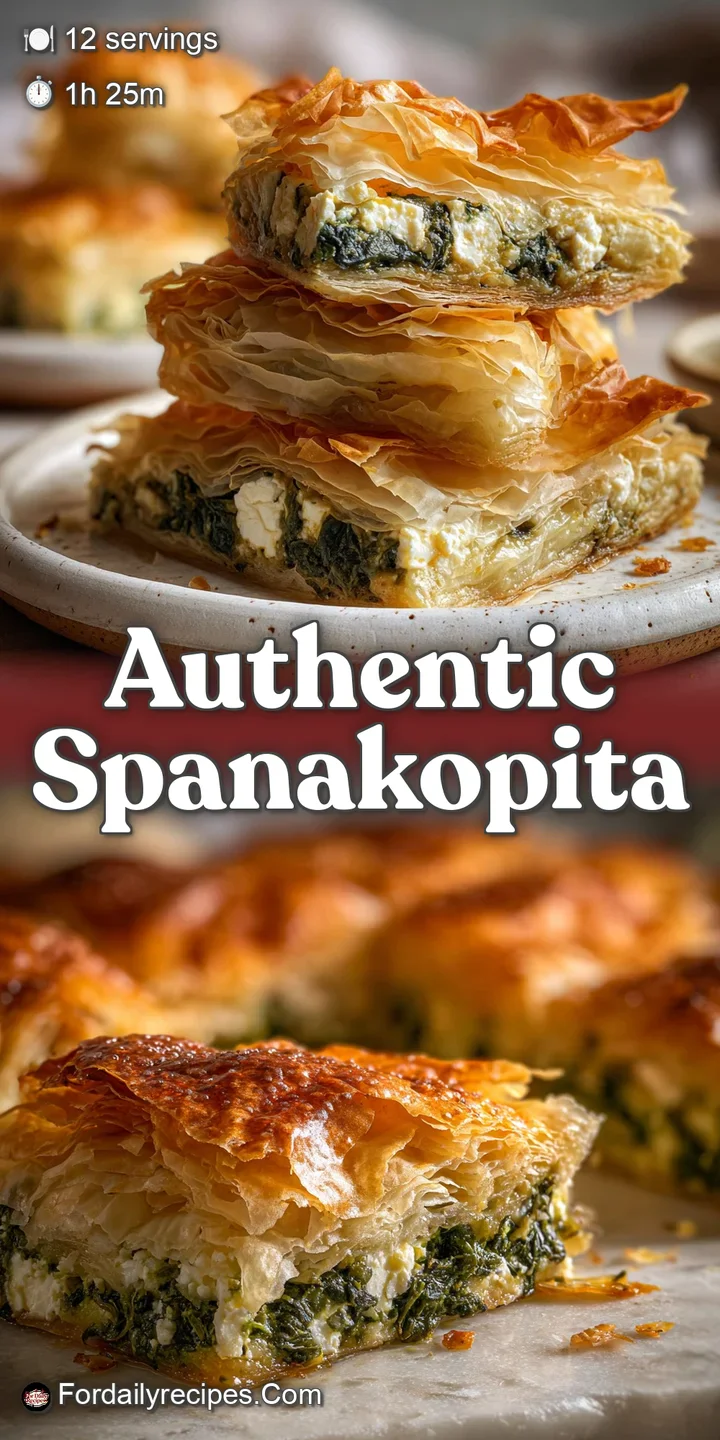
Spanakopita is the classic Greek dish. This savory pie, featuring spinach and feta cheese encased in crispy phyllo dough, is a beloved staple throughout Greece and the Mediterranean.
What can I make with spinach and feta easily?
Spinach and feta stuffed chicken breasts are an easy option. Butterfly chicken breasts, stuff them with a mixture of sautéed spinach, crumbled feta, garlic, and herbs, then bake until cooked through. For a similar flavor profile in a different format, consider our Ground Lamb Recipes: Bright Greek Keftedes with Feta Lemon Orzo.
How do I prevent my phyllo dough from drying out while working?
Keep the unused sheets covered. Once you open the phyllo package, immediately cover the stack of unused sheets with a clean, slightly damp (not wet) kitchen towel. Work with one sheet at a time, returning the towel to cover the rest.
What is the best way to squeeze moisture out of spinach for this recipe?
Use your hands after cooling. After wilting and cooling the spinach, take it in handfuls and squeeze as hard as you can to remove excess water. For ultimate dryness, you can also wrap it in a clean kitchen towel or cheesecloth and wring it out.
Can I use frozen spinach instead of fresh?
Yes, with diligent water removal. If you use frozen spinach, thaw it completely and squeeze out all excess moisture just as you would with fresh. You'll likely need about 24 oz of frozen spinach to replace the 1 kg of fresh.
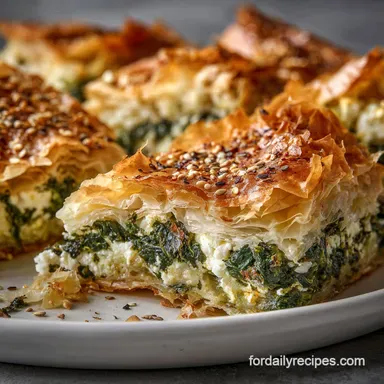
Spinach Feta Phyllo Recipe
Ingredients:
Instructions:
Nutrition Facts:
| Calories | 360 kcal |
|---|---|
| Protein | 11.8 g |
| Fat | 23.4 g |
| Carbs | 27.0 g |
| Fiber | 3.3 g |
| Sugar | 2.1 g |
| Sodium | 483 mg |
