How Long to Cook Lasagna: Perfect Results
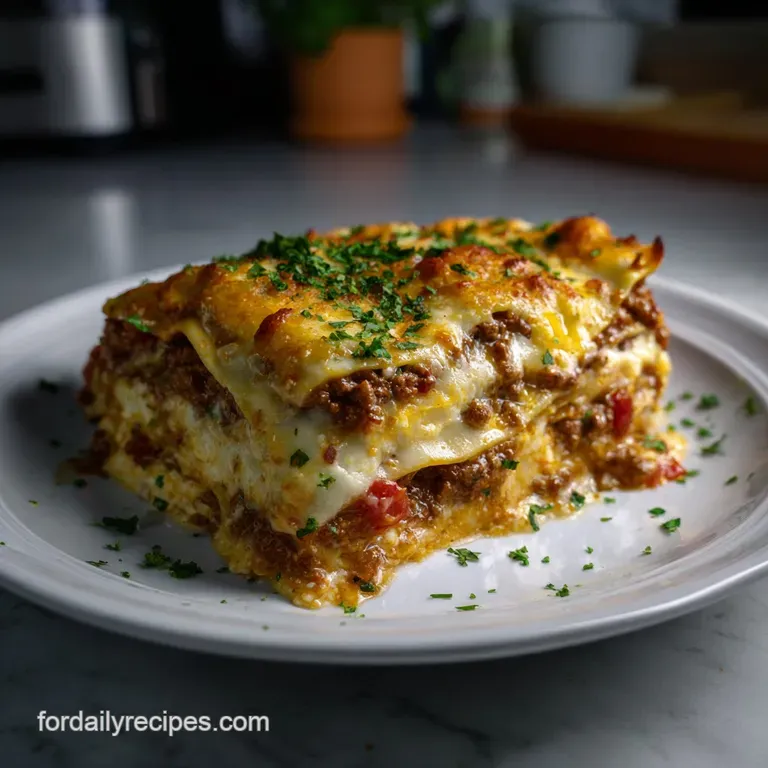
- Effort/Time: High effort; 1 hour 45 mins total time.
- Flavor Hook: Savory Maillard-browned beef meets creamy, herb-flecked ricotta.
- Perfect for: Sunday family dinners and impressive make-ahead meal prep.
- Mastering the Ultimate Meaty Lasagna
- Why This Works: The Science of the Perfect Slice
- Essential Ingredients and Smart Substitutions
- Understanding How Long to Cook Lasagna for Maximum Flavor
- How to Make Meaty Lasagna Step-by-Step
- Determining Exactly How Long to Cook Lasagna in the Oven
- How Long to Cook Lasagna from Frozen
- Expert Tips and Common Mistakes to Avoid
- Storage and Freezing Guidelines
- Serving Suggestions: Completing the Meal
- Recipe FAQs
- 📝 Recipe Card
Mastering the Ultimate Meaty Lasagna
Nothing ruins a Sunday dinner faster than a lasagna that collapses into a puddle of red water the moment your knife hits the pan. We’ve all been there starving, smelling those herbs for an hour, only to serve a plate of noodles swimming in loose grease.
The struggle is usually a combination of excess moisture in the ricotta and a sauce that hasn't been reduced enough to hold its own weight.
I once spent four hours crafting what I thought was the perfect tray, only to have it slide apart like a tectonic plate shift. It was a watery, bland mess because I didn't understand the physics of moisture migration.
I realized that knowing how long to cook lasagna isn't just about the timer; it's about the internal temperature and the evaporation rate.
Today, we're fixing that. We’re using a dual meat strategy and a stabilized cheese binder to ensure every slice stands tall. The secret lies in the tomato paste concentration and the resting period. You’ll hear the cheese sizzle and see those edges shatter with crispiness once we nail the timing.
Why This Works: The Science of the Perfect Slice
- Maillard Reaction: Browning the 1 lb ground beef and 1 lb Italian sausage in a Lodge Cast Iron Skillet creates melanoidins, complex flavor compounds that provide the deep, "meaty" base.
- Protein Denaturation: Adding one large beaten egg to the Galbani Whole Milk Ricotta creates a protein web that solidifies upon heating, preventing the cheese from leaking moisture into the pasta layers.
- Pectin Gelation: Simmering the Hunt’s Tomato Paste and crushed tomatoes reduces the water activity, allowing natural pectins to thicken the sauce into a stable "glue" that binds the Barilla Lasagna Noodles.
- Starch Retrogradation: Letting the lasagna rest for 15 minutes allows the pasta starches to re-align and firm up, which is critical for achieving a clean, vertical slice.
Essential Ingredients and Smart Substitutions
Finding the right balance of fats and acids is the key to understanding how long to cook lasagna without it becoming greasy.
| Original Ingredient | Substitute | Why It Works |
|---|---|---|
| 1 lb Italian Sausage | Ground Pork + Fennel Seeds | Matches the fat profile and provides the signature licorice like aroma. |
| 15 oz Whole Milk Ricotta | Small Curd Cottage Cheese | Similar moisture levels; creates a slightly chunkier, tangy texture. |
| 1 lb Shredded Mozzarella | Provolone (Mild) | Excellent meltability; adds a sharper, creamy finish to the top crust. |
| 1/2 cup Beef Broth | Red Wine (Dry) | Adds acidity and tannins that cut through the richness of the 85/15 beef. |
Selecting the Best Meats for Depth of Flavor
We use a 1:1 ratio of 1 lb ground beef (85/15 lean ratio) and 1 lb Italian sausage to hit the "sweet spot" of fat content. The 85/15 beef provides enough fat for flavor without turning the pan into a deep fryer. The sausage, with its casings removed, brings built-in seasoning like fennel and red pepper flakes.
If you're wondering how long to cook lasagna to render this fat properly, it starts with the 1 hour 15 mins oven time, which allows the meat fats to meld with the tomato acidity.
The Three Cheese Blend: Ricotta, Mozzarella, and Parmesan
Texture comes from the Galbani Whole Milk Ricotta. Never use fat-free; it lacks the emulsifiers needed to stay creamy. We mix this with 1/2 cup of Sargento Grated Parmesan for saltiness and 2 tbsp fresh chopped parsley for brightness. This mixture is held together by one large beaten egg, which acts as the structural engineer of your layers. If you're interested in the chemistry of dairy, you might love learning How To Make Cheese: Pure Curds in Under An Hour for your future pasta dishes.
Pasta Choices: Traditional vs. No-Boil Sheets
While this recipe calls for 12 to 15 Barilla Lasagna Noodles, you have a choice. Traditional noodles require boiling to achieve "al dente" texture. However, the 28 oz of Hunt’s Crushed Tomatoes and 15 oz tomato sauce provide enough hydration to use "oven ready" sheets if you prefer.
When using oven ready, you must ensure the sauce touches every millimeter of the pasta to prevent brittle, crunchy spots.
Understanding How Long to Cook Lasagna for Maximum Flavor
Timing is the most misunderstood variable in Italian American cooking. When we ask how long to cook lasagna, we aren't just looking for melted cheese; we are looking for the total integration of flavors.
The sauce needs to permeate the pasta, and the cheese needs to undergo a specific level of browning.
Balancing Rich Bolognese with Creamy Cheese
The 1.5 tsp dried basil and 1 tsp dried oregano need heat to release their volatile oils. This happens during the simmer and the subsequent bake. If you cook it too short, the herbs taste "dusty." If you cook it too long, the Galbani Ricotta will begin to grain out and lose its velvety mouthfeel.
How to Make Meaty Lasagna step-by-step
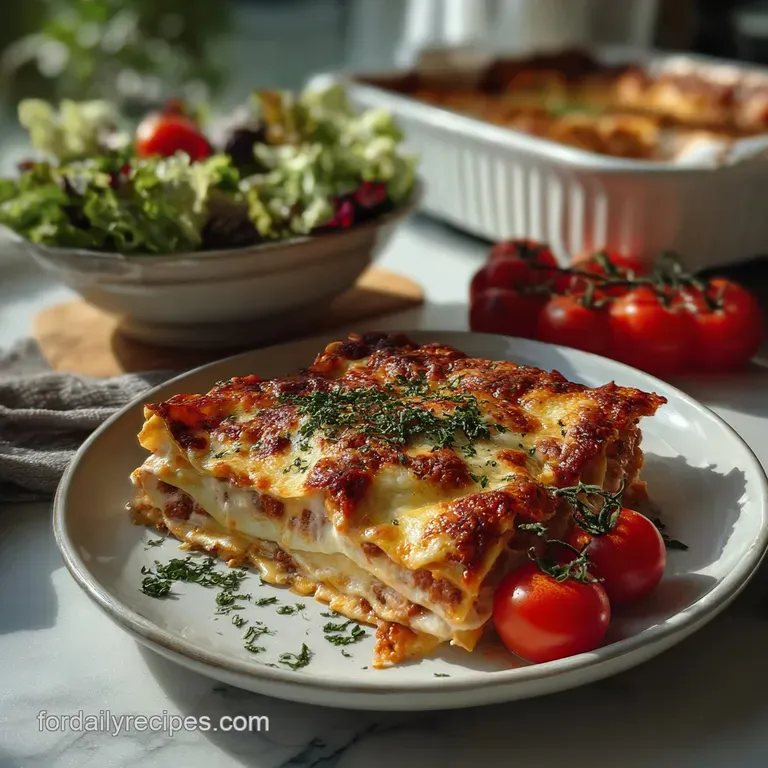
Preparing the Slow Simmered Bolognese Sauce
- Brown 1 lb ground beef and 1 lb Italian sausage in a Lodge Cast Iron Skillet. Note: High heat triggers the Maillard reaction, developing savory brown crusts on the meat proteins.
- Add 1 large white onion and 3 cloves garlic to the rendered fat. Note: Allicin in garlic and sugars in onion soften and sweeten, creating a balanced aromatic base.
- Stir in 28 oz crushed tomatoes, 12 oz tomato paste, and 15 oz tomato sauce. Note: The high concentration of tomato paste acts as a thickener through pectin concentration.
- Pour in 1/2 cup beef broth and 2 tbsp white sugar. Note: Sugar balances the high acidity (low pH) of the processed tomatoes, rounding out the flavor profile.
- Simmer for 15 minutes while stirring occasionally. Note: This brief reduction ensures the sauce is viscous enough to support the weight of the noodles.
Assembling Your Layers for Structural Integrity
- Spread 1.5 cups of meat sauce in the bottom of a 9x13 Pyrex Baking Dish. Note: This base layer prevents the bottom noodles from sticking and burning.
- Arrange 6 lasagna noodles lengthwise over the sauce. Note: Overlapping slightly creates a continuous starch barrier for better slicing.
- Spread half of the ricotta mixture (ricotta, egg, 1/2 tsp salt, parsley, and 1/2 cup Parmesan). Note: The egg denatures during baking, setting the cheese into a firm, non-leaking layer.
- Top with 1/3 of the 1 lb shredded mozzarella. Note: Mozzarella provides the "stretch" and fat content needed for a velvety mouthfeel.
- Repeat the layers, finishing with a thick coating of mozzarella and the remaining Parmesan. Note: A heavy top layer of cheese protects the pasta from drying out in the dry oven air.
Determining Exactly How Long to Cook Lasagna in the Oven
The standard rule for how long to cook lasagna in a 350°F oven is 1 hour 15 mins. This time is divided into two phases: covered and uncovered.
Cooking Covered vs. Uncovered for the Best Crust
For the first 45 minutes, cover the Pyrex dish tightly with aluminum foil. This creates a steam chamber that ensures the 12 to 15 lasagna noodles cook through without the top cheese burning. For the final 30 minutes, remove the foil.
This allows the moisture to evaporate and the Sargento Mozzarella to undergo caramelization, creating that "shatter"-crisp edge we all crave. This specific split is the secret to how long to cook lasagna for the perfect texture.
How Long to Cook Lasagna from Frozen
If you are cooking a pre-assembled frozen lasagna, you must account for the ice crystals. How long to cook lasagna from a frozen state is usually 1 hour 30 mins to 2 hours at 375°F.
You must keep it covered for the first 1 hour 15 mins to ensure the center reaches an internal temperature of 165°F (74°C) using a ThermoPro Digital Meat Thermometer.
Expert Tips and Common Mistakes to Avoid
| Problem | Why It Happens | The Fix | Pro Protocol |
|---|---|---|---|
| Soupy Layers | Sauce too watery or ricotta not drained. | Add 12 oz tomato paste; use an egg binder. | Simmer sauce until a spoon leaves a trail on the pan bottom. |
| Hard Noodle Edges | Noodles not fully covered in sauce. | Ensure sauce reaches the very edge of the dish. | Use a spatula to tuck sauce over the corners of every noodle sheet. |
| Cheese Sticking to Foil | Foil was too tight against the cheese. | Tent the foil or spray it with Pam Non-Stick Spray. | Insert toothpicks into the center to keep the foil "lofted" above the cheese. |
Common Myths
Myth: You must boil the noodles until they are soft before layering. Truth: This often leads to mushy pasta. Boiling for only 5 minutes or even using dry noodles with a slightly wetter sauce results in better "bite" (al dente) after the long oven bake.
Myth: Lasagna is better eaten immediately out of the oven. Truth: This is the #1 cause of "slumping." The structure requires a 15 minute rest to allow the cheese to firm and the sauce to be re-absorbed by the pasta.
Storage and Freezing Guidelines
Lasagna is one of the few dishes that actually tastes better on day two. The flavors have more time to marry, and the structure becomes incredibly dense and satisfying.
- Fridge: Store in an airtight container for up to 4 days.
- Freeze: Slice into individual portions, wrap in plastic wrap, then foil. Lasts 3 months.
- Reheat: The best way to cook lasagna leftovers is in the oven at 350°F for 20 minutes, covered. This prevents the microwave "rubbery cheese" effect.
Serving Suggestions: Completing the Meal
Since this dish is incredibly rich, pair it with a crisp green salad tossed in a vinaigrette to provide an acid hit. If you have leftover garlic and herbs, you might consider making a batch of Snickerdoodle Cookies: Classic Chewy Recipe with Perfect Tang for a sweet contrast after the meal.
For the beverage, a high tannin red wine like a Chianti or Sangiovese is traditional. The tannins act as a palate cleanser against the 33 g of fat per serving, making every bite feel as fresh as the first.
Why You Must Let Your Lasagna Rest Before Slicing
I cannot stress this enough: Wait. When you pull the dish out after the 1 hour 15 mins bake, the internal fluids are boiling. If you cut it now, the sauce will run to the gaps, leaving the noodles dry and the bottom soggy.
During the 15 minute rest, the Barilla noodles act like sponges, pulling in the seasoned juices from the Hunt’s Crushed Tomatoes, resulting in a cohesive, professional looking slice.
Knowing exactly how long to cook lasagna is the difference between a messy casserole and a culinary triumph. Follow these timings, respect the science of the egg binder, and always give your masterpiece the rest it deserves.
Your kitchen will smell like a high end trattoria, and your friends will definitely be texting you for the secret. Happy baking!
Recipe FAQs
What is the standard baked time for lasagna?
45 to 55 minutes covered, then 10 minutes uncovered. Baking covered traps steam, ensuring noodles fully hydrate without drying the sauce. Uncovering browns the cheese topping effectively.
Must I rest the lasagna after removing it from the oven?
Yes, 15 minutes of resting is critical. Resting allows residual heat to redistribute and the internal structure to solidify. This prevents the inevitable collapse when slicing; contrast this structural need with the immediate serving required for recipes like the Chocolate Chip Cookies: The Ultimate Chewy Bakery Style Recipe.
Can I use no-boil noodles instead of traditional noodles?
Yes, but increase liquid slightly. No-boil noodles require more ambient moisture to gelatinize their starch structure during the bake. If you plan on making a large batch, consider using the technique outlined in our Lactation Cookies: Chewy Oatmeal Recipe for Maximum Milk Supply to manage hydration across units.
Is the initial sauce simmering time necessary for structural integrity?
Myth: Simmering for an hour is just flavor building. Reality: Pre-simmering evaporates excess water content, creating the high viscosity matrix required to hold the layers steady during baking and slicing.
Should the internal temperature reach 165°F?
Yes, 165°F ensures food safety. Since lasagna is mostly meat and dairy, reaching this temperature guarantees pathogen destruction throughout the dense layers. Safety precedes texture in casserole preparation.
What happens if I skip browning the beef before saucing?
Browned beef yields superior texture and flavor depth. Browning initiates the Maillard reaction, creating complex savory compounds absent in boiled or steamed meat.
Skipping this yields pale, weaker flavor, similar to the disappointing result of underbaking [Sugar Cookie Recipe: The Best No-Spread Cutout].
Why did my finished lasagna weep liquid after cutting?
Insufficient cheese binding caused the weep. Adding cold ricotta directly to hot sauce causes instant denaturation of milk proteins, preventing them from forming the necessary gel network that traps moisture.
- Ensure ricotta is room temperature
- Mix eggs thoroughly into cheese base
- Bake until edges bubble vigorously
Sliceable Lasagna Cooking Guide
Ingredients:
Instructions:
Nutrition Facts:
| Calories | 668 kcal |
|---|---|
| Protein | 37 g |
| Fat | 33 g |
| Carbs | 41 g |
| Fiber | 4 g |
| Sugar | 10 g |
| Sodium | 1190 mg |
