Giblet Gravy Recipe
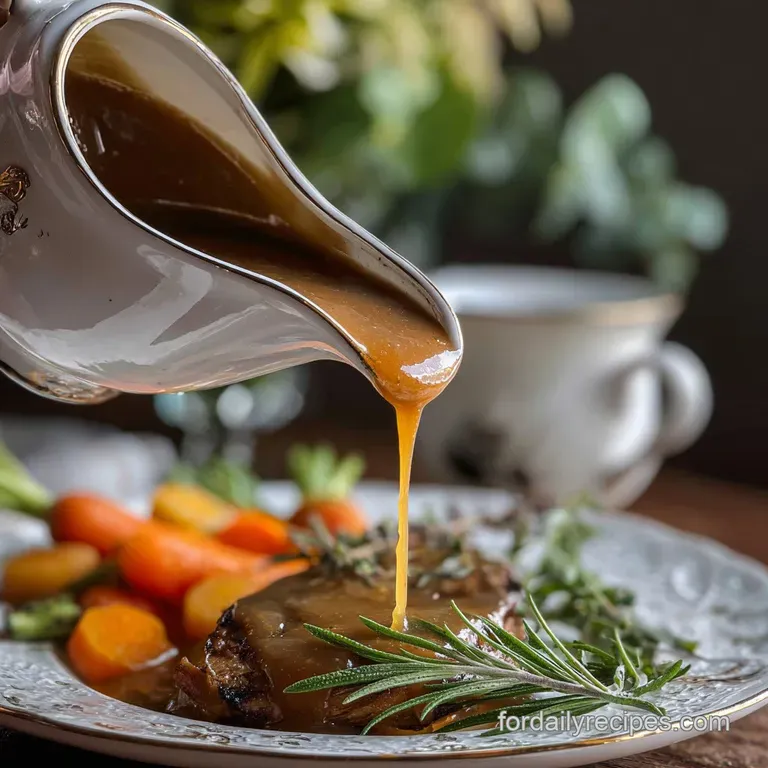
- Time: Active 15 minutes, Passive 1 hour 15 mins, Total 1 hour 30 mins
- Flavor/Texture Hook: Silky, herb infused, and deeply savory
- Perfect for: Thanksgiving dinner, Sunday roasts, and heritage holiday gatherings
- Authentic Heritage Giblet Gravy Recipe
- The Science of Flavor Layers
- Choosing Ingredients and Proper Substitutes
- Crafting the Perfect Velvety Base
- Troubleshooting Texture and Flavor Issues
- Adjusting Yield for Your Table
- Debunking Old School Kitchen Tales
- Storage and Reducing Food Waste
- Perfect Pairings for Your Feast
- Recipe FAQs
- 📝 Recipe Card
Can you hear that? The turkey is finally out of the oven, resting under its foil tent, and the kitchen is filled with that heavy, herb scented steam we wait for all year. But honestly, the real treasure is still sitting in that roasting pan.
I remember watching my grandmother scrape those dark, caramelized bits from the bottom of her heavy pan, whispering that the "good stuff" was hidden in the scrapings. She never rushed it, and neither should we.
This isn't just a sauce; it’s the liquid gold that ties the whole plate together. If you’ve ever stared at a set of giblets wondering what on earth to do with that little bag of "parts," you’re in the right place.
We’re going to treat those trimmings with the respect they deserve to create an old fashioned giblet gravy recipe that puts the canned stuff to absolute shame. It’s about building layers, from the first sizzle of the neck in the pot to the final whisk of the roux.
We've all had those thin, watery gravies that disappear into the mashed potatoes, or worse, the lumpy ones that look like a mistake. Forget those. Today, we’re making something velvety and rich.
I’ve made every mistake in the book, from scorched flour to oversalted broth, and I’ve learned that patience and a few heritage tricks make all the difference. Let’s get that stock simmering and turn those drippings into something your family will talk about until next year.
Authentic Heritage Giblet Gravy Recipe
The foundation of the best giblet gravy recipe isn't the flour or the fat; it’s the extraction of flavor from the connective tissues. When we simmer the neck and gizzards, we aren't just making "meat water." We are performing a slow extraction of proteins and minerals that provide a mouthfeel no store-bought carton can replicate. It’s the same principle I use when preparing the base for a Mexican Chicken Recipe where the broth carries the weight of the entire dish.
The Science of Why it Works
Collagen Conversion: Long, slow simmering transforms the tough collagen in the neck and gizzards into gelatin, which gives the gravy a natural, lip smacking viscosity.
Maillard Reaction: Scraping the "fond" (brown bits) from the roasting pan incorporates complex roasted flavor compounds back into the liquid phase.
Chef's Tip: For a much deeper color and a more intense savory profile, roast the turkey neck and gizzards in a 200°C oven for 20 minutes before adding them to your stockpot. This extra step develops those brown, toasted notes that simmering alone can't reach.
The Science of Flavor Layers
When we talk about a thanksgiving giblet gravy recipe, we are talking about building a bridge between different textures. The gizzards and heart are dense muscles that require time to soften, but the reward is a concentrated "turkey" essence. This is why we start the stock an hour before the turkey finishes. You want that liquid to be dark and potent before it ever meets the roux. It's much like how a 3 Ingredient Biscuit recipe relies on the right fat to flour ratio; here, the fat is our flavorful turkey drippings.
| Component | Science Role | Pro Secret |
|---|---|---|
| Turkey Neck | Gelatin Source | Simmer until meat falls off the bone for the richest body. |
| Pan Drippings | Emulsified Fat | Use a fat separator to keep the flavor but lose the grease. |
| Hard Boiled Eggs | Texture/Protein | Finely chop the whites but mash the yolks into the hot liquid for silkiness. |
| All Purpose Flour | Starch Thickener | Cook the roux until it smells like toasted almonds to avoid a raw taste. |
Adding hard boiled eggs is a tradition that many have forgotten, but it provides a unique, chunky yet-creamy texture that defines a true turkey giblet gravy recipe. The yolks partially dissolve into the sauce, acting as a secondary thickener, while the chopped whites offer a pleasant contrast to the silky gravy.
It’s a texture trick passed down through generations that I wouldn't dream of skipping.
Choosing Ingredients and Proper Substitutes
Selecting your elements with care is the difference between a side dish and the star of the show. We’re using 1 set of turkey giblets (neck, heart, gizzard, and liver) as our primary flavor engine. Always check inside the turkey cavity for that little paper bag!
For the liquid, 950 ml of high-quality turkey broth provides the volume, while the 120 ml of pan drippings offers the soul of the dish.
- Turkey Giblets (1 set): The neck, heart, and gizzard are essential. Why this? Provides the deep, authentic poultry essence and gelatin for body.
- Turkey Broth (950 ml): Use low sodium if possible. Why this? It allows you to control the final seasoning without over salting.
- Pan Drippings (120 ml): The liquid gold from the roasting pan. Why this? Contains the roasted fats and caramelized juices from the bird.
- All Purpose Flour (65 g): The standard thickening agent. Why this? Creates a stable, smooth roux that holds its shape when hot.
- Hard Boiled Eggs (2 large): A heritage texture addition. Why this? Adds a classic, rustic mouthfeel and enriches the sauce.
| Original Ingredient | Substitute | Why It Works |
|---|---|---|
| Turkey Giblets | Chicken Giblets | Similar flavor profile, though slightly less intense than turkey. |
| All Purpose Flour | Cornstarch (30g) | gluten-free alternative. Note: Result is glossier and less hearty. |
| Pan Drippings | Unsalted Butter | Clean fat source. Note: Lacks the roasted meat depth of drippings. |
If you find yourself without the "bits" because you bought a pre brined or processed bird, don't panic. You can still make a giblet gravy recipe no giblets by using a high-quality fortifying base.
Simply substitute the giblet stock with a very concentrated chicken stock infused with extra thyme and a splash of soy sauce for that missing umami punch. It won't be quite as traditional, but it will still beat the grocery store jar any day.
Crafting the Perfect Velvety Base
- Prepare the giblets. Rinse 1 set of giblets and the neck. Trim any excess fat from the gizzard. Note: This prevents an oily film from forming on your stock.
- Simmer the foundation. Place the neck, heart, and gizzard in a pot with 950 ml turkey broth, one quartered onion, one chopped celery stalk, one bay leaf, and 4 sprigs of thyme. Simmer for 1 hour until the gizzard is tender.
- Handle the liver. Add the liver to the pot only during the last 15 minutes of simmering. Note: Liver cooks fast and can become bitter if boiled too long.
- Strain and chop. Remove the giblets and neck. Strain the stock through a fine mesh sieve and discard the vegetables. Finely mince the meat from the neck and the giblets.
- Collect the drippings. Pour 120 ml of drippings from your roasting pan into a measuring cup. Wait for the fat to rise to the top.
- Build the roux. In a heavy skillet, whisk 60 ml of the separated turkey fat with 65 g of all purpose flour over medium heat. Cook 5 minutes until it smells nutty and looks like blonde sand.
- Whisk the liquid. Slowly pour the strained giblet stock into the roux, whisking constantly to prevent lumps. Bring to a gentle boil until the sauce coats the back of a spoon.
- Incorporate the aromatics. Stir in the reserved 60 ml of juices (the dark liquid at the bottom of the drippings) and the minced giblets. Note: This is where the intense color comes from.
- Final texture. Fold in 2 finely chopped hard boiled eggs. Heat through for 3 minutes until the eggs are warm.
- Season to taste. Add 0.5 tsp kosher salt and 0.5 tsp cracked black pepper. Taste and adjust before serving.
The secret to a successful chicken giblet gravy recipe or its turkey counterpart is that slow whisking process. If you pour the liquid in too fast, the flour particles will clump together, creating those dreaded flour "bombs." Take your time. Pour in a quarter of the liquid, whisk until it forms a thick paste, then add the rest gradually. This is the same level of care I put into a Slow Cooker Crockpot recipe where the liquid reduction is key to flavor concentration.
Troubleshooting Texture and Flavor Issues

Why Your Gravy Is Lumpy
Lumps usually happen when cold liquid hits a hot roux too quickly, or if the flour wasn't whisked properly into the fat. If you find yourself with a bumpy sauce, don't despair. You can pour the entire batch through a fine mesh strainer or give it a quick pulse with an immersion blender.
However, if you've already added the chopped eggs and giblets, the strainer is your only choice, and you'll have to add new chopped meat and eggs afterward.
Rescuing an Over Salted Gravy
This often happens when using store-bought broth and salty pan drippings. If it tastes like a salt lick, try adding a splash of heavy cream to create a giblet gravy recipe with cream. The fats in the cream help coat the tongue and dampen the perception of salt.
Alternatively, a tiny pinch of sugar or a teaspoon of apple cider vinegar can help balance the harshness, though use these sparingly to avoid changing the profile too much.
| Problem | Root Cause | Solution |
|---|---|---|
| Thin/Runny | Insufficient roux | Simmer longer to reduce, or whisk in a "beurre manié" (equal parts soft butter/flour). |
| Pale Color | Under cooked roux | Whisk in a teaspoon of Worcestershire sauce or a drop of kitchen bouquet. |
| Raw Flour Taste | Flour not toasted | Bring to a full boil for 2 minutes to fully hydrate the starch granules. |
Achieving the Perfect Viscosity
The "coating the back of a spoon" test is classic for a reason. If you draw your finger through the sauce on the spoon and the line stays clean, you’ve reached the right thickness. Keep in mind that as the gravy sits on the table in a boat, it will continue to thicken as it cools.
I always aim for it to be slightly thinner in the pan than I want it on the plate.
Adjusting Yield for Your Table
If you’re hosting a massive family reunion, you’ll likely need to double this. Scaling up a gravy recipe requires a bit of caution with the seasonings. When doubling the ingredients, don't simply double the salt and pepper right away; increase them by 1.5x first, then taste.
You can always add more, but you can't take it out. For the liquids, if you're making a massive batch (4x or more), reduce the total liquid by about 10% because less evaporation occurs in a very large pot.
If you are cooking for just two people, you can easily halve the recipe. Use a smaller saucepan to prevent the liquid from evaporating too quickly. When halving the eggs, simply use one large egg.
The cooking times for the giblets remain the same, as they need that full hour to become tender regardless of the quantity in the pot.
Debunking Old School Kitchen Tales
Searing Does Not Seal Juices
A common myth is that searing the giblets "seals in" the moisture. In reality, searing is about the Maillard reaction creating new, complex flavor molecules through heat. Moisture loss actually increases during searing, but the trade off is worth it for the incredible depth of flavor that the browned exterior provides to the stock.
Boiling Won't Ruin Texture
Many people are terrified of letting their gravy boil, fearing it will break or become oily. While you don't want a violent, rolling boil for thirty minutes, a brief boil (1-2 minutes) is actually necessary to activate the thickening power of the flour and to remove that "pasty" raw flour taste.
Once it thickens, you can immediately drop it to a simmer.
Storage and Reducing Food Waste
Proper storage is vital for any dish containing meat and eggs. Store your leftovers in an airtight container in the fridge for up to 3 days. When reheating, the gravy will likely have turned into a thick jelly due to the natural gelatin.
Simply place it in a saucepan over low heat and add a splash of broth or water to loosen it back to its original velvety state.
- Freezing: You can freeze giblet gravy for up to 3 months. However, be aware that the texture of the hard boiled eggs may change slightly, becoming a bit rubbery. For best results, freeze the gravy base and add fresh eggs upon reheating.
- Zero Waste: Never throw away the turkey neck bones! Even after simmering for stock, there are often bits of succulent meat clinging to the bone. Pick them off and add them to the gravy or save them for a post holiday soup. The celery leaves and onion skins from the stock prep can also go straight into your compost bin.
Perfect Pairings for Your Feast
This old fashioned giblet gravy recipe is the natural companion to a roasted bird, but its utility doesn't end there. It is the perfect blanket for a mountain of buttery mashed potatoes or a side of savory stuffing. I also love pouring it over leftover biscuits the next morning for a truly decadent heritage breakfast.
If you’re looking for a hearty side that can stand up to this rich sauce, consider serving it alongside a CattleRanch Casserole recipe. The beefy notes of the casserole play beautifully with the poultry depth of the gravy. Regardless of what’s on your plate, this sauce is the element that turns a simple meal into a time honored tradition. Trust the process, take your time with the roux, and enjoy the sizzle of the pan as you create something truly special.

Recipe FAQs
How do you make gravy out of the giblets?
Simmer the giblets and neck with broth for an hour. Then, strain the stock, create a roux with reserved pan drippings and flour, and whisk in the stock until thickened. Stir in minced giblets and chopped hard boiled eggs for texture.
What is the 3 2 1 rule for gravy?
This isn't a standard rule for giblet gravy. Gravy ratios are typically based on fat and flour for the roux (often a 1:1 ratio by weight) and then liquid volume. Some general gravy guides might use 3 parts liquid to 2 parts fat to 1 part flour, but it's more about consistency and taste.
What giblets not to use in gravy?
Avoid using the liver for extended simmering. While liver adds flavor, it can become bitter if cooked too long. Add it only during the last 15 minutes of the stock simmering time.
How do you make Paula Deen's giblet gravy?
While Paula Deen has many gravy recipes, a classic giblet gravy approach involves simmering giblets and neck to create stock, then using pan drippings and flour to form a roux. It's often finished with seasonings and sometimes chopped eggs for texture, similar to many heritage recipes.
Can I use chicken giblets instead of turkey?
Yes, you can substitute chicken giblets for turkey. They offer a similar flavor profile, though turkey giblets generally provide a slightly more intense poultry essence.
My gravy is lumpy, what did I do wrong?
Lumps usually form when cold liquid is added too quickly to a hot roux. Whisk the liquid in gradually, a quarter at a time, ensuring it incorporates fully before adding more. You can rescue lumps by straining the gravy through a fine mesh sieve.
How can I make my giblet gravy richer?
Incorporate finely chopped hard boiled eggs and use a well seasoned turkey stock. The gelatin from the neck and gizzards creates body, and the egg yolks act as a secondary emulsifier for a velvety texture.
Giblet Gravy Recipe
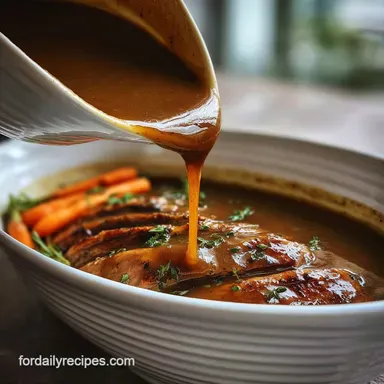
Ingredients:
Instructions:
Nutrition Facts:
| Calories | 119 kcal |
|---|---|
| Protein | 4.8 g |
| Fat | 8.7 g |
| Carbs | 4.2 g |
| Fiber | 0.2 g |
| Sugar | 0.4 g |
| Sodium | 258 mg |
