Roasted Chicken Recipe: Shattering Skin
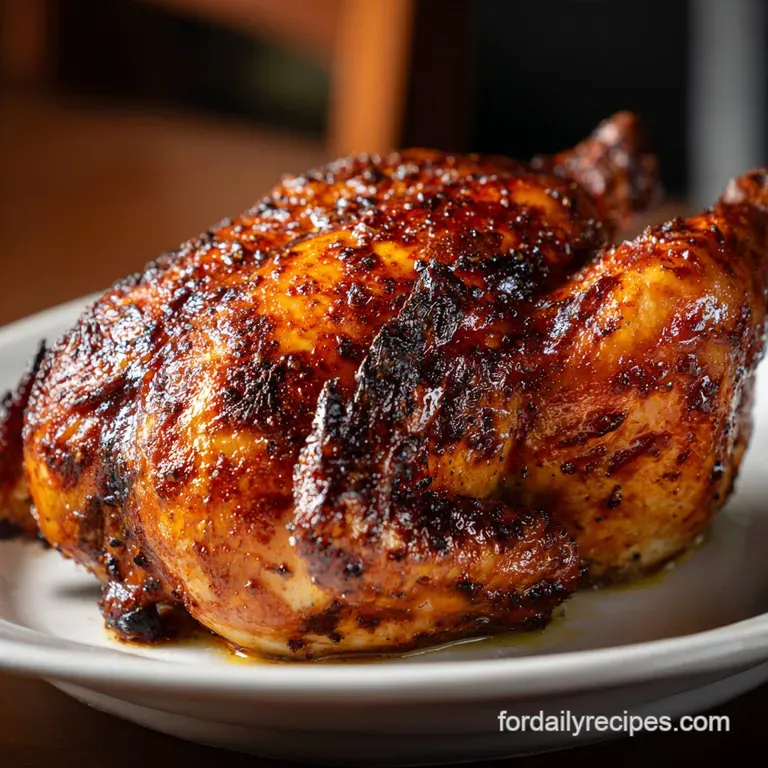
- Time: Active 20 minutes, Passive 1 hour 10 mins, Total 1 hour 30 mins
- Flavor/Texture Hook: Shatter crisp skin with velvety, lemon infused meat
- Perfect for: Sunday family dinner or meal prep heritage basics
- Mastering Your Golden Roasted Chicken Recipe
- Vital Recipe Stats and Dimensions
- Analyzing Primary Building Blocks
- Essential Tools for Roasting
- Step-by-Step Roasting Instructions
- Overcoming Traditional Roasting Hurdles
- Tailoring Your Family Roast
- Practical Storage and Waste
- Complementary Pairings and Ideas
- Critical Level of Sodium
- Recipe FAQs
- 📝 Recipe Card
Mastering Your Golden Roasted Chicken Recipe
The kitchen fills with that unmistakable scent of rosemary and rendered fat, a fragrance that has signaled "home" for generations in my family. I remember watching my grandmother carefully patting down a 4 lbs bird with a kitchen towel as if she were tucking it into bed, explaining that moisture is the enemy of a good roast.
It sounded like a chore then, but the first time I heard that skin crack under my knife like thin glass, I understood the heritage of doing things right.
This isn't a rushed meal; it's a slow building layering of flavors that rewards patience. We are going to treat this bird with the respect it deserves, using high heat to transform simple skin into something magical while keeping the breast meat tender.
It’s the kind of dish that makes you want to pull up a chair and stay a while.
We’ve all had that roast chicken that looks beautiful but tastes like cardboard inside. I’ve made that mistake more times than I care to admit, usually by skipping the drying phase or forgetting to let the meat rest.
But once you master the balance of heat and hydration, you’ll never look back at a grocery store rotisserie bird again.
Heat Transfer and Skin Dehydration
Thermal Momentum: High initial heat causes surface moisture to evaporate instantly, preventing the skin from steaming. This ensures the fat renders quickly to "fry" the skin from the outside in.
Quick Decision Done ness Guide
| Bird Weight | Internal Temp | Rest Time | Visual Cue |
|---|---|---|---|
| 4 lbs | 165°F (74°C) | 15 minutes | Juices run clear from thigh |
| 5 lbs | 165°F (74°C) | 20 minutes | Leg moves easily in socket |
| 6 lbs | 165°F (74°C) | 25 minutes | Skin is deep mahogany gold |
Chef Tip: Rub 4 tbsp unsalted butter under the skin of the breast. It creates a fat barrier that bastes the meat from the inside, preventing it from drying out before the dark meat is done.
Vital Recipe Stats and Dimensions
Roasting a whole chicken is about managing ratios. When you have 1 lb Yukon Gold potatoes and 3 large carrots in the pan, they act as a "flavor sponge" for the drippings. However, if you add too many vegetables, they release too much steam and ruin your chances of getting that crispy finish.
It’s a delicate dance of ingredients.
| Feature | Classic Roast | Fast Roast (Butterfly) |
|---|---|---|
| Texture | Succulent, soft meat | Evenly browned, firmer |
| Time | 1 hour 10 mins | 45 minutes |
| Effort | Low (Whole bird) | Medium (Removing spine) |
You really want to aim for a 4 lbs bird for this specific timing. If you go much larger, the breast will dry out before the legs reach that safe, tender temperature. Stick to the metrics, and the bird will reward you.
Analyzing Primary Building Blocks
Every ingredient in this roasted chicken recipe has a specific chemical job to do. We aren't just adding 2 tbsp Kosher salt for flavor; we are using it to change the cellular structure of the skin.
| Ingredient | Science Role | Pro Secret |
|---|---|---|
| Kosher Salt | Denatures proteins | Use coarse salt for better surface area coverage. |
| Lemon | Acidic tenderizer | Poke holes in the lemon to release steam inside. |
| Garlic Head | Aromatic base | Slice crosswise to expose all cloves for max oil. |
Don't use table salt here; it's too fine and will make the bird overly salty. The large flakes of Kosher salt are essential for drawing out the moisture that hides in the pores of the skin.
Essential Tools for Roasting
You don't need a fancy rotisserie, but a heavy bottomed roasting pan or a large cast iron skillet (like a Lodge) is vital. These materials hold onto heat, ensuring the 2 tbsp extra virgin olive oil stays hot enough to sear the 1 lb Yukon Gold potatoes on the bottom.
- Meat Thermometer: The only way to truly know it's done without cutting into it.
- Kitchen Twine: Tying the legs (trussing) helps the bird cook evenly.
- Paper Towels: More than you think you need for the "dry down."
If you find yourself making this often, investing in a good Garlic Herb Chicken recipe technique will show you how much the pan choice matters for that final reduction sauce.
step-by-step Roasting Instructions
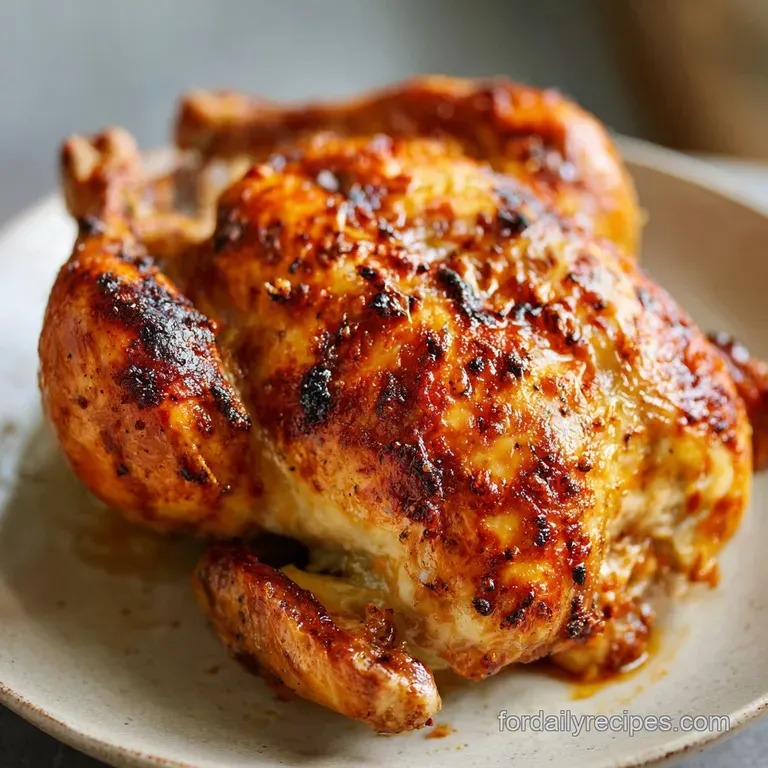
- Prep the bird. Remove giblets from the 1 whole chicken (approx. 4 lbs) and pat it completely dry with paper towels. Note: Surface moisture causes steaming instead of browning.
- Season heavily. Rub the entire surface and the cavity with 2 tbsp Kosher salt and 1 tbsp freshly cracked black pepper.
- Stuff the cavity. Insert the halved lemon, the sliced garlic head, and 4 sprigs fresh rosemary or thyme inside the bird.
- Apply fat. Rub 4 tbsp unsalted butter under the breast skin and over the legs until the bird looks coated and matte.
- Prep vegetables. Toss 1 lb Yukon Gold potatoes, 3 large carrots, and 1 yellow onion with 2 tbsp extra virgin olive oil in the roasting pan.
- Position bird. Place the chicken directly on top of the vegetables. Note: The vegetables act as a natural roasting rack.
- Initial Roast. Roast at 400°F (200°C) for 30 mins until the skin begins to turn golden brown.
- Finish cooking. Continue roasting for another 40 mins until the thermometer hits 165°F (74°C).
- Rest the meat. Remove from oven and let it sit for 15 minutes until the juices settle back into the fibers.
Overcoming Traditional Roasting Hurdles
The biggest heartbreak is pulling a bird out only to realize the thighs are still pink. This happens because the leg joint is the most insulated part of the chicken.
Why the Breast Dries Out
This occurs when the lean white meat reaches temperature long before the fatty dark meat. To fix this, always start your chicken with the legs pointing toward the back of the oven, which is usually the hottest spot.
| Problem | Root Cause | Solution |
|---|---|---|
| Rubber Rub skin | Not enough dry heat | Pat skin dry and don't baste with watery liquids. |
| Burnt Veggies | Cut too small | Keep carrots in 2 inch chunks and potatoes halved. |
| Bland Meat | Only surface salted | Salt the cavity and under the skin 24 hours early. |
Common Mistakes Checklist
- ✓ Skipping the resting period (results in a dry bird and a puddle on the board).
- ✓ Using a damp chicken (prevents the Maillard reaction/browning).
- ✓ Overcrowding the pan (creates a steam sauna for the veggies).
- ✓ Tucking the wings too tight (prevents the armpit area from cooking).
- ✓ Forgetting to preheat the oven for at least 20 minutes.
Tailoring Your Family Roast
You can easily adapt this dish based on what’s in your pantry. If you want a different flavor profile, you might look at a Flavorful Syrian Chicken recipe for inspiration on warm spice blends.
| Original Ingredient | Substitute | Why It Works |
|---|---|---|
| Unsalted Butter | Ghee | Higher smoke point; adds a deeper nutty flavor. |
| Yukon Gold Potatoes | Red Potatoes | Holds shape well; slightly waxier texture. |
| Rosemary/Thyme | Dried Poultry Blend | Concentrated flavor. Note: Use 1 tbsp only. |
Decision Shortcut
- If you want extra shatter crisp skin, dry brine the bird in the fridge uncovered for 24 hours.
- If you want a deeper gravy, roast the neck and giblets in the pan corners.
- If you want velvety potatoes, toss them in the rendered schmaltz halfway through.
Practical Storage and Waste
Storage: Keep leftovers in an airtight container in the fridge for up to 4 days. You can freeze the cooked meat for up to 3 months, though the skin will lose its crispness.
To reheat, use an oven at 350°F (180°C) rather than a microwave to maintain some texture.
Zero Waste: Never throw away the carcass! The bones, the garlic head, and the carrot peels are the foundation for a heritage stock. Simmer them with water and a splash of apple cider vinegar for 4 hours to extract every bit of collagen. This stock becomes a perfect base for a future Dinner Idea with recipe using orzo or rice.
Complementary Pairings and Ideas
A heavy roast needs something bright to cut through the richness of the 45.2 g of fat per serving. I usually lean toward a crisp green salad with a lemon vinaigrette or steamed green beans with a bit of sea salt. The natural sweetness of the 3 large carrots already provides a great earthy balance.
If you are looking for a more robust meal, consider serving this alongside a crusty sourdough loaf to soak up the pan juices. There is a certain heritage in "bread dipping" that makes the meal feel complete. You could even swap the herbs for a Poultry Seasoning recipe to give it that classic holiday aroma any time of the year.
Roasting Myths Debunked - Basting the chicken makes it juicier. In reality, pouring liquid over the skin just makes it soggy. The juice comes from internal temperature control, not external pouring. - Searing the meat "locks in" juices.
Searing is purely for flavor and color (the Maillard reaction); moisture loss happens regardless of the crust.
Critical Level of Sodium
1922 mg mg of sodium per serving (84% % of daily value)
The American Heart Association recommends limiting sodium intake to about 2,300mg per day for optimal health.
Smart Swaps to Reduce Sodium
-
Reduce Salt by Half-25%
Kosher salt is the main source of sodium in this recipe. Try using only 1 tbsp of kosher salt instead of 2 tbsp to significantly lower the sodium content while still providing flavor.
-
Unsalted is Key-10%
Ensure the butter used is truly unsalted. Even small amounts of salt in butter can add up, especially when used in larger quantities. This change will not change the overall flavor profile.
-
Lemon Power!-5%
Maximize the use of lemon, garlic, and pepper. Ensure you are using freshly cracked black pepper and rubbing the chicken well with the lemon. This will enhance the existing flavors without increasing sodium.
-
Herb Infusion
Experiment with other fresh herbs like sage, oregano, or parsley in addition to rosemary and thyme. Fresh herbs boost flavor without adding any sodium.
Recipe FAQs
Is it better to roast chicken at 350 or 400?
400°F is generally better for crisp skin. Starting the roast at 400°F allows the exterior fat to render quickly, creating that desirable shattering crust. You drop the temperature after the first 30 minutes to finish cooking without burning the outside.
How to make the tastiest roast chicken?
Pat the skin completely dry and salt it generously, ideally 24 hours ahead. Moisture is the enemy of crispness; drying the skin allows the high heat to achieve the Maillard reaction, which creates deep flavor and color.
How long does it take to roast a chicken in your oven?
For a 4 lb bird, expect approximately 70 minutes total cook time. This includes an initial 30 minutes at high heat followed by a lower temperature until the internal temperature hits 165°F in the thickest part of the thigh.
How to roast chicken so it's moist?
Ensure you let the bird rest, covered loosely, for at least 15 minutes post roast. This crucial resting period allows the muscle fibers to relax and reabsorb the flavorful juices instead of having them run out when you slice it.
Should I baste the chicken while it roasts?
No, frequent basting is counterproductive for crisp skin. Pouring liquid over the skin drops the surface temperature, causing it to steam rather than roast; fat applied under the skin works better for internal moistness, similar to the technique used in our Stuffed Chicken Breast recipe.
Is it okay to cook vegetables underneath the chicken?
Yes, using sturdy vegetables as a natural rack is highly recommended. They absorb flavorful drippings, and by using larger chunks, you minimize the amount of steam they release, which protects your skin crispness.
What internal temperature should I look for?
Target 165°F (74°C) in the thigh joint. You must use a reliable thermometer inserted into the thickest part of the thigh without touching bone; this ensures the dark meat is done while protecting the white meat from overcooking.
Easy Roast Chicken Recipe
Ingredients:
Instructions:
Nutrition Facts:
| Calories | 734 kcal |
|---|---|
| Protein | 59.1 g |
| Fat | 45.2 g |
| Carbs | 22.3 g |
| Fiber | 3.8 g |
| Sugar | 4.6 g |
| Sodium | 1922 mg |
