Roasted Baby Potatoes: Ultra Crispy and Creamy
- Time: Active 10 minutes, Passive 35 minutes, Total 45 minutes
- Flavor/Texture Hook: Shatter crisp exterior with a velvety, earthy center
- Perfect for: Wholesome Sunday dinners or nutritious meal prep
- Mastering the Essential Techniques for Golden Roasted Baby Potatoes
- Everything You Need to Know About Recipe Specs
- Gathering Wholesome Ingredients for These Earthy Roasted Baby Potatoes
- The Practical Tools Required for Crispy Potato Success
- A Step-by-Step Guide to Cooking Roasted Baby Potatoes
- Solving Potential Issues with Your Oven Roasted Baby Potatoes
- Creative Ways to Adapt Your Roasted Baby Potatoes Recipe
- Practical Storage and Reheating Tips for Roasted Baby Potatoes
- Plating and Garnishing Your Crispy Roasted Baby Potatoes
- Recipe FAQs
- 📝 Recipe Card
Mastering the Essential Techniques for Golden Roasted Baby Potatoes
The distinct, high pitched shatter of a potato crust under a fork is a sound that brings everyone to the table. I remember the first time I realized that my potatoes were coming out of the oven looking a bit sad, dull, and far too soft.
They tasted fine, but they lacked that structural integrity that makes a side dish memorable. It wasn't until I started experimenting with the water chemistry that everything changed.
By adding just a pinch of a common pantry staple to the boiling water, the potatoes transformed from simple tubers into something structurally magnificent.
When we talk about wholesome cooking, it is often about making the most of the humble ingredients we already have. These Roasted Baby Potatoes aren't just a side dish, they are a testament to how a few simple steps can change the physical properties of a vegetable.
You don't need expensive fats or complicated machinery. You just need a little bit of patience during the boiling phase and a willingness to get a bit aggressive with your pot when it comes time to coat them in oil. Trust me, the extra effort in the first ten minutes pays off when you hear that first crunch.
We have all been there, staring at a tray of potatoes that look more steamed than roasted. The problem usually isn't the oven temperature, although that helps, it's the surface area. A smooth potato has very little space for the heat to create a crust.
By parboiling them in an alkaline environment, we are essentially creating a starchy "mash" on the outside of each potato half. This slurry dehydrates in the oven, turning into a crispy, golden armor that protects the fluffy interior. It is a satisfying process that turns a basic vegetable into the star of the plate.
The Alkaline Parboil Technique
Most of us were taught to just toss potatoes into boiling water until they are soft. However, adding 0.5 tsp baking soda to your 2 quarts of water is a total game changer. This small addition increases the pH level of the water, which breaks down the pectin in the potato skin more effectively than plain water.
As the pectin dissolves, the exterior of the potato becomes porous and fuzzy. This fuzz is exactly what you want, as it will later combine with the olive oil to form a thick paste. Without this step, the potato remains too smooth, and the oil simply slides off rather than soaking in to create that coveted crunch.
High Surface Area Agitation
After the potatoes have simmered for about 8 to 10 minutes, you'll notice the edges look a bit frayed. This is the perfect moment. Once they are drained and steam dried, the "shake" is mandatory.
When you return them to the pot and toss them vigorously with the olive oil, those frayed edges turn into a thick, starchy coating. It might look a little messy or unappealing at first, but this starchy slurry is the secret to a high surface area crust.
Every little bit of that paste will brown and harden in the oven, giving you ten times more crispy bits than a standard roast.
Late Stage Aromatic Application
One mistake I made for years was adding my minced garlic and fresh herbs right at the beginning. Because the oven is set to 425°F, garlic will inevitably burn and turn bitter long before the potatoes are finished.
By waiting until the final 10 to 15 minutes of roasting to add the 4 cloves of minced garlic, 1 tbsp rosemary, and 1 tbsp thyme, you ensure the aromatics are toasted and fragrant without being scorched.
The oils in the herbs will infuse into the potato crust during those last few minutes, creating a much more vibrant flavor profile that tastes fresh rather than burnt.
Everything You Need to Know About Recipe Specs
Before we get the oven preheated, let's look at the logistics. This recipe is designed to be efficient, fitting into a 45 minute window from start to finish. It serves 5 people, making it an ideal size for a family dinner or for someone who likes to have nutritious leftovers for the week ahead.
We are aiming for a over high heat roast at 425°F, which is the sweet spot for browning the starches without drying out the middle of the baby potatoes.
Consistency is key when you are working with different sizes of potatoes. I recommend using 2 lbs of baby potatoes, either Yukon Gold or Red Bliss. Yukon Golds tend to have a naturally buttery flavor and a medium starch content that works beautifully with this method.
Red Bliss potatoes hold their shape a bit better and offer a slightly more waxy texture, which some people prefer for a heartier bite. Whichever you choose, the goal is to halve the larger ones so they all cook at the same rate.
| Method | Total Time | Texture | Best For |
|---|---|---|---|
| Traditional Roast | 60 minutes | Leathery skin, soft inside | Low effort, hands off prep |
| Alkaline Parboil | 45 minutes | Shatter crisp crust, fluffy | Maximum texture, dinner parties |
| Direct Bake | 50 minutes | Tougher skin, denser | When you don't want to boil water |
Choosing the right method depends on how much time you have, but the alkaline parboil (our focus here) is objectively the most effective for texture. If you are looking for a quicker variation on a weeknight, you might consider how Air Fryer Baked Potatoes compare in terms of speed, though the oven method allows for more potatoes to be cooked at once. The extra step of boiling for 8 to 10 minutes actually saves roasting time in the long run because the centers are already partially cooked through.
Gathering Wholesome Ingredients for These Earthy Roasted Baby Potatoes
When selecting your produce, look for baby potatoes that feel firm and heavy for their size. Avoid anything with a green tint or soft spots. Since we are keeping the skins on for maximum nutrition and texture, I always opt for organic options when possible and give them a good scrub.
The 2 lbs of baby potatoes are the canvas for the rest of our ingredients.
| Ingredient | Science Role | Pro Secret |
|---|---|---|
| Baking Soda | Raises pH to break down pectin | Only 0.5 tsp is needed for a massive texture shift |
| Kosher Salt | Seasons the potato from the inside out | Use 1 tbsp in the boiling water for deep seasoning |
| Extra Virgin Olive Oil | Conducts heat and creates the crisp | Don't skimp; 3 tbsp ensures a full starchy coating |
| Parmesan Cheese | Adds umami and a salty finish | Grate it fresh for better melting and flavor |
For the fats, 3 tbsp of extra virgin olive oil provides a hearty, plant forward base. If you have dietary restrictions or allergies, you can easily swap the oil or the cheese. Below is a list of how to adapt the ingredients while keeping the dish wholesome and satisfying.
- 2 lbs baby potatoes: You can use a mix of colors for a beautiful presentation. Why this? Baby potatoes have a higher skin to flesh ratio for better crunch.
- 3 tbsp olive oil: Substitute with avocado oil for a higher smoke point. Why this? It carries the herb flavors and facilitates the Maillard reaction.
- 4 cloves garlic: Use 1 tsp garlic powder if fresh isn't available. Why this? Fresh garlic provides a more pungent, earthy aroma.
- 1 tbsp rosemary: Use 1 tsp dried rosemary if fresh is unavailable. Why this? It adds a woodsy, piney scent that pairs with potatoes.
- 1 tbsp thyme: Substitute with oregano or marjoram for a different profile. Why this? Thyme adds a subtle lemony, floral note.
- 0.25 cup parmesan: Use nutritional yeast for a vegan friendly umami boost. Why this? It adds a salty, savory crust to the final dish.
The Practical Tools Required for Crispy Potato Success
You don't need a kitchen full of gadgets, but a few specific tools will make the process much smoother. A large stockpot is essential for the parboiling stage. You want enough room for the 2 quarts of water to circulate around the 2 lbs of potatoes freely.
If the pot is too small, the water temperature will drop too much when you add the potatoes, which messes with your timing.
A large, rimmed baking sheet is the other non negotiable. I prefer a heavy duty aluminum pan because it conducts heat evenly. Crowding is the enemy of crispiness; if the potatoes are too close together, they will steam instead of roast. If you find your tray is too small, split the batch between two pans.
A metal spatula is also better than a plastic one here, as it allows you to scrape under the potatoes and flip them without losing that precious crust that might be sticking slightly to the pan.
A step-by-step Guide to Cooking Roasted Baby Potatoes
- Preheat your oven to 425°F (220°C). Half the larger baby potatoes so they are uniform in size. Note: This ensures they all finish cooking at exactly the same time.
- Boil 2 quarts of water in a large stockpot and add 1 tbsp salt and 0.5 tsp baking soda.
- Simmer the potatoes in the boiling water for 8–10 minutes until the exterior is softened but the center still resists a knife.
- Drain the potatoes into a colander and let them sit for 2 minutes. Note: This allows excess moisture to evaporate, which is crucial for browning.
- Rough up the potatoes by returning them to the pot with 3 tbsp olive oil and shaking vigorously. Look for a thick, starchy paste forming on the edges.
- Spread the potatoes onto your rimmed baking sheet, ensuring the flat side of the halves are facing down.
- Roast for 20 minutes without touching them. Note: This builds the initial crust on the bottom side.
- Flip the potatoes carefully using a metal spatula to reveal the golden bottoms.
- Season with 4 cloves minced garlic, 1 tbsp chopped rosemary, 1 tbsp thyme, and 0.5 tsp pepper.
- Finish roasting for another 10-15 minutes until they are deep golden brown and audibly crunchy. Toss with 0.25 cup parmesan cheese just before serving.
Solving Potential Issues with Your oven-roasted Baby Potatoes
Even with a straightforward recipe, things can occasionally go sideways. The most common frustration is potatoes that stick to the pan. This usually happens if the pan wasn't hot enough or if you try to flip them too early.
Patience is a virtue here; let the crust form fully, and they will naturally release from the metal. If they are truly stuck, a thin metal spatula and a firm hand usually solve the problem without destroying the potato.
Another issue is the dreaded soggy potato. This is often caused by overcrowding the pan. If the potatoes are touching, the moisture they release has nowhere to go but back into the neighboring potato. This creates steam. To prevent this, give each potato at least half an inch of "personal space" on the tray.
It’s better to use two trays than to cram everything onto one.
| Problem | Root Cause | Solution |
|---|---|---|
| Potatoes Sticking | Flipped too early or not enough oil | Wait for a full crust to form before flipping; use 3 tbsp oil. |
| Burnt Garlic | Added at the start of roasting | Only add minced garlic during the final 10-15 minutes. |
| Lack of Crunch | Skipped the parboil or the shake | Ensure the potatoes have a fuzzy, starchy coating before roasting. |
Achieving that "shatter" effect requires a balance of heat and surface moisture removal. If your potatoes are soft, you might need to extend the roasting time by 5 minutes or move the rack to a lower position where the heat is more intense. If you're planning a larger meal, this side pairs exceptionally well with a Sunday Dinner Roast Beef, which can often cook at a similar temperature if you plan your timing correctly.
Common Mistakes Checklist
- ✓ Ensure the water is actually boiling before adding the baking soda and potatoes.
- ✓ Do not overcook during the parboil; they should not be falling apart.
- ✓ Let the potatoes steam dry for the full 2 minutes after draining.
- ✓ Don't be afraid to shake the pot hard the "messier" they look, the crispier they get.
- ✓ Check that your oven is truly preheated to 425°F using an oven thermometer.
Creative Ways to Adapt Your Roasted Baby Potatoes Recipe
While the rosemary and garlic combo is a classic for a reason, you shouldn't feel limited. The beauty of this technique is that it works with almost any flavor profile. For a Mediterranean vibe, you can toss them with dried oregano and lemon zest instead of rosemary.
If you want something with a bit more of a kick, a sprinkle of smoked paprika or even a dash of nutritional yeast can add depth without the need for dairy.
The Lemony Mediterranean Twist
If you want a brighter, tangier profile, try adding the zest of one lemon and a teaspoon of dried oregano during the last 10 minutes of roasting. Once out of the oven, a squeeze of fresh lemon juice over the hot potatoes creates a beautiful steam that carries the citrus scent. This version is fantastic when paired with grilled chicken or a fresh salad. You can see how this compares to a more traditional Greek Roasted Potatoes recipe, which uses a slightly different roasting liquid.
Air Fryer Roasted Baby Potatoes
If you are cooking for a smaller group, the air fryer is a brilliant tool. You can follow the parboiling and "roughing up" steps exactly as written. Then, air fry at 400°F for about 15-20 minutes, shaking the basket halfway through.
The convection heat in the air fryer is incredibly efficient at drying out that starchy slurry, often resulting in an even more consistent crunch in less time.
Vegan "Butter" Swap
For those avoiding dairy, the parmesan is easily replaced. I often use a mix of nutritional yeast and a pinch of onion powder to get that savory, salty finish. You can also use a high-quality vegan butter instead of olive oil, though keep an eye on the smoke point.
The goal is to maintain that earthy, wholesome flavor while respecting dietary needs.
Practical Storage and Reheating Tips for Roasted Baby Potatoes
Potatoes are famously difficult to keep crispy once they cool down, but it isn't impossible. If you have leftovers, let them cool completely before putting them in an airtight container. This prevents steam from building up inside the container and making the crust soggy.
They will stay fresh in the fridge for up to 4 days.
For reheating, please avoid the microwave at all costs. The microwave will turn your beautiful, crispy potatoes into rubbery chunks. Instead, pop them back into a 400°F oven or an air fryer for about 5 to 7 minutes.
This will re dehydrate the surface and bring back a good portion of that original crunch.
- Fridge Storage: Store in a glass container for up to 4 days.
- Freezer Storage: You can freeze these for up to 3 months. Reheat directly from frozen at 425°F for 15 minutes.
- Zero Waste Tip: If you have just a few leftover potatoes, smash them flat and fry them in a pan with an egg the next morning for a quick, nutritious breakfast hash. Even the herb infused oil left on the baking sheet can be wiped up with a piece of bread it's liquid gold.
Plating and Garnishing Your Crispy Roasted Baby Potatoes
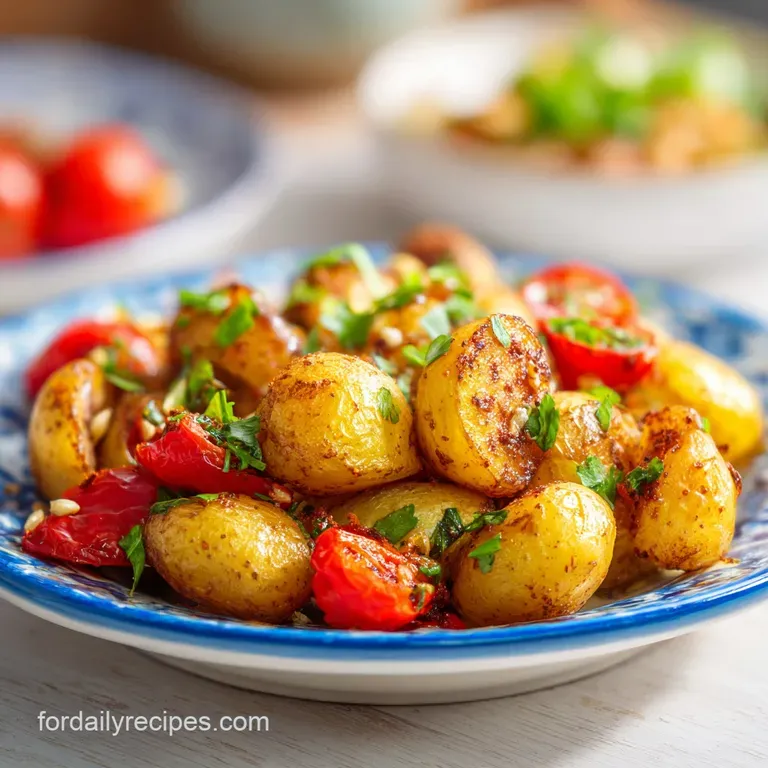
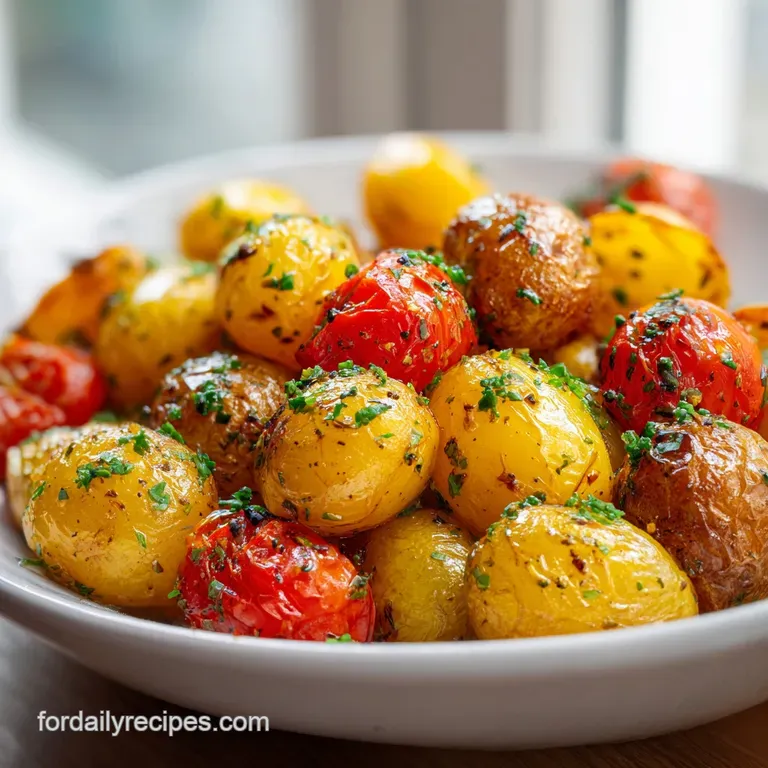
The visual appeal of this dish comes from the contrast between the deep golden brown crust and the vibrant green of the fresh herbs. When you are ready to serve, don't just dump them into a bowl. Arrange them on a flat platter so the crispy edges stay exposed to the air.
If they are piled too high, the ones on the bottom will lose their crunch from the weight and steam of the ones on top.
A final sprinkle of fresh herbs perhaps a little extra thyme or even some chopped parsley adds a pop of color that makes the dish look as good as it tastes. The parmesan should be added while the potatoes are still piping hot so it slightly melts into the crevices.
If you are serving these for a special occasion, a small bowl of garlic aioli or a lemon tahini dressing on the side offers a creamy counterpoint to the shatter crisp texture of the potatoes.
Roasting potatoes is a fundamental skill, but it is the attention to these small, physical details that turns a basic meal into something truly satisfying. By understanding how starch, pH levels, and surface area interact, you can consistently produce a side dish that is wholesome, delicious, and perfectly textured every single time.
Happy roasting!

Recipe FAQs
How long do you roast baby potatoes for?
Roast for a total of 30 35 minutes. You will roast them for 20 minutes, flip them, and then continue for another 10 15 minutes until they reach a deep golden brown color.
Are potatoes good for a cardiac diet?
Yes, they can be part of a heart healthy diet when prepared simply. By using small amounts of olive oil and fresh herbs like rosemary and thyme rather than heavy fats or excessive salt, they remain a nutritious, whole food option.
Should you roast potatoes at 400 or 425?
Use 425°F (220°C). This higher temperature is essential for achieving a crispy exterior while keeping the inside tender, as the heat helps develop a proper crust on the starch coated surface.
Are baby new potatoes good for roasting?
Yes, they are excellent for this method. Their thin skins and creamy interior texture make them the ideal choice for achieving that signature contrast between a crunchy shell and a soft center.
Why is it necessary to boil potatoes with baking soda before roasting?
The baking soda alters the pH of the water, breaking down the potato's exterior starch. This creates a starchy paste on the surface of the potato that dehydrates and crisps significantly faster in the oven than raw potatoes ever could.
How to ensure the potatoes get maximum crunch?
Shake the drained potatoes vigorously in the pot before roasting. This physical agitation creates the starchy layer mentioned above, and if you enjoyed mastering this texture control technique, you can apply similar logic to achieve crisp results in other roasted vegetables.
Is it true that I should skip the steam drying step?
No, this is a common misconception. Allowing the potatoes to steam dry for 2 minutes after draining is vital because it removes excess surface moisture, ensuring the olive oil adheres properly and the skins crisp rather than steam in the oven.
Crispy Roasted Baby Potatoes
Ingredients:
Instructions:
Nutrition Facts:
| Calories | 237 kcal |
|---|---|
| Protein | 5.6 g |
| Fat | 9.8 g |
| Carbs | 31.8 g |
| Fiber | 2.8 g |
| Sugar | 1.4 g |
| Sodium | 485 mg |
