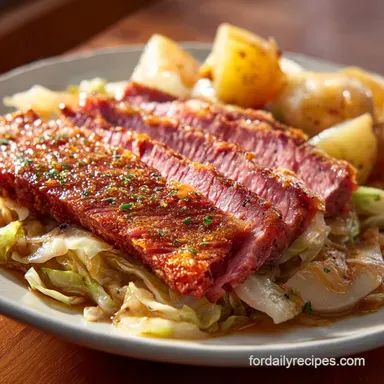
Hearty Corned Beef and Cabbage with Potatoes

- Total5 Hrs
- Servings8
- Calories617 kcal
- Time: 15 min active + 4 hours 30 mins cooking + 15 min rest
- Taste: Salty, savory, and deeply aromatic
- Best for: Large family dinners or cozy weekend feasts
Did you know that boiling your meat at a high heat actually makes it tougher? It's a common trap. When you rush the process, the muscle fibers tighten up and push out the moisture.
You want a gentle, lazy simmer to let those fibers relax. This is how you get that melt-in-your-mouth feel without the rubbery texture of a rushed pot.
This corned beef and cabbage meal is all about patience and timing. You'll start with a long braise for the beef, then layer in the vegetables at the very end to keep them from turning into mush.
Corned Beef and Cabbage
Low Simmer: Keeping the heat low prevents the proteins from seizing, which keeps the meat succulent.
Staged Entry: Adding cabbage and potatoes only in the final hour ensures they are tender but still hold their shape.
The Salt Rinse: Rinsing the meat before it hits the pan stops the final dish from becoming a salt bomb.
Ingredient Deep Dive
- 3½ lb corned beef brisket
- 6 cups reduced-sodium beef stock
- 2 tbsp apple cider vinegar
- 1 oz pickling spices
- 1 tsp cracked black pepper
- 1 lb small red potatoes, halved
- 4 large carrots, cut into 2-inch chunks
- 2 lb green cabbage, cut into 8 wedges
The foundation of this dish is the salt-cured brisket. The brine provides the base flavor, but the addition of vinegar and stock adds a bright, acidic contrast that cuts through the richness.
| Ingredient | Role | If You Don't Have It |
|---|---|---|
| Corned Beef Brisket | Main protein and structural base | None |
| Beef Stock | Braising medium for moisture | Water with beef bouillon |
| Apple Cider Vinegar | Cuts through the fat and salt | White vinegar or lemon juice |
| Pickling Spices | Adds aromatic depth | Celery seed, mustard seed, and peppercorns |
I like to use a reduced-sodium stock here. Since the corned beef is already cured in salt, using a standard stock can sometimes make the liquid too salty.
| Original Ingredient | Substitute | Why It Works |
|---|---|---|
| Red Potatoes | Yukon Gold | Similar texture. Note: Holds shape slightly better |
| Green Cabbage | Savoy Cabbage | More crinkled leaves. Note: A bit sweeter and more tender |
| Carrots | Parsnips | Similar root structure. Note: Adds a nuttier, earthier flavor |
Recipe Details
This is a high-yield meal that feeds a crowd. The total time is mostly passive, as the beef does all the work in the pot.
- Prep time: 15 minutes
- Cook time: 4 hours 30 mins
- Total time: 5 hours
- Yield: 8 servings
Essential Gear
A 6-quart Dutch oven is the best tool for this. The heavy bottom distributes heat evenly, and the tight lid keeps the steam trapped, which is what actually breaks down the connective tissue in the brisket.
Bringing It Together
Phase 1: Preparing the Meat
Remove the corned beef from its packaging. Rinse it thoroughly under cold water to remove excess brine, then pat dry with paper towels.
Place the brisket in the Dutch oven. Pour in 6 cups of reduced-sodium beef stock and 2 tbsp of apple cider vinegar until the meat is almost entirely submerged. Stir in 1 oz of pickling spices and 1 tsp of cracked black pepper.

Phase 2: The Low and Slow Simmer
Bring the liquid to a gentle boil over medium-high heat, then immediately reduce heat to low. Cover with a tight-fitting lid.
Simmer gently for 3 to 3.5 hours. Check for doneness when a fork slides in and out with minimal resistance. This is the key for any corned beef and cabbage recipe stove top method.
Phase 3: Integrating the Vegetables
Carefully arrange 1 lb of halved red potatoes and 4 cut carrots around the beef. Place the 8 cabbage wedges on top of the meat and vegetables.
Cover and continue to simmer for 45 to 60 minutes. Cook until the cabbage is translucent and potatoes are easily pierced with a knife.

Phase 4: The Finishing Touch
Remove the brisket to a carving board. Let it rest for 15 minutes to retain juices. Locate the grain of the meat and slice the brisket thinly against the grain.

Quick Fixes
If your meat still feels rubbery, it simply hasn't cooked long enough for the collagen to break down. Brisket is unpredictable, so you should cook to texture rather than the clock. If it's not fork-tender, give it another 30 to 60 minutes.
When the cabbage turns to mush, it's usually because it spent too much time in the pot. Always add it in the final hour.
Tough Meat
The collagen hasn't fully melted into gelatin yet.
Mushy Cabbage
The vegetables were added too early or simmered too hard.
Too Salty
The brine wasn't rinsed off or the stock had too much sodium.
| Problem | Fix |
|---|---|
| Rubbery beef | Simmer for another 30-60 mins |
| Mushy veg | Reduce simmer time for cabbage |
| Overly salty | Dilute the broth with a bit of water |
Keeping It Fresh
Store the leftovers in sealed containers in the refrigerator for 3 to 4 days. I find that the beef stays tender if you store it submerged in some of its own cooking liquid.
The beef freezes well for up to 3 months, but the cabbage and potatoes lose their texture and become grainy. Freeze the meat separately in broth for the best results.
When you're ready for seconds, reheat gently in a saucepan with a splash of beef stock over low heat. To ensure safety, heat leftovers to 165°F according to USDA food safety guidelines. When reheating cooked leftovers, check with a food thermometer that the center reaches 165°F (74°C); the appliance temperature and time alone do not confirm this.
Serving Suggestions

This corned beef and cabbage meal is a complete plate on its own, but I like to serve it with a side of spicy brown mustard for dipping.
If you want something extra on the side, a rich Brown Gravy recipe works well for those who prefer their vegetables smothered. For a fresh contrast, a simple slaw with a vinegar dressing helps brighten the plate.
Flavor Twists
You can change the profile of this corned beef and cabbage dish by swapping the beef stock for a non-alcoholic stout-flavored broth. This adds a deeper, slightly bitter note that mimics traditional pub styles.
For a low-sodium version, soak the brisket in cold water for 24 hours, changing the water every 8 hours, before you start the cooking process. This draws out a significant amount of the curing salt.
If you prefer a different texture, try roasting the carrots and potatoes in the oven at 400°F for 20 minutes before adding them to the pot. This adds a caramelized edge to the vegetables that you can't get from simmering alone.
Critical in Sodium
2230 mg of sodium per serving (97% of daily value)
American Heart Association recommendation: no more than 2,300 mg of sodium per day
Tips to Reduce Sodium
-
Soak the Brisket
Soak the corned beef brisket in cold water for 12-24 hours, changing the water several times, to leach out excess curing salt before cooking.
-
Upgrade Your Stock
Swap the reduced-sodium beef stock for no-sodium beef broth or use water infused with fresh onion and garlic for a similar base.
-
Verify Spice Blends
Check the label of your pickling spices to ensure there is no added salt, or make your own blend using whole peppercorns, mustard seeds, and bay leaves.
-
Bulk Up with Veggies
Increase the amount of cabbage, carrots, and potatoes to add more volume to the meal, which naturally lowers the sodium concentration per serving.
-
Amplify Aromatics
Use fresh herbs or extra cracked black pepper to provide a flavor punch that compensates for the reduction in salt.
Good to Know
Should the vegetables cook in the same pot as the beef, or should the beef be removed first?
Keep the beef in the pot. Arrange the potatoes and carrots around the meat and place cabbage wedges on top for the final 45 to 60 minutes of simmering.
How much liquid is needed to cover the meat?
Combine 6 cups of beef stock and 2 tablespoons of apple cider vinegar. This volume ensures the brisket is almost entirely submerged in the Dutch oven.
How can you tell when the brisket is tender enough?
Insert a fork into the meat. The beef is ready when the utensil slides in and out with minimal resistance.
Can the leftovers be used for other meals?
Yes, they are versatile. Repurpose the remaining beef and vegetables into hashes or sandwiches and keep them stored in the refrigerator.
Corned Beef
Ingredients:
Instructions:
Keep Cooking

Classic Chili Mac with Beef
Learn to make the best classic Chili Mac featuring rich beef and sharp cheddar.

Big Mac Sauce Recipe Make-Ahead Creamy
Master the classic big mac sauce recipe with our step-by-step guide to achieving that zesty, creamy…

Broccoli Pasta Recipe: Silky Sauce
Master this Broccoli Pasta recipe by using starchy water to create a silky, garlicky sauce.

Brown Gravy Recipe: Homemade
Master the classic brown gravy recipe using a toasted roux for deep flavor.
