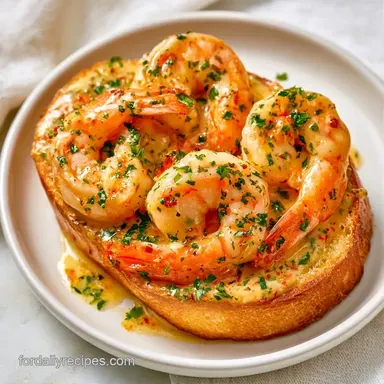
Butter Poached Shrimp Crostini with Garlic Baguette

- Time: 10 min active + 12 min cooking
- Flavor & Texture: Buttery, zesty, and crunchy
- Perfect for: Weekend gatherings
Butter Poached Shrimp Crostini
Rubbery shrimp are the worst. It usually happens when the pan is too hot and the proteins tighten up too fast, turning a nice piece of seafood into something that bounces.
This method fixes that. By poaching the shrimp in a controlled butter emulsion, you get a texture that's soft and tender. It creates a rich coating that clings to the shrimp instead of just sliding off.
Butter Poached Shrimp Crostini feels fancy, but it's mostly about patience with your burner. It's a great way to bring some extraordinary flavors to a casual night without spending hours in the kitchen.
How the Texture Stays Tender
- Low-Heat Poaching: Keeping the butter below a simmer stops the shrimp from toughening.
- Cold Butter Whisking: Adding chilled cubes slowly creates a stable, silky sauce that is less likely to separate.
- Garlic Rub: Rubbing raw garlic on hot toast infuses the bread with aromatics without burning the garlic.
Recipe Specs
| Base Choice | Texture | Best Use |
|---|---|---|
| French Baguette | Classic crunch | Traditional appetisers |
| Ciabatta | Chewier | Heavier toppings |
| Sourdough | Tangy contrast | Cutting through richness |
What Each Ingredient Does
| Ingredient | What It Does | Best Swap |
|---|---|---|
| Chilled Butter | Carries flavor and keeps shrimp moist | Ghee (Note: less creamy) |
| Seafood Stock | Adds depth and stabilizes the butter | Clam juice (approximate) |
| French Baguette | Provides the crunchy base | Sourdough baguette |
Ingredients and Swaps
- 1 French baguette (340g), sliced into ½ inch rounds
- 3 tbsp extra virgin olive oil
- 1 clove garlic, peeled and halved
- 1 cup unsalted butter, cubed and chilled Why this? Cold butter helps the emulsion stay stable
- ¼ cup seafood stock with lemon juice
- ½ tsp kosher salt
- ¼ tsp white pepper
1 lb large shrimp, peeled and deveined, tail-on
1 tsp lemon zest
- 2 tbsp fresh parsley, finely chopped
Equipment Needed
You'll need a baking sheet for the toast and a medium saucepan for the poaching. A whisk is helpful for the butter emulsion, and paper towels are a must for drying the shrimp.
Key Steps
Phase 1: Preparing the Crisp Base
- Preheat the oven to 400°F (200°C).
- Arrange the baguette slices on a baking sheet and brush the tops lightly with 3 tbsp extra virgin olive oil.
- Toast in the oven for 5–7 minutes until the edges are golden brown and the centers are firm.

- Immediately remove the toasts from the oven and rub the cut side of the halved garlic clove over each warm slice.
Phase 2: The Gentle Poach
- Pat the 1 lb shrimp thoroughly dry with paper towels. Note: Excess water will cause the butter to splatter
- In a saucepan over low heat, melt 2 tablespoons of the butter; gradually whisk in the remaining chilled butter, one cube at a time, to create an emulsion.
- Stir in the ¼ cup seafood stock with lemon juice, ½ tsp kosher salt, and ¼ tsp white pepper, keeping the heat very low so the butter shimmers but does not bubble.
- Gently slide the shrimp into the butter and cook for 2–3 minutes per side until they turn a soft, opaque pink and form a gentle 'C' shape, reaching an internal temperature of 145°F (63°C).

Phase 3: Final Assembly
- Remove shrimp from the pan and drain on a paper towel for 10 seconds.
- Place one shrimp on each toasted baguette slice.

- Drizzle a small amount of the remaining butter from the pan over the shrimp and garnish with 1 tsp lemon zest and 2 tbsp chopped fresh parsley.
If Something Goes Wrong
If the butter starts to separate, it means the heat is too high. The fat is breaking away from the solids. You can usually fix this by pulling the pan off the heat and whisking in a tiny bit of cold water.
When shrimp overcook, they curl into a tight "O" shape. At that point, they're already too firm. Pull them off the heat the second they hit that "C" shape.
To keep the bread from getting soggy, don't add the shrimp until you're ready to serve. The butter is rich, and the bread will absorb it quickly.
Fixing Common Issues
| Problem | Root Cause | Solution |
|---|---|---|
| Split Butter | Heat too high | Remove from heat; whisk in cold butter |
| Rubbery Shrimp | Overcooked | Cook to 145°F (63°C) then remove |
| Soggy Toast | Topped too early | Assemble and serve immediately |
Dietary Adaptations

For a gluten-free version, swap the baguette for a gluten-free baguette, sliced and toasted as in step 3. If you want more zest, you can serve these with a side of Rémoulade Sauce for a tangy contrast. For this gluten-free version, also use products labelled gluten-free for the broth or stock.
Storing Leftovers
Keep any remaining cooked shrimp in a tightly closed container in the refrigerator for up to 2 days. Following USDA guidelines on leftovers, ensure they reach 165°F (74°C) when reheated. To maintain the texture, skip the microwave; instead, warm them gently in a pan with a small knob of butter over low heat.
Store toasted crostini in a sealed bag at room temperature for 24 hours. To restore the crunch, re-toast them in the oven for 2 minutes.
How to Enjoy
I like to serve these on a large wooden platter with extra lemon wedges on the side. The brightness of a fresh squeeze of lemon right before eating cuts through the butter. It's an extraordinary way to start a meal that feels high-end but stays simple to put together.
Questions Readers Ask
How do you keep crostini from going soggy once the topping is spread?
Assemble them immediately before serving. Toasted baguette slices stay crisp longer if topped just before eating, as the butter sauce otherwise softens the bread.
How long can leftover shrimp topping be stored?
Place your cooked shrimp in a tight container and refrigerate for up to 2 days. To preserve the texture, avoid the microwave and instead reheat them softly in a pan with butter until they reach 165°F (74°C).
Can the butter sauce be kept from separating while the shrimp cook?
Yes, whisk in chilled butter one cube at a time. This gradual addition over low heat creates a stable emulsion and helps prevent the sauce from breaking.
How to avoid overcooking shrimp so they turn rubbery?
Cook for only 2–3 minutes per side. Remove them from the pan as soon as they turn opaque pink and form a gentle 'C' shape, reaching 145°F (63°C).
Butter Poached Shrimp Crostini with Garlic