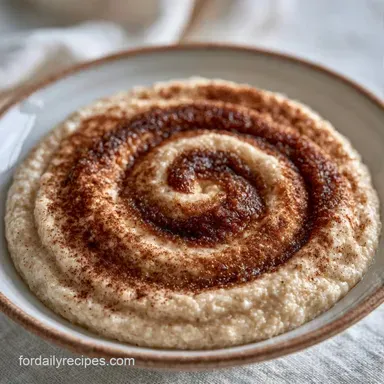
Brown Sugar Cream of Wheat: Guilt-Free

- Time: 5 minutes preparation + 10 minutes cooking
- Sensory Profile: Warm mahogany porridge with a silky finish
- Perfect for: A traditional family breakfast
Ever wonder why some porridge tastes like starchy sludge while others feel like a comforting embrace? For years, I produced "morning mortar" because I believed boiling the liquid was the correct method.
I’d stir in the farina, panic as clumps formed, and crank up the heat, which usually just burned the bottom of the pan.
Everything changed when I began treating the process more like making a sauce than a soup. A low simmer combined with a deliberate whisking technique makes all the difference, transforming a simple grain into a dish that evokes a cozy, rustic country kitchen.
This recipe captures those nostalgic tastes while refining the components. We use almond milk for a subtle creaminess and dark brown sugar to add deep, molasses-rich notes. It is a hearty, soul-warming way to start the day without feeling overly heavy.
The Trick Behind the Texture
- Simmering Liquid: Adding grains to simmering, not boiling, liquid prevents the "clump and shell" effect. This ensures the starch swells evenly for a velvety result.
- Off Heat Mixing: Folding in sugar and butter after removing the pot from the heat prevents the sugars from scorching. It preserves the bright cinnamon notes and creates a glossy finish.
- Figure Eight Whisking: This motion keeps the grains moving through different temperature zones in the pan. Serious Eats' testing shows that constant agitation is the only way to stop starch clumps from bonding.
Recipe Specs
| Method | Prep Time | Cook Time | Texture |
|---|---|---|---|
| Stovetop | 5 minutes | 10 minutes | Custard like |
| Oven Baked | 10 minutes | 30 minutes | Denser set |
What You'll Need
For the base, we use a mix of water and plant milk. This balances the thickness without making the porridge too heavy. Dark brown sugar adds a depth that light brown sugar just can't match.
- 1/2 cup (60g) Cream of Wheat (Regular farina) Why this? Provides the classic, smooth porridge base
- Substitute: Semolina (similar texture, slightly nuttier)
- 2 cups (480ml) water Why this? Standard hydration for a medium thickness
- Substitute: Extra almond milk (for more richness)
- 1 cup (240ml) unsweetened almond milk Why this? Adds creaminess without heavy dairy
- Substitute: Oat milk (similar creaminess)
- 1/4 tsp (1.5g) sea salt Why this? Cuts through the sugar and brightens flavor
- Substitute: Kosher salt
- 1 tbsp (12g) dark brown sugar Why this? Adds molasses depth and mahogany color
- Substitute: Maple syrup (adjust quantity by taste)
- 1/2 tsp (1g) ground cinnamon Why this? Classic warm spice profile
- Substitute: Nutmeg (use 1/4 tsp)
- 1 tbsp (14g) unsalted butter, chilled and cubed Why this? The secret is using chilled butter to create a glossy emulsion
- Substitute: Coconut oil (vegan option)
Tools for the Job
Professional gear isn't necessary, but a heavy-bottomed saucepan is a must. Thin cookware can create hot spots that burn your farina. I recommend a balloon whisk for optimal results, as it incorporates air and smooths out lumps faster than a spoon.
Using a small silicone spatula to scrape the edges will ensure no stray grains stick and scorch.
Key Steps

- Combine the water, almond milk, and sea salt in a small heavy bottomed saucepan.
- Bring the mixture to a gentle simmer over medium heat until small bubbles form around the edges.
- Reduce heat to low immediately.
- Slowly sprinkle in the Cream of Wheat while whisking constantly in a figure eight motion. Note: Pouring too fast causes clumps.
- Continue whisking for 3-5 minutes until the mixture thickens and looks like a smooth custard.
- Remove the pan from the heat entirely.
- Immediately fold in the dark brown sugar and ground cinnamon.
- Stir in the chilled, cubed butter until melted and the porridge is a uniform mahogany color.
- Pour into bowls and serve while steaming.
Avoiding Kitchen Disasters
When you're first starting with this recipe, lumps are the most common frustration. If you see them forming, don't panic and don't keep boiling the pot, as that just "sets" the lumps in place. Instead, remove the pot from the heat and whisk vigorously for 30 seconds.
If they're really stubborn, a quick pulse with an immersion blender fixes it instantly.
Another issue is the "burnt bottom" syndrome. This happens when the heat is too high or you stop whisking. If you smell something toasted, stop stirring immediately to check the bottom. If it's scorched, pour the top layer into a new bowl and leave the burnt residue behind.
Handling Lumps
If the grains clump together, it's usually because the liquid wasn't hot enough or the pour was too fast.
Preventing Scorched Pots
Low heat is your friend here. The starch in farina is very sensitive to temperature spikes.
Adjusting Thickness
If the porridge feels too thick, whisk in a tablespoon of warm milk at the end.
| Problem | Root Cause | Solution |
|---|---|---|
| Lumpy Texture | Adding grains too quickly | Whisk in a figure eight; use immersion blender |
| Burnt Bottom | Heat too high / Poor stirring | Lower heat; use a heavy bottomed pan |
| Too Thick | Too much farina / Overcooked | Stir in warm almond milk until smooth |
Variations and Swaps
For a different twist, try a maple brown sugar cream of wheat recipe by swapping the brown sugar for Grade A maple syrup. It gives the dish a lighter, more forest like sweetness. If you want something more textural, stir in some toasted pecans or dried cranberries right before serving.
If you're looking for other grain options, my high fiber oatmeal is a great alternative for those who prefer a heartier, chewier bite. For a completely vegan version of this dish, simply swap the butter for a chilled coconut oil cube or a vegan butter substitute.
You can also try a Sugar Cream of Wheat version by using granulated white sugar and adding a pinch of vanilla bean paste. This results in a cleaner, more traditional "white" porridge flavor that kids usually love.
| Goal | What to change |
|---|---|
| Thicker texture | Reduce water by 1/4 cup |
| More richness | Swap water for whole milk |
| Deep molasses flavor | Use dark brown sugar |
Keeping It Fresh
Store any remaining Cream of Wheat in an airtight jar and keep it chilled for a maximum of 3 days. It is normal for the mixture to solidify into a dense mass, as the starch keeps soaking up moisture during cooling.
To warm it back up, use a small saucepan on low heat. Stir in a bit of water or almond milk, mixing softly until the consistency is creamy once more. Try to skip the microwave, since it often causes uneven heating and a gritty texture.
Minimize waste by saving the remaining almond milk from your carton for smoothies or pancake batter. Any leftover butter in the wrapper can be frozen for your next preparation.
Great Pairing Ideas
Because this Cream Of Wheat is quite indulgent, it pairs wonderfully with tart or fresh flavors. A few sliced strawberries or a handful of fresh blueberries offer a bright acidity that balances the molasses notes.
As a side, I suggest a slice of toasted rhubarb nut bread. The sharp tang of the rhubarb creates a lovely contrast with the warm cinnamon. For those wanting a savory element to balance the meal, adding a few soft-boiled eggs provides the protein required to keep you sated until lunch.
Clearing Up Porridge Misconceptions
Many assume that you need to use milk for the entire liquid base to achieve a creamy consistency. In reality, the starch within the grains creates the thickness, and a small splash of milk at the end is sufficient for the right mouthfeel.
Another frequent misunderstanding is that boiling the grains accelerates the cooking time. Actually, boiling often makes the grain's exterior gelatinize too quickly, which traps raw starch inside and results in those annoying lumps.
Final Tips for the Process
The secret to a great bowl of Cream Of Wheat is patience and managing the temperature. Once you stop rushing and start whisking in a figure-eight pattern, the process becomes a meditative start to your day. Follow the visual cues, maintain low heat, and finish with a bit of chilled butter.
It is a classic dish that demonstrates how a few minor adjustments can significantly improve the outcome.
Recipe FAQs
How many calories are in a bowl of Cream of Wheat with brown sugar?
One serving contains 200 kcal.
Tip: Use dark brown sugar to achieve a rich mahogany color.
How to make cream of wheat with milk?
Simmer water and almond milk in a saucepan before whisking in the farina.
Tip: Stir in a figure-eight motion to keep the porridge smooth.
What can I substitute for cream of wheat?
Corn grits or rolled oats provide a similar warm breakfast texture.
Tip: If you enjoyed mastering the grain consistency here, see how we create a different crunch in our homemade granola.
Is it true that adding brown sugar makes Cream of Wheat unhealthy?
This one's false: A single tablespoon of dark brown sugar adds flavor without compromising the meal's balance.
Tip: Fold the sugar in after removing the pan from heat to avoid burning.
Cream Of Wheat with Brown Sugar: Creamy