Beetroot Salad Dip Greek Yogurt Patzarosalata
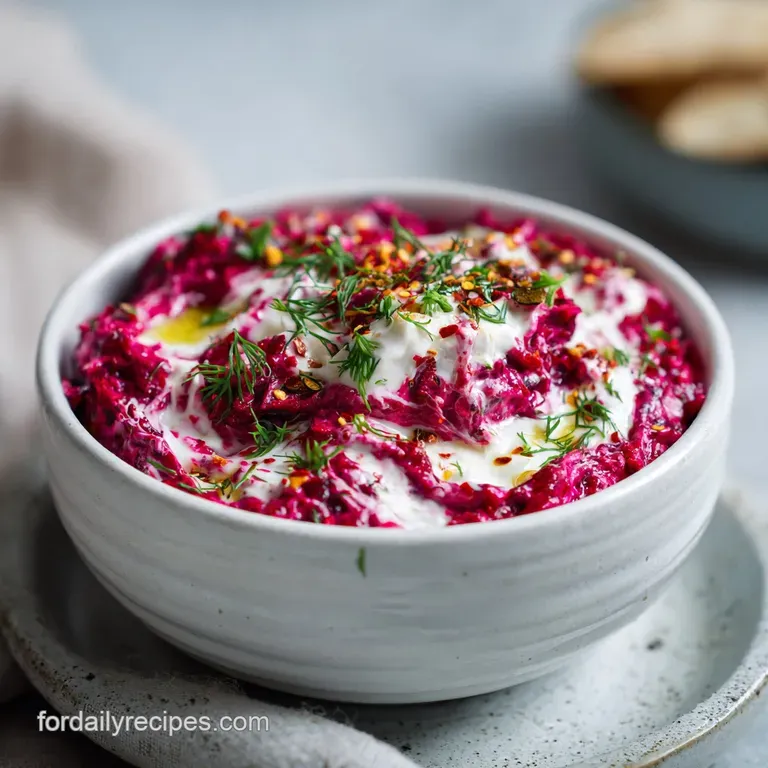
- Creating the Ultimate Beetroot Salad Dip Greek Yogurt Patzarosalata
- Why This Recipe Works
- Vital Statistics for This Vibrant Appetizer
- Essential Components for a Wholesome Mediterranean Spread
- Culinary Gear for Achieving a Silky Texture
- Detailed Stages for Roasting and Assembly
- Correcting Common Texture and Flavor Issues
- Simple Variations for Diverse Dietary Preferences
- Storage Methods for Preserving Freshness and Flavor
- Aesthetic Touches for a Professional Table Setting
- Common Myths About Beet Salads
- Recipe FAQs
- 📝 Recipe Card
Creating the Ultimate Beetroot Salad Dip Greek Yogurt Patzarosalata
I'll never forget the first time I tried to make this at home without a plan. My kitchen looked like a crime scene - pink splatters on the ceiling, stained wooden spoons, and fingers that stayed a vibrant shade of fuchsia for three whole days.
But the moment that earthy, roasted aroma filled the air and I swirled that first spoonful of crimson beet juice into the thick, snowy Greek yogurt, I knew I was onto something special.
There is something deeply satisfying about transforming humble, dirt covered root vegetables into a dip so velvety and bright that it practically glows on the table.
We often think of beets as those sad, vinegary slices from a tin, but when you roast them whole, they undergo a complete metamorphosis. They become concentrated, sweet, and incredibly tender. This recipe isn't just about mixing ingredients; it's about balancing the deep, grounded notes of the earth with the sharp, lactic tang of strained yogurt. It's a wholesome necessity for any gathering where you want people to actually finish the vegetable platter. Whether you're serving this alongside a crisp Greek Salad Recipe or just eating it with a hunk of crusty bread, it's the kind of dish that makes everyone ask for the recipe before the first bowl is even empty.
Trust me, we've all been there with the soggy, watery salads that pool at the bottom of the dish. I made that mistake so you don't have to. The secret lies in the patience of the prep - specifically how we handle the moisture.
Once you master the "grate and drain" technique, you'll never go back to those store-bought versions that rely on thickeners and sugar. We're keeping it plant forward, honest, and absolutely packed with nutrients that your body will thank you for later.
Why This Recipe Works
The success of this dish relies on a few fundamental culinary principles that transform simple ingredients into a complex spread. By understanding these interactions, you can ensure a consistent result every single time you cook.
- Maillard Reaction and Concentration: Roasting the beets whole in their skins traps steam inside, which cooks the flesh while concentrating the natural sugars through slow evaporation.
- Acidic Color Stabilization: The addition of red wine vinegar doesn't just provide tang; it lowers the pH, which helps the betalain pigments in the beets stay a bright, vivid red rather than turning a dull brown.
- Protein Fat Emulsification: Using full fat Greek yogurt provides a stable base where the fats carry the garlic's fat soluble flavor compounds, ensuring the "bite" is distributed evenly.
- Hygroscopic Balancing: Salt draws out the excess water from the grated beets before they hit the yogurt, preventing the dip from separating or becoming "soupy" after an hour in the fridge.
Chef's Tip: To get the skins off without the mess, rub the roasted beets with a paper towel while they are still warm. The skins will slide right off like a glove, and your hands will stay (mostly) clean.
The Physics of the Pink Emulsion
When you fold the beets into the yogurt, you aren't just mixing colors; you are creating a temporary suspension. The lactic acid in the yogurt acts as a mild preservative and texture stabilizer, ensuring the "velvety" mouthfeel remains consistent even after chilling.
| Servings | Beetroot Amount | Yogurt Quantity | Ideal Bowl Size |
|---|---|---|---|
| 2 People | 0.75 lbs | 0.75 cups | Small cereal bowl |
| 4 People | 1.5 lbs | 1.5 cups | Medium mixing bowl |
| 8 People | 3 lbs | 3 cups | Large serving platter |
Adjusting your quantities based on the guest list is straightforward, but always remember that the ratio of garlic to yogurt should be adjusted cautiously. Garlic grows more potent as it sits in the acidic environment of the yogurt, so if you are doubling the recipe for a party, start with 1.5 times the garlic and taste before adding the rest.
Vital Statistics for This Vibrant Appetizer
Getting the timing right is the difference between a crunch that's too hard and a texture that's just right. Beets are dense, and they require a specific thermal environment to break down those tough fibers into something supple.
This isn't a "fast food" recipe; it's a "slow food" process that rewards your patience with a depth of flavor you can't get from a microwave.
- Roasting Temperature: 400°F (200°C) is the sweet spot. Any lower and they take too long; any higher and the natural sugars might scorch before the center is soft.
- Precision Weight: We are looking for 1.5 lbs of fresh beets, which usually equates to about 3 to 4 medium sized globes.
- Resting Time: The dip needs at least 30 minutes in the fridge before serving. This allows the garlic to mellow and the flavors to "marry."
| Component | Fresh Roasted | Pre Cooked (Vacuum Packed) | Impact |
|---|---|---|---|
| Texture | Firm but silky | Often slightly mushy | Fresh has a better "shatter" |
| Flavor | Deep, earthy sweetness | Milder, slightly metallic | Fresh offers a complex profile |
| Effort | 45 mins active/passive | 5 mins active | Shortcuts save time but lose soul |
If you are in a rush, the vacuum packed beets are a functional substitute, but you'll miss that specific aroma that only comes from a hot oven. If you do go the shortcut route, make sure to pat them extremely dry with paper towels, as they often sit in a lot of liquid which can ruin your yogurt base.
Essential Components for a Wholesome Mediterranean Spread
When shopping, look for beets that still have their greens attached if possible. While we aren't using the greens in the dip itself, they are a great indicator of freshness. If the leaves are wilted and slimy, the beets have been sitting in storage too long and may have lost their sweetness.
For the yogurt, "Greek style" isn't enough - you need actual strained Greek yogurt. The thick, almost cheese like consistency is what gives the patzarosalata its structure.
- 1.5 lbs fresh beets: Look for firm, smooth skins without soft spots. Why this? Freshness ensures the highest natural sugar content for roasting.
- 2 large cloves garlic: Freshly minced is non negotiable here. Why this? Jarred garlic has a bitter aftertaste that ruins the creaminess.
- 1.5 cups full fat Greek yogurt: The higher fat content prevents curdling when mixed with vinegar. Why this? Fat carries the flavor of the walnuts and garlic.
- 3 tablespoons extra virgin olive oil: Use the good stuff, something peppery. Why this? It acts as a bridge between the earthy beets and tangy yogurt.
- 0.5 cup raw walnut halves: These provide the necessary textural contrast. Why this? They add a "shatter" that breaks up the soft texture.
Component Analysis
| Ingredient | Science Role | Pro Secret |
|---|---|---|
| Red Wine Vinegar | pH Balancing | Add half at the start, half at the end for "bright" notes. |
| Greek Yogurt | Emulsion Base | Whisk it alone for 30 seconds before adding beets to aerate. |
| Sea Salt | Moisture Extraction | Use fine grain to ensure it dissolves completely in the cold dip. |
Beyond these basics, you'll need your aromatics. A bunch of flat leaf parsley or fresh dill is essential. If you prefer a more traditional "anise" hint, go with the dill. If you want something cleaner and more garden fresh, parsley is your best friend.
Don't skip the cracked black pepper; the heat from the pepper cuts through the richness of the yogurt perfectly.
Culinary Gear for Achieving a Silky Texture
You don't need a high end lab to make a great dip, but a few specific tools will make your life significantly easier (and less messy). A box grater is the traditional way to go, but if you have a food processor with a grating attachment, now is the time to pull it out.
It will save your knuckles and keep the pink stains contained.
- Cast Iron Skillet or Baking Sheet: For roasting the beets. I prefer cast iron because it holds heat so evenly.
- Aluminum Foil: Essential for wrapping the beets to create that steam chamber effect.
- Fine Mesh Sieve: For draining the grated beets. This is the "make or break" tool for texture.
- Large Glass Bowl: Beets stain plastic and wood permanently. Glass is non reactive and easy to clean.
- Nitrile Gloves: Optional, but highly recommended if you have a job interview or a date the next day.
Chef's Tip: Freeze your walnuts for 10 minutes before chopping them. This prevents the oils from leaching out onto the cutting board, keeping the "shatter" crisp rather than oily.
If you don't have a fine mesh sieve, you can use a clean kitchen towel (one you don't mind turning pink!) to wring out the moisture. This is actually a very effective technique used in traditional Greek kitchens. Just place the grated beets in the center, gather the corners, and squeeze with all your might.
Detailed Stages for Roasting and Assembly
Let's get into the flow. This recipe is all about the "prep wait finish" cycle. While the beets are roasting, you can prep the rest of your meal or perhaps whip up a Maroulosalata Greek Lettuce recipe to serve as a fresh contrast.
- Prep the Beets. Scrub 1.5 lbs fresh beets to remove dirt, but leave the roots and an inch of the stems attached to prevent "bleeding" in the oven.
- Roast until Tender. Wrap each beet individually in foil with a tiny drop of oil. Bake at 400°F until a knife slides into the center like butter (about 45 minutes).
- Cool and Peel. Let them sit in the foil for 10 minutes. Use a paper towel to rub the skins off while they are still warm. Note: Peeling while warm is much easier than when cold.
- Grate the Ruby Bases. Use the coarse side of a box grater to shred the peeled beets into a bowl.
- Extract the Moisture. Place the grated beets in a sieve over a bowl. Sprinkle with a pinch of salt and let them drain for 15 minutes. Squeeze the pulp to remove any lingering juice.
- Aromatize the Base. In your large glass bowl, whisk 1.5 cups Greek yogurt, 2 minced garlic cloves, 2 tbsp red wine vinegar, and 3 tbsp olive oil until silky.
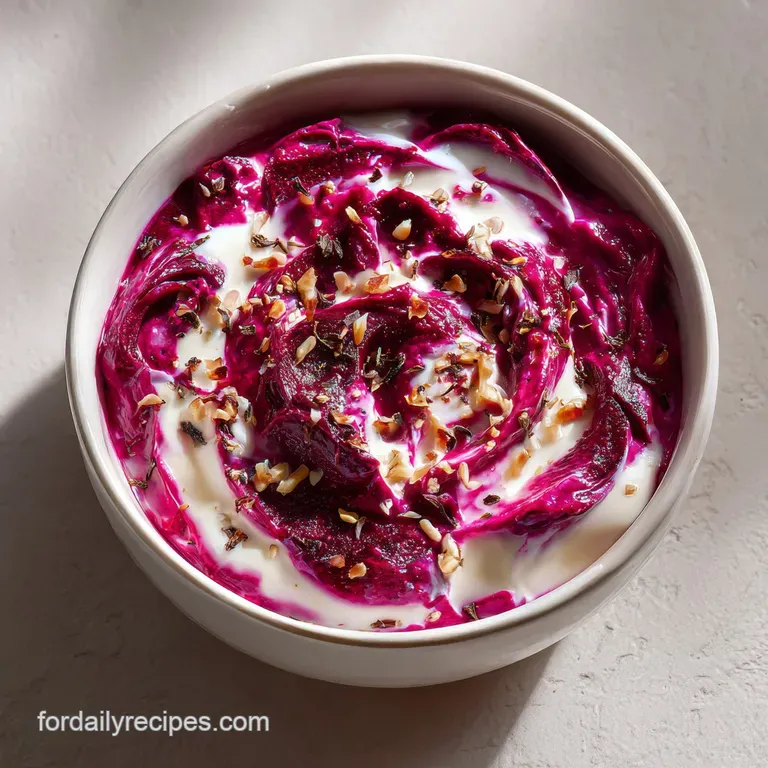
- The Yogurt Infusion. Gently fold the drained beets into the yogurt mixture. Do not over mix if you want a "swirled" look, or mix thoroughly for a solid neon pink hue.
- The Final Crunch. Roughly chop 0.5 cup walnuts and fold half into the dip. Stir in your chopped parsley or dill, salt, and pepper.
- Chill and Set. Cover and refrigerate for 30 minutes. This is crucial for the yogurt to firm back up after being disturbed.
- Garnish and Serve. Top with the remaining walnuts and a final drizzle of olive oil before bringing it to the table.
Correcting Common Texture and Flavor Issues
Even the best cooks run into trouble sometimes. The most frequent complaint with patzarosalata is that it becomes "watery" after a few hours. This is usually due to the beets releasing juice after they've been mixed with the salt and yogurt. If this happens, don't panic! You can easily fix it.
Why Your Patzarosalata is Watery
If your dip looks more like a cold soup than a thick spread, the beets weren't drained enough. The salt in the yogurt continues to pull moisture out of the vegetable cells even after mixing.
| Problem | Root Cause | Solution |
|---|---|---|
| Thin/Runny Dip | Residual beet juice | Stir in an extra 1/4 cup of yogurt or a tablespoon of labneh. |
| Harsh Garlic Bite | Garlic was too fresh/large | Add a squeeze of lemon juice or a tiny pinch of sugar to neutralize. |
| Dull Pink Color | Not enough acidity | Add another teaspoon of red wine vinegar to brighten the pigments. |
To prevent these issues from happening in the first place, follow this quick checklist of preventative measures:
- ✓ Always use full fat yogurt; low-fat versions have more whey and separate faster.
- ✓ Squeeze the grated beets until they feel like a dry pulp before mixing.
- ✓ Mince the garlic into a paste rather than chunks for a smoother flavor profile.
- ✓ Roast the beets rather than boiling them to keep the flavor concentrated and dry.
- ✓ Toast the walnuts lightly in a dry pan for 2 minutes for extra depth.
Simple Variations for Diverse Dietary Preferences
We want everyone at the table to enjoy this, regardless of their dietary restrictions. The beauty of a plant forward dish like this is its inherent flexibility. While the Greek yogurt is central to the traditional patzarosalata, there are several ways to adapt it without losing that "wholesome necessity" feel.
If you are looking for a dairy-free or vegan friendly version, you can swap the Greek yogurt for a thick, unsweetened almond or cashew based yogurt. Just be sure to find one that isn't too "nutty" in flavor, or it might clash with the earthiness of the beets.
Another great trick for vegans is to use "toum" (a Lebanese garlic sauce) mixed with a bit of cashew cream for that signature bite.
| Original Ingredient | Substitute | Why It Works |
|---|---|---|
| Greek Yogurt | Coconut Cream (Chilled) | Extremely thick and rich. Note: Adds a slight tropical note. |
| Red Wine Vinegar | Lemon Juice | Provides a cleaner, more citrusy acidity. |
| Walnuts | Toasted Sunflower Seeds | Keeps the crunch but is safe for those with nut allergies. |
For those watching their calorie intake, you can use 2% Greek yogurt, but I strongly advise against 0% or fat free versions. Without the fat, the garlic and vinegar will taste incredibly harsh, and the texture will be grainy rather than velvety.
If you use 2%, just be extra diligent about draining the beets to compensate for the thinner yogurt base.
Storage Methods for Preserving Freshness and Flavor
Storing this dip correctly is vital because the flavors continue to develop over time. The garlic will become more pronounced by day two, which some people (including me!) actually prefer. However, the color will also bleed more deeply into the yogurt, turning the whole dish a uniform, intense magenta.
In the Fridge: Store in an airtight glass container for up to 3 days. Any longer and the yogurt may begin to sour or separate. If you see a bit of pink liquid on top when you take it out, just give it a quick, gentle stir to re emulsify the fats.
Zero Waste Tip: Don't throw away that beet juice you squeezed out! It's packed with vitamins. I love to stir it into a vinaigrette for a salad or even add it to a morning smoothie for a natural energy boost. If you have leftover roasted beet scraps, they are brilliant tossed into a Double Bean Mediterranean recipe for extra bulk.
Freezing: Honestly, don't even bother with the freezer. Yogurt based dips lose their texture entirely once frozen and thawed; the proteins break down and the mixture becomes grainy and unappealing. This is a dish best enjoyed fresh or within a few days of making.
Aesthetic Touches for a Professional Table Setting
We eat with our eyes first, and a bright pink dip needs a little bit of help to look sophisticated rather than like a bowl of Pepto Bismol. The key is contrast. The deep green of the herbs and the golden brown of the walnuts are your best friends here.
- The "Swoosh" Technique: Use the back of a spoon to create a deep swirl in the top of the dip. This creates little "canyons" for the olive oil to pool in.
- Layered Textures: Don't mix all the walnuts in. Keep a handful of the best looking halves to perch on top of the swirls.
- Herb Freshness: Only add the garnish herbs right before serving. If they sit on the dip in the fridge, they will wilt and turn dark.
If you want X, do Y
- If you want a rustic texture, grate the beets coarsely and leave the walnuts in large chunks.
- If you want a refined dip, pulse the roasted beets in a food processor until finely minced and finely chop the nuts.
- If you want a smoky profile, add a tiny pinch of smoked paprika to the yogurt base.
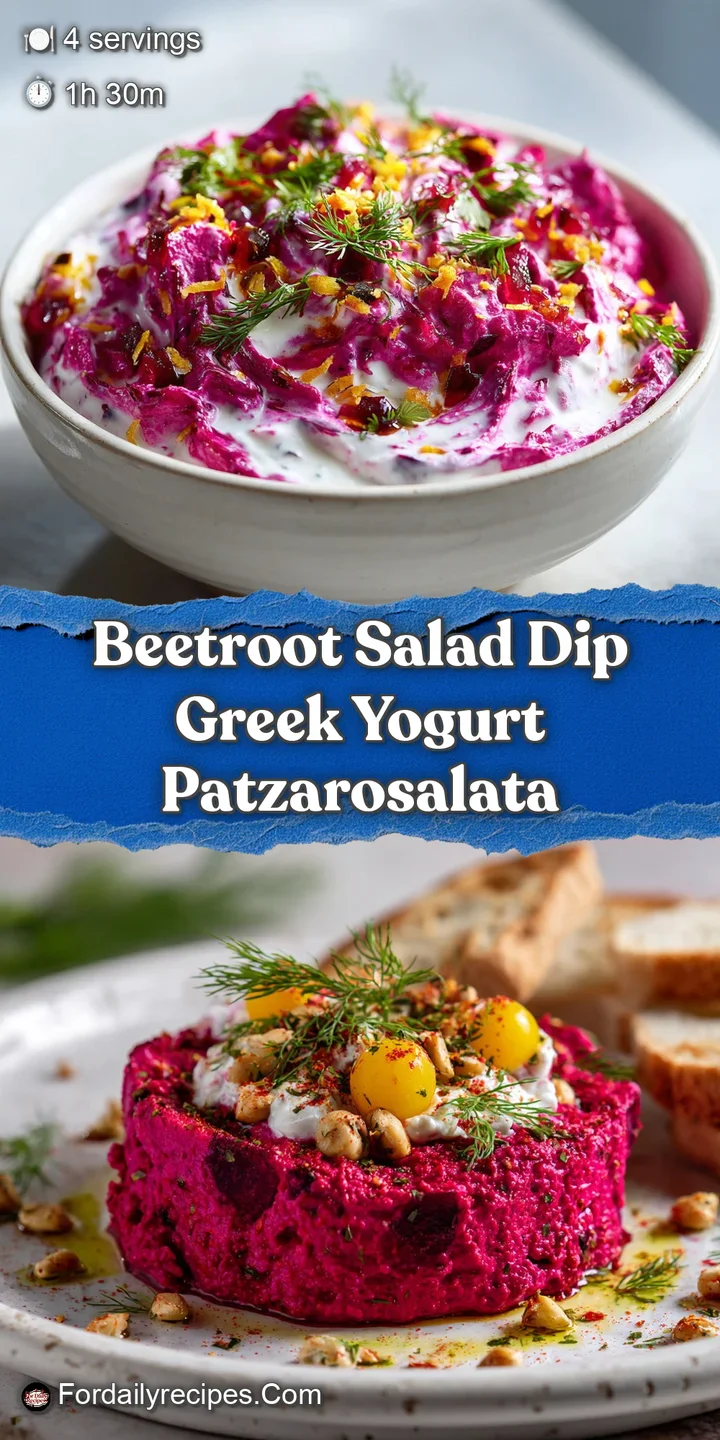
To really "wow" your guests, serve this in a dark colored bowl navy blue or charcoal grey to make that pink color absolutely pop. Pair it with triangles of toasted pita, cucumber slices, or even some endive leaves for a low carb option.
It’s a wholesome, satisfying, and visually stunning addition to any meal that proves vegetables really can be the star of the show.
Common Myths About Beet Salads
Myth: You have to boil beets to get them soft. Actually, boiling is the least effective way to cook beets for a dip. It leaches out all the color and most of the flavor into the water.
Roasting is the gold standard because it uses dry heat to intensify the natural sugars, resulting in a much "meatier" and more satisfying texture.
Myth: Raw garlic is too strong for a creamy dip. While raw garlic is potent, the acid in the vinegar and the yogurt actually performs a "cold cook" on the garlic, mellowing the sharpness over time. This is why the 30 minute rest in the fridge is so important.
It turns a harsh "bite" into a warm, lingering hum of flavor.
Myth: Canned beets are just as good as fresh. I've tried it, and the difference is night and day. Canned beets have a specific "processed" taste and a soft, uniform texture that lacks the character of a fresh roasted root.
If you want that restaurant quality patzarosalata, start with the raw vegetable every time. It’s worth the 45 minutes of roasting, I promise!
Recipe FAQs
Does beetroot go with Greek yogurt?
Yes, absolutely. The earthy sweetness of the beet perfectly balances the lactic tang and thick texture of strained Greek yogurt.
What is the name of the Greek beetroot dip?
The most common name is Patzarosalata dip. While Patzarosalata often refers to a salad, blending it with thick yogurt creates this specific spread often served as a meze.
How do you make beetroot yogurt dip?
Roast beets whole until tender, cool, then grate them coarsely. Drain the grated beets thoroughly to remove excess moisture before gently folding them into the seasoned Greek yogurt base.
How do you ensure the dip isn't watery after chilling?
Squeeze the grated beets dry using a clean towel or sieve after salting them. This critical step removes water that would otherwise leach out into the yogurt base during refrigeration.
Is it true you must use roasted beets instead of canned for the best flavor?
Yes, roasting is superior for this dip. Roasting concentrates the natural sugars and delivers a deeper, earthier flavor that canned beets simply cannot replicate, much like slow cooking concentrates flavor in other dishes.
What is the best way to prevent the dip from staining my hands pink?
Wear nitrile or food grade gloves while peeling and grating the beets. This physical barrier is the only sure way to keep your hands clean, especially since the hot steam helps the skins release.
Should I add the garlic right before serving or mix it in early?
Mix the garlic in early and allow the dip to rest for at least 30 minutes. The acidity in the yogurt mellows the harshness of the raw garlic, transforming the pungent bite into a smoother background flavor.
Beetroot Salad Dip Greek Yogurt
Ingredients:
Instructions:
Nutrition Facts:
| Calories | 312 kcal |
|---|---|
| Protein | 11.9 g |
| Fat | 22.9 g |
| Carbs | 17.8 g |
| Fiber | 4.4 g |
| Sugar | 12.1 g |
| Sodium | 305 mg |
