Slow Cooker Beef and Potatoes Recipe
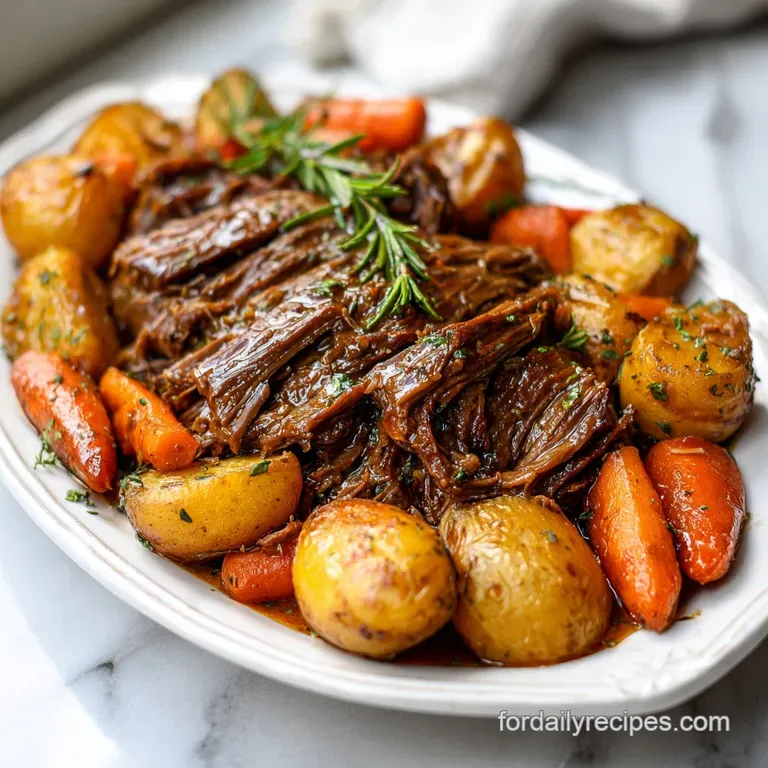
- Time: Active 15 minutes, Passive 8 hours, Total 8 hours 15 mins
- Flavor/Texture Hook: Silky, melt in-your mouth beef with savory sweet undertones
- Perfect for: Cold winter nights and busy families who crave heritage comfort
Why This Dish Works
- Maillard Reaction: Searing the beef at a high temperature before slow cooking creates complex, savory flavor compounds that a raw start simply cannot replicate.
- Collagen Breakdown: The long, over low heat window converts tough collagen into gelatin, providing a natural, lip smacking thickness to the gravy.
- Starch Stability: Using Yukon Gold potatoes ensures they hold their shape through the eight hour cycle rather than disintegrating into the liquid.
- Umami Synergy: Combining tomato paste, Worcestershire sauce, and beef bone broth creates a deep, savory foundation that builds over time.
This specific method is much more reliable than trying to rush a stew on the stovetop. If you are looking for more inspiration for your slow cooker, you might enjoy my Slow Cooker Beef recipe which uses a similar heritage technique to achieve that fall apart tenderness.
Decision Shortcut Comparison
| Thickness | Internal Temp | Rest Time | Visual Cue |
|---|---|---|---|
| 1.5 inch cubes | 195°F - 205°F | 10 mins | Beef shreds easily with a fork |
| 1 inch cubes | 190°F - 200°F | 5 mins | Fibers pull apart without resistance |
| 2 inch cubes | 200°F - 210°F | 15 mins | Surface appears dark and glistening |
Finding the right balance between the meat and vegetables is key. A good Cooker Recipe with Beef and Potatoes relies on the interaction between the rendered fat and the starchy vegetables.
When the fat meets the potato skins, it creates a richness that mimics the heavy cream often used in modern recipes, without actually needing it.
Component Analysis Table
| Ingredient | Science Role | Pro Secret |
|---|---|---|
| Beef Chuck Roast | High collagen content | Fat marbling prevents the meat from drying out during the long cook |
| Tomato Paste | Glutamate source | Sautéing it for one minute before adding liquid doubles the flavor |
| Yukon Gold Potatoes | Medium starch | They absorb salt more efficiently than red potatoes for a better seasoning balance |
| Brown Sugar | Caramelization | A small amount balances the acidity of the tomato and Worcestershire |
A slow Cooker Recipe with Beef and Potatoes is only as good as its foundation. I always reach for a heavy, marbled chuck roast because it has the connective tissue needed for that silky mouthfeel. Avoid lean cuts like round or sirloin, as they will turn into dry, stringy wood after eight hours in the pot.
Essential Ingredients and Subs
- 3 lbs Beef Chuck Roast: The star of the show. Why this? Contains the fat and collagen necessary for meltingly tender results.
- Sub: Beef brisket (cut into chunks) also works beautifully, though it is slightly fattier.
- 1.5 lbs Yukon Gold Potatoes: Diced into 1 inch chunks. Why this? They hold their shape and have a buttery flavor.
- Sub: Red bliss potatoes; they have a similarly low starch content that resists turning to mush.
- 3 large Carrots: Peeled and cut into thick rounds. Why this? Provides a natural sweetness to contrast the savory beef.
- Sub: Parsnips; these add an earthy, slightly spicy depth to the heritage profile.
- 1 large Yellow Onion: Thick cut wedges. Why this? Yellow onions provide a high sugar content for better caramelization.
- Sub: White onions, though they are a bit sharper and less sweet.
- 2 cups Low sodium Beef Bone Broth: The braising liquid. Why this? Bone broth has more natural gelatin than standard stock.
- Sub: A mix of 1.5 cups water and 0.5 cups dry red wine for a bistro style finish.
- 2 tbsp Worcestershire Sauce: The umami booster. Why this? Adds fermented depth and a hit of acidity.
- Sub: Soy sauce; it provides the salt and umami but lacks the vinegary punch.
- 2 tbsp Tomato Paste: For color and richness. Why this? Thickens the sauce and adds a concentrated savory note.
- Sub: Sun dried tomato pesto for an herbal, concentrated tomato flavor.
Flavor Map
- Richness: Beef chuck fat and bone broth
- Sweetness: Brown sugar and caramelized onions
- Earthiness: Thyme and potatoes
- Brightness: Worcestershire and fresh rosemary
Steps for Kitchen Success
- Prep the beef. Cut the 3 lbs Beef Chuck Roast into 1.5 inch cubes. Note: Keeping the cubes uniform ensures they all reach that shredding point at the same time.
- Season well. Toss the beef with 1 tsp Fine Sea Salt and 1/2 tsp Cracked Black Pepper. until every piece is evenly coated.
- Sear the meat. Heat a large skillet over medium high heat with a splash of oil. Brown the beef in batches until a dark, flaky crust forms on all sides.
- Build the base. Add the 1 large Yellow Onion and 2 tbsp Tomato Paste to the skillet for 2 minutes. until the paste turns a deep rust color.
- Deglaze the pan. Pour in a splash of the 2 cups Low sodium Beef Bone Broth and scrape the bottom until the savory browned bits dissolve.
- Assemble the pot. Layer the 1.5 lbs Yukon Gold Potatoes and 3 large Carrots in the slow cooker. Note: Harder vegetables go on the bottom where the heat is most direct.
- Combine everything. Add the beef, 4 cloves Garlic, 2 tbsp Worcestershire Sauce, 1 tbsp Brown Sugar, and remaining broth. until the liquid partially covers the meat.
- Infuse aromatics. Place 2 sprigs Fresh Thyme and 1 sprig Fresh Rosemary on top. until the scent of herbs fills the room.
- Slow cook. Cover and cook on LOW for 8 hours. until the beef is tender and gives no resistance.
- Thicken the sauce. Whisk 2 tbsp Cornstarch and 2 tbsp Water, then stir into the pot for 15 minutes until the liquid becomes glossy and velvety.
Chef's Tip: If you have ten extra minutes, let the beef rest in the sauce after turning the heat off. This allows the meat fibers to "relax" and soak up the surrounding gravy, making it even more succulent.
Troubleshooting Common Issues
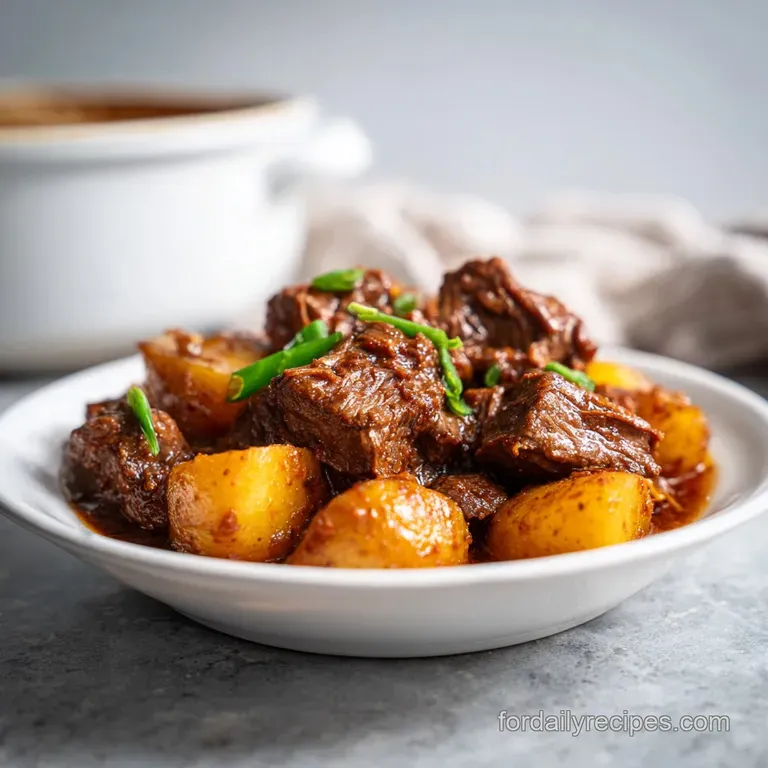
For Tough or Chewy Beef
This usually happens because the collagen hasn't had enough time to melt. If the timer is up but the meat feels rubbery, it simply needs more time. This Recipe with Beef and Potatoes relies on the internal temperature of the meat reaching at least 195°F.
Salt Correction Tips
Sometimes the broth reduces more than expected, leaving the dish too salty. Don't panic. You can add a splash of water or more unsalted broth. Alternatively, a tiny squeeze of lemon juice or a teaspoon of vinegar can cut through the saltiness and balance the flavors.
Troubleshooting Table
| Problem | Root Cause | Solution |
|---|---|---|
| Thin, watery sauce | Too much liquid or skipped searing | Stir in a cornstarch slurry and cook on HIGH for 20 mins |
| Mushy potatoes | Cut too small or wrong variety | Use 1 inch chunks of Yukon Golds and avoid over stirring |
| Bland flavor | Under seasoned at the start | Stir in an extra dash of Worcestershire or a pinch of salt at the end |
Common Mistakes Checklist
- ✓ Skipping the sear; you lose half the flavor without that crust.
- ✓ Adding too much liquid; the vegetables release their own moisture.
- ✓ Opening the lid constantly; this lets out the steam and adds 20 mins to the cook time.
- ✓ Using "Stew Meat" packs; these are often lean scraps that turn out dry.
- ✓ Not trimming large chunks of hard white fat from the roast.
Adjusting the Batch Size
If you are cooking for a smaller crowd, you can easily halve this Recipe with Beef and Potatoes. Use a smaller slow cooker (3 quart) to ensure the liquid level remains high enough to braise the meat. Keep the cook time the same, as the thickness of the beef cubes determines the duration, not just the total weight.
When scaling up for a big heritage family gathering, you'll need to work in batches to sear the meat. Do not overcrowd your skillet, or the beef will steam instead of browning. For a 6 quart or larger pot, you can double the ingredients, but reduce the bone broth by about 10% to prevent the dish from becoming a soup.
Cooking Method Comparison
| Method | Time | Texture | Best For |
|---|---|---|---|
| Slow Cooker | 8 hours | Fall apart tender | Deep flavor development |
| Pressure Cooker | 1 hour | Soft but less integrated | Last minute dinner |
| Dutch Oven | 3 hours 30 mins | Slightly crispy edges | Achieving a thick reduction |
Working with Beef and Potatoes is a lesson in patience. If you ever feel like rushing it by using the HIGH setting, just remember that the meat fibers might seize up and become tough. Low and slow is always the path to that velvety heritage finish we all love.
Debunking Old Kitchen Tales
One myth I hear constantly is that the slow cooker "seals in the juices" of the meat. In reality, the meat is actually losing moisture as it cooks. The reason it tastes juicy is because the fat and collagen have melted into the fibers.
The searing step isn't for "sealing" either, it is purely for building that dark, savory crust through the Maillard reaction.
Another legend is that you must submerge the meat entirely in liquid. If you do that with a slow cooker recipe, you'll end up with boiled beef. Since the lid prevents evaporation, you only need enough liquid to reach about halfway up the meat.
The beef and vegetables will provide the rest of the moisture as they break down.
Storage and Zero Waste
This dish actually tastes better the next day after the flavors have had time to mingle in the fridge. You can store leftovers in an airtight container for up to 4 days. When reheating, do it gently on the stovetop with a splash of water to loosen the gravy back to its velvety state.
For long term storage, this freezes beautifully for up to 3 months. Just make sure to leave a little head space in your freezer bag as the liquid will expand. If you find yourself with leftover gravy but no meat, use it as a base for a Slow Cooker Lasagna Soup recipe for a completely different meal.
Don't toss those carrot peels or onion ends! Throw them into a freezer bag. Once the bag is full, you can boil them with some water to make your own vegetable scrap stock. It is a wonderful way to honor the ingredients and keep the heritage of a zero waste kitchen alive.
High in Sodium
895 mg mg of sodium per serving (39% % of daily value)
The American Heart Association recommends limiting sodium intake to no more than 2,300mg per day for most adults.
Sodium Reduction Tips for Your Beef Stew
-
Swap the Broth-30%
Replace the low-sodium beef bone broth with no-salt added beef broth or homemade broth. This can significantly reduce the sodium content.
-
Reduce Added Salt-25%
Decrease the amount of fine sea salt used in the recipe by half, or eliminate it completely. Taste and adjust seasoning after cooking.
-
Limit Worcestershire Sauce-20%
Worcestershire sauce is high in sodium. Reduce the amount added by half (1 tbsp instead of 2 tbsp) or substitute with a low-sodium alternative.
-
Unsalted Tomato Paste-15%
Ensure you are using no-salt added tomato paste. Many brands add salt to their tomato paste which contributes to overall sodium.
-
Enhance with Herbs & Spices
Use fresh herbs and spices like thyme, rosemary, garlic, and black pepper to enhance the flavor of your stew without adding sodium. Consider adding a pinch of red pepper flakes for a subtle kick.
Recipe FAQs
Can you put potatoes in a slow cooker with beef?
Yes, absolutely. Potatoes are a classic pairing for slow cooked beef because they absorb the savory sauce beautifully.
Can I cook raw beef and potatoes together?
No, you should sear the beef first. Searing creates essential flavor compounds through the Maillard reaction that you cannot achieve by starting raw.
Can I put raw beef straight into a slow cooker?
No, searing is critical for deep flavor. While the beef will technically become tender after 8 hours, skipping the sear results in a dull, unappetizing gray exterior.
Do potatoes go on top or bottom of meat in a crockpot?
Place potatoes on the bottom, closer to the heat source. Harder vegetables benefit from more direct, consistent heat exposure to ensure they soften evenly alongside the beef.
If I cube my beef small, do I need to adjust the cooking time?
Reduce the cook time slightly, but prioritize tenderness. Smaller cubes might be done closer to the 6-hour mark on low, but check for fork shredding quality instead of relying solely on the clock.
Is it true that slow cooker meals are always bland?
False. Blandness usually results from skipping the foundational searing step or under seasoning the initial liquid.
What is the best way to make the sauce thicker at the end?
Whisk together cornstarch and cold water to create a slurry. Stir this mixture into the hot liquid during the last 15 minutes of cooking until the sauce becomes glossy and velvety.
Beef And Potatoes Slow Cooker
Ingredients:
Instructions:
Nutrition Facts:
| Calories | 554 kcal |
|---|---|
| Protein | 46 g |
| Fat | 27 g |
| Carbs | 23 g |
| Fiber | 3 g |
| Sugar | 4 g |
| Sodium | 895 mg |
