Burnt Ends Brisket: Making the Sticky, Smoky Crown Jewels of Bbq
- The Crown Jewels of BBQ: Why We Obsess Over Burnt Ends
- Essential Ingredients for Authentic Smoked Burnt Ends
- Step-by-Step: Mastering the Three Phases of Burnt Ends
- Chef's Troubleshooting: Avoiding Dry Burnt Ends
- How to Store and Reheat Burnt Ends for Maximum Juiciness
- Pairing Suggestions: What to Serve With Your Burnt Ends
- Recipe FAQs
- 📝 Recipe Card
The Crown Jewels of BBQ: Why We Obsess Over Burnt Ends
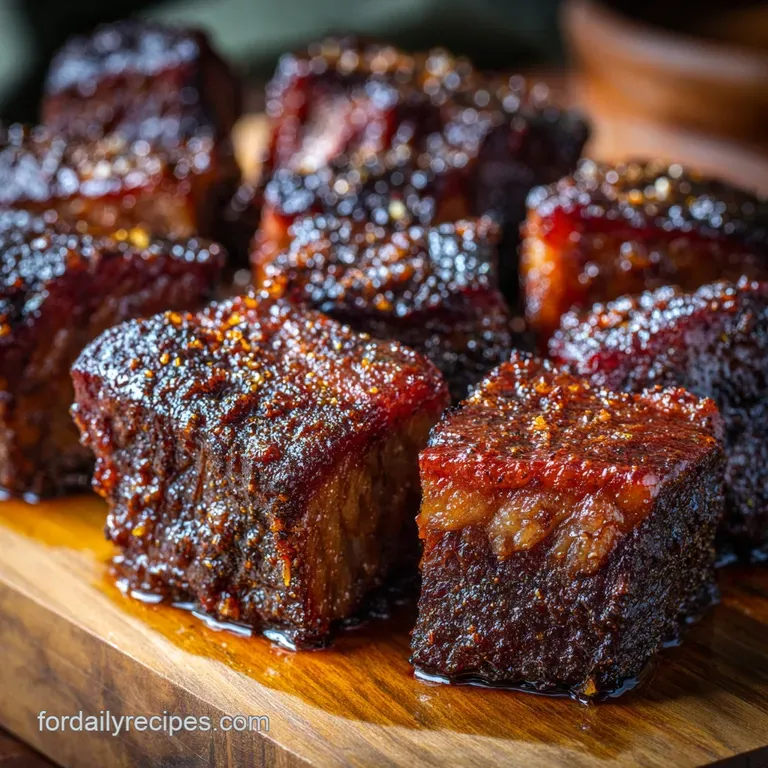
That smell, man. That sweet, deep, hickory kissed cloud of smoke that settles over your backyard is the first sign that you're about to make something brilliant. Then comes the bite: a deep, peppery bark that gives way to a shocking burst of melting, sticky meat, all wrapped up in a glorious, caramelized glaze.
This isn't just barbecue; this is pure, concentrated flavour, and it’s why we lovingly call them Burnt Ends.
They might seem intimidating, requiring a long cook, but honestly, this recipe is about patience, not complexity. You're taking the most flavourful part of the brisket the point and giving it the royal treatment.
We maximize that beautiful smoky crust, then braise it in liquid gold, ensuring every cube remains obscenely juicy. It’s a project for a Saturday, maybe, but the payoff is the biggest flavour bang for your time.
If you’ve ever tossed the point cut into a sandwich or worried about that long resting time, stop right there. We are transforming those glorious fatty bits into BBQ gold using a method that guarantees tenderness every single time.
Get ready to fire up the smoker because these authentic, sticky Burnt Ends are about to change your life.
Achieving the Perfect Bark and Tender Centre
The secret to truly transcendent Burnt Ends lies in executing the three distinct phases perfectly. Most people fail because they try to braise too early, or they skip the vital final glaze. This method works because we first develop an impenetrable, flavourful bark using high heat and low temp for hours.
You need that crust.
Once the bark is set, we dice the meat and bathe it in a rich liquid (Phase 2), forcing that concentrated muscle and fat to break down completely. This steaming process prevents the small cubes from drying out, which is a major win.
Finally, we finish uncovered in a sweet sauce, allowing the sugars to caramelize into that addictive, sticky outer coating.
Essential Ingredients for Authentic Smoked Burnt Ends
If you want the real deal, Kansas City style flavour, you need a great binder, a killer rub, and a brisket point with plenty of marbled fat. We are strictly talking about the point of the brisket here it has the perfect fat-to-meat ratio for melting tenderness.
Don't skimp on the quality of your coarse pepper, either.
Ingredients Detail 1
| Ingredient | Why We Use It | Substitution/Hack |
|---|---|---|
| Brisket Point | High fat content ensures juiciness. | Chuck Roast: Cube and use chuck roast instead for a cheaper, faster option. |
| Yellow Mustard | Acts as a binder for the rub. | Worcestershire Sauce: Use a few dashes to wet the meat instead; it adds an umami punch. |
| Coarse Pepper | Creates the essential, dark, crisp bark. | Pre-ground Pepper: Avoid it! Use fresh 16 mesh coarse ground only the flavour difference is huge. |
| Beef Broth (Braise) | Introduces moisture during the wrap. | Apple Juice: Use this for a slightly sweeter final product, highly recommended by many pros. |
Ingredients Detail 2
The rub needs complexity not just salt and pepper, but layers of flavour from paprika, sugar, and aromatics. That dark brown sugar is crucial, helping to form that dark mahogany colour during the initial smoke. Don't worry about measuring your rub perfectly; the aim is coverage.
Slightly more rub is always better than slightly less.
Chef's Note: I once tried to use sweet paprika instead of smoked paprika, thinking it wouldn't matter much. It did. The result was a duller, sweeter flavour profile. Always use smoked paprika for that authentic smoky depth!
step-by-step: Mastering the Three Phases of Burnt Ends
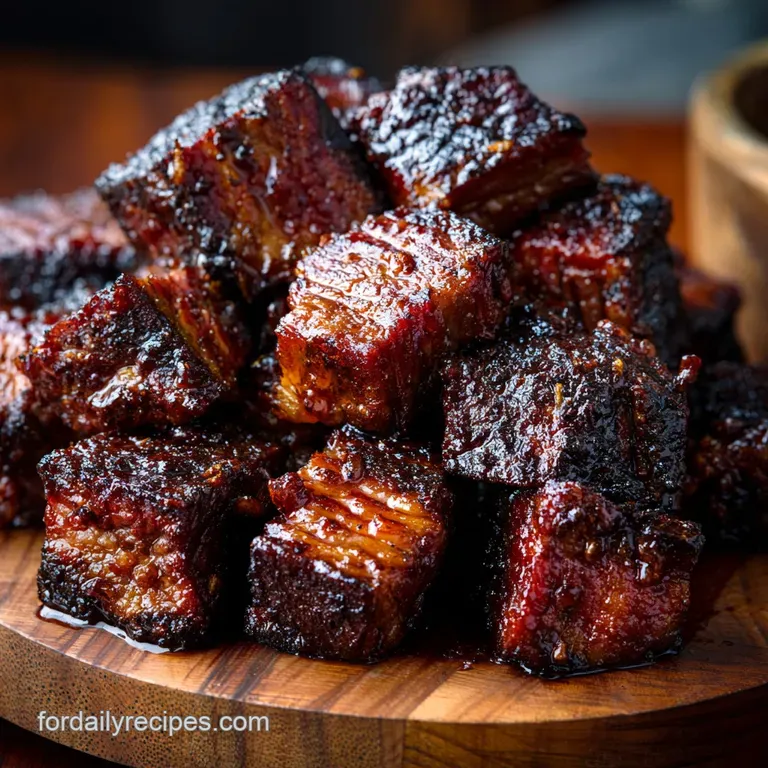
This is a marathon, not a sprint. Get the smoker stable, trust your thermometer, and settle in for a long, rewarding day of barbecue.
Instructions Detail 1 (The Bark)
- Prep and Rub: Trim the hard fat cap on your brisket point down to about 1/4 inch thickness. Pat the meat dry, then slather a thin layer of yellow mustard all over it. Mix your dry rub ingredients thoroughly and apply the rub heavily, pressing it into the mustard binder until the meat is completely coated and looks black.
- Smoke Time: Preheat your smoker to a consistent 225°F (107°C) using hickory or oak wood. Place the rubbed point, fat-side up, directly on the grates. Smoke undisturbed for 6– 8 hours until the internal temperature hits 165°F (74°C). The crust, or "bark," must be rock hard and dark black red. Don't touch it!
Instructions Detail 2 (The Braise and Glaze)
- Cube and Bathe: Remove the point from the smoker and let it rest for 10 minutes. Grab your sharp knife and slice the point into generous 1 inch cubes. Transfer all the cubes into a deep disposable foil pan. Pour in the beef broth and apple cider vinegar, then dot the top with the pieces of butter.
- The Braise: Cover the pan tightly with foil and return it to the smoker. Maintain 225°F (107°C) for another 1.5 to 2 hours. The cubes are done when they probe like soft butter they should be ridiculously tender, likely reaching 205°F (96°C) internally.
- Glaze and Finish: Drain off most of the liquid (but keep a few tablespoons for moisture). Pour your favourite BBQ sauce and honey over the cubes and toss gently to coat. Remove the foil lid and crank the smoker temperature up to 250°F (120°C). Cook for another 30– 45 minutes, stirring once, until the sauce has thickened and deeply caramelized onto the edges. You want them sticky and wonderfully messy.
Chef's Troubleshooting: Avoiding Dry Burnt Ends
Burnt ends should melt in your mouth, not chew like jerky. There are two critical failure points where most home cooks run into trouble, leading to tough, dry cubes.
First, you didn’t cook the point long enough during the braise phase (Phase 2). Doneness isn't about reaching 165°F (74°C) for the bark; it's about pushing the temperature in Phase 2 past 200°F (93°C) until the connective tissue in the fat renders completely.
If the probe offers resistance, put the lid back on and wait.
Second, you drained too much liquid before the glaze. That reserved braising liquid is liquid gold, full of rendered fat and smoky flavour. If you pour out every last drop before adding the sauce, your meat will inevitably dry out during the final 30 minute caramelization process.
Always leave a small pool of liquid in the bottom of the pan to keep things moist.
How to Store and Reheat Burnt Ends for Maximum Juiciness
If you have leftovers (which is a miracle in itself), they store incredibly well. Simply scoop the cooled Burnt Ends, along with any remaining sauce, into an airtight container. They will last safely in the refrigerator for up to 4 days.
For longer storage, freeze them! Place the completely cooled Burnt Ends on a parchment lined tray and flash freeze them for an hour, then transfer them to a freezer bag or vacuum seal them. They keep well for up to 3 months. To reheat, the best method is the low and slow oven trick.
Preheat your oven to 250°F (120°C), place the Burnt Ends in a foil pan with a splash of beef broth, cover tightly with foil, and bake for 20– 30 minutes until steaming hot. This re-steaming process keeps them perfectly tender.
Pairing Suggestions: What to Serve With Your Burnt Ends
These intensely rich, fatty, and sweet cubes beg for something sharp and acidic to balance the palate. Don't serve something heavy and creamy; you need bright contrast.
Additional_Info Detail 1
A sharp, vinegary coleslaw is non-negotiable, trust me. Skip the creamy mayo laden versions and opt for one dressed heavily with cider vinegar and coarse ground mustard. The acidity cuts through the richness of the fat beautifully. You need that crunch and tang.
Additional_Info Detail 2
For sides, classic smoky baked beans laced with molasses or a spicy jalapeño cheddar cornbread are the perfect foundation. And what about drinks? Forget the delicate wines. This calls for a bold, hoppy IPA or, if you're feeling fancy, a high proof Kentucky Bourbon sipped neat alongside that sticky perfection.
Recipe FAQs
What is the best cut of meat to use for authentic burnt ends?
Authentic burnt ends are made exclusively from the Brisket Point, which is the fattier, thicker muscle attached to the flat of a whole packer brisket. The flat cut is too lean and will dry out quickly during the extremely long smoking process required to properly render the fat.
Using the Point ensures that signature rich, moist, and tender texture that defines "meat candy."
Why are my burnt ends tough or dry instead of moist and tender?
Dryness or toughness usually indicates that the meat was pulled too early before the connective tissues (collagen) fully broke down into gelatin. Burnt ends require a very high internal temperature, typically between 200°F and 205°F (93°C 96°C), for the fat to fully render and the meat to become truly tender.
Use the "probe test" a thermometer or skewer should slide into the meat with minimal resistance, like pushing into soft butter.
Do I need to wrap the burnt ends, and when should I start the glazing stage?
Wrapping, or the "Texas Crutch," is crucial for the second stage, as it keeps the ends moist while they braise in the BBQ sauce and caramelized sugars. You should transition to the wrapping and glazing stage once the meat cubes have achieved a deep mahogany bark and are probe tender, which generally occurs at an internal temperature around 190°F to 200°F (88°C 93°C).
Once wrapped, return them to the smoker to finish rendering and caramelizing.
Can I make burnt ends without a dedicated smoker?
Yes, you can adapt this recipe using a standard charcoal kettle grill set up for indirect heat, or even a low oven. If using a grill, utilize wood chunks or smoking chips placed directly on the charcoal to generate the smoke flavor during the initial cook.
For an oven preparation, set the temperature low (around 275°F/135°C) and add liquid smoke to the braising sauce to replicate some of the smoky complexity.
How do I achieve a deeper, thicker bark on the burnt ends?
To maximize bark formation, ensure your dry rub contains coarse ingredients, specifically kosher salt and coarse black pepper, and apply it liberally the night before cooking. Additionally, avoid heavy spritzing during the first few hours of the smoke, as excess moisture will soften the developing bark.
The key is dry air and uninterrupted smoke contact early in the process.
What is the proper method for storing and reheating leftover burnt ends?
Allow the burnt ends to cool completely before storing them in an airtight container in the refrigerator for up to 4 days, or freezing them for up to 3 months. To reheat, thaw them overnight if frozen, and place them in an oven safe dish covered tightly with aluminum foil.
Reheat gently at 300°F (150°C) until warmed through, adding a small splash of liquid or fresh sauce to maintain moisture.
Can I use pork belly instead of brisket for a similar result?
Absolutely; pork belly burnt ends (often called "Pork Candy") are a hugely popular and delicious alternative, requiring less cooking time than beef brisket. While the flavor profile is richer and more porcine, the technique is nearly identical: smoke the cubed pork belly, braise it in sauce, and then return it uncovered for a final caramelization.
This makes them a perfect option if you are short on time.
Authentic Smoked Brisket Burnt Ends Recipe
Ingredients:
Instructions:
Nutrition Facts:
| Calories | 650 kcal |
|---|---|
| Fat | 45 g |
| Fiber | 1 g |
