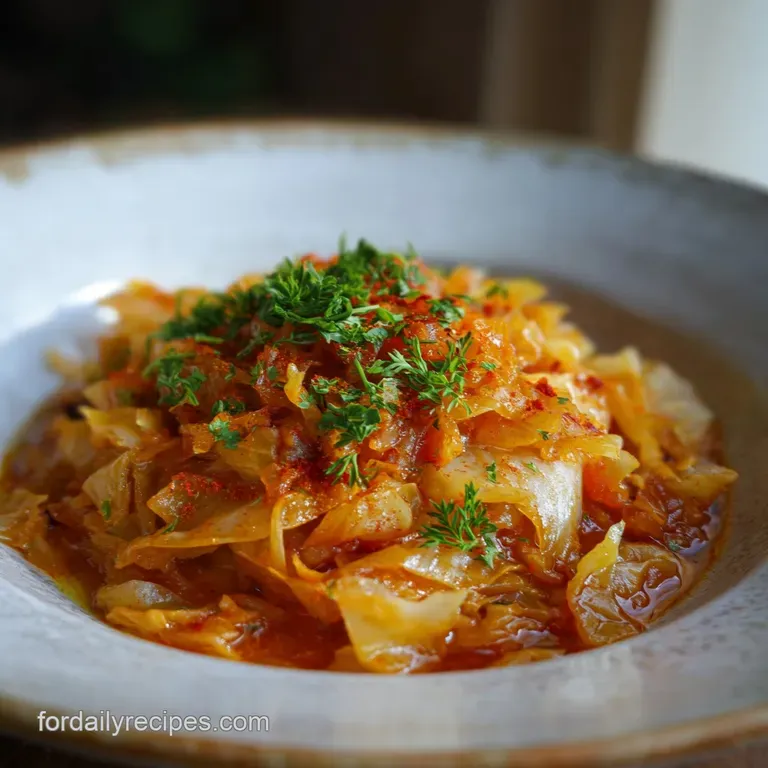
Turkish Cabbage Stew: Traditional Kapuska
- Time: Active 20 minutes, Passive 45 minutes, Total 1 hours 5 mins
- Flavor/Texture Hook: Velvety, melt in-your mouth cabbage with a smoky, citrusy finish.
- Perfect for: Weekend batch cooking or a cozy, high fiber weeknight dinner.
- Secrets to Mastering Your Turkish Cabbage Stew
- The Chemistry of Global Flavor
- Essential Ingredient Deep Dive
- Ingredients and Smart Pantry Swaps
- Professional Kitchen Tools Needed
- Step by Step Cooking Guide
- Fixing Common Texture and Taste Issues
- Scaling the Recipe for Crowds
- Debunking Cabbage Stew Beliefs
- Regional Variations and Flavor Twists
- Proper Storage and Waste Reduction
- Perfect Pairings for This Stew
- Recipe FAQs
- 📝 Recipe Card
Secrets to Mastering Your Turkish Cabbage Stew
The first time I smelled Kapuska simmering in a friend’s kitchen in Istanbul, I was hit with an aroma so deep and complex I couldn't believe it came from a head of cabbage.
It wasn't that sulfurous, boiled smell we all dread from school cafeterias; it was something extraordinary smoky, tangy, and intensely savory. That scent lingered in the air, a mixture of caramelized onions and the unique, sun dried fragrance of Turkish pepper paste.
I’ve spent years trying to replicate that exact sensory experience in my own kitchen. I’ve made the mistake of rushing the onions or skipping the step of "blooming" the tomato paste, resulting in a thin, lackluster soup.
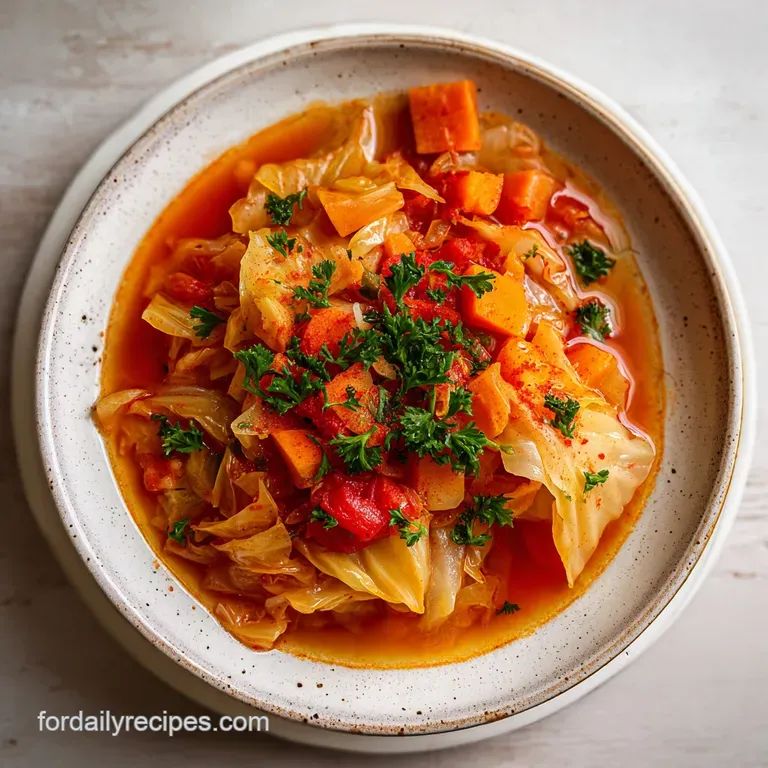
But when you get it right when the beef is seared to a dark mahogany and the cabbage ribbons have softened into a silken texture this Turkish Cabbage Stew becomes something you’ll crave every time the temperature drops.
Trust me on this: the secret isn't just in the ingredients, but in the patience you show that pot.
We aren't just making a soup here; we’re building a foundation of flavor that gets better the next day. The rice acts as a subtle thickener, absorbing the beef broth while releasing just enough starch to give the liquid a velvety body.
It's the kind of meal that makes a cold Tuesday feel like a special occasion, especially when finished with a sharp zing of lemon and a handful of dried mint.
The Chemistry of Global Flavor
Maillard Mastery: Searing the beef chuck at a high temperature creates complex flavor compounds that dissolve into the broth, providing a savory depth that raw meat cannot offer.
Pigment Activation: Heating the Turkish pepper paste in oil releases fat soluble capsaicin and carotenoids, intensifying both the vibrant red color and the smoky heat of the stew.
Starch Suspension: The small amount of white rice releases amylopectin during the simmer, which naturally emulsifies the fats and liquids into a cohesive, rich sauce.
| Premium Ingredient | Budget Alternative | Flavor Impact | Savings |
|---|---|---|---|
| Beef Chuck Cubes | Ground Beef (0.5 lb) | Softer texture, less chew | Save $3-5 |
| Turkish Pepper Paste | Tomato Paste + Smoked Paprika | Loses fermented depth | Save $2 |
| Beef Broth | Water + Bouillon Cube | Slightly higher sodium | Save $1-2 |
The choice between beef chuck and ground beef is a classic kitchen debate. While chuck offers those chunky, succulent bites that feel like a traditional Sunday roast, ground beef integrates more thoroughly into every spoonful of the Turkish Cabbage Stew, making it feel more like a hearty ragu.
Essential Ingredient Deep Dive
| Component | Science Role | Pro Secret |
|---|---|---|
| White Cabbage | Structural Fiber | Use the inner core for extra sweetness and crunch. |
| Turkish Pepper Paste | Umami Foundation | Look for "Biber Salçası" to get the authentic sun dried tang. |
| Aleppo Pepper | Aromatic Heat | Provides a fruity, mild tingle without overwhelming the palate. |
Ingredients and Smart Pantry Swaps
- 1 medium head white cabbage: Shredded into 1 inch ribbons. Why this? Cabbage provides the bulk and sweetness that balances the spicy paste.
- Substitute: Savoy cabbage (Note: Softens much faster than white cabbage).
- 2 tbsp extra virgin olive oil: For sautéing.
- Substitute: Ghee or clarified butter for a nuttier, richer base.
- 1 large yellow onion: Finely diced for the aromatic base.
- Substitute: Two large shallots for a more delicate sweetness.
- 2 cloves garlic: Minced.
- Substitute: 1 tsp garlic powder added with the spices.
- 0.5 lb beef chuck: Cubed small (1/2 inch). Why this? Chuck has enough fat to stay tender during the long simmer.
- Substitute: Lamb shoulder for an even more traditional Turkish profile.
- 1.5 tbsp Turkish tomato paste: For color and body.
- 1 tbsp Turkish hot pepper paste: For heat and depth.
- 1 tsp Aleppo style pepper flakes: For a mild, citrusy spice.
- Substitute: Half part crushed red pepper and half part sweet paprika.
- 1 tsp dried mint: The "secret" Turkish finishing touch.
- 2 cups low sodium beef broth: The braising liquid.
- Substitute: Chicken broth or vegetable broth.
- 2 tbsp uncooked white rice: To thicken the stew.
- Substitute: Bulghur wheat for a heartier, nuttier texture.
- 1 tbsp fresh lemon juice: To cut through the richness.
- 0.5 tsp salt and 0.5 tsp black pepper.
Professional Kitchen Tools Needed
You really want a heavy bottomed vessel for this. A Dutch oven (like a Le Creuset or Lodge) is ideal because it retains heat evenly and prevents the cabbage from scorching during the wilting phase.
The thick walls ensure the "Gentle Simmer" stays consistent, which is vital for the beef chuck to break down without becoming stringy.
You’ll also need a sharp chef’s knife to handle that cabbage. Shredding a 2 lb head of cabbage can feel like a workout if your blade is dull. I prefer a 10 inch knife to make long, clean cuts through the core.
Beyond that, a sturdy wooden spoon is your best friend for scraping up those brown bits (fond) from the bottom of the pot that’s where all the magic lives.
step-by-step Cooking Guide
1. The Aromatic Foundation
Heat the 2 tbsp olive oil in your Dutch oven over medium high heat. Add the 0.5 lb beef chuck cubes and sear for 5 minutes until deep brown and sizzling. Remove the meat and set aside, then drop in the diced yellow onion.
Sauté for 6 minutes until translucent and golden at the edges. Note: Don't rush this; the onion sweetness balances the spicy pepper paste later.
2. Blooming the Salça
Stir in the minced garlic and the 1.5 tbsp tomato paste and 1 tbsp hot pepper paste. Cook for 3 minutes, stirring constantly, until the paste darkens and smells toasted. This "blooming" phase is non negotiable for a truly authentic Turkish Cabbage Stew.
3. Wilting the Cabbage
Return the beef to the pot and add the shredded cabbage ribbons in batches. It will look like too much cabbage, but it will shrink. Toss it with the paste for 5 minutes until the cabbage begins to collapse and takes on a reddish hue.
4. The Gentle Simmer
Pour in the 2 cups beef broth, 2 tbsp rice, Aleppo pepper, salt, and black pepper. Bring to a boil, then reduce heat to low. Cover and simmer for 45 minutes until the cabbage is velvety and the beef is tender.
5. The Finishing Touch
Stir in the 1 tsp dried mint and 1 tbsp lemon juice. Let it sit for 5 minutes off the heat until the aromas mingle into a fragrant cloud. Serve warm in deep bowls.
Fixing Common Texture and Taste Issues
Thin Stew Solutions
If your stew looks more like a watery soup, it usually means the cabbage released more moisture than expected. This often happens with very fresh, large heads of cabbage. To fix this, simply remove the lid for the last 15 minutes of cooking to allow some liquid to evaporate, or add an extra tablespoon of rice earlier in the process.
Bitter Cabbage Fixes
Occasionally, white cabbage can have a slightly bitter aftertaste, especially if it was harvested late in the season. The sharp acidity of the lemon juice usually fixes this, but if it persists, a tiny pinch of granulated sugar (just 1/4 teaspoon) can neutralize the bitterness without making the dish sweet.
| Problem | Root Cause | Solution |
|---|---|---|
| Tough Beef | Simmer time was too short | Simmer for an extra 15 mins covered. |
| Mushy Rice | Rice added too early | Add rice exactly 45 mins before finishing. |
| Overly Salty | Broth reduction | Add a splash of water and extra lemon juice. |
Common Mistakes Checklist
- ✓ Pat the beef dry with paper towels before searing (prevents steaming).
- ✓ Do not skip blooming the pepper paste in oil (essential for depth).
- ✓ Keep the lid tightly closed during the simmer to trap the steam.
- ✓ Always use fresh lemon juice; the bottled stuff lacks the necessary brightness.
- ✓ Let the stew rest for 10 minutes before serving to thicken the juices.
Scaling the Recipe for Crowds
Downscaling (1-2 servings): Use a small saucepan and cut the ingredients in half. Reduce the beef broth by 20% as less evaporation occurs in smaller pots. Cook time remains the same to ensure the beef is tender.
Upscaling (10+ servings): When doubling the recipe, use a very large stockpot. Do not double the salt immediately; start with 1.5x and adjust at the end. You may need to sear the beef in two batches to avoid overcrowding the pan, which leads to gray, boiled meat instead of a brown crust.
If you are looking for a lighter, faster version of a cabbage based meal, you might enjoy my Fat Burning Cabbage recipe. It uses similar base vegetables but focuses on a quicker, broth heavy approach.
Debunking Cabbage Stew Beliefs
Many people believe that cabbage must be boiled in a massive amount of water to be soft. This is a myth. Cabbage is about 90% water itself; braising it in a small amount of concentrated broth, as we do in this Turkish Cabbage Stew, allows it to soften in its own juices, resulting in a much more intense flavor.
Another misconception is that dried mint is "just for garnish." In Turkish cuisine, dried mint is a functional herb. When added to a hot stew, it releases oils that act as a digestive aid and provide a cooling counterpoint to the heat of the pepper paste.
It is a structural part of the flavor profile, not an afterthought.
Regional Variations and Flavor Twists
Vegetarian Variation Tips
To make a Turkish Cabbage Stew vegetarian, simply omit the beef and use a rich vegetable stock. I highly recommend adding 1 cup of cooked chickpeas or brown lentils during the last 20 minutes of simmering to provide the protein and "bite" that the beef usually offers.
The smoky pepper paste does most of the heavy lifting for flavor, so you won't feel like you're missing out.
Adding Hearty Potatoes
In some regions of Anatolia, people prefer a Turkish Cabbage Stew with potatoes. If you want to try this, peel and cube one medium russet potato into 1/2 inch pieces. Add them at the same time as the beef broth.
The potatoes will release even more starch, making the stew incredibly thick and filling perfect for the coldest winter nights.
The Decision Shortcut
- If you want it spicier, double the Aleppo pepper and add 1/2 tsp of cayenne.
- If you want it creamier, serve each bowl with a massive dollop of full fat Greek yogurt.
- If you want it smokier, add 1/2 tsp of liquid smoke or use smoked salt.
Proper Storage and Waste Reduction
Storage: This stew is legendary for being better on day two. Keep it in an airtight container in the fridge for up to 4 days. The flavors meld, and the cabbage absorbs even more of the spicy broth.
Freezing: You can freeze this for up to 3 months. Just be aware that the rice might become slightly softer upon thawing. Reheat gently on the stovetop with a splash of water to loosen the sauce.
Zero Waste: Don't throw away the cabbage core! Dice it very finely and sauté it right along with the onions. It has a high sugar content and adds a lovely structural element to the base of the stew. If you have leftover beef broth, use it to deglaze your next pan of roasted vegetables.
Perfect Pairings for This Stew
Traditional Side Pairings
In a traditional Turkish home, this stew would almost always be served alongside a bowl of plain bulghur pilaf or a stack of warm pide bread to soak up the juices. The acidity of the stew also pairs beautifully with a crisp, cold salad. I often serve this with my Sumac Onion Salad recipe, which provides a crunchy, sharp contrast to the soft, braised cabbage.
The Essential Side
If you want to keep the meal lower in carbs but still crave that "stew and bread" experience, try serving it with a side of roasted cauliflower or just a simple plate of pickled peppers (Turşu). The vinegary snap of pickles cuts through the richness of the beef fat and pepper paste perfectly. It turns a simple bowl of stew into a full sensory Turkish feast. For those who enjoy hearty, legume based stews, you might also find the textures in my Ditalini Pasta Recipe quite satisfying as a follow up meal later in the week.
Recipe FAQs
Is Turkish Cabbage Stew better the next day?
Yes, it is significantly better the next day. The flavors continue to meld overnight, and the cabbage fully absorbs the spiced broth, resulting in a richer, deeper taste.
What is the most critical step for achieving authentic flavor?
Bloom the tomato and pepper pastes in oil. Cook the pastes for three minutes, stirring constantly, until they darken and smell toasted; this releases fat-soluble flavor compounds.
How can I substitute Turkish Pepper Paste if I cannot find it?
Use tomato paste mixed with smoked paprika and cayenne. Use 2 parts standard tomato paste to 1 part mixture of smoked paprika and a pinch of cayenne to mimic the depth and heat.
How do I ensure the cabbage is tender and not mushy?
Simmer it gently, covered, for 45 minutes. Keep the heat low to maintain a gentle bubble, which allows the tough cabbage fibers to break down slowly into a silken texture.
Why is the rice included in this savory stew?
The rice acts as a natural thickening agent. As it cooks, it releases starch, lending a velvety body to the broth without needing flour or cream.
What is the best cut of beef to use for the best texture?
Beef chuck cubes are highly recommended. This cut contains adequate marbling and connective tissue that breaks down during the long simmer, yielding melt-in-your mouth tenderness.
How do I prevent the stew from tasting flat or bland?
Finish the stew with fresh lemon juice and dried mint. The acidity cuts through the richness of the beef fat, and the mint provides the essential bright, aromatic Turkish finish.
Turkish Cabbage Stew Recipe
Ingredients:
Instructions:
Nutrition Facts:
| Calories | 254 kcal |
|---|---|
| Protein | 12.8 g |
| Fat | 14.2 g |
| Carbs | 19.5 g |
| Fiber | 5.2 g |
| Sugar | 8.4 g |
| Sodium | 485 mg |
