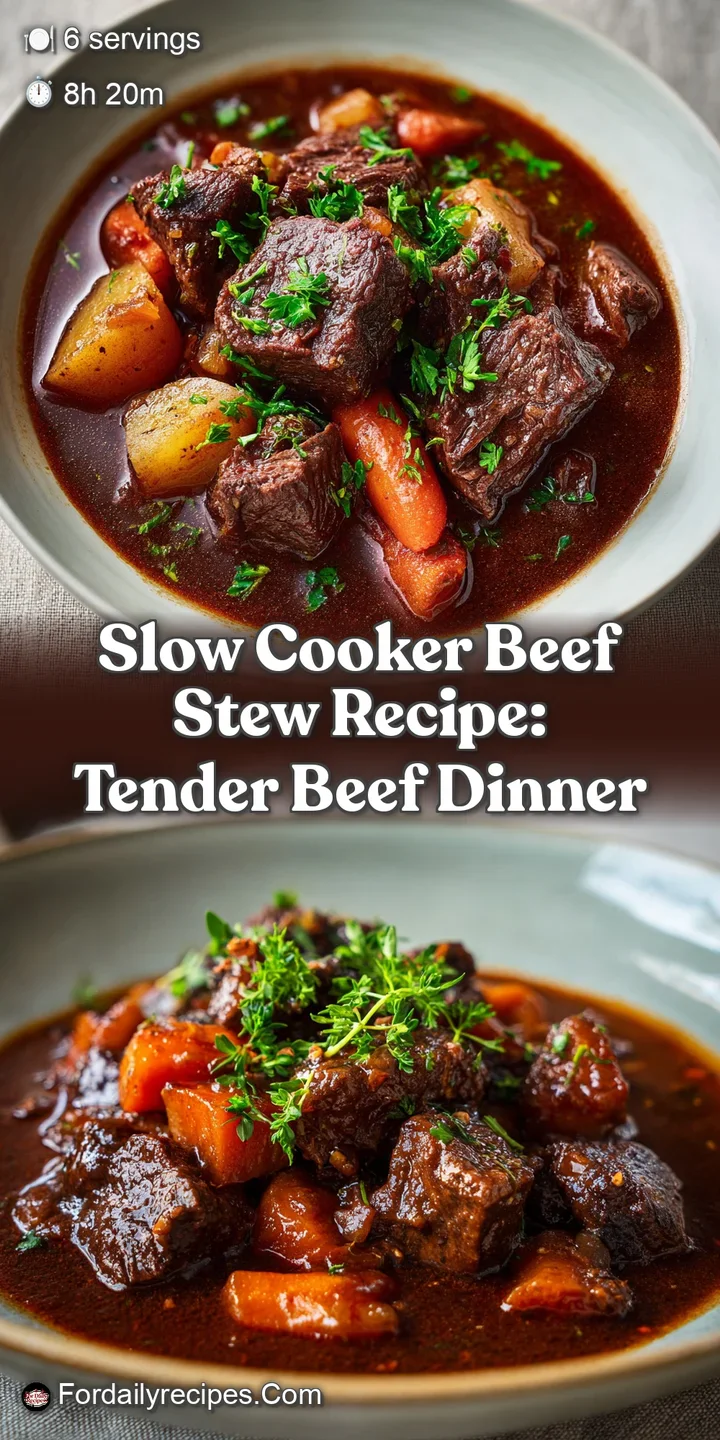
Slow Cooker Beef Stew: Tender Beef & Velvety Gravy
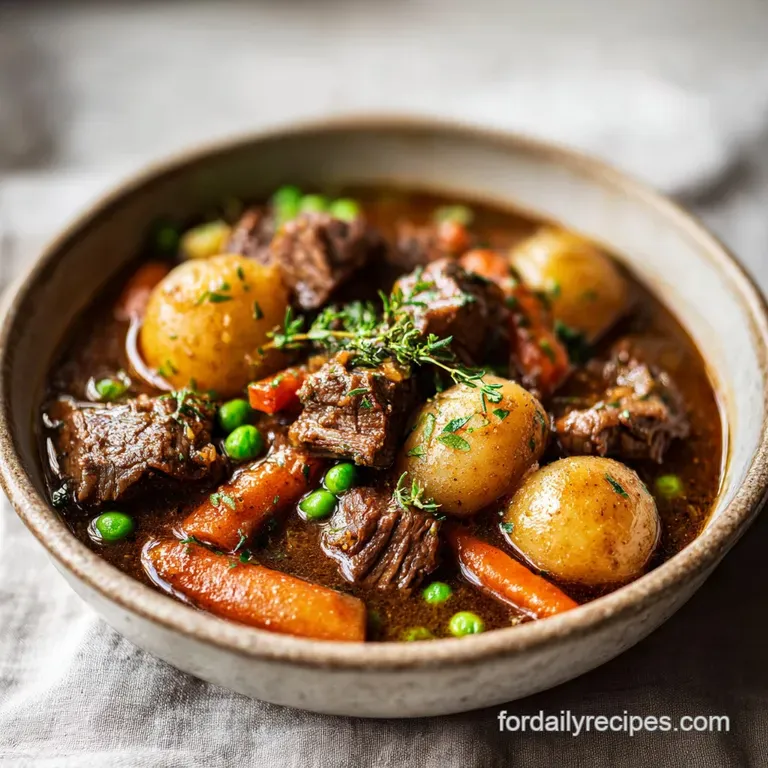
- Time: Active 20 minutes, Passive 8 hours, Total 8 hours 20 mins
- Flavor/Texture Hook: Fork tender beef in a rich, velvety gravy
- Perfect for: Lazy Sundays or busy workdays needing a cozy homecoming
- Why This Slow Cooker Beef Stew Beats Everything Else
- The Physics of Tenderness
- Component Analysis for a More Meaningful Braise
- The Elements Required for This Savory Masterpiece
- Essential Tools for a Hands Off Kitchen Experience
- Step-by-Step Guidance for the Perfect Tenderness
- Common Pitfalls and How to Rescue Your Stew
- Adjusting the Pot for Crowds or Quiet Evenings
- Creative Twists on a Traditional Classic Stew
- Debunking Old Tales About Slow Cooked Meats
- Keeping Your Stew Fresh and Minimizing Waste
- Perfect Accompaniments for Your Velvety Beef Gravy
- High in Sodium
- Recipe FAQs
- 📝 Recipe Card
Why This Slow Cooker Beef Stew Beats Everything Else
The first time I heard the sizzle of beef hitting a hot cast iron skillet, I knew I was onto something special. There is an unmistakable aroma that fills the kitchen that deep, savory scent of browning meat that signals a meal worth waiting for.
I remember watching my grandmother carefully sear every single cube of beef until a dark, crusty bark formed on the edges. She used to say that skipping this step was like leaving the soul out of the pot, and honestly, she was right.
We are going for a beautiful contrast here: the bright, earthy sweetness of thick cut carrots against the deep, savory intensity of a red wine reduction. It is a heritage dish that relies on patience rather than fancy footwork.
You will find that the beef does not just get soft; it becomes supple and tender, yielding to the slightest pressure of a spoon while the potatoes soak up all that liquid gold.
This is not just another dump and go meal that ends up tasting like a generic tin of soup. We are building layers of flavor that evolve over eight hours. You will get that hit of umami from the Worcestershire and tomato paste, followed by the herbaceous notes of thyme and bay leaves.
It is a slow motion transformation that turns basic pantry staples into a time honored feast.
The Physics of Tenderness
Collagen Conversion: The low, steady heat slowly breaks down tough connective tissues (collagen) into silky gelatin, creating a luxurious mouthfeel.
The Maillard Reaction: Searing the beef at high heat creates new flavor compounds that a slow cooker cannot produce on its own.
Osmotic Balance: Salt from the onion soup mix penetrates the cell walls of the vegetables, seasoning them from the inside out while they soften.
Starch Gelatinization: The Yukon Gold potatoes release just enough starch to naturally begin thickening the braising liquid before the final cornstarch slurry.
| Beef Cut Thickness | Internal Temp | Rest Time | Visual Cue |
|---|---|---|---|
| 1.5 inch cubes | 195°F - 205°F | 10 minutes | Beef flakes easily with a fork |
| 2 inch chunks | 195°F - 205°F | 15 minutes | Meat pulls apart with no resistance |
| 1 inch pieces | 190°F - 200°F | 5 minutes | Tender but holds cube shape |
Chef Tip: To get a truly superior crust, pat your beef cubes completely dry with paper towels before they hit the oil. Moisture is the enemy of a good sear; if the beef is damp, it will steam instead of sizzle.
Component Analysis for a More Meaningful Braise
Understanding the "why" behind your ingredients makes you a better cook. We aren't just throwing things in; we are selecting components that play specific roles in the final architecture of the flavor.
| Ingredient | Science Role | Pro Secret |
|---|---|---|
| Beef Chuck Roast | High collagen fat content | Buy the whole roast and hand cut it for better texture than pre cut stew meat. |
| Red Wine | Acidic tenderizer | Use a dry Cabernet; the acidity cuts through the heavy fat of the beef. |
| Tomato Paste | Umami booster | Sauté it for one minute with the garlic to caramelize the natural sugars. |
| Yukon Gold Potatoes | Texture stabilizer | These hold their shape better than Russets, which can turn into grainy mush. |
When you select your beef, look for heavy marbling those little white flecks of fat are what will melt down to keep the meat juicy. I once tried making this with a leaner cut of round roast, and it was a disaster; the meat ended up stringy and dry because there wasn't enough fat to lubricate the muscle fibers during the long cook. Trust me, the chuck roast is the way to go for that classic Slow Cooker Crockpot recipe feel.
The Elements Required for This Savory Masterpiece
Gathering your ingredients is the first step toward success. This list combines fresh produce with a few clever shortcuts that add a massive punch of flavor without extra effort.
- 3 lbs beef chuck roast: Cubed into 1.5 inch pieces Why this? Highest collagen content for maximum tenderness.
- 2 tbsp vegetable oil: For over high heat searing.
- 1 large yellow onion: Coarsely chopped for a rustic texture.
- 4 cloves garlic: Smashed and minced to release oils.
- 1 packet onion soup mix: A time honored shortcut for concentrated savory notes.
- 1 cup dry red wine: Such as Cabernet Sauvignon or Merlot.
- 3 cups low sodium beef broth: Provides the essential braising liquid.
- 2 tbsp Worcestershire sauce: Adds a fermented, salty depth.
- 2 tbsp tomato paste: Concentrated tomato flavor and thickener.
- 1.5 lbs Yukon Gold potatoes: Chopped into large, hearty chunks.
- 4 large carrots: Sliced into thick rounds to survive the long cook.
- 3 stalks celery: Sliced into 1 inch pieces.
- 2 dried bay leaves: For a subtle, woody aroma.
- 1 tsp dried thyme: The classic herb for beef pairings.
- 2 tbsp cornstarch: Mixed with 1/4 cup cold water for the final glaze.
- 1 cup frozen peas: Added at the very end for a pop of color and sweetness.
- Fresh parsley: A bright finish to cut through the richness.
| Original Ingredient | Substitute | Why It Works |
|---|---|---|
| Red Wine (1 cup) | Extra Beef Broth + 1 tbsp Balsamic | Provides the necessary acidity without the alcohol content. |
| Yukon Gold Potatoes | Red Potatoes | Similar waxy texture that maintains integrity during 8 hour cooking. |
| Onion Soup Mix | 1 tbsp Onion Powder + 1 tsp Salt | Mimics the flavor profile if you prefer to avoid pre packaged mixes. |
Essential Tools for a Hands Off Kitchen Experience
You do not need a kitchen full of gadgets, but a few specific items make the process much smoother. Having the right equipment ensures that the heat is distributed evenly and the flavors are captured perfectly.
For the searing phase, I highly recommend a heavy bottomed cast iron skillet. It holds heat better than stainless steel, allowing you to get that deep brown crust on the beef without the pan temperature dropping. If you don't have one, any large frying pan will work, but you may need to sear in more batches.
The star of the show is, of course, a 6 quart or larger slow cooker. This size allows the ingredients to have enough room for the liquid to circulate. If the pot is too cramped, the vegetables on top might not soften at the same rate as the meat on the bottom.
You will also want a sharp chef's knife for those carrots and potatoes thick, uniform cuts are the secret to even cooking.
step-by-step Guidance for the Perfect Tenderness
For the Beef and Aromatics
- Prep the beef. Pat the 3 lbs of beef chuck roast dry and season lightly.
- Sear the meat. Heat 2 tbsp vegetable oil in a skillet. Brown the beef in batches until a dark, caramelized crust forms. Note: Don't crowd the pan or the meat will steam.
- Sauté aromatics. Remove beef, then add the chopped onion and garlic to the skillet for 2 minutes until fragrant and translucent.
- Deglaze the pan. Pour in 1 cup red wine, scraping up the brown bits (fond) with a wooden spoon.
For the Braising Liquid
- Combine liquids. In the slow cooker, whisk together 3 cups beef broth, 1 packet onion soup mix, 2 tbsp Worcestershire, and 2 tbsp tomato paste.
- Add beef. Transfer the seared beef and the wine/onion mixture from the skillet into the slow cooker.
For the Vegetables and Herbs
- Layer vegetables. Place the 1.5 lbs potatoes, 4 carrots, and 3 stalks celery on top of the beef.
- Add herbs. Tuck 2 bay leaves and 1 tsp thyme into the liquid.
- Slow cook. Cover and cook on Low for 8 hours until the beef is fork tender.
For the Final Finish
- Thicken the sauce. Whisk 2 tbsp cornstarch with 1/4 cup cold water. Stir into the stew and cook on High for 15 minutes until the gravy is glossy and thick.
- Final additions. Stir in 1 cup frozen peas and let them warm through for 5 minutes.
- Garnish and serve. Remove bay leaves and sprinkle with fresh parsley before serving.
Common Pitfalls and How to Rescue Your Stew
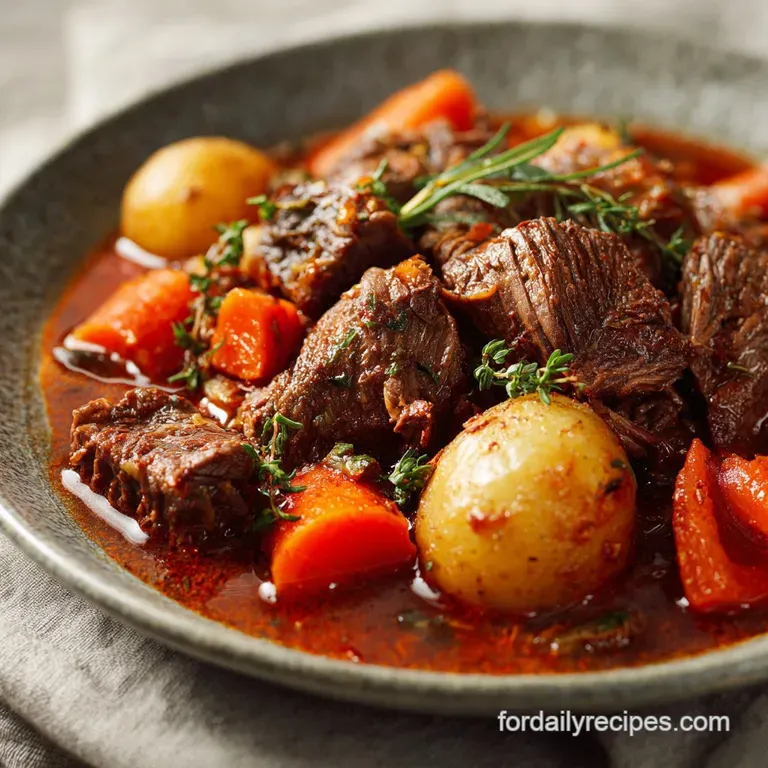
Why Your Beef Is Tough
If your beef feels rubbery or difficult to chew, it simply hasn't cooked long enough. In a slow cooker, beef goes through a "tough phase" before the collagen finally melts. Even if the vegetables are done, the meat might need another hour.
Always check for that specific visual cue: the meat should flake apart with just a fork.
Rescuing a Thin Sauce
Sometimes the vegetables release more water than expected, leaving you with a soup rather than a stew. Don't panic. You can take a cup of the hot liquid, whisk in an extra tablespoon of cornstarch, and add it back in.
Alternatively, you can smash a few of the cooked potato chunks directly into the sauce; the released starch acts as a natural thickener that gives the broth a rustic, hearty body.
| Problem | Root Cause | Solution |
|---|---|---|
| Mushy Vegetables | Cut too small | Chop carrots and potatoes into at least 1.5 inch pieces next time. |
| Greasy Texture | Too much fat in chuck | Skim the surface with a wide spoon or a piece of bread before serving. |
| Bland Flavor | Lack of acidity | Add a teaspoon of red wine vinegar or lemon juice at the very end. |
- ✓ Always sear the beef in small batches to maintain pan temperature.
- ✓ Ensure the potatoes are submerged in the liquid to prevent browning.
- ✓ Keep the lid closed; every time you "peek," you lose 15-20 minutes of heat.
- ✓ Use low sodium broth to control the saltiness from the soup mix.
- ✓ Add the frozen peas at the very last second to keep them bright green and "pop y."
Adjusting the Pot for Crowds or Quiet Evenings
Scaling this Crockpot Beef Stew recipe is relatively straightforward, but there are a few rules to follow to ensure the texture remains consistent. When you are cutting the recipe in half for a smaller 3 quart slow cooker, you can reduce the cooking time by about 20%, but keep a close eye on the liquid levels. Because there is less volume, the liquid can evaporate faster.
If you are doubling the recipe for a big family gathering, you'll likely need two slow cookers. Do not try to cram 6 lbs of beef into one pot; the center will stay cold for too long, which is a food safety risk. For the seasoning, you don't always need to double the salt or spices exactly.
I usually start with 1.5 times the spices and adjust at the end. The liquid should also be reduced by about 10% when doubling, as a larger volume of vegetables will release significantly more moisture into the pot.
Creative Twists on a Traditional Classic Stew
While the heritage version is timeless, sometimes you want to play with the flavor map. You can easily pivot this dish to match different cravings without losing that core comfort factor.
- The Irish Twist: Replace the red wine with a bottle of dark Guinness stout. The bitterness of the beer pairs beautifully with the sweetness of the carrots and adds a dark, almost chocolatey depth to the gravy.
- The Root Cellar Variation: Swap the potatoes for a mix of parsnips and rutabagas. This creates a more complex, peppery flavor profile that feels very much like a dish from an old country kitchen.
- Adding Fluffy Dumplings: About 30 minutes before the stew is done, drop spoonfuls of biscuit dough (like the ones from my favorite heritage biscuits) onto the surface. Cover and let them steam until they are light and airy.
| Method | Time | Texture | Best For |
|---|---|---|---|
| Slow Cooker (Low) | 8 hours | Ultra tender, melty beef | Hands off convenience |
| Slow Cooker (High) | 4-5 hours | Firm but tender beef | When you start later in the day |
| Dutch Oven (300°F) | 3 hours | Deepest caramelization | Weekend cooking with oven access |
Debunking Old Tales About Slow Cooked Meats
One of the most persistent myths is that you can't "overcook" beef in a slow cooker. While it's hard to do, you absolutely can reach a point where the meat fibers give up all their moisture and become mushy or "mealy." Eight to nine hours on low is the sweet spot; pushing it to twelve hours will likely result in a texture that lacks structure.
Another common misconception is that searing "seals in the juices." Science tells us this isn't true moisture is lost regardless of searing. However, searing is vital for the Maillard reaction, which creates hundreds of different flavor compounds.
The sear isn't about juiciness; it's about the complexity of the taste. Without it, your stew will always taste a bit "flat."
Finally, many people think you must submerge the meat in liquid completely. In reality, the slow cooker acts like a steam chamber. As long as the pot is tightly covered, the meat will cook perfectly even if it's only halfway covered by the broth. This actually helps prevent the beef from tasting "boiled."
Keeping Your Stew Fresh and Minimizing Waste
This recipe actually tastes better the next day because the flavors have time to fully marry and penetrate the meat. Store any leftovers in an airtight container in the fridge for up to 4 days. When reheating, do it gently on the stovetop over medium low heat.
If the gravy has thickened too much in the fridge, just splash in a little beef broth or water to loosen it up.
For zero waste cooking, don't toss those celery leaves! Chop them up and mix them with the parsley for a more flavorful garnish. If you have leftover beef and gravy but no vegetables, you can shred the beef and serve it over toasted bread for a "hot beef sandwich" the following day.
This stew also freezes beautifully for up to 3 months. Just be sure to leave about an inch of space at the top of your freezer bag, as the liquid will expand when it freezes.
Perfect Accompaniments for Your Velvety Beef Gravy
To truly honor this dish, you need something to soak up every last drop of that rich sauce. A thick slice of crusty sourdough bread is the classic choice, but if you want to lean into the heritage vibe, served over a pile of creamy mashed potatoes is the way to go.
The double potato move might seem redundant, but the contrast between the chunky Yukon Golds and smooth mash is surprisingly satisfying.
If you are looking for a lighter pairing, a crisp green salad with a sharp lemon vinaigrette provides a necessary "bright" contrast to the heavy, savory stew. For a more substantial side, consider a Slow Cooker Lasagna Soup recipe if you are hosting a large soup themed party, though usually, this stew is a complete meal on its own. It's the kind of food that doesn't need much just a quiet table, a warm bowl, and maybe a glass of that leftover Cabernet.
High in Sodium
895 mg mg of sodium per serving (39% % of daily value)
The American Heart Association recommends limiting sodium intake to no more than 2,300mg per day for most adults. Aim for even less, ideally 1,500mg per day, for greater health benefits.
Tips to Reduce Sodium in Your Beef Stew
-
Swap Broth-30%
Replace the low-sodium beef broth with a no-sodium beef broth or homemade broth. This single swap can significantly cut the sodium content.
-
Omit Onion Soup Mix-25%
Eliminate the onion soup mix entirely. It's a concentrated source of sodium. Instead, enhance the flavor with additional fresh or dried herbs and spices.
-
Reduce Worcestershire-20%
Cut the Worcestershire sauce in half or replace it with a low-sodium alternative like coconut aminos to reduce the sodium punch. You can also add a dash of balsamic vinegar for depth.
-
Tomato Paste Tweak-15%
Use a low-sodium tomato paste, or consider using fresh tomatoes if available.
-
Herb Power!
Instead of relying on salt, boost the flavor with fresh herbs like rosemary, thyme, and oregano. Experiment with different combinations to find your favorite flavor profile.
Recipe FAQs
Can you put raw beef in a slow cooker for stew?
Yes, you can technically put raw beef in. However, browning the beef first creates the Maillard reaction, which develops crucial savory flavor compounds the slow cooker cannot produce alone.
How to make the best beef stew in a slow cooker?
Sear the beef until deeply browned on all sides first. This step builds the foundational flavor; after that, ensure you use a cut with good marbling, like chuck, and cook low for at least 8 hours for maximum collagen breakdown.
What are common mistakes when making beef stew?
Cutting vegetables too small or opening the lid frequently are common errors. Small vegetables disintegrate, and opening the lid resets the cooking temperature by 20 minutes, leading to unevenly cooked ingredients.
Is it better to cook beef stew in crockpot on high or low?
Low is significantly better for achieving fork tender meat texture. High heat cooks faster but risks drying out the meat fibers before the tough connective tissues have fully converted to silky gelatin.
Do I need to sear the beef if I use a leaner cut like round roast?
No, searing will not save a naturally lean cut for stewing. Lean cuts lack the internal fat necessary to lubricate the muscle fibers during long, slow cooking; aim for chuck roast for the best outcome, similar to what we use in our Chuck Roast in recipe.
What is the purpose of adding acid like red wine to stew?
Acid acts as a tenderizer and flavor brightener for the beef. It helps break down muscle fibers and cuts through the richness of the fat, much like the acid balance we focus on when developing vinaigrettes in recipes like Calico Beans recipe.
How do I thicken the gravy without using a pre-made soup mix?
Create a standard cornstarch slurry to thicken the final sauce. Whisk 2 tablespoons of cornstarch with 1/4 cup of cold water until smooth, then stir into the hot stew during the last 15 minutes of cooking on High.
Slow Cooker Beef Stew
Ingredients:
Instructions:
Nutrition Facts:
| Calories | 812 kcal |
|---|---|
| Protein | 56.5 g |
| Fat | 42.8 g |
| Carbs | 38.4 g |
| Fiber | 5.8 g |
| Sugar | 7.2 g |
| Sodium | 895 mg |
