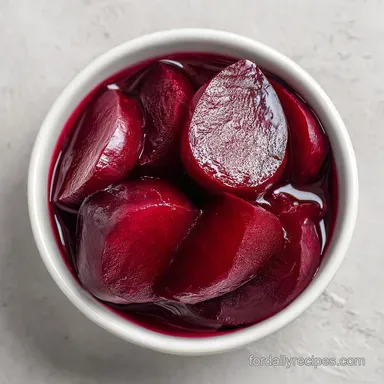
Refrigerator Pickled Beets: Tangy and Crisp
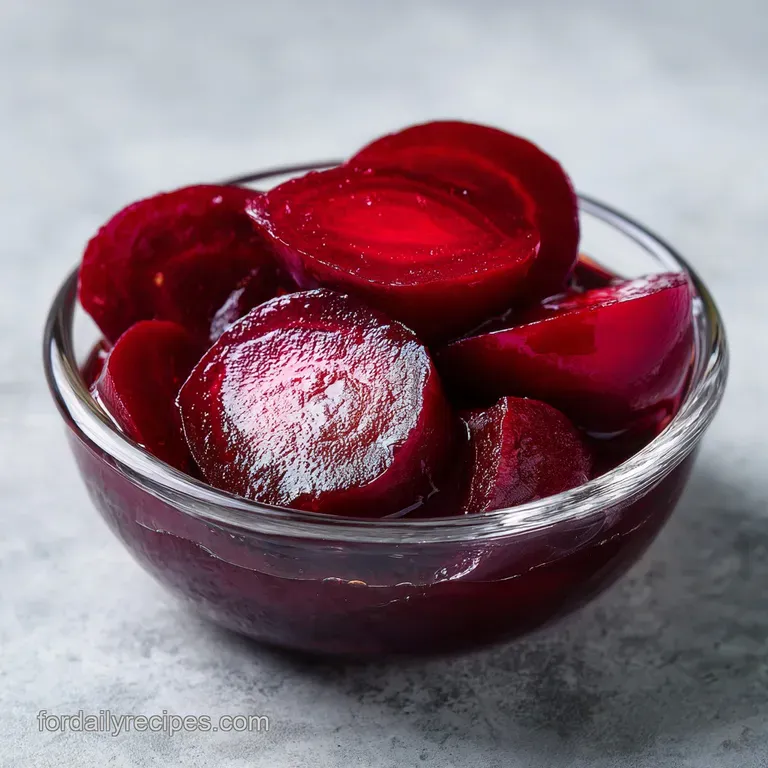
- Time:15 minutes active + 45 minutes cooking + 24 hours chilling = Total 25 hours
- Flavor/Texture Hook: Tangy, earthy snap with a velvety finish
- Perfect for: Meal prep, holiday side dishes, or adding zest to a winter salad
- Getting That Vibrant Snap with Pickled Beets
- The Secret to Root Texture
- The Component Analysis
- Selecting the Best Components
- The Minimal Tool Kit
- Putting the Beets Together
- Avoiding Common Kitchen Blunders
- Mixing Up the Flavors
- Keeping Beets Fresh Longer
- The Best Pairing Ideas
- Recipe FAQs
- 📝 Recipe Card
Getting That Vibrant Snap with Pickled Beets
That heavy, earthy scent of boiling beets is one of those smells that just fills every corner of the house. I remember the first time I tried to make these, I spent an entire afternoon scrubbing raw beets with a vegetable brush, trying to get them "perfect" before they hit the pot.
My knuckles were stained deep purple, and I was exhausted before the actual cooking even started.
Then I discovered the boil and slip method. The second you plunge those hot roots into an ice bath, the skins just glide right off under your thumbs. It is honestly like magic. No more scrubbing, no more wasted time, just perfectly clean, bright red beets ready for the brine.
Trust me on this, the waiting is the hardest part. You'll want to dive into those jars the moment they're cool, but the real magic happens during that 24 hour soak. That's when the vinegar stops being "outside" the beet and starts becoming part of the root, turning a simple vegetable into something sharp and punchy.
The Secret to Root Texture
Understanding how the brine interacts with the beet helps you avoid that dreaded "soggy" texture. It's all about managing the cell walls of the vegetable.
- Acid Balance
- The mix of apple cider and white vinegar provides a tiered acidity that penetrates the root without collapsing the structure.
- Sugar Buffer
- Sugar doesn't just add sweetness, it prevents the vinegar from becoming too aggressive, which keeps the beet from tasting "cooked" in the jar.
- The Cold Shock
- Plunging beets into ice water stops the cooking process instantly, locking in the snap and preventing the insides from becoming mealy.
- Clove Infusion
- Heating the spices allows the oils in the cloves and peppercorns to release, creating a fragrant brine that scents the beets from the inside out.
| Method | Time | Texture | Best For |
|---|---|---|---|
| Classic Cold Soak | 25 hours | Firm and saturated | Long term fridge storage |
| Quick Warm Steep | 2 hours | Softer, more acidic | Same day appetizers |
| Slow Oven Roast | 2 hours | Concentrated, sweeter | Gourmet plating |
The Component Analysis
Before we get into the list, let's look at what's actually happening in the pot. Not every ingredient is just for flavor; some are doing the heavy lifting.
| Ingredient | Science Role | Pro Secret |
|---|---|---|
| Apple Cider Vinegar | Primary Acid | Adds a fruity depth that white vinegar lacks |
| Granulated Sugar | Flavor Balance | Prevents the brine from tasting too sharp |
| Kosher Salt | Osmotic Pressure | Draws out excess water to let brine in |
| Whole Cloves | Aromatic Base | Bloom them in hot liquid to avoid "soapy" spots |
Selecting the Best Components
Right then, let's get your shopping list sorted. I've found that using a mix of vinegars is the only way to get that professional taste at home. If you only use white vinegar, it's too sterile; too much cider vinegar, and it's too rustic.
- 2 lbs red beets, scrubbed and trimmed Why this? Medium beets are usually more tender than giant ones
- Substitute: Golden beets (Note: Result will be yellow/orange, slightly milder flavor)
- 1 tsp kosher salt (for boiling) Why this? Helps maintain beet color during the boil
- Substitute: Sea salt (Note: Use slightly less as it can be saltier)
- 1 cup apple cider vinegar Why this? Provides a mellow, fruity acidity
- Substitute: Red wine vinegar (Note: More pungent, less sweet)
- 1/2 cup white distilled vinegar Why this? Adds a clean, sharp "zing"
- Substitute: Rice vinegar (Note: Much milder, may need more sugar)
- 3/4 cup granulated sugar Why this? Balances the high acid content
- Substitute: Honey (Note: Adds floral notes, makes brine thicker)
- 1 tbsp kosher salt (for brine) Why this? Enhances all other flavors
- Substitute: Himalayan salt (Note: Same result, adds minerals)
- 4 whole cloves Why this? Classic warm spice profile
- Substitute: Allspice berries (Note: More peppery, less medicinal)
- 1 tsp whole black peppercorns Why this? Adds a subtle, biting heat
- Substitute: White peppercorns (Note: Milder, more fermented taste)
- 1/2 tsp mustard seeds Why this? Adds a tiny bit of nuttiness
- Substitute: Celery seeds (Note: More savory, traditional "deli" taste)
The Minimal Tool Kit
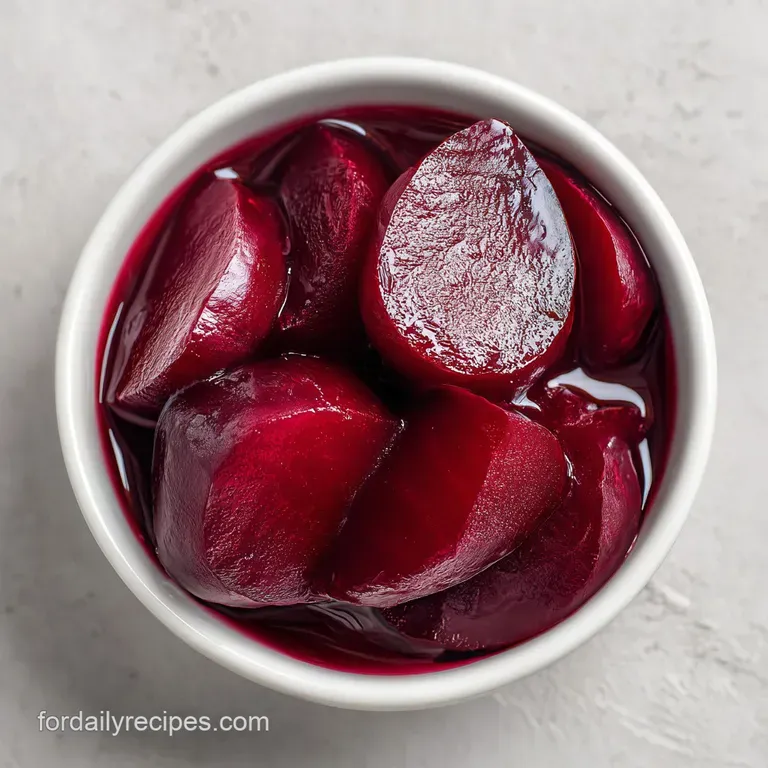
You don't need a fancy canning setup for these. Since we're doing refrigerator pickles, a few basic pots and jars are all you need. I prefer using a large stainless steel pot for the beets so the stains don't linger.
For the brine, a small saucepan works best. It allows the liquid to reduce and heat up quickly. I also suggest having a large bowl ready for your ice bath - it needs to be big enough to submerge all the beets at once.
Finally,, make sure your pint jars are clean. You don't need to sterilize them like you would for shelf stable canning, but a quick wash with hot soapy water ensures nothing interferes with the brine's longevity.
Putting the Beets Together
Let's crack on. Follow these steps closely, especially the ice bath part, or you'll be fighting with the skins for an hour.
- Place scrubbed beets in a pot of water and bring to a boil. Simmer for 30-45 minutes until a fork pierces the center with slight resistance. Note: Overcooking makes them mushy in the jar.
- Immediately plunge cooked beets into an ice bath for 5 minutes, then use your thumbs to slide the skins off.
- Slice the beets into 1/4 inch rounds. Note: Uniform slices ensure even pickling.
- Combine apple cider vinegar, white vinegar, sugar, salt, cloves, peppercorns, and mustard seeds in a small saucepan.
- Heat over medium high, stirring constantly until the sugar and salt have completely dissolved and the liquid reaches a light simmer.
- Turn off the heat and let the brine sit for 2 minutes to allow the cloves to bloom.
- Divide the sliced beets evenly among four glass pint jars.
- Pour the hot brine over the beets, ensuring they are completely submerged, leaving 1/2 inch of headspace.
- Let the jars sit at room temperature until cool to the touch, then seal with lids and transfer to the refrigerator.
- Wait at least 24 hours for the beets to reach peak flavor saturation.
Avoiding Common Kitchen Blunders
Even with a simple recipe, things can go sideways. Usually, it's a matter of temperature or timing. If your beets feel slippery or "slimy," you likely didn't let them cool enough before sealing.
Why Your Beets Stay Hard
If the beets don't absorb the brine, they were likely undercooked. The vinegar can't penetrate a root that's still too dense in the center. Check them with a fork before the ice bath.
| Problem | Root Cause | Solution |
|---|---|---|
| Mushy Texture | Overcooked or too much vinegar | Reduce simmer time by 5 mins |
| Dull Color | Low acidity in brine | Use distilled white vinegar as specified |
| Bland Taste | Not chilled long enough | Wait the full 24 hours |
- ✓ Pat the beets dry after peeling to prevent watering down the brine.
- ✓ Use a sharp knife for slicing to avoid "crushing" the beet cells.
- ✓ Stir the brine constantly to prevent sugar from scorching on the bottom.
- ✓ Ensure the beets are fully submerged; any exposed pieces can spoil.
- ✓ Use glass jars, as plastic can absorb the beet stain and smell.
Mixing Up the Flavors
Once you've nailed the basic version, you can really play around with the aromatics. I love adding a bit of heat or a different kind of sweetness depending on what I'm serving them with.
If you want a spicy kick, toss in a sliced jalapeño or a pinch of red chili flakes. For a more sophisticated, earthy vibe, add a sprig of fresh thyme or a bay leaf to the brine. I've also tried using a bit of maple syrup instead of half the sugar, which gives them a wonderful autumnal taste.
If you love this style of pickling, you might also enjoy my quick pickled red onions for tacos. Both use a similar vinegar sugar balance but offer completely different flavor profiles.
Keeping Beets Fresh Longer
These will stay vibrant and punchy in the fridge for about 3-4 weeks. Just make sure you use a clean fork every time you fish some out - introducing bacteria from your mouth or other foods will shorten their shelf life significantly.
For the zero waste crowd, don't toss the leftover brine! It is essentially a seasoned vinegar. I use it as a base for a quick salad dressing or pour a bit over sautéed kale to cut through the bitterness.
If you find yourself with too many jars, you can't freeze these because the freezing process destroys the cell walls, leaving you with a mushy mess. Instead, share them with friends or try making a crispy quick pickle with other root vegetables to clear out the crisper drawer.
The Best Pairing Ideas
Pickled beets are all about contrast. Because they are earthy and acidic, they work best against fats and creams. I highly recommend serving them alongside a wedge of sharp goat cheese or a dollop of Greek yogurt.
For a full meal, try them as a side for roasted pork loin or a grilled salmon fillet. The acidity cuts through the richness of the meat, acting as a palate cleanser between bites. They are also a stellar addition to a "ploughman's lunch" with crusty bread and a hard cheddar.
Finally,, try them in a salad with fresh arugula and toasted walnuts. The bitterness of the greens and the crunch of the nuts make the velvetiness of the beets really stand out. It's a simple combination, but it feels like something from a high end bistro.
Recipe FAQs
How to peel the beets quickly?
Plunge cooked beets into an ice bath for 5 minutes. Once chilled, use your thumbs to slide the skins right off the roots.
Is it true that beets must be peeled before boiling?
No, this is a common misconception. Boiling them whole and then using an ice bath is faster and helps maintain a more vibrant ruby color.
How to prepare the pickling brine?
Combine apple cider vinegar, white vinegar, sugar, salt, cloves, peppercorns, and mustard seeds in a saucepan. Heat over medium high, stirring constantly until the sugar and salt dissolve and the liquid simmers.
How long should the beets simmer?
Simmer for 30 45 minutes. They are perfectly cooked when a fork pierces the center with only slight resistance.
Can I eat the pickled beets immediately?
No, wait at least 24 hours. The beets need this time in the refrigerator for the brine to fully penetrate the root for peak flavor.
Why did my beets turn out mushy?
You likely overcooked them during the simmering stage. To keep a crisp snap, remove them from the heat the moment a fork can pierce the center.
What are the best pairings for these beets?
Serve them alongside salty appetizers or sharp cheeses. The tangy acidity balances rich flavors perfectly, much like the flavor profile used in smoked salmon bites.
Refrigerator Pickled Beets