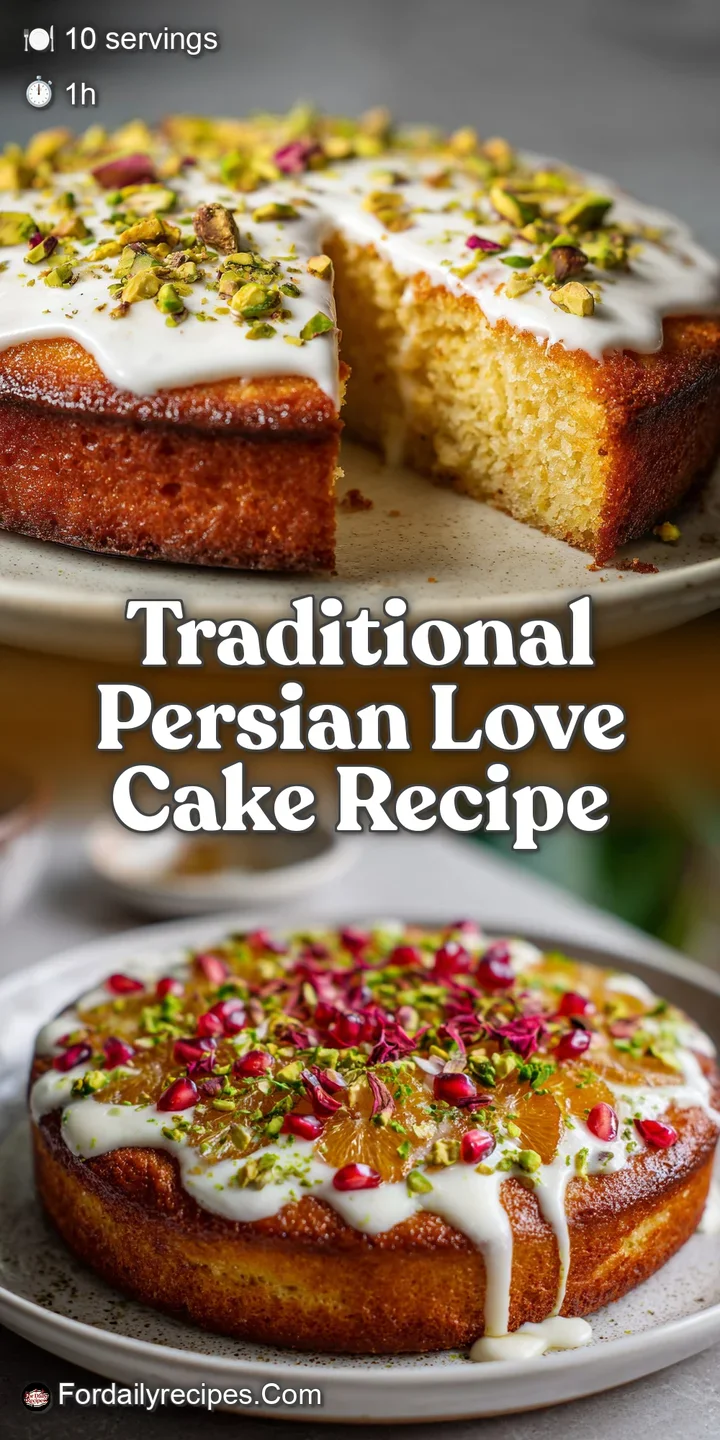
Traditional Persian Love Cake Recipe
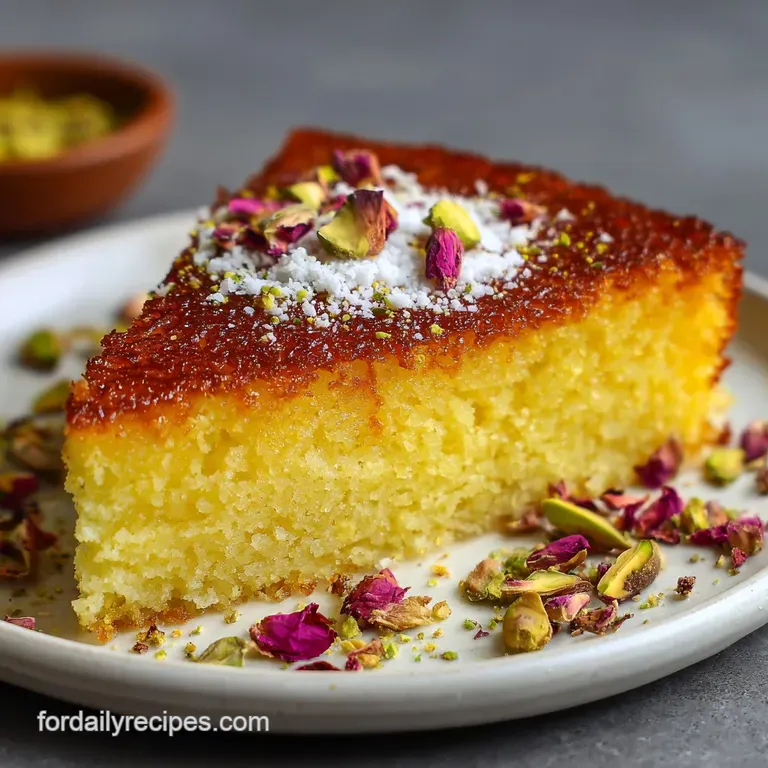
- Time: Active 15 minutes, Passive 45 minutes, Total 1 hour
- Flavor/Texture Hook: A velvety, citrus bright crumb with a shatter crisp pistachio topping
- Perfect for: Extraordinary weekend gatherings or a sophisticated dinner party finale
- Discover the Magic of This Persian Love Cake Recipe
- The Molecular Chemistry of Floral Crumb
- Recipe Specs
- Curating the Finest Global Ingredients
- Tools for an Extraordinary Bake
- A Step-by-Step Culinary Transformation
- Avoiding Common Pitfalls and Errors
- Scaling This Dish for Any Occasion
- Creative Twists on the Classic
- Maximizing Freshness Through Smart Storage
- Debunking Culinary Lore
- Ideal Pairings for a Global Feast
- Recipe FAQs
- 📝 Recipe Card
Discover the Magic of This Persian Love Cake Recipe
Imagine walking into a kitchen where the air is heavy with the scent of crushed green cardamom and the sultry, floral notes of warming rose water. The first time I pulled this cake from the oven, I wasn't prepared for how the aroma would literally stop my guests in their tracks.
We were having a casual Friday night dinner, but as soon as the saffron infused syrup hit the warm crumb, the entire mood shifted from ordinary to extraordinary. It transcends borders, bringing a piece of ancient Silk Road magic directly to your dining table.
The beauty of this dish lies in its contrasts. You have the slight crunch of semolina grains playing against the buttery softness of almond meal, all held together by a syrup that makes the cake feel almost honeyed.
I used to think floral desserts were risky too much rose and it tastes like a bottle of perfume but this recipe balances the botanicals with lemon zest and sea salt. It's not just a dessert; it's a conversation starter.
Trust me, once you see that golden saffron hue, you’ll never go back to basic sponge cakes.
Many people struggle with dry cakes or flavors that feel one note. But what about that dreaded "soapy" aftertaste people fear with rose water? We’ll get to that. The secret is in the timing of the syrup and the quality of your spices.
This isn't just about mixing ingredients; it's about a culinary transformation that happens in your oven. Right then, let's crack on with the science that makes this bake so reliable every single time.
The Molecular Chemistry of Floral Crumb
Starch Gelatinization: Semolina is a high protein flour that requires heat and moisture to soften; the syrup infusion post bake allows the granules to swell and soften without losing their distinct, pebbly structure.
Lipid Stabilization: The high fat content in the 200g of almond meal provides a moisture barrier that prevents the cake from drying out, even if left on the counter for a couple of days.
Acid Base Equilibrium: Lemon juice in the syrup reacts with any residual sugar, cutting through the richness and ensuring the floral notes feel bright rather than cloying.
Sugar Hygroscopy: The 100g of sugar in the syrup acts as a humectant, pulling moisture into the heart of the cake and keeping the crumb velvety for days.
| Servings | Ingredient Adjustments | Recommended Pan Size | Total Bake Time |
|---|---|---|---|
| 5 People | Halve all ingredients; use 1.5 eggs (beat and divide) | 6 inch Round | 35 minutes |
| 10 People | Use quantities as listed in the schema | 8 inch or 9 inch Springform | 45 minutes |
| 20 People | Double all ingredients exactly | Two 9 inch Springform pans | 45-50 minutes |
Whether you are hosting a small intimate gathering or a larger weekend celebration, adjusting this cake is straightforward. Just remember that if you are doubling the batch, you’ll want to bake in two separate pans rather than one giant one to ensure the center sets before the edges burn.
This cake is quite dense, so a standard 9 inch pan is the "sweet spot" for that perfect height to moisture ratio.
Recipe Specs
When we talk about the "perfect" bake, we are looking for specific indicators of success. For this cake, the internal temperature should hit 205°F if you’re using a probe, but the visual cues are just as vital.
You want to see the edges pulling away from the sides of the pan, forming a dark, caramelized crust that protects the soft interior.
- Prep time:15 minutes of active whisking and zesting.
- Bake time:45 minutes at 350°F (175°C).
- Cooling time:20 minutes before the first slice to let the syrup set.
Since this recipe relies heavily on texture, I always recommend weighing your ingredients. 200g of almond meal is much more accurate than a cup measurement which can vary by how tightly you pack it. For a truly authentic experience, pairing this with a crisp Persian Shirazi Salad recipe earlier in the meal creates a beautiful thematic flow for your dinner party.
| Component | Science Role | Pro Secret |
|---|---|---|
| Fine Semolina | Provides structural "bite" | Toast it lightly in a dry pan for 2 mins for a nuttier aroma |
| Almond Meal | Adds fat and moisture | Use "super fine" meal for a more refined, less gritty texture |
| Saffron Threads | Natural dye and earthy base | Bloom the threads in 1 tsp of warm water before adding to syrup |
| Unsalted Butter | Emulsifies the sugar | Ensure it is truly room temp (65°F) for maximum aeration |
The semolina is the unsung hero here. Unlike all purpose flour, it doesn't get tough when worked. Instead, it provides a rustic, sophisticated texture that makes the cake feel substantial. When combined with the almond meal, it creates a crumb that is naturally lower in gluten and much higher in flavor.
Curating the Finest Global Ingredients
To make this Persian Love Cake Recipe truly shine, you need to be picky about your pantry. The quality of your rose water is the difference between a masterpiece and a disaster. Look for "distilled rose water" rather than "rose essence," which is often synthetic and harsh.
- 200g almond meal: Why this? Provides the foundational fat for a moist, tender crumb that never goes dry. (Substitute: Ground hazelnuts for a deeper, earthier profile)
- 150g fine semolina: Why this? Offers the characteristic "crunch" and structure unique to Middle Eastern bakes. (Substitute: Polenta/Cornmeal for a crunchier, gluten-free-friendly alternative)
- 170g unsalted butter, softened: Why this? Creates the air pockets needed for the cake to rise without being heavy. (Substitute: Coconut oil for a dairy-free version, though it adds a tropical note)
- 3 large eggs: Why this? Binds the fats and proteins together into a cohesive batter. (Substitute: Flax eggs, though the cake will be much denser)
- 1 tsp ground cardamom: Why this? The signature spice that provides warmth and depth. (Substitute: Ground cinnamon with a pinch of ginger)
- 1 pinch saffron threads: Why this? Adds the golden color and a subtle, honey like musk. (Substitute: 1/8 tsp turmeric for color only)
- 1 tbsp rose water: Why this? The aromatic heart of the dish. (Substitute: Orange blossom water for a different floral vibe)
Chef's Tip: Freeze your butter for 10 minutes then grate it if your kitchen is too warm. This ensures the butter doesn't melt into a puddle while you're creaming it with the sugar, giving you a much better lift!
Tools for an Extraordinary Bake
You don't need a professional pastry kitchen, but a few specific items will make your life significantly easier. A springform pan is non negotiable here. Because we soak the cake in syrup while it's still in the pan, a regular cake tin might make it difficult to remove the cake without it breaking apart.
I personally use a stand mixer such as a KitchenAid for the butter and sugar phase, but a handheld electric whisk works perfectly fine. The goal is to get as much air into that butter as possible. You’ll also want a small saucepan for the syrup and a toothpick or skewer. Why the skewer?
We need to poke holes in the cake to let that liquid gold saffron syrup penetrate all the way to the bottom. Without those channels, the syrup just sits on top, making the crust soggy while the middle stays dry.
A step-by-step Culinary Transformation
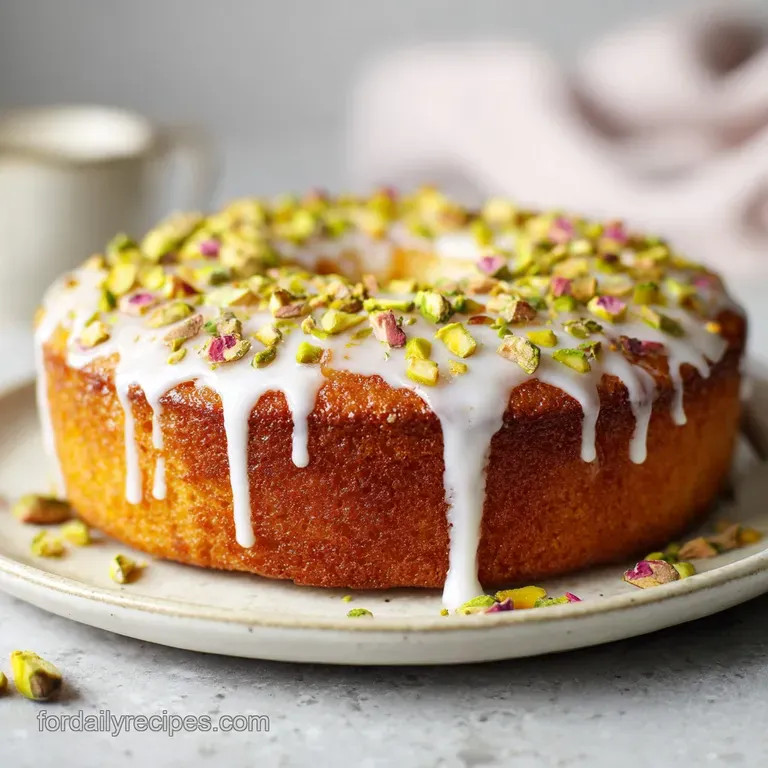
Phase 1: Creating the Aerated Base
Preheat your oven to 350°F and grease an 8 inch springform pan. In your mixer, cream the 170g unsalted butter and 200g granulated sugar. Note: Continue for at least 5 minutes until the mixture looks pale and fluffy. Add the 3 large eggs one at a time, ensuring each is fully incorporated before adding the next.
This prevents the emulsion from breaking.
Phase 2: Folding for Structure
In a separate bowl, whisk together the 200g almond meal, 150g fine semolina, 1 tsp ground cardamom, 1 tsp baking powder, 1 tbsp lemon zest, and 0.5 tsp sea salt. Slowly fold these dry ingredients into the wet mixture using a spatula.
Do not overmix; you want to maintain the air you just beat into the butter.
Phase 3: The Golden Bake
Pour the batter into your prepared pan and smooth the top. Bake for 45 minutes until the top is golden brown and a skewer comes out clean. The kitchen will start to smell like a dream at around the 30 minute mark.
Phase 4: The Rapid Infusion
While the cake bakes, combine 0.5 cup water, 100g sugar, and the saffron threads in a saucepan. Bring to a boil, then simmer for 5 minutes. Remove from heat and stir in 1 tbsp rose water and 1 tbsp lemon juice. Note: Adding these at the end preserves their delicate volatile oils.
Phase 5: The Finishing Touch
As soon as the cake comes out of the oven, poke holes all over the surface with a skewer. Pour the warm syrup slowly over the hot cake. Wait until the syrup is fully absorbed before sprinkling the 30g chopped pistachios and 2 tbsp dried rose petals on top.
This ensures the garnishes stay crisp and don't sink into the cake.
| Feature | Stovetop (Syrup) | Oven (Cake) |
|---|---|---|
| Primary Goal | Dissolve sugar & bloom saffron | Set proteins & brown the crust |
| Temperature | 212°F (Boiling) | 350°F (Baking) |
| Time Needed | 5-7 minutes | 45 minutes |
Avoiding Common Pitfalls and Errors
One of the most frequent issues I hear about is the cake being too "wet" or "mushy" in the center. Usually, this happens if the syrup is poured on a cold cake. The cake must be hot so the steam helps pull the syrup into the crumb.
If the cake has cooled, the sugar in the syrup will just crystallize on the surface, creating a sticky mess rather than a moist interior.
Why Your Cake Is Too Dense
If you didn't cream the butter and sugar long enough, you won't have enough air bubbles. Those bubbles expand in the oven, creating the lift. If you skip this, the weight of the almond meal and semolina will crush the structure, leaving you with a heavy brick.
Why Your Syrup Didn't Soak In
The holes are vital! If you don't poke deep enough, or if you wait too long to pour the syrup, the "crust" of the cake becomes an impermeable barrier. Think of the cake like a sponge; it’s most absorbent when it's just finished its "drying" process in the oven.
| Problem | Root Cause | Solution |
|---|---|---|
| Soapy Taste | Too much rose water | Stick to exactly 1 tbsp; measure carefully! |
| Gritty Texture | Coarse semolina used | Switch to "Fine" or "Extra Fine" semolina |
| Sunken Center | Oven door opened too early | Don't peek before the 35 minute mark |
Common Mistakes Checklist:
- ✓ Ensure eggs are at room temperature to prevent the butter from curdling.
- ✓ Use a fresh bottle of rose water; old bottles lose their floral nuance and turn bitter.
- ✓ Bloom your saffron in a tiny bit of warm water before adding to the syrup for better color.
- ✓ Let the cake cool completely in the pan before attempting to release the springform sides.
- ✓ Toast the pistachios for 3 minutes before chopping to maximize the "shatter" effect.
Scaling This Dish for Any Occasion
Scaling a cake that uses semolina is relatively easy because the ratios are forgiving. If you want to make a massive version for a wedding or big party (Scaling UP), do not just double the baking powder. Use 1.5x the spices and leavening to avoid a metallic taste.
For the liquids, reduce them by about 10% as large batches trap more moisture.
If you are scaling DOWN for a "date night" cake, use a 6 inch pan. You'll need to reduce the baking time by about 20%. Keep a close eye on it starting at the 30 minute mark. Since you can't easily use half an egg, beat two eggs together and then weigh out half of that mixture for a half recipe.
It’s a bit of extra work, but it keeps the chemistry precise.
Creative Twists on the Classic
While the traditional version is hard to beat, I love experimenting with the profile. If you want a gluten-free Persian Love Cake Recipe, you can swap the semolina for fine polenta. The texture will be crunchier and more vibrant yellow, but it hits those same nostalgic notes.
For an Eggless Persian Love Cake Recipe, you can use 1/4 cup of plain yogurt per egg. The acidity in the yogurt actually works beautifully with the lemon zest, though the cake won't rise quite as much.
It becomes more of a dense, fudge like torte, which is equally incredible when served with a dollop of thick cream.
- The Citrus Twist: Replace the lemon juice in the syrup with orange juice and add a splash of orange blossom water for a sunnier, brighter flavor.
- The Modern Garnish: Instead of just rose petals, try adding a few flakes of edible gold leaf and some pomegranate arils for a burst of juicy acidity.
- The Nutty Variation: Swap the pistachios for slivered almonds or crushed walnuts if you want a more subdued color but a richer flavor.
Maximizing Freshness Through Smart Storage
This cake actually tastes better on day two. The syrup has time to fully migrate into every single grain of semolina, and the cardamom mellows out. I always suggest making it the night before you plan to serve it.
- Fridge: Store in an airtight container for up to 5 days. The cold will firm up the butter, so let it sit at room temp for 30 minutes before eating.
- Freezer: This cake freezes remarkably well! Wrap individual slices in parchment paper and then foil. It will stay fresh for up to 3 months.
- Zero Waste Tip: If you have leftover syrup, don't toss it! Stir it into your morning tea or drizzle it over a bowl of yogurt. The saffron and rose flavors are world class additions to a simple breakfast.
Debunking Culinary Lore
One common myth is that saffron is only for color. In reality, high-quality saffron has a distinct metallic, honey like flavor that acts as the "bass note" for the rose water. Without it, the cake can feel a bit thin. Another misconception is that you need to soak the semolina before baking.
Because we are using a syrup soak method after baking, the pre soak is unnecessary and would actually make the batter too heavy to rise properly.
Ideal Pairings for a Global Feast
When serving this, you want something to cut through the sweetness. A dollop of unsweetened Greek yogurt or labneh is my absolute favorite pairing. The tanginess of the dairy acts as a perfect foil to the floral syrup. If you’re feeling extra adventurous, serve it alongside a bowl of my Tzatziki Sauce Recipe — just kidding! Keep the garlic away from this one. Instead, go for a hot glass of Persian black tea with a sugar cube held between your teeth, traditional style.
Decision Shortcut: If you want a moister cake, pour the syrup while it's still bubbling hot. If you want a cleaner slice, let the cake chill in the fridge for 2 hours before cutting.
If you want a stronger aroma, crush your cardamom pods fresh rather than using pre ground powder.
This bake is truly a labor of love, but the results are nothing short of extraordinary. Whether you're making this for a partner, a friend, or just a quiet weekend treat for yourself, the ritual of zesting, spice grinding, and syrup pouring is almost as sweet as the cake itself. Enjoy every scented bite!
Recipe FAQs
What is traditionally included in a Persian Love Cake?
Almond meal, semolina, rose water, and cardamom. These ingredients create the signature moist, slightly grainy texture and floral spiced aromatic profile.
Why is this cake called a Persian Love Cake?
It is named for a romantic legend, often involving a woman baking the cake to win the heart of a distant lover or prince. The name suggests a dessert so delicious it inspires great affection.
What characteristic flavor profile does Persian Love Cake possess?
It tastes floral, warm, and citrus bright. The warmth comes from cardamom and saffron, balanced by the bright acidity of lemon and the delicate perfume of rose water.
How do I prevent the rose water from tasting soapy in the final bake?
Use exactly 1 tablespoon and add it only to the syrup after removing it from the heat. Adding it early or using rose essence instead of distilled water risks overwhelming the delicate balance of spices.
Is the 1234 cake rule applicable to this specific recipe?
No, the 1234 cake rule is not applicable here. That rule (equal weights of flour, sugar, butter, eggs) applies to basic sponge cakes, whereas this cake relies on semolina and almond meal for texture.
How should I ensure the saffron syrup fully penetrates the crumb?
Poke holes aggressively into the cake immediately after removing it from the oven. The cake must be hot so the steam assists in drawing the warm syrup down through the channels.
Can I substitute the almond meal with another nut flour?
Yes, but the texture will shift slightly. Substituting with ground hazelnuts will create a deeper, earthier flavor profile, similar in concept to achieving texture control when making our Snickerdoodle Cookies recipe.
Persian Love Cake Recipe
Ingredients:
Instructions:
Nutrition Facts:
| Calories | 452 calories |
|---|---|
| Protein | 8.6g |
| Fat | 26.8g |
| Carbs | 45.8g |
| Fiber | 3.2g |
| Sugar | 40.1g |
| Sodium | 245mg |
