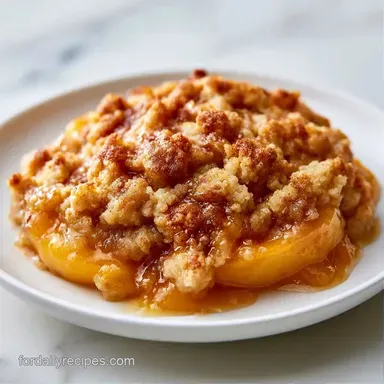
Buttery Peach Cobbler Crumble Topping
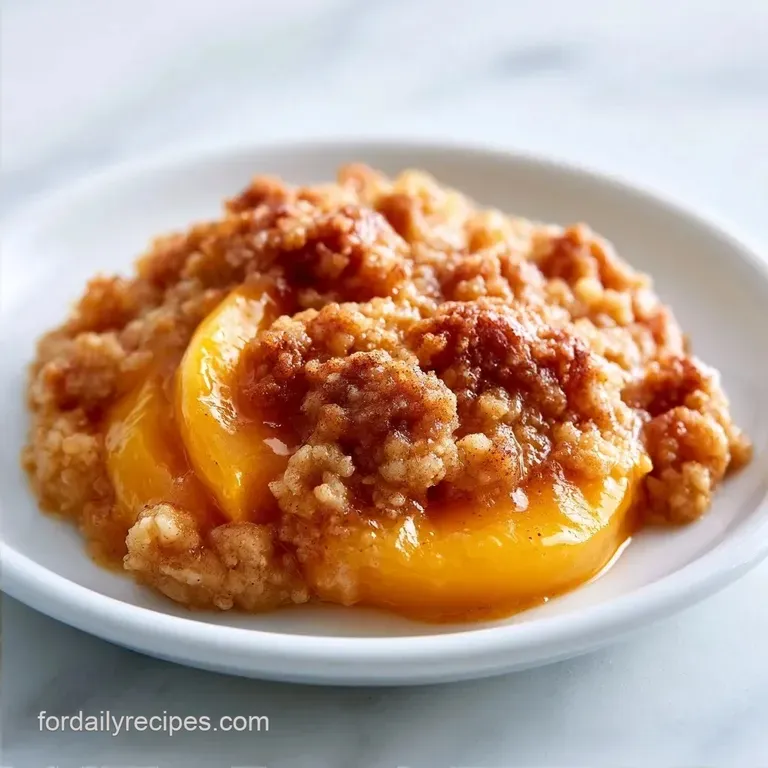
- Time: 10 min active + 40 min baking
- Flavor/Texture Hook: Mahogany colored, buttery clusters with a toasted oat crunch
- Perfect for: Summer family gatherings or a cozy weekend treat
Peach Cobbler Crumble Topping Recipe Guide
That smell hits you the second you open the oven door. It's a heavy, sweet cloud of toasted cinnamon and caramelized peaches that makes everyone in the house wander into the kitchen.
I remember making this for a summer potluck years ago, and while the peaches were great, the topping was what people actually asked about. They wanted to know why it didn't just turn into a soggy layer of cake.
The hero here is the old-fashioned rolled oat. While some people use quick oats or just flour, the rolled variety adds a structural chew that holds up against the jammy fruit. It creates a heritage feel, like something from a grandmother's kitchen, but a specific focus on the crunch.
Without those hearty oats, you lose the textural contrast that makes a crumble feel distinct from a standard pie.
You can expect a topping that forms irregular, golden brown clusters. It's not a smooth crust, but a rugged landscape of sugar and butter. By the time it comes out of the oven, the edges of the oats are toasted and the brown sugar has melted into a rich, sandy grit that clings to the fruit.
How the Crumble Stays Crisp
- Cold Butter: Keeping the butter chilled means it doesn't melt immediately. This creates small steam pockets during baking that lift the flour and oats, resulting in clumps instead of a flat sheet.
- Oat Structure: Rolled oats don't absorb moisture as fast as flour. This keeps the topping from soaking up all the peach juice, maintaining a distinct crunch.
| Method | Time | Texture | Best For |
|---|---|---|---|
| Classic Crumble | 50 mins | Chunky & Toasted | Heritage desserts |
| Quick Mix | 30 mins | Sandy & Soft | Weeknight cravings |
| Pressed Crust | 60 mins | Dense & Cookie like | Sliceable portions |
Tools You'll Need
Minimal equipment is required. A spacious mixing bowl is essential to give you enough room to incorporate the butter without making a mess with the flour. While a pastry cutter is helpful, using two strong forks is an effective alternative for cutting in the fat.
For the final step, a spoon or your fingers are ideal. This allows you to sense the dough's texture and confirm that those pea-sized butter pieces are still intact. As noted by King Arthur Baking, the condition of the butter is the most critical factor in any crumble.
Gathering Your Essentials
| Ingredient | Role | If You Don't Have It |
|---|---|---|
| All purpose flour | Provides structure | Whole wheat (makes it nuttier/denser) |
| Rolled oats | Adds chew and crunch | Quick oats (will be softer/less chunky) |
| Light brown sugar | Adds molasses flavor | Granulated sugar (less depth/chew) |
| Unsalted butter | Binding fat and richness | Coconut oil (solid state), adds coconut note |
The Dry Base
The flour and oats form the skeleton of the topping. Using 125g of all purpose flour keeps the clumps light, while the 45g of rolled oats adds that rustic, old-fashioned bite.
The Binding Fat
You'll need 113g of unsalted butter. The trick is to cube it while it's still very cold. If the butter softens, the crumble will merge into a paste, and you'll lose those distinct mahogany clusters.
Recipe Specs
For those who like to prep ahead, keep in mind that the active time is only 10 minutes. The bulk of the time is spent in the oven where the magic happens.
- Prep time:10 minutes
- Cook time:40 minutes
- Total time:50 minutes
- Yield: 6 servings
- Oven Temp:375°F (190°C)
| Original Ingredient | Substitute | Why It Works |
|---|---|---|
| Brown Sugar | Maple Sugar | Similar moisture; adds a distinct foresty sweetness |
| Rolled Oats | Almond Meal | gluten-free option. Note: Browns faster and is softer |
| Vanilla Extract | Almond Extract | Stronger, cherry like aroma; use half the amount |
You can actually make the crumble mixture a day early. Just keep it in a sealed container in the fridge. This actually helps the fats stay firm, which can lead to even better clumps when they hit the heat of the oven.
Key Steps
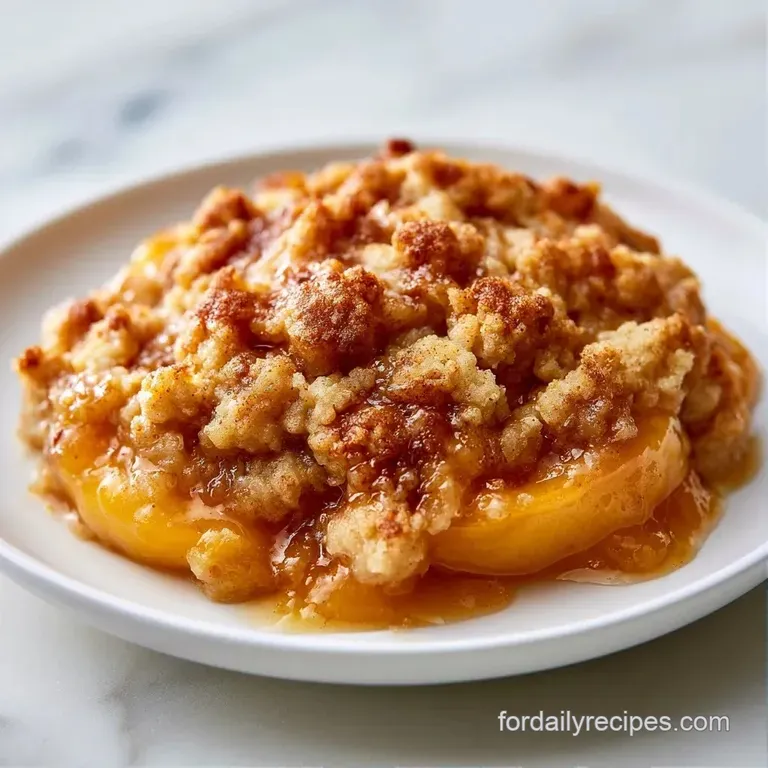
- Whisk dry ingredients. Combine 125g flour, 45g rolled oats, 100g light brown sugar, 2g ground cinnamon, and 1.5g sea salt in a bowl. Whisk vigorously to break up any brown sugar clumps.
- Add cold butter. Drop in 113g of chilled, cubed butter. Note: Cold butter is the only way to get the right texture.
- Cut in the fat. Use a pastry cutter or forks to work the butter into the flour. Stop until the mixture looks like coarse crumbs with some pea sized chunks of butter still visible.
- Stir in vanilla. Mix in 5ml of pure vanilla extract. Use a fork to distribute it quickly without overworking the dough.
- Form clusters. Using your fingertips, gently pinch the mixture together. Squeeze it into small, irregular clusters to create the crumble effect.
- Top the fruit. Evenly sprinkle the crumble over your prepared peach filling. Don't press it down; let it sit loosely on top.
- Bake the cobbler. Place in the oven at 190°C (375°F) for 35-40 minutes.
- Check for doneness. Remove until the topping is deep golden brown and the peach juices are bubbling up around the edges.
How to Fix Common Problems
Most topping failures stem from temperature issues. When butter melts before entering the oven, the flour absorbs the fat, creating a greasy, flat layer instead of a crisp crust.
Fixing a Sandy Texture
If your mixture resembles wet sand, the room was likely too warm or you over mixed the ingredients. Because the butter has merged too completely with the flour, put the bowl in the freezer for 10 minutes. This chills the fat so it can create steam pockets during baking.
Stopping Soggy Toppings
Sogginess occurs when the fruit releases excessive moisture or the crumble is too thin. Be careful not to over mix the peaches with the thickener and make sure the topping is piled on generously.
Preventing Burnt Edges
Brown sugar can cause the edges to scorch quickly. If the top is browning too fast while the peaches aren't yet bubbling, cover the dish with a piece of foil for the final 10 minutes.
| Problem | Root Cause | Solution |
|---|---|---|
| Topping is a solid sheet | Butter was too soft | Use frozen cubed butter next time |
| No golden color | Oven temp too low | Check oven with a thermometer; ensure 190°C |
| Topping tastes bland | Missing salt/cinnamon | Add a pinch of salt to the fruit filling |
Creative Twists and Swaps
For an extra touch, stir 50g of chopped walnuts or pecans into the dry ingredients. These toast alongside the oats to provide a woody richness that complements the cinnamon. Alternatively, swap half of the brown sugar for coconut sugar to achieve a deeper, more toasted caramel taste.
If you're looking for more baking inspiration, my mini muffins recipe employs a comparable dry-mixing technique. You can apply a similar oat-focused method to create other nutritious breakfast options.
Reducing the Sugar
The brown sugar can be lowered to 70g while still maintaining the structural integrity. Keep in mind that caramelization is what provides the signature "crunch." Reducing the sugar excessively will result in a topping that feels more like a biscuit than a traditional crumble.
Going gluten-free
Substitute the all-purpose flour for a 1:1 gluten-free flour blend. Because GF flours often absorb more moisture, feel free to stir in an additional teaspoon of melted butter if the mixture remains too powdery to form clumps.
Storage and Freshness Tips
Store leftovers in a glass container. In the fridge, this dessert lasts about 3 to 4 days. The topping will naturally soften as it absorbs moisture from the peaches, so it won't be as crisp as day one.
To bring back the crunch, don't use the microwave. Put a slice in the oven or an air fryer at 175°C (350°F) for about 5 minutes. This crisps the butter and sugar back up. For the freezer, you can freeze the unbaked crumble mixture for up to 2 months.
Just sprinkle it frozen directly onto the peaches and add 5 minutes to the bake time.
To avoid waste, if you have leftover crumble mixture that didn't make it into the pan, bake it on a separate tray for 10 minutes. It makes a great crunchy topping for yogurt or vanilla ice cream.
Adjusting the Batch Size
Scaling a Peach Cobbler Crumble Topping Recipe requires a bit of care with the fats.
Scaling Down (Half Batch): Use a smaller baking dish (like a 6 inch round). Reduce the bake time by about 20%. Since you can't easily split an egg (though there are no eggs here), just halve the grams of each ingredient precisely.
Scaling Up (Double Batch): When doubling, don't just double the salt and cinnamon; go to about 1.5x first, then taste. The flavors can become overpowering in larger volumes.
If baking a much deeper dish, lower the oven temperature to 175°C (350°F) and extend the time. This ensures the middle of the topping cooks through before the top burns.
| Goal | What to change |
|---|---|
| More Crunch | Increase rolled oats by 20g |
| Softer Texture | Use melted butter instead of cubed |
| Deep Caramel Color | Use dark brown sugar instead of light |
Pairing Ideas
A scoop of vanilla bean ice cream is the traditional choice. The cold cream melts against the warm, buttery clusters for a perfect contrast in texture and temperature. If you prefer something lighter, a spoonful of Greek yogurt or a drizzle of homemade almond milk cream can balance the richness.
For a drink, a chilled glass of milk or a crisp sparkling cider works beautifully. The acidity in the cider cuts through the butter of the crumble, refreshing your palate between bites of sweet peaches.
Debunking Baking Myths
Some believe a food processor is necessary to create these clumps, but that's not the case. A processor often overworks the dough, resulting in a paste. To get those rustic, irregular clusters, pinching by hand is the best method.
Another misconception is that the fruit should be "sealed" with a flour layer first. This is unnecessary. The crumble itself acts as the barrier and provides the flavor; simply pile it on and let the oven work its magic.
Recipe FAQs
How do you make crumble topping for peach cobbler?
Mix flour, oats, brown sugar, cinnamon, and salt, then work in chilled cubed butter using a pastry cutter. Pinch the mixture into small clusters before sprinkling it over your fruit.
What is the secret to good crumble topping?
Use cold, cubed butter and pinch the dough into irregular clusters. This ensures a mix of crisp sandy textures and larger buttery chunks. If you enjoyed mastering texture control here, the same principle works in our walnut rhubarb bread.
Why does a peach cobbler differ from a crumble?
A traditional cobbler usually features a biscuit or cake like dough dropped on top. A crumble uses a streusel style topping for a crunchier, sandy finish.
Which method is best for reheating?
Heat a slice in the oven or air fryer at 175°C (350°F) for about 5 minutes. This crisps the butter and sugar back up without making the topping soggy.
Is it true that Crisco can replace butter without changing the texture?
No, and here's why. Shortening lacks the flavor and moisture release of butter, which prevents the topping from browning and tasting rich.
Peach Cobbler Crumble Topping