Fondant Potatoes: Silky & Crisp
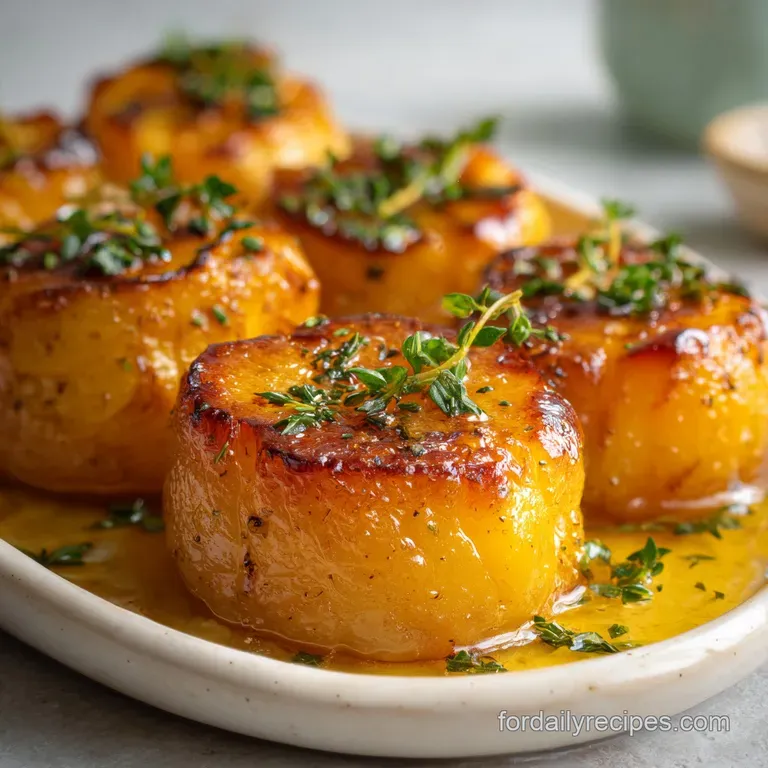
- Time: Active 20 minutes, Passive 35 minutes, Total 55 minutes
- Flavor/Texture Hook: A velvety, butter soaked interior protected by a crisp, salty exterior
- Perfect for: Sunday roasts, heritage holiday dinners, or impressing a guest
- Achieving the Silky Texture of Authentic Fondant Potatoes
- The Physics of the Velvet Core
- Component Analysis of the Braising Liquid
- Selecting the Heritage Components for Flavor
- Tools for a Mahogany Shattering Crust
- The Step-by-Step Path to Buttery Goodness
- Avoiding Soggy Bottoms and Scorched Garlic
- Adjusting the Heritage Recipe for Your Table
- Culinary Truths Regarding the Braise
- Preserving the Heritage of Your Leftovers
- Pairing Your Dish with Time Honored Mains
- Recipe FAQs
- 📝 Recipe Card
Achieving the Silky Texture of Authentic Fondant Potatoes
The first time I heard the sizzle of a potato cylinder hitting a scorching cast iron pan, I knew I was witnessing something special. I remember my grandmother standing over a heavy skillet, the air thick with the scent of rosemary and browning butter, carefully flipping what looked like small ivory pillars.
She called them "melting potatoes," a term that felt more like a promise than a name. When I finally took a bite, the outside didn't just crunch; it seemed to shatter, giving way to a center so creamy it felt like eating a savory cloud.
It was a heritage recipe that had been passed down through generations, and it completely changed how I viewed the humble potato.
We’ve all had those dry, mealy roasted potatoes that require a gallon of gravy to swallow. This recipe is the antidote to that. We are going to treat these potatoes with the same respect you'd give a fine steak, searing them for color and then gently braising them in a bath of chicken stock and aromatics.
The result is a dish that feels incredibly indulgent, yet it relies on basic pantry staples. But what about the risk of them falling apart or sticking? We'll navigate those pitfalls together, ensuring every pillar stands tall on your plate.
Trust me on this, once you master the rhythm of the sear and the simmer, you’ll never go back to basic roasting again.
Right then, let's get into the details. This isn't just about cooking; it's about a specific sequence of heat and moisture. We are looking for that deep, mahogany color that hints at a complex, nutty flavor. If you've ever felt intimidated by French techniques, don't be.
This is home cooking at its most refined, focusing on patience and the sensory cues of a bustling kitchen. You'll smell the garlic softening and the thyme "popping" in the fat, signaling that the magic is happening.
The Physics of the Velvet Core
Starch Gelatinization: As the potatoes braise in chicken stock, the starch granules inside the Yukon Golds absorb the liquid and swell until they burst, creating a texture that is silky rather than grainy.
The Maillard Reaction: over High heat searing before the liquid is added creates a complex crust of caramelized sugars and proteins, providing a structural "shell" that keeps the potato from collapsing.
| Potato Thickness | Internal Texture | Sear Time | Visual Doneness Cue |
|---|---|---|---|
| 1 inch | Fluffy / Light | 4 mins per side | Pale golden edges |
| 1.5 inches | Creamy / Custard | 6 mins per side | Deep mahogany crust |
| 2 inches | Dense / Rich | 8 mins per side | Dark brown, firm shell |
Choosing the right height for your potato cylinders is the most important decision you'll make today. If they are too thin, they’ll overcook and turn into mush during the braise. If they are too tall, the center might remain firm while the outside gets soggy.
I find that 1.5 inches is the "sweet spot" for that perfect contrast.
Component Analysis of the Braising Liquid
| Ingredient | Science Role | Pro Secret |
|---|---|---|
| Unsalted Butter | Emulsification & Flavor | Use cold cubes to slow down the browning process during the sear. |
| Chicken Stock | Hydration & Umami | Ensure it's room temperature so it doesn't "shock" the hot pan and cause splattering. |
| Yukon Gold Potatoes | Texture Foundation | Their medium starch content provides the best balance between holding shape and melting. |
The quality of your stock matters immensely here because the potatoes will absorb nearly all of it. If you have a heritage bone broth tucked away in the freezer, now is the time to pull it out. The gelatin in a good stock adds a lip smacking richness to the final glaze that water or bouillon simply can't match.
Selecting the Heritage Components for Flavor
To make these fondant potatoes melting potatoes, we need specific elements that work in harmony. Don't skip the fresh herbs; dried ones will simply burn in the over high heat sear and leave a bitter aftertaste.
- 4.5 large Yukon Gold potatoes: Why this? They have a buttery naturally yellow flesh and hold their shape better than Russets.
- 2 tbsp Vegetable oil: Why this? We need a high smoke point for the initial sear; olive oil burns too quickly.
- 4 tbsp Unsalted butter, cold and cubed: Why this? Adding butter late ensures it browns into a nutty sauce rather than burning.
- 1.5 cups Chicken stock: This provides the moisture for the internal "melt."
- 3 cloves Garlic, smashed: We want the oils to infuse the fat without the garlic pieces burning.
- 4 sprigs Fresh thyme: Adds an earthy, floral aroma that defines this dish.
- 1 sprig Fresh rosemary: A little goes a long way to provide a piney, savory backbone.
- 0.5 tsp Fine sea salt: For precision seasoning.
- 0.25 tsp Freshly cracked black pepper: Provides a subtle heat.
A quick substitute for the vegetable oil would be clarified butter (ghee) if you want an even deeper flavor profile. If you find yourself without chicken stock, a high-quality vegetable stock works, but it will lack the "sticky" finish that chicken gelatin provides.
| Original Ingredient | Substitute | Why It Works |
|---|---|---|
| Chicken Stock (1.5 cups) | Beef Consommé | Adds a much darker color and meatier flavor; slightly saltier outcome. |
| Vegetable Oil | Ghee / Clarified Butter | Higher smoke point than regular butter with a rich, toasted flavor. |
| Fresh Thyme | Fresh Sage | Offers a warm, fuzzy herbal note that pairs beautifully with autumn dishes. |
Using beef consommé is a fantastic trick if you are serving these alongside a prime rib. It turns the potatoes into something almost soul warming and incredibly dark in color. Just be sure to reduce your added salt slightly, as consommé is naturally quite savory.
Tools for a Mahogany Shattering Crust
You really need a heavy bottomed pan for this. A cast iron skillet (like a Lodge) or a heavy stainless steel pan is your best friend here. Avoid non stick pans; they can't handle the high heat required to get that deep sear, and the crust will end up pale and soft.
You'll also need a sharp chef's knife to trim the potatoes into those iconic cylinders. Some people use a metal ring mold to get them perfectly circular, but I prefer the "hand cut" look. It feels more like a home cooked meal and less like a factory produced side dish.
Finally,, a fish spatula or a thin offset spatula is helpful for flipping the potatoes without tearing the delicate crust we worked so hard to build.
The step-by-step Path to Buttery Goodness
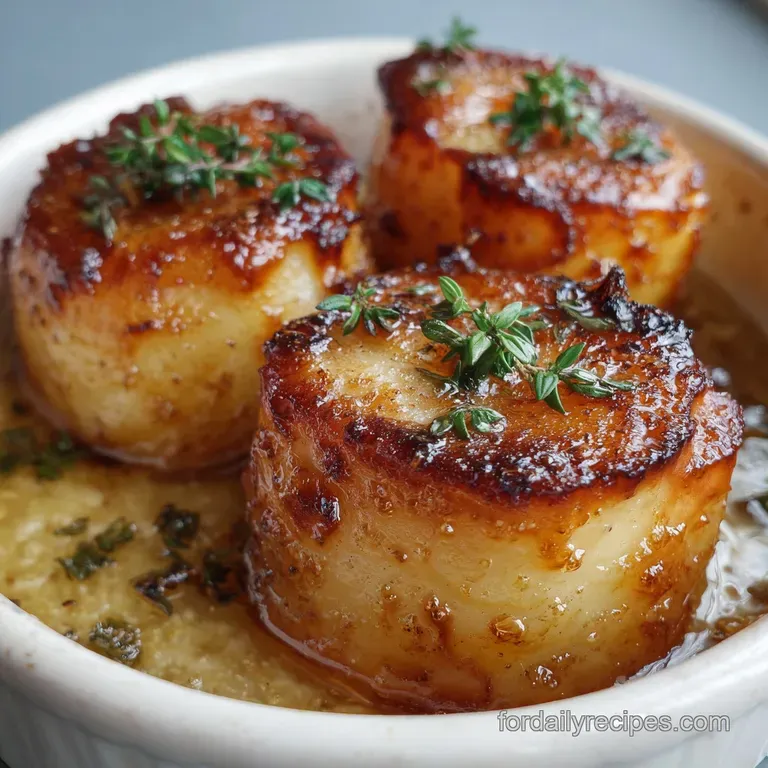
Phase 1: Precision Prep for Easy Fondant Potatoes
- Shape the potatoes. Peel the 4.5 large Yukon Gold potatoes and slice off the ends so they stand flat. Note: Aim for 1.5 inch tall cylinders.
- Rinse and dry. Place the cylinders in a bowl of cold water for 5 minutes, then pat them completely bone dry with a paper towel. Note: Surface moisture is the enemy of a good sear.
- Season the ends. Sprinkle the 0.5 tsp fine sea salt and 0.25 tsp black pepper over the flat ends of the potatoes.
Phase 2: Achieving the Signature Crust
- Heat the oil. Add the 2 tbsp vegetable oil to a heavy skillet over medium high heat until it shimmers and wisps of smoke appear.
- Sear the first side. Place potatoes in the pan (don't crowd them!) and cook for 5-6 minutes until a deep mahogany crust forms. Note: Don't move them until they naturally release from the pan.
- Flip and repeat. Carefully turn the potatoes over and sear the other side for another 5 minutes.
- Introduce the aromatics. Lower the heat to medium and add the 4 tbsp cubed butter, 3 cloves smashed garlic, and the sprigs of thyme and rosemary.
Phase 3: The Braising Bath
- Baste the potatoes. Use a spoon to pour the foaming, herb scented butter over the tops of the potatoes for 2 minutes until the kitchen smells like a French bistro.
- Add the stock. Carefully pour the 1.5 cups chicken stock into the pan. Note: The liquid should come about halfway up the sides of the potatoes.
- Bake the potatoes. Transfer the skillet to a preheated 400°F (200°C) oven and cook for 25-30 minutes until a knife slides into the center with zero resistance.
Phase 4: The Final Glaze
Once the potatoes are tender, remove the pan from the oven. If there is still a lot of liquid left, place the pan back on the stovetop over high heat for 2 minutes to reduce the stock into a thick, syrupy glaze.
Spoon this liquid gold over the potatoes right before serving to give them a glossy, professional finish.
Avoiding Soggy Bottoms and Scorched Garlic
One of the biggest mistakes I once made was adding the garlic at the same time as the potatoes. By the time the potatoes were seared, the garlic was black and bitter. Always wait until you've flipped the potatoes and lowered the heat before adding your aromatics.
To Fix Potatoes Sticking to the Pan
If your potatoes feel "glued" to the skillet, do not force them. Usually, this means the crust hasn't fully formed yet. Wait another minute; once the Maillard reaction has completed, the potato will naturally release from the metal.
To Prevent a Soggy Top
If you find the tops of your fondant potatoes aren't as crispy as you'd like after the braise, it’s likely because you used too much stock. The liquid should never cover the tops. If it does, you're boiling them, not braising them.
| Problem | Root Cause | Solution |
|---|---|---|
| Bitter Flavor | Burnt garlic or herbs | Add aromatics only after the initial over high heat sear is complete. |
| Falling Apart | Over cooking or low starch potato | Use Yukon Golds and check for doneness at the 25 minute mark. |
| Pale Crust | Pan not hot enough | Wait for the oil to shimmer and smoke slightly before adding potatoes. |
✓ Pat the potatoes perfectly dry before they hit the oil to ensure a crisp sear. ✓ Use a heavy cast iron pan for even heat distribution and better crust formation. ✓ Don't overcrowd the pan; leave at least an inch of space between each potato cylinder.
✓ Always use unsalted butter so you have total control over the seasoning. ✓ Baste frequently with the herb butter before adding the stock to build flavor layers.
Adjusting the Heritage Recipe for Your Table
When you need to feed a larger crowd, scaling this recipe is relatively straightforward, but you must be careful with the liquid to surface area ratio.
- Scaling Up (2x): Use two separate skillets rather than one giant one. If you crowd too many potatoes into one pan, the temperature drops, and they will steam instead of sear. Use 1.5x the salt and spices, and keep the stock level at the halfway point of the potatoes.
- Scaling Down (½): You can easily make this for two people. Use a smaller 8 inch skillet to ensure the 0.75 cups of stock still reaches halfway up the potatoes. If the pan is too large, the stock will evaporate too quickly before the centers are soft.
| Premium Choice | Budget Alternative | Flavor Impact | Savings |
|---|---|---|---|
| Saffron infused Stock | Chicken Bouillon | Saffron adds a floral, luxury aroma | Save $10-15 |
| European Cultured Butter | Standard Store Brand | Cultured butter is tangier and richer | Save $4-6 |
| Fresh Thyme & Rosemary | Dried Herbs (in a sachet) | Fresh is much more vibrant; dried can be dusty | Save $3-5 |
If you are on a budget, don't worry. A standard store brand butter and a decent bouillon cube will still produce a result that is ten times better than a standard boiled potato. The magic is in the technique, not the price tag of the ingredients.
Culinary Truths Regarding the Braise
Many people believe that you must use a metal ring mold to make "real" fondant potatoes. That is a myth. While it looks pretty in a restaurant, the rustic, hand trimmed edges actually provide more surface area for the butter to cling to. Another misconception is that you can't use Russet potatoes.
While Yukon Golds are the standard for their "melting" quality, Russets will work; they just produce a fluffier, more mashed potato like interior rather than a creamy one.
One final myth to debunk: "You can't over sear the potatoes." Actually, you can. If the crust becomes too thick and hard (almost like a shell), it prevents the stock from penetrating the center of the potato during the oven phase. Aim for mahogany, not charred black.
Preserving the Heritage of Your Leftovers
Storage: These potatoes are best served immediately to enjoy the contrast of the crust. However, you can store leftovers in an airtight container in the fridge for up to 3 days. The crust will soften, but the flavor will actually deepen as the potatoes continue to absorb the garlic and herb notes.
Reheating: To bring back some of that original glory, avoid the microwave. Instead, place them in a small pan with a splash of water or stock, cover with foil, and heat in a 350°F oven for 10-15 minutes.
For the last 2 minutes, remove the foil to let the tops firm up again.
Zero Waste: Don't throw away those potato scraps! The bits you trimmed off to make the cylinders are full of starch. Boil them in a little salted water, mash them up, and you've got the start of a great potato soup or a small batch of gnocchi.
Even the herb stems can be tossed into a freezer bag for your next batch of homemade stock.
Pairing Your Dish with Time Honored Mains
Because these potatoes are so rich and buttery, they pair beautifully with proteins that have a bit of acidity or a strong savory profile. I love serving these with a pan seared duck breast or a thick cut pork chop with a vinegar based sauce.
If you want to keep it classic, a simple roasted chicken is the way to go. The juices from the chicken mingle with the herb scented stock of the potatoes, creating a plate that tastes like a warm hug from the past.
For a vegetable heavy meal, try pairing them with roasted balsamic Brussels sprouts the acidity of the vinegar cuts right through the richness of the fondant potatoes melting potatoes.
- For a Velvet Like Interior: Ensure you don't skip the soaking step. Rinsing off the excess surface starch allows the heat to penetrate the center more evenly without the outside getting gummy.
- For a Quick Shortcut: If you're short on time, you can sear the potatoes and then simmer them entirely on the stovetop. Cover the pan with a lid to trap the steam. They won't be quite as "roasty" in flavor, but they will still be incredibly tender and delicious.
- For a Vegan Twist: Replace the butter with a high-quality vegan butter alternative and use a rich mushroom broth instead of chicken stock. The umami from the mushrooms provides a similar depth that makes the dish feel just as hearty.
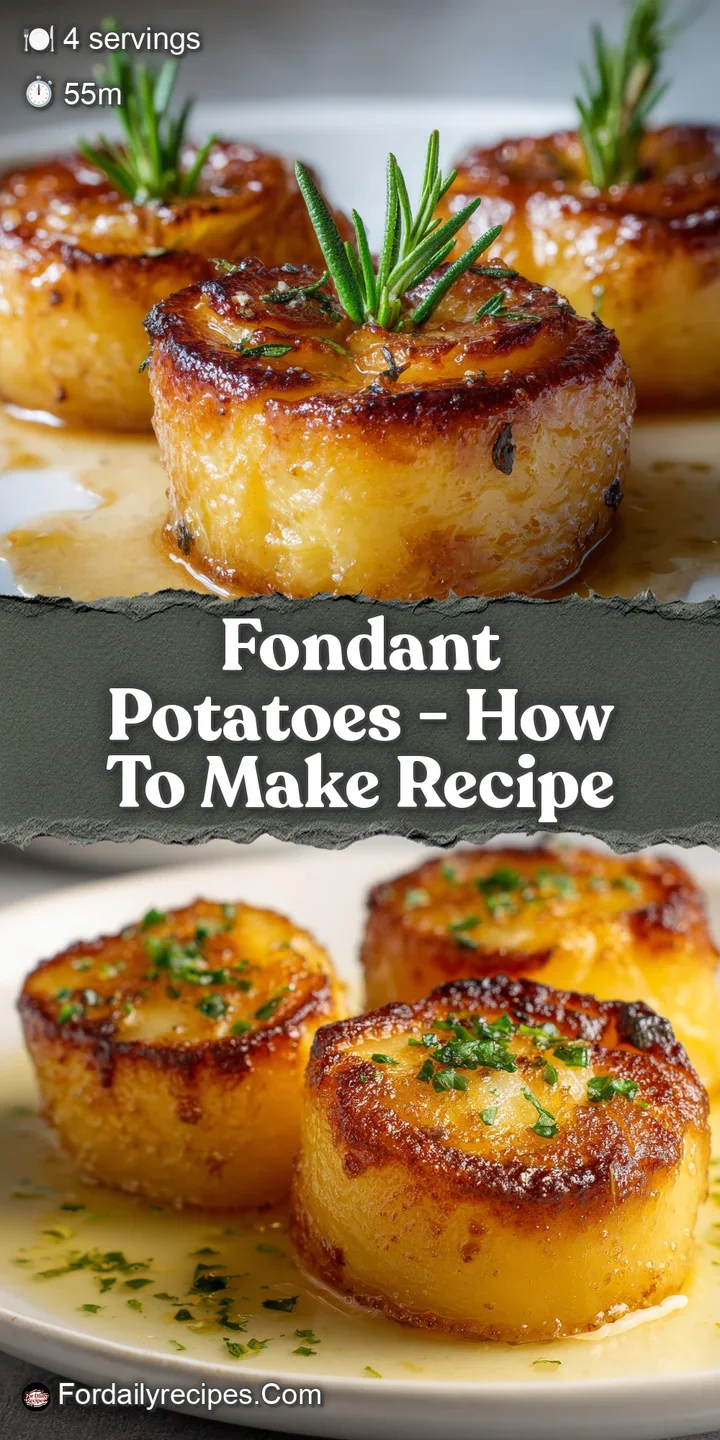
Recipe FAQs
What kind of potatoes are best for fondant potatoes?
Yukon Golds are ideal. Their medium starch content provides a great balance of holding their shape while achieving a creamy, melt-in-your mouth interior.
How thick should fondant potato cylinders be?
Aim for 1.5 inches thick. This thickness ensures a good balance: not too thin to turn mushy, and not too tall to remain firm in the center.
Why do my fondant potatoes stick to the pan?
The crust likely hasn't fully formed yet. Wait another minute; once the Maillard reaction is complete, the potatoes should naturally release from the skillet.
Can I use dried herbs instead of fresh for fondant potatoes?
No, fresh herbs are strongly recommended. Dried herbs can burn during the high heat sear, imparting a bitter flavor, while fresh herbs add a vibrant aroma.
How do I prevent the tops of my fondant potatoes from becoming soggy?
Ensure the liquid doesn't cover the tops. The stock should only come halfway up the sides of the potatoes; too much liquid leads to boiling rather than braising.
Can I make fondant potatoes ahead of time?
Yes, peel and shape them up to 24 hours in advance. Store the prepared potato cylinders in cold water until you're ready to cook them.
What can I serve with fondant potatoes?
Pair them with rich proteins or acidic sides. Excellent choices include pan-seared duck breast, pork chops with a vinegar sauce, or roasted chicken.
Fondant Potatoes
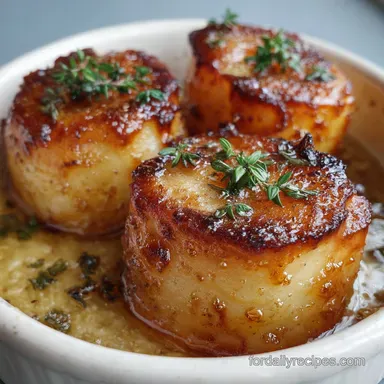
Ingredients:
Instructions:
Nutrition Facts:
| Calories | 387 kcal |
|---|---|
| Protein | 7.3 g |
| Fat | 19.7 g |
| Carbs | 45.7 g |
| Fiber | 5.0 g |
| Sugar | 1.8 g |
| Sodium | 485 mg |
