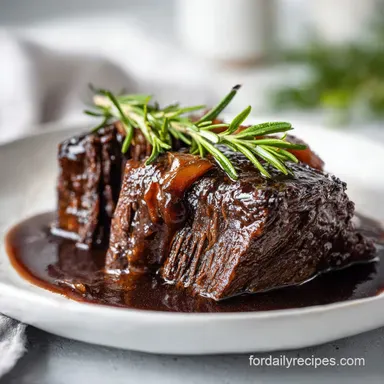
Beef Pot Roast: Oven-Braised Method

- Time: 15 min active + 210 min oven
- Flavor & Texture: Savory, tender, and deeply browned
- Perfect for: Sunday family dinner or meal prep
The aroma of browned beef and garlic wafting through the air is an immediate signal that a delicious dinner is underway. This dish brings a cozy, welcoming energy to the entire home.
This method prioritizes developing complex layers of taste prior to roasting. The result is a melt-in-your-mouth main course accompanied by vegetables that have absorbed every drop of savory juice.
Much of the appeal of a beef Pot roast lies in the slow, deliberate cooking process. It yields a rich, amber sear and a sauce with a luxurious finish.
Beef Pot Roast
The Low and Slow Heat: Keeping the oven at 300°F prevents the meat from seizing up. It gives the collagen time to melt into gelatin.
The Sear: Browning the meat creates a dark crust. This adds a savory depth that you can't get from simmering alone.
Acid Balance: A splash of lemon juice cuts through the heavy fat. It keeps the flavor from feeling too one-note.
| Meat Cut | Tenderness | Flavor Depth | Best Use |
|---|---|---|---|
| Beef Chuck | Very High | Deep | Long braises |
| Rump Roast | Medium | Mild | Shorter cooks |
| Eye of Round | Low | Light | Slicing thin |
Ingredient Deep Dive
- 3 lb beef chuck roast, trimmed of excess exterior fat
- 2 tsp kosher salt
- 1 tsp coarse black pepper
- 2 tbsp neutral oil
- 2 cups low-sodium beef broth
- 2 tbsp fresh lemon juice
- 4 cloves garlic, smashed
- 1 tbsp tomato paste
- 2 bay leaves
- 3 sprigs fresh thyme
- 1 lb carrots, peeled and cut into 2-inch chunks
- 1½ lb Yukon Gold potatoes, halved or quartered
- 1 large yellow onion, wedged
The beef chuck is the star here. It has plenty of connective tissue and fat marbling, which is what makes the meat shred instead of drying out. If you use a leaner cut, the result stays tough.
The aromatic base relies on yellow onion and smashed garlic. These melt into the sauce, providing a savory foundation. Tomato paste adds a brick-red color and a hint of umami.
Fresh thyme and bay leaves provide the herbal notes that define a time-honored roast. The lemon juice is a subtle addition, but it wakes up the whole pot.
Recipe Specs
This dish is designed for a 6-quart Dutch oven. It's a slow process, but most of that time is passive. You just let the oven do the heavy lifting.
The total time is 3 hours and 45 minutes. This includes the 15 minutes of prep and the 3.5 hours of cooking.
Equipment Needed
A heavy-bottomed Dutch oven is non-negotiable. You need something that can move from the stove to the oven and hold heat evenly.
A meat thermometer is the only way to be sure the roast is done. Looking at the meat isn't enough, as internal heat varies.
Bringing It Together
Creating a Rich Crust
Set your oven to 300°F (150°C). Make sure the beef is thoroughly moisture-free. Note: Removing surface moisture ensures a better sear. Liberally season every side with 2 tsp kosher salt and 1 tsp coarse black pepper.
Bring 2 tbsp neutral oil to a shimmer in a 6-quart Dutch oven over medium-high heat. Brown the meat for 5–7 minutes per side until a dark, chestnut brown crust forms. Lift the beef out and place it on a plate.

Developing the Aromatics
Reduce the heat to medium. Cook the wedged yellow onion in the leftover beef fat until the edges are translucent.
Mix in 1 tbsp tomato paste and 4 cloves smashed garlic. Sauté for 60 seconds until the paste turns a deep brick red and smells fragrant.

The Slow Braise
Deglaze the pan by pouring in 2 cups low-sodium beef broth and 2 tbsp lemon juice. Scrape the bottom with a wooden spoon until all the browned bits are released.
Put the beef back into the pot. Add 2 bay leaves and 3 sprigs fresh thyme. Seal with a tight-fitting lid and bake at 300°F (150°C) for 2.5 hours.
Adding the Vegetables
Gently stir in 1 lb carrots and 1½ lb Yukon Gold potatoes. Cover and return the pot to the oven for another 60 minutes.
The roast is ready once the beef hits an internal temperature of 200°F (93°C) and shreds easily with a fork.

Common Problems and Fixes
Fixing Tough Meat
If the beef resists a fork, it needs more time. The collagen hasn't fully melted yet. Put it back in the oven for 30–45 minutes.
Thickening a Thin Gravy
Sometimes the liquid stays too watery. You can simmer it on the stove after removing the meat to reduce it. For a thicker result, you can use a Brown Gravy Recipe technique by whisking in a cornstarch slurry.
Preventing Burnt Edges
If the liquid level is too low, the edges of the meat can scorch. Ensure the broth covers at least a third of the roast.
| Problem | Fix |
|---|---|
| Meat is rubbery | Cook longer until it hits 200°F |
| Sauce is too thin | Simmer uncovered on the stove |
| Veggies are mushy | Add them 30 mins later than listed |
Keeping It Fresh
Keep leftovers refrigerated in an airtight container for 4 days. Since the gravy thickens as it cools, stir in a splash of water when reheating.
This meal is freezer-friendly; store the beef and sauce in a freezer-safe container for up to 3 months.
To warm it up, heat the meat gently in a covered pot on low until it reaches 165°F (74°C) inside. I suggest adding a bit of beef broth to keep everything moist. When reheating cooked leftovers, check with a food thermometer that the centre reaches 165°F (74°C); the appliance temperature and time alone do not confirm this.
What to Serve This With

The potatoes and carrots are already in the pot, but you can add more on the side.
I prefer serving this over a heap of buttery mashed potatoes to soak up the velvety gravy. A side of steamed green beans or a crisp garden salad adds a nice freshness to the plate.
Flavor Variations to Try
Red Pepper & Tomato Variation
To shift the flavor profile, sauté a diced red bell pepper along with the onions. Use two tablespoons of tomato paste instead of one to create a more robust sauce.
Root Vegetable Alternative
Substitute the potatoes with parsnips or turnips. These provide a slightly peppery note that pairs wonderfully with the beef Pot roast.
Garlic & Herb Boost
Double the garlic and include a sprig of fresh rosemary to give the dish a more aromatic, woody fragrance.
Slow Cooker Method
For a slow cooker beef pot roast, brown the meat in a pan first. Transfer all ingredients to your crockpot and cook on low for 8 hours.
Pressure Cooker Method
For an Instant Pot beef pot roast, sear the meat directly in the pot. Add the herbs and liquids, then cook on high pressure for 60 minutes with a natural release. Add the carrots and potatoes before pressure cooking instead, since 10 minutes of sautéing will not cook them through.
Your Questions, Answered
What is the best cut of beef for pot roast?
Beef chuck roast is the top recommendation. Its abundant connective tissue and marbling melt during the slow cook, resulting in meat that shreds easily.
How many hours of cooking are required?
The beef needs 3.5 hours in the oven. It braises for 2.5 hours alone and another 60 minutes once the vegetables are added.
Which liquid provides the best flavor?
Low-sodium beef broth mixed with lemon juice. The broth creates a rich base, while the lemon juice balances the richness of the beef fat.
How to store the leftovers?
Keep the roast in the refrigerator. Because this dish contains cooked meat, it must be chilled to stay fresh.
Can I use a different cut of beef?
Yes, although leaner cuts like rump roast are available. These will produce a milder flavor and a firmer texture since they have less collagen than chuck.
Why does my roast stay tough?
The meat may not have reached 200°F internally. Collagen converts to gelatin gradually as the meat heats, and the roast is usually fully tender by about 200°F internally.
Could this be prepared in a slow cooker?
Yes, a slow cooker method is a common alternative. This approach uses a much longer timeframe at a lower temperature than the 300°F oven method.
How do I test for doneness?
Use a thermometer to confirm an internal temperature of 200°F. The beef is ready when it pulls apart effortlessly with a fork.
Beef Pot Roast in the Oven