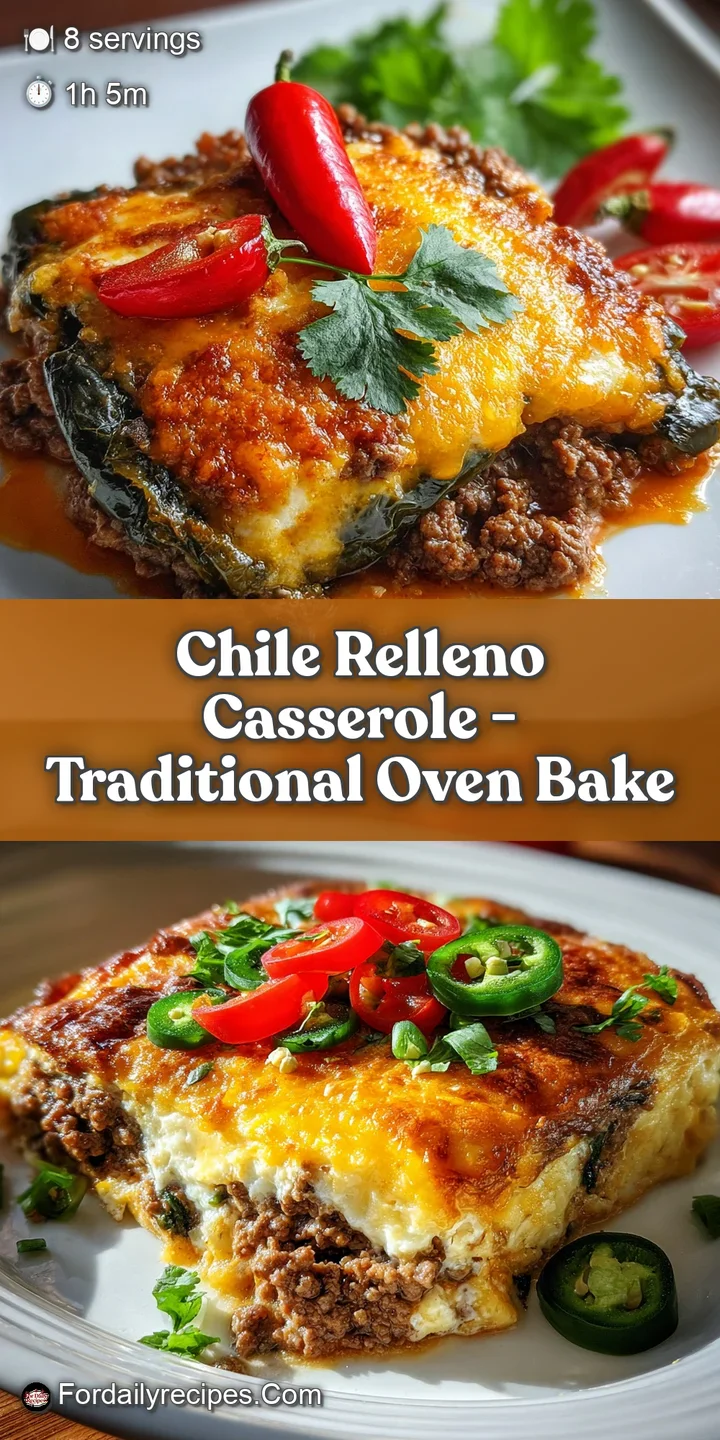
Chile Relleno Casserole: Velvety Custard Bake
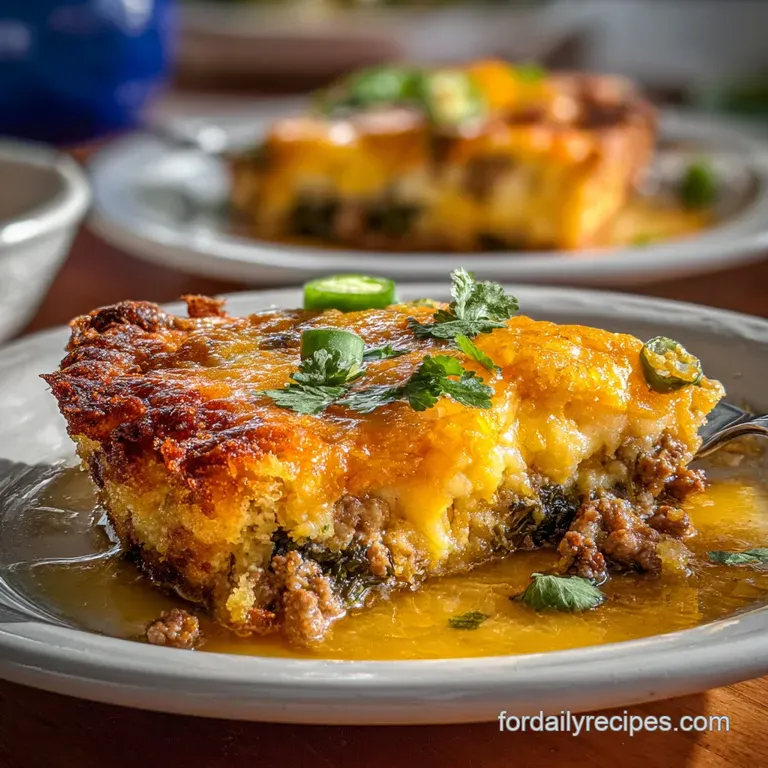
- Time: Active 20 minutes, Passive 45 minutes, Total 1 hours 5 minutes
- Flavor/Texture Hook: A custardy, golden brown top that gives way to a smoky, molten cheese center.
- Perfect for: Holiday brunches, Sunday family gatherings, or a comforting weeknight supper.
- Capture Heritage with This Chile Relleno Casserole
- The Science of Why it Works
- Essential Stats for a Perfectly Timed Family Meal
- Selecting the Finest Components for a Rich Savory Base
- Preparing Your Kitchen with the Right Professional Tools
- Building the Layers for a Spectacular Golden Finish
- Fixing Texture Issues and Achieving the Ideal Custard
- Adapting the Recipe with Tasty Twists and Swaps
- Scaling Your Dish for Larger Family Gatherings
- Debunking Old Myths About the Perfect Casserole
- Preserving Freshness and Reducing Kitchen Waste Efficiently
- Plating Your Creation for a Truly Memorable Experience
- Recipe FAQs
- 📝 Recipe Card
Capture Heritage with This Chile Relleno Casserole
The aroma of roasting peppers and browning beef is a scent that immediately transports me back to my grandmother’s kitchen, where time seemed to slow down and every meal was an act of love.
This Chile Relleno Casserole isn't just a recipe; it’s a story told through layers of melted cheese and spiced beef, inspired by the traditional stuffed peppers of New Mexico but simplified for the home cook who values heritage over haste.
I remember the first time I tried to make this without her guidance. I rushed the process, didn't dry the chiles properly, and ended up with a soggy mess that lacked that signature "poof." It was a humbling lesson that taught me the importance of patience and technique.
Over the years, I’ve refined this method to ensure that every bite offers that perfect contrast between the silky egg topping and the robust, savory base.
We are going to build this dish stage by stage, focusing on how the flavors develop as they meld in the oven. You aren't just putting ingredients in a pan; you are creating a harmony of textures.
From the sizzle of the lean ground beef to the way the Monterey Jack stretches and pulls, every element is designed to provide a sense of home. Trust me, once you see that golden crust emerge from the oven, you'll understand why this has been a staple in our house for decades.
The Science of Why it Works
Protein Matrix Stability: The eggs and milk form a protein rich custard that, when reinforced with a small amount of flour, creates a structural web capable of trapping steam for a lasting rise.
Fat Emulsification: The lecithin in the egg yolks acts as a bridge between the milk’s moisture and the fats in the cheese, preventing the common problem of oil pooling on the surface.
Comparison of Fast vs Classic Methods
| Method | Prep Style | Final Texture | Flavor Depth |
|---|---|---|---|
| Fast Shortcut | Pre cooked meat, store-bought mix | Soft but uniform | Mild and straightforward |
| Classic Heritage | Hand layered chiles, whipped custard | Fluffy with distinct layers | Complex and smoky |
| This Recipe | Searing beef with aromatics | Velvety with structural integrity | Deep, umami rich savory notes |
Building flavor in stages is the secret here. While some might suggest throwing everything into a bowl and mixing it, we take the time to sear the beef until it reaches a deep caramelization. This is similar to the foundation we lay in my Breakfast Casserole recipe, where the quality of the base determines the success of the entire dish.
Essential Stats for a Perfectly Timed Family Meal
Precision is the companion of any good cook, and while our grandmothers might have cooked by "feel," we can use a few checkpoints to ensure our Chile Relleno Casserole is a success every single time.
One of the most important things to remember is that the dish will continue to cook slightly after it leaves the heat, a process known as carryover cooking.
When you pull the pan from the oven, the center should have a slight, jell like jiggle but not be liquid. If it’s completely stiff, you’ve likely over denatured the egg proteins, which can lead to a rubbery texture. We want that velvety, melt in-the mouth feel that only comes from careful timing.
Quick Decision Guide for Perfect Doneness
| Pan Depth | Internal Temp | Rest Time | Visual Cue |
|---|---|---|---|
| Standard (5 cm) | 71°C | 10 minutes | Center jiggles like firm gelatin |
| Shallow (3 cm) | 71°C | 5 minutes | Edges pull away from the pan |
| Deep Dish (7 cm) | 71°C | 15 minutes | Top is domed and golden brown |
Chef's Tip
Freeze your canned chiles for 10 minutes before you start. This firms up the delicate flesh just enough so you can slit them open and flatten them out without the peppers tearing into a million pieces.
Selecting the Finest Components for a Rich Savory Base
Choosing the right ingredients for your Chile Relleno Casserole is about balancing moisture and fat. For the beef, I always go with 450 grams (1 lb) of 90/10 lean ground beef. Anything fattier will release too much grease into the peppers, which prevents the egg custard from adhering to the layers below.
We want the beef to provide a sturdy, savory floor for the dish.
The chiles are the heart of the matter. We use 400 grams (14 oz) of whole green chiles, which provide a mild but distinct heat. If you have the time, you can roast fresh Poblanos, but the canned variety offers a specific, tender texture that reminds me of the heritage recipes I grew up with.
Just be sure to pat them bone dry; moisture is the enemy of a fluffy casserole.
Ingredient Deep Dive
| Component | Science Role | Pro Secret |
|---|---|---|
| 6 Large Eggs | Structure & Lift | Use room temperature eggs for a 20% higher rise |
| 355 ml Whole Milk | Hydration & Richness | The fat in whole milk creates a more velvety crumb |
| 450 g Lean Ground Beef | Savory Foundation | Sear until no pink remains to maximize umami |
| 0.5 tsp Baking Powder | Chemical Leavening | Ensure it's fresh to guarantee the "soufflé" effect |
Primary Ingredients and Substitutions
- 450 g Lean Ground Beef (90/10): Why this? Provides a robust, meaty texture without excessive grease pooling in the pan. (Substitute: Ground turkey or chorizo for a spicier kick)
- 1 small Yellow Onion, finely diced: Why this? Adds subtle sweetness and moisture to the beef base. (Substitute: White onion or shallots)
- 2 cloves Garlic, minced: Why this? Essential for building that aromatic, savory depth. (Substitute: 0.5 tsp garlic powder)
- 400 g canned Whole Green Chiles: Why this? Soft texture and mild heat that layers perfectly between cheese. (Substitute: Roasted Poblano peppers)
- 340 g Monterey Jack Cheese, shredded: Why this? Superior meltability and mild flavor that doesn't overpower the peppers. (Substitute: Muenster or Havarti)
- 113 g Sharp Cheddar Cheese, shredded: Why this? Provides a necessary salty tang to contrast the creamy eggs. (Substitute: Pepper Jack)
- 6 large Eggs: Why this? The binder and primary leavening agent for the top layer. (Substitute: 1.5 cups liquid egg substitute)
- 355 ml Whole Milk: Why this? Creates a rich, custard like consistency rather than a dry sponge. (Substitute: Heavy cream mixed with water)
- 30 g All Purpose Flour: Why this? Stabilizes the egg proteins so the casserole doesn't collapse. (Substitute: Cornstarch or gluten-free flour blend)
- Spices (Cumin, Paprika, Salt, Pepper): Why this? These earthy tones bridge the gap between the beef and the chiles.
Preparing Your Kitchen with the Right Professional Tools
To achieve that specific heritage texture, you don't need a pantry full of gadgets, but a few specific tools will make the process much smoother. A heavy bottomed skillet is non negotiable for browning the beef.
If the pan is too thin, the meat will steam rather than sear, and you'll miss out on those dark, flavorful bits that anchor the dish.
For the custard, a balloon whisk is better than a fork. You want to incorporate as much air as possible into those eggs. When the air bubbles are trapped by the flour and then hit the heat of the oven, they expand, giving you that beautiful dome.
If you have a stand mixer, you can even whip the egg whites separately to soft peaks and fold them in for an even lighter result, though the traditional way is to whisk them whole.
- 23x33 cm Baking Dish: The standard size for this volume of ingredients to ensure the layers aren't too thin.
- Cast Iron Skillet: Ideal for achieving the Maillard reaction on the ground beef.
- Large Glass Mixing Bowl: Gives you plenty of room to whisk the eggs and milk without splashing.
- Fine Mesh Sieve: Useful if you want to sift the flour into the eggs to prevent any stubborn lumps.
- Paper Towels: Essential for drying the chiles don't skip this!
Building the Layers for a Spectacular Golden Finish
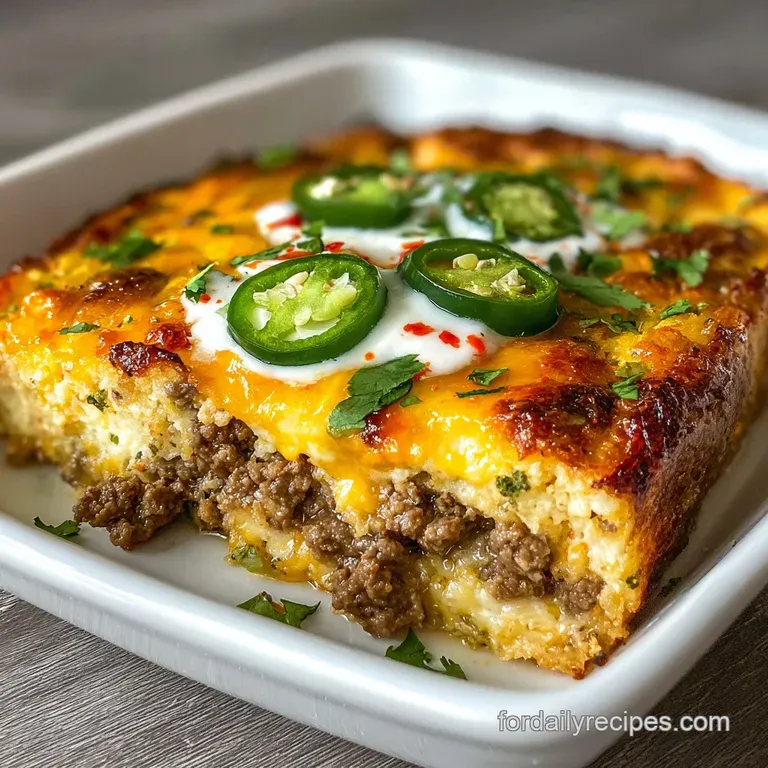
Now, let's get into the heart of the process. This is where we transform raw ingredients into a Chile Relleno Casserole that looks as good as it tastes. The layering is the most satisfying part, a rhythmic assembly that ensures every forkful contains a bit of everything: meat, chile, cheese, and cloud.
- Brown the beef. Sauté the 450 grams of beef with the diced yellow onion and garlic in a skillet over medium high heat until the meat is craggy and browned.
- Season the base. Stir in the 1 tsp cumin, 0.5 tsp smoked paprika, 0.5 tsp salt, and 0.25 tsp black pepper. Note: Toasting the spices with the meat fat awakens their essential oils.
- Prepare the dish. Lightly grease your baking dish. Spread the cooked beef mixture evenly across the bottom.
- Dry the chiles. Take your 400 grams of whole chiles, slit them open, and pat them dry with paper towels until no moisture remains on the surface.
- Layer the peppers. Place half of the flattened chiles directly over the beef, creating a green "blanket."
- Add the cheese. Sprinkle 170 grams of the shredded Monterey Jack and half of the sharp cheddar over the chiles.
- Repeat layers. Add the remaining chiles and the rest of the Monterey Jack cheese.
- Whisk the custard. In a large bowl, whisk 6 eggs, 355 ml milk, 30 g flour, 0.5 tsp baking powder, and a pinch of salt until the mixture is frothy and pale yellow.
- Pour and bake. Pour the egg mixture slowly over the cheese. Bake at 175°C (350°F) for 45 minutes until the top is puffed and a deep golden brown.
- Rest. Let the casserole sit for 10 minutes before slicing to allow the custard to set firmly.
Chef's Note
Add a dash of fish sauce or soy sauce to the beef while browning. It might sound unconventional, but it deepens the umami profile of the meat without adding any "fishy" flavor, making it taste like it’s been simmering for hours.
Fixing Texture Issues and Achieving the Ideal Custard
Even the most seasoned cooks run into trouble sometimes. The most common pitfall with a Chile Relleno Casserole is the "soggy bottom" or a custard that separates. This usually happens when there is too much hidden moisture in the ingredients.
If your casserole looks like it’s swimming in liquid, it’s often because the onions weren't cooked down enough or the chiles were still wet from the can.
Why Your Casserole is Watery
If you cut into the dish and see liquid pooling, the culprit is usually the chiles. Canned chiles are packed in brine, and their flesh is porous. If you don't press them dry, that brine releases during the bake.
Another cause could be the fat from the beef; if you don't drain the skillet thoroughly, that oil will sit at the bottom of the dish, preventing the egg from binding with the meat.
| Problem | Root Cause | Solution |
|---|---|---|
| Deflated Top | Taken out of the oven too quickly | Bake until the center reaches 71°C |
| Gritty Texture | Flour wasn't whisked properly | Sift flour or use a blender for the custard |
| Oily Surface | Using high fat cheese or undrained meat | Use 90/10 beef and blot the cheese with a towel |
Common Mistakes Checklist
- ✓ Pat the chiles completely dry (prevents the custard from becoming diluted).
- ✓ Preheat your oven for at least 20 minutes (a hot oven is vital for the initial "spring" of the eggs).
- ✓ Use room temperature eggs (cold eggs won't whip as much air, leading to a flatter bake).
- ✓ Don't over mix the egg and flour (over mixing develops gluten, which can make the custard tough).
- ✓ Let the dish rest (this is when the structure fully stabilizes for a clean slice).
Adapting the Recipe with Tasty Twists and Swaps
While this version is a favorite, heritage recipes are meant to evolve with the family. You can easily adapt this Chile Relleno Casserole to fit what you have in the fridge. For instance, if you want a version that leans into the morning hours, it pairs beautifully with my Biscuits and Gravy recipe for a spread that will keep everyone full until dinner.
If you want X, do Y
- If you want a spicier kick, replace the Monterey Jack with a habanero infused cheese and add chopped jalapeños to the beef.
- If you want a vegetarian version, swap the beef for a mixture of sautéed mushrooms and black beans.
- If you want a smokier flavor, use roasted Poblano peppers instead of canned and add a touch more smoked paprika to the egg base.
Making it a Chile Relleno Casserole with Chicken
To swap the beef for chicken, use 450 grams of shredded rotisserie chicken. Toss it with the cumin and paprika, but add a splash of chicken broth or lime juice to keep it moist, as chicken can dry out faster than beef in the oven. Layer it exactly the same way the result is lighter but just as satisfying.
The Low Carb/Keto Swap
For those watching their carb intake, you can omit the 30 grams of flour. The casserole won't rise quite as high and the texture will be closer to an omelet than a soufflé, but the flavor remains impeccable. Just ensure you whisk the eggs very well to compensate for the lack of starch.
Scaling Your Dish for Larger Family Gatherings
When the whole family comes over, you'll likely need to double the recipe. This is where things get a bit tricky with baking times.
Scaling Down (1/2 recipe): Use a smaller 20x20 cm pan. Reduce the baking time by about 10-15 minutes. For the "half egg," whisk one egg in a cup and use exactly half of the liquid.
Scaling Up (2x recipe): Use two separate 23x33 cm dishes rather than one giant deep pan. This ensures the heat can penetrate the center effectively without burning the edges.
If you must use one large pan, lower the oven temperature by 15°C and extend the time by 20 minutes. For spices, I usually only increase them by 1.5x to avoid them becoming overwhelming.
Debunking Old Myths About the Perfect Casserole
There is a myth that you must separate the egg whites and beat them to stiff peaks to get a "real" relleno texture. While that does provide a lot of lift, the flour and baking powder in this recipe do the heavy lifting for you.
In fact, over beating the whites can sometimes cause the casserole to rise and then crash violently once it hits the cool air. A solid whisking of the whole eggs is more stable and provides a better mouthfeel.
Another common misconception is that you can't use "mild" chiles if you want flavor. People think "authentic" means "burning hot." In reality, the traditional Chile Relleno Casserole is about the smokiness and the sweetness of the pepper flesh, not just the capsaicin.
Using mild canned chiles allows the delicate flavor of the eggs and the richness of the Monterey Jack to shine through without being masked by heat.
Preserving Freshness and Reducing Kitchen Waste Efficiently
One of the best things about a hearty bake is that it often tastes even better the next day as the spices continue to mingle.
- Storage: Keep leftovers in an airtight container in the fridge for up to 4 days.
- Freezing: This dish freezes surprisingly well. Once cooled, wrap individual slices in parchment paper and then foil. It will stay fresh for up to 2 months.
- Reheating: To maintain the texture, reheat in a 150°C oven until warmed through. Microwaving works but can make the egg base a bit rubbery.
- Zero Waste: Don't toss the onion skins or the liquid from the chile cans. The onion skins can go into a bag in the freezer for your next batch of vegetable stock. The chile liquid (if you didn't use it all) can be added to a soup base or a jar of salsa for an extra punch of flavor.
Plating Your Creation for a Truly Memorable Experience
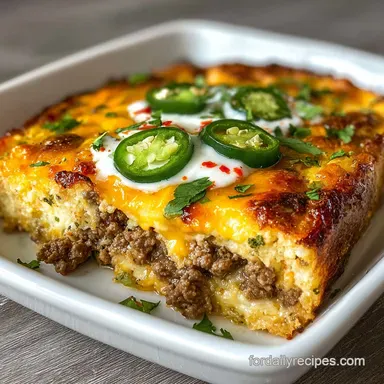
Presentation is the final layer of any great meal. To honor the heritage of this dish, I like to serve it with a dollop of cool sour cream and a sprinkle of fresh cilantro to brighten up the earthy tones of the cumin and beef.
If you're feeling adventurous, a side of warm flour tortillas is perfect for scooping up any stray bits of cheese and egg.
This recipe is similar to the approach used in our Breakfast Casserole recipe, where we prioritize the "bite" of the dish. A simple side of sliced avocado or a crisp radish salad provides a refreshing crunch that cuts through the richness. Whatever you choose, make sure to serve it while it's still warm and the cheese is at its most pliable. After all, the joy of a casserole is in the shared experience of digging into a pan that’s been prepared with care.
Recipe FAQs
Can I use fresh poblano peppers instead of canned green chiles?
Yes, you can, but it's more work. Roasting and peeling fresh poblanos adds a delicious smoky flavor, but canned chiles offer a specific tender texture that’s closer to the heritage recipe. If using fresh, roast them until blackened, steam them in a bag to loosen the skins, then peel and seed.
How do I prevent my Chile Relleno Casserole from being watery?
Pat the canned chiles completely dry. Canned chiles can hold a surprising amount of moisture from their brine; thoroughly drying them with paper towels is crucial to prevent a diluted, soupy casserole.
Why is the top of my casserole deflated?
You likely pulled it out of the oven too soon. The custard needs to reach an internal temperature of 71°C (160°F) to fully set and maintain its puffed dome shape.
Can I make this casserole ahead of time?
Yes, assembly can be done up to 12 hours in advance. Layer the ingredients, cover tightly, and refrigerate. You may need to add a few extra minutes to the baking time if baking directly from the fridge.
What kind of beef is best for this casserole?
Use lean ground beef, preferably 90/10. This provides a savory foundation without releasing excessive grease, which can make the casserole oily and prevent the egg custard from adhering properly.
How do I make a vegetarian version of this casserole?
Substitute the beef with sautéed mushrooms and black beans. Sauté your favorite mushrooms until golden and then mix them with well drained black beans. This creates a hearty, flavorful base that pairs well with the chiles and cheese.
Is it true that I must separate the eggs for a fluffy result?
No, that's a common misconception for this recipe. While separating eggs adds lift, this casserole relies on the combination of flour and baking powder to achieve its fluffy texture. Whisking the whole eggs thoroughly is sufficient and more stable.
Chile Relleno Casserole
Ingredients:
Instructions:
Nutrition Facts:
| Calories | 427 kcal |
|---|---|
| Protein | 32 g |
| Fat | 28 g |
| Carbs | 9 g |
| Fiber | 1 g |
| Sugar | 3 g |
| Sodium | 680 mg |
