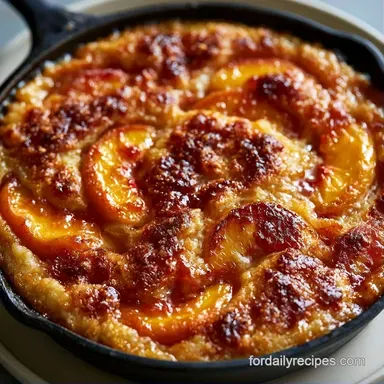
Southern Cast Iron Peach Cobbler: Golden Crust

- Time: 15 min active + 40 min bake
- Flavor/Texture Hook: Tart, jammy fruit under a golden, buttery crust
- Perfect for: Sunday family dinners or heritage celebrations
The scent of cinnamon and bubbling sugar hitting a hot pan always brings me back to my grandmother's kitchen. For generations, the Southern tradition of the cobbler wasn't about precision or fancy plating, but about using whatever fruit was peaking in the heat of August.
It's a dish that represents the heart of home cooking, meant to be scooped out of a pan and shared while it's still steaming.
I've spent years watching how different pans affect the result. Most people use a glass baking dish, but that often leads to a pale bottom. A Cast Iron Peach Cobbler changes the whole experience because the metal holds onto heat, frying the bottom layer of peaches into a concentrated syrup.
You can expect a bright, tangy fruit base that cuts right through the rich, buttery topping. This Peach Cobbler balances that sharp acidity with a sweet, cakey crust that doesn't overpower the fruit. It's that specific contrast between the molten center and the golden top that makes it a classic.
The Essentials of Peach Cobbler
The beauty of this dessert lies in the contrast of textures. You have the bright, acidic pop of the peaches meeting the rich, heavy fat of the butter.
For those who love variety, you might enjoy a Cobbler in 45 Minutes recipe if you want a deeper, forest fruit tang. But for a pure heritage experience, sticking to the gold of the peach is the way to go.
| Goal | Exact Change |
|---|---|
| For a firmer set | Add 1 extra tsp cornstarch to peaches |
| For extra crunch | Sprinkle 1 tbsp coarse sugar on top |
| For a tarter flavor | Increase lemon juice to 2 tbsp |
Why This Version Works
Many recipes end up with a soggy middle or a crust that tastes like raw flour. Here is why this method avoids those traps.
- Cast Iron Heat: The skillet distributes heat evenly and maintains a high temperature, which caramelizes the peach juices.
- Maceration Time: Letting the fruit sit with sugar draws out moisture early, so the crust doesn't have to fight a flood of juice in the oven.
| Method | Time | Texture | Best For |
|---|---|---|---|
| Oven Baked | 40 mins | Golden, risen crust | Traditional gatherings |
| Stovetop | 20 mins | Sautéed, jammy | Quick cravings |
What Each Ingredient Does
Getting the ratios right ensures the Peach Cobbler has that specific "biscuity" feel rather than becoming a cake.
| Ingredient | What It Does | Best Swap |
|---|---|---|
| Fresh Peaches | Provides the tart, juicy base | Frozen peaches (thawed) |
| Cornstarch | Thickens the juices into a syrup | Arrowroot powder |
| Cold Butter | Creates steam pockets for lift | Chilled margarine |
| Whole Milk | Binds the dough with richness | Buttermilk (for more tang) |
For the Peach Filling
The fruit needs to be sliced into 1/2 inch wedges. If they're too thin, they vanish into the sauce. If they're too thick, they stay hard. I use 6 cups of peaches, 1/2 cup granulated sugar, 2 tbsp cornstarch, 1 tbsp lemon juice, 1 tsp cinnamon, 1/4 tsp nutmeg, and 1 tsp vanilla.
For the Old Fashioned Topping
This is where the texture comes from. You'll need 1 1/2 cups all purpose flour, 1 cup granulated sugar, 2 tsp baking powder, 1/2 tsp salt, 1/2 cup cold unsalted butter (cubed), and 3/4 cup whole milk. Finally, have 2 tbsp of melted butter ready for the pan.
Chef's Note: Freeze your butter for 10 minutes before cubing it. This ensures the lumps stay intact during mixing, which gives the Peach Cobbler its characteristic flaky texture.
Tools For The Job
Professional gear isn't required, though a few specific items are helpful. For the best possible crust, a 10 inch cast iron skillet is the top choice.
A pastry cutter is also recommended, but a strong fork works well for incorporating the butter into the flour. I suggest using a large mixing bowl for the peaches to keep the fruit from bruising while you toss.
Key Steps for Success
Use these instructions to achieve a rich mahogany finish on your Peach Cobbler.
- Combine the sliced peaches, granulated sugar, cornstarch, lemon juice, cinnamon, nutmeg, and vanilla in a large bowl.
- Allow the peach mixture to rest for 10-15 minutes. Note: This allows the sugar to draw out the juices, which are then thickened by the cornstarch.
- Set your oven to 350°F (175°C).
- In a separate bowl, whisk together the flour, sugar, baking powder, and salt.
- Use a fork or pastry cutter to work the cold, cubed butter into the flour until you see pea sized lumps.
- Mix in the milk until just combined. Note: Stop stirring as soon as the flour is incorporated to keep the topping tender.
- Pour the melted butter into the cast iron skillet and swirl to coat the sides.
- Distribute the peach mixture evenly across the bottom of the skillet.
- Spoon the dough over the fruit in dollops, gently spreading it to the edges.
- Bake for 35-40 minutes until the topping is golden brown and the fruit bubbles vigorously.
Avoiding Kitchen Disasters

Even with a simple Peach Cobbler, things can go sideways. Most issues come down to moisture management.
Preventing a Soggy Bottom
This usually happens when the peaches are too ripe or the cornstarch isn't distributed. Ensure every slice is coated. If you're using very juicy fruit, add one more teaspoon of cornstarch. This keeps the Iron Peach Cobbler from becoming a soup.
Fixing a Pale Crust
If your Peach Cobbler is still pale after 35 minutes, your oven might be running cold. Turn on the broiler for 1-2 minutes, but watch it like a hawk. It can go from golden to burnt in seconds.
Managing Fruit Texture
If the peaches feel too mushy, you likely over stirred the filling or used fruit that was too soft. Stick to peaches that are fragrant but still have a slight give when pressed.
Creative Twists and Swaps
While the classic version is timeless, you can tweak the Peach Cobbler to fit your mood. If you want something even easier for a weeknight, a Cake Mix Peach Cobbler is a great shortcut.
Adding a Bourbon Kick
Stir 2 tbsp of bourbon into the peach filling before baking. The alcohol burns off, but it leaves a woody, caramel note that pairs well with the cinnamon.
Using Canned Peaches
If it's winter, canned peaches work. Just drain them well and reduce the added sugar by 2 tbsp, as canned fruit is usually packed in syrup. This ensures your Iron Peach Cobbler doesn't become cloyingly sweet.
Creating a Pecan Crunch
Press a handful of chopped pecans into the top of the dough before it goes into the oven. The nuts toast in the oven heat, adding a savory, earthy contrast to the sugar.
Storage & Reheating
While Peach Cobbler is delicious warm, you'll likely have some left over.
Refrigeration: Place leftovers in a sealed container in the refrigerator for a maximum of 3 days. Be aware that the topping will soften as it absorbs the fruit's moisture.
Freezing: Baked portions can be stored in the freezer for up to 2 months. Wrap them tightly with foil and thaw in the refrigerator overnight when ready to eat.
Reheating for Crispiness: For the best texture, avoid using the microwave. Instead, heat a slice in a toaster oven or a 300°F oven for 10 minutes to bring back the crunch.
Zero Waste: If you have extra peach slices left over, simmer them with a touch of sugar and water to make a simple compote for pancakes.
What to Serve This With
Something is needed to balance the richness of the Peach Cobbler.
The Classic Pairing: Vanilla bean ice cream is the traditional choice. As the cold cream melts into the warm fruit, it creates a smooth, decadent sauce.
The Sophisticated Twist: Opt for a dollop of Greek yogurt or crème fraîche. The tanginess of these creams offsets the sugar in the Peach Cobbler, making the fruit flavors pop.
For a lighter alternative, a drizzle of heavy cream or a few fresh mint leaves add a refreshing touch to this hearty dessert.
Debunking Cobbler Myths
You might hear that you need to peel every peach for a "proper" Peach Cobbler. That's not true. The skins soften during the 40 minute bake and add a bit of color and nutrients to the dish.
Some say you must use a specific type of flour for the crust. While cake flour makes it softer, all purpose flour is what gives the Peach Cobbler its heritage, biscuit like structure.
Scaling Your Bake
If you're feeding a crowd or just yourself, you can adjust the Peach Cobbler easily.
Scaling Down: For a half batch, use a smaller 6 inch skillet. Reduce the baking time by about 20%. Since the recipe calls for milk and butter rather than eggs, you don't have to worry about splitting an egg.
Scaling Up: For a double batch, use two separate 10 inch skillets. Do not try to double the depth in one pan, or the middle of the Peach Cobbler will remain raw while the edges burn. Increase the salt and cinnamon to only 1.5x instead of 2x to keep the flavors balanced.
Baking Adjustments: If you are baking two pans at once, lower the oven temp to 325°F and extend the time by 5-10 minutes to ensure even airflow.
Recipe FAQs
Is peach cobbler actually just a type of pie?
Actually, no. A cobbler features a dropped biscuit or cake-like topping rather than a traditional rolled pastry crust.
When is the cobbler officially done baking?
Look for a golden brown topping and fruit juices bubbling vigorously around the edges. This usually happens after about 35 to 40 minutes in the oven.
How to reheat leftovers to keep the topping crisp?
Place a slice in a toaster oven or a 300°F oven for 10 minutes. This avoids the sogginess often caused by microwaves.
Can I use canned fruit instead of fresh?
Yes, you can swap fresh slices for canned peaches. If you enjoy using pantry staples, try this canned peach crumble for a similar flavor profile.
Why does the fruit need to sit before baking?
Letting the peaches sit allows the sugar to macerate the fruit and the cornstarch to hydrate. This ensures the filling thickens properly instead of remaining watery.
Peach Cobbler for 6 Servings: Golden