Cake in a Cake Recipe Tutorial

- Time: Active 45 minutes, Passive 1 hour 15 mins, Total 2 hours
- Flavor/Texture Hook: Velvety crumb with buttery notes
- Perfect for: Holiday gatherings, birthday surprises, or festive afternoon tea
- Mastering the Ultimate Cake in a Cake Recipe
- Science Behind the Surprise Reveal
- Component Analysis for Structural Success
- Sourcing Heritage Pantry Staples
- Essential Tools for Precision Baking
- Crafting the Hidden Center Stepwise
- Fixing Your Common Baking Hurdles
- Timeless Flavor Variations to Try
- Preserving Freshness and Zero Waste
- Serving the Perfect Hidden Slice
- Clarifying Your Biggest Baking Doubts
- Recipe FAQs
- 📝 Recipe Card
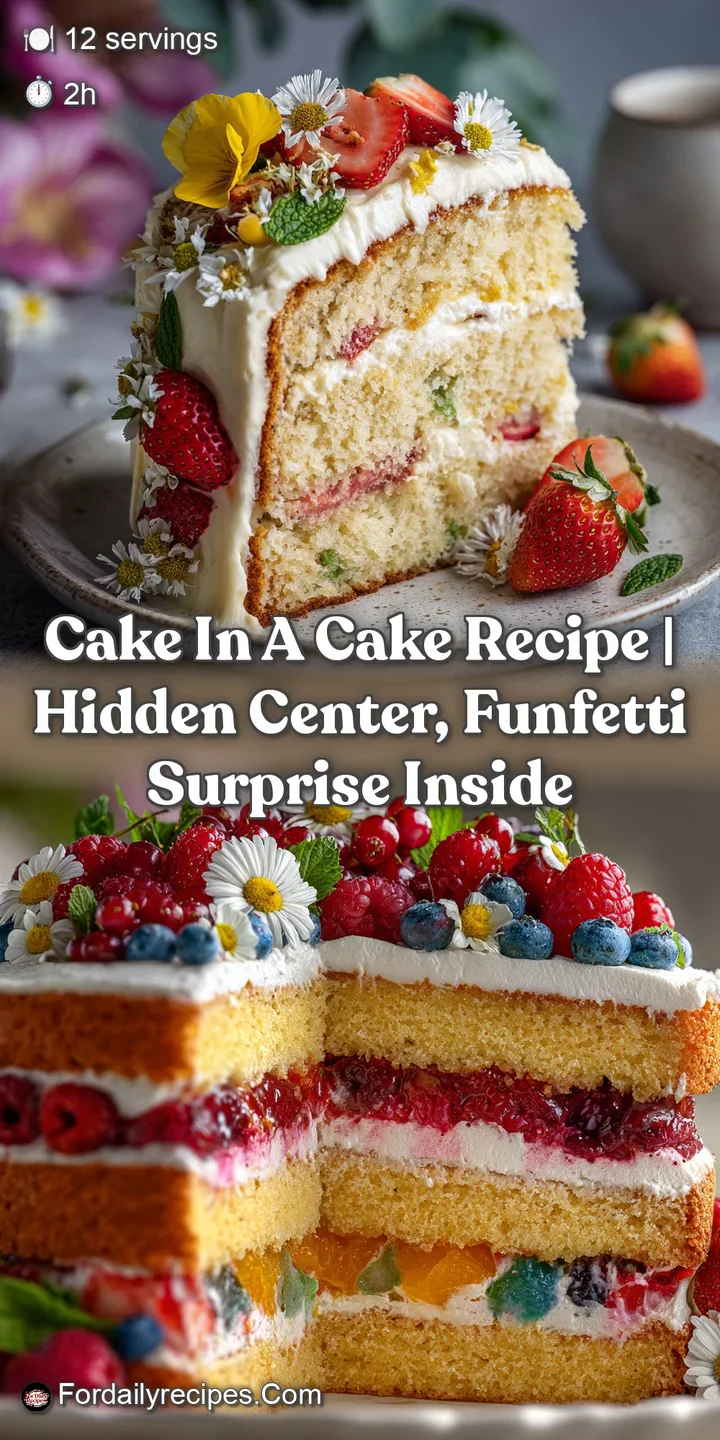
Imagine the soft thud of a knife against a wooden board and the gentle hiss of a blade sliding through a dense, buttery sponge. As the first slice falls away, a vibrant heart or star is revealed, nestled perfectly in the center of a contrasting crumb.
This isn't just a dessert, it is a piece of edible heritage that reminds me of the intricate tea cakes my grandmother used to bake for Sunday service. She always said that the best gifts are the ones you have to look a little closer to find, and this cake proves her right every single time.
We are moving away from the rush of the world to focus on the slow, methodical joy of layering flavors and textures. This cake in a cake recipe is a labor of love that rewards patience with a "wow" factor that no simple frosting can match.
We aren't just making a snack, we are building a memory that will be talked about long after the last crumb is swept away. It is about the smell of vanilla bean paste filling the kitchen and the tactile satisfaction of creaming butter until it looks like pale silk.
Throughout this process, I will guide you through the pitfalls I stumbled into years ago, like the time my "hidden" shapes floated to the top or bled their color into the surrounding batter. We will use time honored techniques to ensure your internal design stays sharp and centered.
By the time we are done, you will have a masterpiece that looks like it came from a professional patisserie but tastes exactly like home.
Mastering the Ultimate Cake in a Cake Recipe
Success here depends on understanding how two different batters interact during the second stage of baking. The internal cake must be slightly denser to withstand being baked twice, while the outer sponge needs to be light enough to surround the shapes without collapsing.
- Protein Structure: Using all purpose flour for the internal shape provides the gluten network needed to hold sharp edges during the second bake.
- Density Control: Adding sour cream to the outer batter increases the specific gravity, which helps keep the pre baked shapes from floating to the top.
- Thermal Barrier: Chilling the cut out shapes before embedding them slows down their rate of expansion, preventing them from warping while the outer batter sets.
- Emulsification Stability: Beating eggs one at a time ensures the fat and water in the butter and milk stay bonded, leading to a velvety, uniform crumb.
Chef's Note: I always freeze my cut out shapes for 15 minutes before placing them in the outer batter. This creates a temperature buffer that keeps the edges crisp and prevents the "hidden" cake from overcooking while the rest bakes.
Science Behind the Surprise Reveal
The magic happens through a process called crumb integration, where the raw batter clings to the porous surface of the cooked cake.
Starch Gelatinization: As the outer batter heats up, the starch granules in the cake flour swell and trap the pre baked shapes in a solid matrix.
Leavening Kinetics: The baking powder in the outer layer reacts to the oven's heat, creating air pockets that expand around the solid center, ensuring a seamless transition between colors.
Component Analysis for Structural Success
| Ingredient | Science Role | Pro Secret |
|---|---|---|
| Unsalted Butter | Aeration and Tenderness | Use room temp butter to trap air during creaming. |
| Cake Flour | Fine Crumb Structure | Sifting twice ensures no clumps and a silky texture. |
| Sour Cream | Moisture and Density | The acidity softens gluten while the fat adds weight. |
| Gel Food Coloring | Pigment Concentration | Gels won't alter the hydration levels of the batter. |
Sourcing Heritage Pantry Staples
To get that authentic, rich flavor, I always reach for high-quality fats and extracts. For the internal "design" cake, you will need: 175g Kerrygold Unsalted Butter (room temperature) 175g Granulated Sugar 3 Large Eggs (room temperature) 175g King Arthur All Purpose Flour Why this? Provides the necessary gluten structure for clean edges. 5g Baking Powder 20ml Whole Milk 10g Gel Food Coloring
For the outer "surprise" batter, gather: 225g Kerrygold Unsalted Butter (softened) 225g Superfine Sugar 4 Large Eggs 225g Swan’s Down Cake Flour Why this? Lower protein content creates a tender, contrasting outer shell. 7g Baking Powder 10ml Nielsen Massey Vanilla Bean Paste 30ml
Sour Cream
For the professional finish: 150g Unsalted Butter (whipped) 300g Confectioners' Sugar (sifted) 5ml Heavy Cream
Essential Tools for Precision Baking
- KitchenAid Stand Mixer: Using the paddle attachment is non negotiable for achieving the correct aeration.
- Lodge Cast Iron Loaf Pan: Cast iron provides incredibly even heat distribution, which is vital for the double bake method.
- Off set Spatula: This helps in smoothing the outer batter around the delicate hidden shapes.
- Small Cookie Cutters: Choose simple shapes like hearts, stars, or circles for the cleanest reveal.
Crafting the Hidden Center Stepwise

Preparing the Internal Design
- Cream 175g Kerrygold Butter and 175g sugar in your KitchenAid until pale and fluffy. Note: This takes about 5 minutes.
- Add 3 eggs one at a time, beating well after each addition to maintain the emulsion.
- Fold in 175g King Arthur All Purpose Flour and 5g baking powder until no white streaks remain.
- Stir in 20ml whole milk and 10g gel food coloring until the color is vibrant and uniform.
- Spread into a shallow baking tin and bake for 25 minutes until a toothpick comes out clean.
- Let the cake cool completely on a wire rack before attempting any cuts.
Sculpting the Hidden Shapes
- Use your chosen cookie cutter to stamp out shapes from the cooled colored cake. Note: Keep the shapes close together to minimize waste.
- Line up your shapes in a tight row on a tray and freeze for 15 minutes until firm to the touch.
Embedding the Center
- Cream 225g butter and 225g superfine sugar for the outer batter until exceptionally light.
- Incorporate 4 eggs, 10ml vanilla bean paste, and 30ml sour cream until the mixture looks like thick silk.
- Sift in 225g cake flour and 7g baking powder, folding gently by hand to keep the air in.
- Spread a thin layer of outer batter (about 1 inch) into the bottom of your Lodge Loaf Pan.
- Stand your frozen shapes upright in a tight, continuous line down the center of the pan.
- Carefully spoon the remaining batter over and around the shapes until they are completely covered.
- Bake for 50 minutes until the top is golden and the cake springs back.
Finishing the Final Bake
- Allow the loaf to cool in the pan for 20 minutes before transferring to a rack.
- Whip 150g butter with 300g confectioners' sugar and 5ml heavy cream until light and airy.
- Frost the cooled cake generously to hide any bumps from the internal shapes.
Fixing Your Common Baking Hurdles
Sometimes the shapes don't want to stay where you put them, or the colors decide to migrate. It happened to me with a batch of "hidden" pumpkins that ended up looking more like orange blobs. This usually comes down to batter consistency.
Preventing the Hidden Shape from Floating
If your shapes are floating to the top, your outer batter is likely too thin. The inclusion of sour cream in this recipe is a deliberate choice to add "heaviness" or density to the raw batter. Similar to the thick base in a 3 Ingredient Biscuit recipe, a sturdy batter holds its shape during the rise.
| Problem | Cause | Fix | Pro Tip |
|---|---|---|---|
| Shape Floats | Outer batter too thin | Add 1 tbsp extra flour | Freeze shapes before embedding |
| Bleeding Color | Internal cake underbaked | Bake center 5 mins longer | Use gel, never liquid coloring |
| Dry Crumb | Overbaking the second stage | Lower oven temp by 10°F | Check doneness 5 mins early |
Fixing Bleeding Colors
If the dye from your inner cake is staining the outer sponge, it’s usually because the inner cake was too moist. Make sure it is fully baked and cooled. Using high-quality gel colors instead of liquid drops prevents excess moisture from breaking the "seal" of the crumb.
Timeless Flavor Variations to Try
While vanilla is the classic choice, you can easily adapt this to suit different heritage flavors. I love a chocolate orange version where the inner "sun" is orange flavored and the outer shell is a dark cocoa sponge.
- Chocolate Contrast: Swap 30g of the outer cake flour for high-quality cocoa powder.
- Citrus Zest: Add the zest of two lemons to the outer batter for a bright, floral note.
- Themed Centers: Use green for shamrocks, red for hearts, or even a Date Palm Recipe inspired center for a rich, caramel like hidden surprise.
| Original Ingredient | Substitute | Why It Works |
|---|---|---|
| Sour Cream | Greek Yogurt (Full Fat) | Similar acidity and fat content for density. |
| Cake Flour | AP Flour + Cornstarch | 2 tbsp cornstarch per cup of AP flour mimics cake flour. |
| Vanilla Paste | Vanilla Extract | Same flavor, though you lose the beautiful bean specks. |
Preserving Freshness and Zero Waste
This cake keeps remarkably well because of the high fat content from the butter and sour cream. Store it in an airtight container at room temperature for up to 4 days. If you find yourself with leftover scraps from the internal "design" cake, don't throw them away!
Zero Waste Tip: Crumble the colorful scraps and mix them into vanilla ice cream or use them as a base for cake pops. You can also toast the scraps in the oven to make "cake croutons" for a yogurt parfait.
Freezing: You can freeze the entire frosted cake for up to 2 months. Wrap it tightly in plastic wrap and then a layer of foil. Thaw in the fridge overnight before serving.
Serving the Perfect Hidden Slice
The moment of truth is the cut. To get the cleanest reveal, use a long, serrated bread knife. Wipe the blade clean with a damp cloth between every single slice. This prevents crumbs from the outer layer from smearing onto the vibrant inner design.
I love serving this on a plain white platter so the "surprise" truly pops. It pairs wonderfully with a sharp Earl Grey tea or a cold glass of milk. If you are looking for more decadent pairings, this loaf goes beautifully alongside a slice of Cream Cheese Pound Cake recipe during a holiday dessert spread.
Clarifying Your Biggest Baking Doubts
How do I prevent the heart from floating?
The key is the density of the outer batter and the temperature of the internal cake. By freezing the pre baked shapes, they become heavy "anchors." As the outer batter begins to set in the oven, it traps the cold shapes before they have a chance to migrate.
Can I use a store-bought mix for the center?
You can, but I wouldn't recommend it. store-bought mixes are often designed to be very light and airy, which means they can crumble or lose their shape when you try to cut them and bake them a second time. Our heritage style pound cake base is much more reliable.
What if my internal cake crumbles?
This usually happens if the cake is still warm. Patience is your best friend here. Let the internal cake chill in the fridge for an hour before using your cookie cutters. A cold cake is a structurally sound cake.
Why is my outer cake taking longer to bake?
The frozen center will naturally lower the internal temperature of the loaf. This is why we bake it for 50 minutes compared to the 25 minutes for the initial cake.
Don't be tempted to crank up the heat; the slow, steady bake ensures the outside doesn't burn while the center reaches the proper temperature.
Can I make this in a round pan instead?
While possible, a loaf pan is traditional because it allows you to line up the shapes in a straight row. In a round pan, the shapes would need to be arranged in a circle, which can make the reveal much more difficult to predict when you start slicing. Stick with the loaf for your first try.
Making this cake in a cake recipe is about more than just a trick; it is about the joy of the process. It takes us back to a time when baking was an afternoon long event, filled with the hum of a mixer and the quiet anticipation of a secret revealed.
I hope this becomes a tradition in your kitchen, just as it has in mine. Trust the science, embrace the steps, and most importantly, enjoy that first look of amazement when you cut the first slice.
Recipe FAQs
How to make a cake in a cake?
Yes, it requires a two-stage baking process. You first bake a small, dense, pre-colored cake, cut it into shapes, and then embed those shapes into a second, raw batter before baking the entire loaf again.
How to make cake in a mug with cake mix?
This recipe is not designed for mug cakes. The "cake in a cake" requires slow, even heat absorption and structural integrity that a microwave mug cake cannot provide.
How to make cake with a cake mix?
We highly recommend using a scratch recipe for structural stability. Boxed mixes are often too delicate and high in leavening agents, causing the hidden shapes to deform or bleed during the second bake.
How to make cake without a cake mix?
This recipe uses two distinct scratch batters for optimal results. The internal design cake needs a stronger gluten structure than the outer cake, so using carefully measured flour ratios is crucial for success.
How to make cake cake pops?
The scraps from the internal design cake are perfect for cake pops. Simply crumble any leftover dense colored cake, mix it with a binder like cream cheese or frosting, and roll them tightly.
Why are my hidden shapes floating to the top?
Your outer batter is likely too thin to support the weight of the pre baked shapes. We incorporate sour cream in the outer layer specifically to add density and prevent this migration during the rise.
What is the best way to ensure clean slices?
Chill the entire baked loaf thoroughly before slicing. After chilling, use a long, sharp serrated knife and wipe the blade clean between every cut to prevent smearing the vibrant internal design.
Cake In A Cake Recipe Tutorial

Ingredients:
Instructions:
Nutrition Facts:
| Calories | 727 kcal |
|---|---|
| Protein | 7g |
| Fat | 41g |
| Carbs | 86g |
| Fiber | 1g |
| Sugar | 61g |
| Sodium | 145mg |
