Pina Colada: the Classic Puerto Rican Recipe (Velvety Smooth)
- The Authentic Piña Colada: History, Legend, and Perfection
- Mastering the Texture: The Science Behind the Perfect Freeze
- Deciphering the Core Ingredients of Your Dream Pina Colada
- Customizing Your Colada: Swaps and Mocktail Options
- Step-by-Step: How to Make the Ultimate Piña Colada
- Quick Reference: Tools and Measurements
- Troubleshooting Your Colada: Chef’s Tips and Avoiding Common Mistakes
- Prep Ahead: Storage, Freezing, and Batching
- What to Serve with a Tropical Pina Colada
- Recipe FAQs
- 📝 Recipe Card
The Authentic Piña Colada: History, Legend, and Perfection
That scent, that incredible blast of sweet pineapple and rich coconut, is pure bottled vacation. When you breathe it in, you can practically hear the ocean waves and feel the sticky heat fading away. Seriously, this drink doesn't just taste good; it fundamentally shifts your mood.
People often assume making a perfect tropical cocktail is complicated, but it’s mostly about honoring the core ingredients and ditching the sugary shortcuts. This isn't just easy; it’s a total lifesaver when friends drop by unexpectedly or when you need a fast five minute escape after a brutal Monday.
Why buy those chemical laden pre-mixes when the real thing is this simple and inexpensive?
Today, we are skipping the watery resort versions and making the dense, creamy, absolutely perfect Piña Colada you deserve. We're going to dive into the science of texture, because nailing that velvety smoothness is everything. Let's crack on and make some magic.
Mastering the Texture: The Science Behind the Perfect Freeze
The Puerto Rican Claim: Where the Colada Was Born
Every great recipe has a great origin story, right? The Piña Colada, which literally means "strained pineapple," is fiercely claimed by Puerto Rico. While a few different bartenders try to claim the crown, the most famous story credits Ramón "Monchito" Marrero at the Caribe Hilton in 1954.
He wanted to capture the essence of the island in a drink, and honestly, he succeeded wildly.
Ditching the Mix: Why Fresh Ingredients Matter
Here's the truth: the neon yellow stuff in the bottle is mostly corn syrup and chemicals. When you use real frozen pineapple and true Cream of Coconut , the flavour is deep, complex, and genuinely refreshing.
We are aiming for complexity, not just sweetness, and fresh lime juice gives us that crucial edge.
What Makes This Recipe Truly "Velvety Smooth"?
The magic lies in controlling the water content. When I first started making these, I used way too much cubed ice, and the result was thin and instantly watery. The key is using frozen pineapple chunks instead of copious amounts of ice.
The fruit acts as a naturally thickener while providing the intense chill needed, resulting in a dense, almost milkshake like consistency.
The Critical Ratio of Pineapple to Cream
Think of this like making a perfect vinaigrette; the ratio has to be spot on to emulsify properly. If you use too much coconut cream, it becomes heavy and cloying. If you use too much pineapple, it becomes too acidic and icy.
Our formula balances the frozen fruit mass with just enough fatty cream to bind it all together, ensuring that iconic rich mouthfeel.
Achieving That Iconic Foamy Head
Ever wonder why some homemade Coladas look flat and others have that beautiful, frothy top? It’s all in the powerful blender and the density of the Cream of Coconut . When the high speed blades hit the fatty cream and the sugar, it aerates the mixture, creating tiny, stable bubbles.
Always blend on high speed for the last 15 seconds to achieve maximum froth.
The Secret Power of Cream of Coconut
Listen up, this is a non-negotiable step: You must use Cream of Coconut, typically found in a can or jar (like Coco Lopez), not plain coconut milk. Cream of Coconut is heavily sweetened and contains stabilisers that keep the drink from separating into weird, watery layers.
It is the backbone of the perfect Colada.
Deciphering the Core Ingredients of Your Dream Pina Colada
We are using a small list, which means the quality of each item really matters. Don't skimp on the rum or the coconut base.
| Ingredient | Role | Substitute/Notes |
|---|---|---|
| Frozen Pineapple Chunks | Texture & Coldness | Use 1 cup frozen mango chunks + 1 cup fresh pineapple. (If only fresh pineapple is available, dice it and freeze for 4 hours first.) |
| Light/White Rum | Alcohol Base | Aged/Dark Rum for a deeper flavour, or Cachaça for a unique South American twist. |
| Cream of Coconut | Creaminess & Sweetness | Full fat canned coconut milk (not light) + 1 tbsp sweetened condensed milk. |
| Fresh Lime Juice | Acidity & Balance | Use 1/2 oz Lemon Juice, but fresh lime is superior for flavour. |
| Pineapple Juice | Liquid Base | Water, but this will dilute the pineapple flavour dramatically; use water only if fruit is intensely flavorful. |
Customizing Your Colada: Swaps and Mocktail Options
The Great Rum Debate: White vs. Aged Rum Selection
A traditional Piña Colada uses a light, crisp White Rum. This keeps the pineapple and coconut centre stage. However, if you want a richer, deeper "tiki" flavour, try swapping half the white rum for an aged or gold rum. Dark rum adds complexity but can slightly change the color of the final drink.
Cream vs. Milk: Why Cream of Coconut is Non-Negotiable
If you use thin coconut milk, your drink will be icy, watery, and sadly separated within five minutes. Cream of Coconut is essentially an emulsified, sweetened coconut paste. It provides the density and mouthfeel we are chasing. Trying to save a dollar here leads to a major flavour failure.
Fresh or Frozen? Sourcing the Best Pineapple
Always, always go frozen for the texture. If you have absolutely gorgeous, ripe fresh pineapple, go ahead and use it, but you'll need to double the amount of ice (1 cup total) to compensate for the lack of frozen mass. But does it risk dilution? You bet. Stick to the frozen chunks, trust me.
Creating a Virgin Piña Colada (Mocktail Instructions)
Making this a zero proof tropical dream is incredibly simple. Omit the 4 oz of white rum entirely. To keep the volume and flavour intensity high, replace the rum with an additional 3 oz of pineapple juice and 1 oz of cold, filtered water, or a splash of coconut water.
Add a tiny dash of vanilla extract for a hint of richness that mimics the depth of alcohol.
Adjusting Sweetness Without Simple Syrup
The Cream of Coconut provides all the sweetness you should need, but if your pineapple is tart, you might want a boost. Instead of adding plain simple syrup, which is just water, use 1/2 ounce of agave nectar.
Agave blends beautifully into the tropical profile and has a richer texture than simple syrup.
dairy-free Coconut Options
Guess what? The classic Piña Colada is naturally dairy-free. Cream of Coconut is made from coconut meat and sugar, not milk products! This makes it a fantastic option for anyone with dairy sensitivities.
Chef’s Note: My biggest mistake was grabbing "Cream of Coconut" and "Coconut Milk" thinking they were interchangeable. They are not! Read the label; the cream version should be thick, sticky, and high in sugar.
step-by-step: How to Make the Ultimate Piña Colada
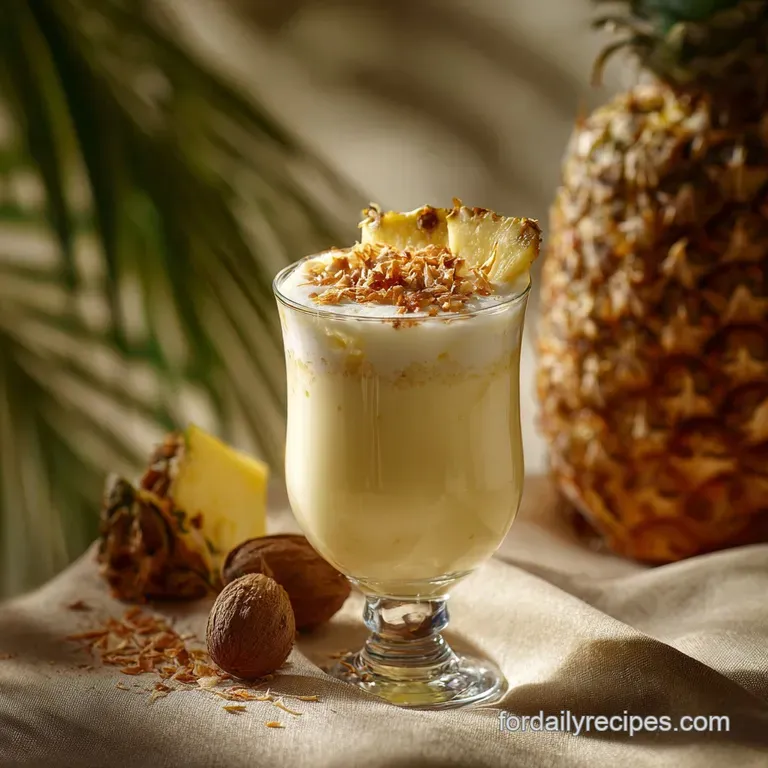
Preparing the Ingredients for Optimal Blending
Make sure your frozen pineapple has been sitting out for just one minute so it’s not rock solid. This prevents your blender blades from seizing up, which is never a fun time. Having all your liquids especially the sticky Cream of Coconut pre-measured is essential for speed.
The Proper Blending Technique (Speed and Timing)
Start low and go slow. Pour all the measured liquids (rum, coconut cream, lime, juice) into the blender first. Pulse those 2 3 times to combine the creamy base. Now, dump in the frozen pineapple and any extra ice.
Start on a medium speed until the blades catch, then blast it on high for 60 to 90 seconds until it’s perfectly smooth and velvety. Stop blending the second it looks uniform to prevent melting.
Garnish Game: The Final Flourish
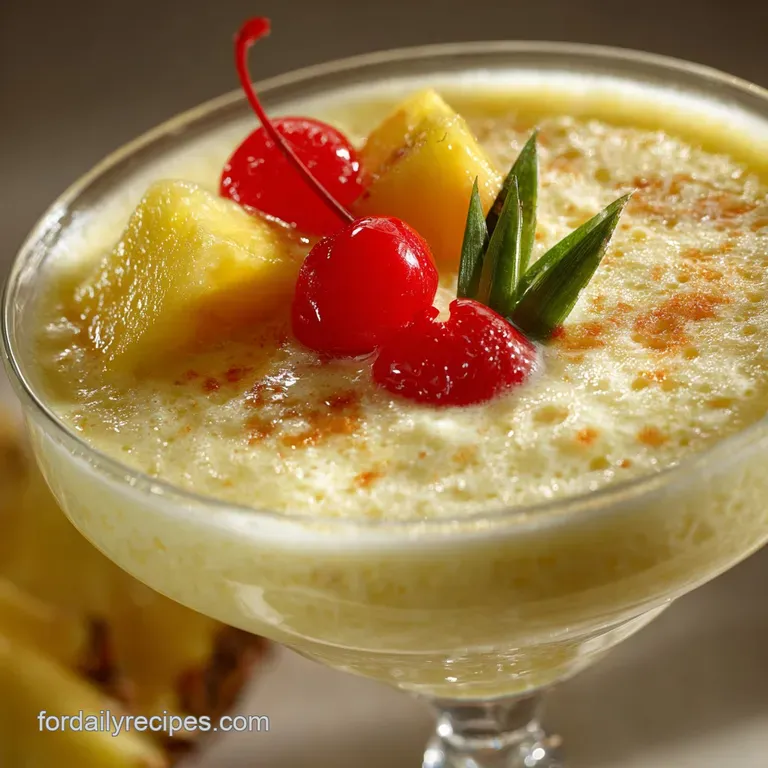
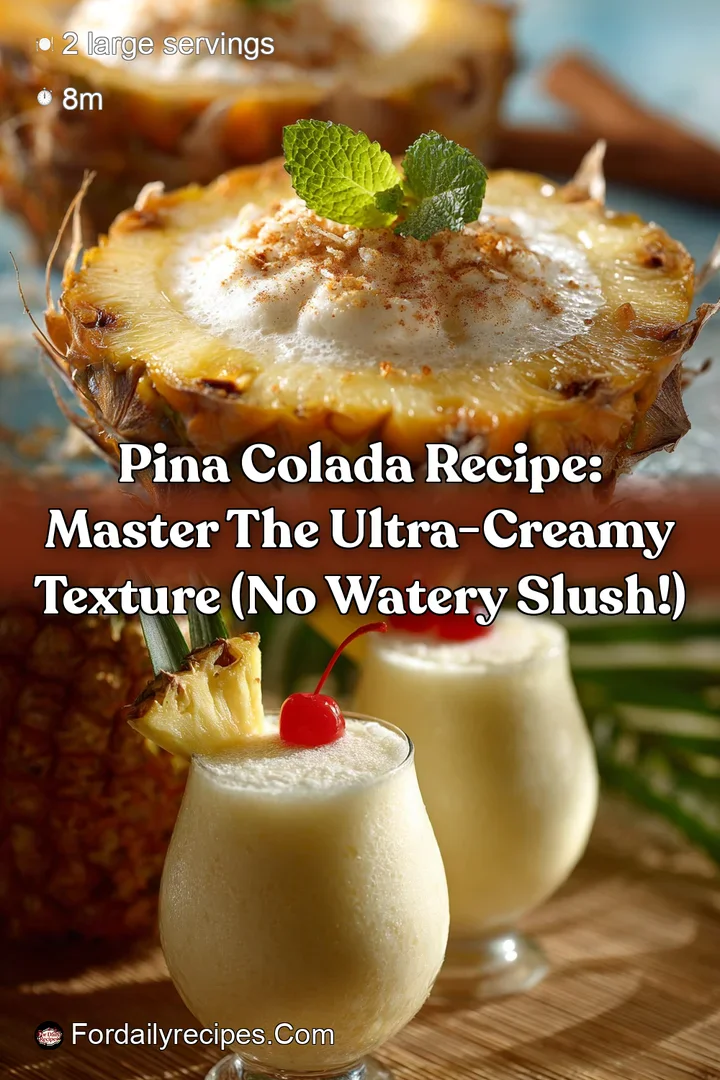
A Piña Colada without a good garnish is just a smoothie, right? Stick a fresh pineapple wedge on the rim, maybe score it slightly so it sits flat. Drop in a bright red maraschino cherry or two for that classic retro vibe. Use fun straws!
Quick Reference: Tools and Measurements
Essential Barware for Blending
You absolutely need a high powered blender for this job. Trying this with a cheap immersion blender will lead to chunky, disappointing results. Hurricane glasses or tall, chilled highball glasses are the ideal serving vessel.
Precise Measurements for a Double Batch
To make four large servings, simply double everything. Use 8 oz (240ml) White Rum, 6 oz (180ml) Cream of Coconut, and 4 cups of frozen pineapple. The process remains exactly the same liquids first, then solids.
Chill Time vs. Serving Temperature
This is a drink meant to be consumed immediately. Do not blend a batch and then let it sit in the fridge for an hour. It will separate, dull the flavour, and lose all that lovely froth. The temperature should be achieved solely by the frozen fruit and the chilled glass.
Troubleshooting Your Colada: Chef’s Tips and Avoiding Common Mistakes
Why Is My Piña Colada Too Watery?
The single biggest failure point is using too much ice and not enough frozen fruit. If you have to use extra ice because your pineapple wasn't frozen enough, try adding an extra tablespoon of Cream of Coconut to help thicken and emulsify the extra liquid.
Optimizing Ice for Less Dilution
If your recipe calls for ice, make sure it is high-quality, dense ice not the cloudy, crumbly kind from the back of the freezer. Better yet, make ice cubes from pineapple juice itself. This keeps the flavor intense as the ice melts.
Shaking vs. Blending: The Prep Method Breakdown
A Piña Colada is a blended drink, full stop. Shaking is for cocktails that need slight dilution and aeration, like a martini. Shaking a Colada base (without the frozen components) results in a watery mess. You must blend to incorporate the frozen mass and achieve the necessary texture.
Prep Ahead: Storage, Freezing, and Batching
Freezing Instructions for "Colada Ice Pops"
If you accidentally made too much, don't throw it out! Pour the excess mixture into popsicle molds and freeze for at least six hours. They make fantastic, boozy, creamy ice pops just be sure to label them clearly if kids are around!
Storing the Un-blended Base
You can certainly measure and mix the liquid components (rum, coconut cream, juices) ahead of time and keep them in a sealed container in the fridge for up to 48 hours. Do not add the frozen pineapple until you are ready to serve.
This "Colada Base" is brilliant for fast assembly.
Reconstituting a Large Batch
If your large batch separates after sitting for just a few minutes, don't panic. Simply pour the contents back into the blender, add 1/4 cup of fresh ice, and give it two or three quick high speed pulses. It will instantly reform the velvety texture.
What to Serve with a Tropical Pina Colada
This rich, sweet, and powerful drink pairs perfectly with anything that has a little salty spice or bright acidity. Think tropical backyard barbecue.
- Spicy Grilled Skewers: The sweetness of the cocktail beautifully mellows out the heat of spicy jerk marinated prawn or pork skewers.
- Citrus Ceviche: A sharp, tangy ceviche is an amazing contrast to the creaminess of the Colada, refreshing the palate between sips.
- Coconut Rice Pudding: If you must pair it with dessert, stick to something lighter and equally coconut forward, or go completely opposite with something tart, like key lime pie.
Recipe FAQs
My Piña Colada tastes watery and lacks that velvety texture. What went wrong?
This is usually due to using too much ice relative to the frozen ingredients, or relying solely on canned pineapple juice instead of the fruit. To troubleshoot, reduce the ice and add 1/4 cup more frozen pineapple chunks or a tablespoon of pure, unsweetened coconut cream (scooped from the top of a chilled can of coconut milk) and re-blend.
Can I use regular coconut milk or standard milk instead of cream of coconut?
No, substituting regular coconut milk or dairy milk will result in a thin, disappointing drink. Cream of coconut (often sold under brand names like Coco López) is sweetened, highly emulsified, and thickened specifically to provide the signature rich, non-separating texture of a classic Piña Colada.
What type of rum is best, and can I make a non-alcoholic version?
Traditional recipes call for white Puerto Rican rum, as its clean profile allows the fruit flavors to shine. For an alcohol free mocktail, simply replace the rum with an equal amount of extra pineapple juice or a splash of non-alcoholic coconut spirit for added body.
Should I use fresh pineapple or frozen pineapple chunks?
Frozen pineapple is highly recommended as it acts as a chilled stabilizer, thickening the drink dramatically without the need for excessive ice, which causes dilution. If using fresh pineapple, ensure the fruit and all other liquid ingredients are thoroughly pre-chilled before blending.
My drink is too sweet. How can I fix the flavor balance?
Sweetness typically comes from the cream of coconut or overly ripe pineapple. The quickest fix is to introduce acid by adding 1/2 ounce of fresh lime juice, which cuts through the richness and brightens the tropical flavors. You can also add a small splash more rum, as alcohol balances sweetness effectively.
Can I make a large batch of Piña Colada mix ahead of time?
You can mix all the liquid ingredients (rum, coconut cream, pineapple juice) and store them in the refrigerator for up to 48 hours. Do not pre-blend with ice, as this will lead to a separated and icy final product. When ready to serve, pour the chilled mixture into the blender and incorporate fresh ice until smooth.
Is the traditional Piña Colada recipe vegan friendly?
Yes, the classic recipe is inherently vegan, as the primary ingredients are rum, pineapple, and cream of coconut. Always check the label on your specific cream of coconut product, but it is typically a plant based product derived entirely from the coconut fruit.
Best Creamy Pina Colada Recipe
Ingredients:
Instructions:
Nutrition Facts:
| Calories | 375 kcal |
|---|---|
| Fat | 10 g |
| Fiber | 3 g |
