Stuffed French Toast: Cream Cheese Strawberry Filling

- Time: Active 15 minutes, Passive 12 minutes, Total 27 minutes
- Flavor/Texture Hook: Shatter crisp golden exterior with a velvety, zesty strawberry cream center
- Perfect for: Slow Sunday mornings or a time honored family brunch
- Creating Morning Memories with Decadent Stuffed French Toast
- The Science of Why it Works
- Choosing Your Preferred Cooking Method
- The Component Analysis for Success
- Handpicking the Elements for Your Morning Feast
- The Essential Tools for a Golden Crust
- Step by Step Guide to a Perfect Sizzle
- Mastering the Heat and Avoiding Sogginess
- Guidelines for Scaling the Recipe
- Creative Variations for Every Season and Palate
- Debunking Morning Cooking Myths
- Preserving the Crunch for Later Enjoyment
- Complementary Flavors for a Balanced Brunch Table
- Recipe FAQs
- 📝 Recipe Card
Creating Morning Memories with Decadent Stuffed French Toast
There is a specific sound that defines a perfect Saturday morning in my kitchen: the rhythmic whisking of eggs against a ceramic bowl followed by the gentle hiss of butter hitting a warm skillet.
I remember watching my grandmother stand over her cast iron, flipping thick slices of heritage style bread until they were the color of a sunset. But as much as I loved her recipe, I always found traditional versions a bit one dimensional.
They were sweet, sure, but they often lacked that bright, "wake up" punch that makes a breakfast truly memorable.
That is why I started experimenting with this Stuffed French Toast. I wanted to bridge the gap between a classic custard soak and a cheesecake like richness, all while keeping the process simple enough that you aren't stuck at the stove for hours.
The secret turned out to be a simple contrast: the tang of plain Greek yogurt and a hint of lemon zest cutting through the heavy cream cheese. It’s a trick I learned after one too many breakfasts that felt more like a lead weight in my stomach than a morning treat.
We have all been there, right? You cut into a beautiful looking slice only to find the inside is still raw bread, or worse, the filling has leaked out and turned into a burnt mess in the pan. Trust me, I’ve made those mistakes so you don't have to.
Today, we are focusing on the technique of the "pocket cut" and the science of the soak. This isn't just about throwing things in a pan; it’s about creating layers of texture that make every bite feel like a celebration of generations of home cooking.
The Science of Why it Works
Protein Coagulation: The eggs in the custard set at a specific temperature, creating a structural framework that holds the moisture inside the bread without letting it turn into mush.
Starch Gelatinization: As the brioche heats, the starch granules in the flour absorb the milk and eggs, swelling and thickening to create that signature custardy interior.
Maillard Reaction: The honey and milk sugars interact with the heat of the pan, producing hundreds of different flavor compounds and that characteristic golden brown crust.
Choosing Your Preferred Cooking Method
| Method | Time | Texture | Best For |
|---|---|---|---|
| Stovetop | 12 minutes | Shatter crisp edges with a soft, warm center | Small batches and maximum crunch |
| Oven (Bake) | 20 minutes | Uniformly soft, bread pudding style | Hosting a large group or meal prepping |
While the stovetop method is my personal heritage inspired favorite because of the control it gives you over the crust, the oven is a lifesaver when you have a house full of people. If you choose the oven, make sure to flip the slices halfway through to ensure the bottom doesn't get soggy.
The Component Analysis for Success
| Ingredient | Science Role | Pro Secret |
|---|---|---|
| Brioche Bread | High fat/egg content provides structural integrity | Use day old bread so the dry crumb acts like a sponge for the custard |
| Greek Yogurt | Acids break down protein for a tender crumb | Use full fat for the creamiest mouthfeel and best tang |
| Softened Cream Cheese | Provides the fat base for a stable filling | Whip it with the honey first to prevent any lumpy bits |
| Lemon Zest | Citric acid balances the heavy sugars | Rub the zest into the diced strawberries to release the essential oils |
The chemistry here is all about balance. The fats in the cream cheese and whole milk provide that velvety richness we crave, while the lemon zest and yogurt provide the necessary "brightness" to keep the dish from feeling overwhelming. Much like the delicate balance of textures in a French Silk Pie recipe, we are aiming for a contrast between the airy bread and the dense, creamy center.
Handpicking the Elements for Your Morning Feast
To make the best Stuffed French Toast, you need to start with high-quality ingredients. I’ve found that the simpler the recipe, the more the quality of your butter and eggs shines through.
- 4 oz low-fat cream cheese, softened: Why this? Provides the creamy structure for the filling without being too heavy. (Substitute: Mascarpone for a richer, more buttery flavor)
- 1/4 cup plain Greek yogurt: Why this? Adds a necessary tang that cuts through the sweetness. (Substitute: Sour cream works in a pinch)
- 1 tbsp honey: Why this? A natural floral sweetener that caramelizes beautifully. (Substitute: Maple syrup)
- 1/2 tsp lemon zest: Why this? Essential for cutting through the fat and brightening the berries. (Substitute: Orange zest)
- 1/2 cup fresh strawberries, finely diced: Why this? Adds pops of color and fresh acidity. (Substitute: Raspberries or blueberries)
- 3 large eggs: Why this? The "glue" that creates the custard crust. (Substitute: 3/4 cup liquid egg substitute)
- 3/4 cup whole milk: Why this? Provides the fat needed for a silky custard soak. (Substitute: Oat milk for a nuttier undertone)
- 1 tsp pure vanilla extract: Why this? Adds depth and a classic "bakery" aroma. (Substitute: Vanilla bean paste)
- 1 tsp ground cinnamon: Why this? The warm spice that defines time honored French toast. (Substitute: Pumpkin pie spice)
- 1/4 tsp grated nutmeg: Why this? Adds a subtle earthy complexity to the custard. (Substitute: Allspice)
- 1 pinch sea salt: Why this? Essential for magnifying all the other flavors. (Substitute: Table salt)
- 8 thick slices brioche bread (approx. 1 inch thick): Why this? The sturdy crumb prevents the toast from falling apart. (Substitute: Challah or thick cut Texas toast)
- 2 tbsp unsalted butter: Why this? For that authentic, nutty browned butter flavor. (Substitute: Clarified butter/Ghee)
- 1 tsp neutral oil: Why this? Prevents the butter from burning at high temperatures. (Substitute: Avocado oil)
Chef's Tip: Freeze your butter for 10 minutes before putting it in the pan. Cold butter hits the hot pan and creates steam, which helps the edges of the bread "puff" slightly for a lighter texture.
The Essential Tools for a Golden Crust
While you can certainly make this with basic gear, having the right tools makes the "sizzle" phase much easier to manage. I always reach for my heavy bottomed non stick skillet or a seasoned cast iron.
These materials hold heat evenly, which is crucial when you're trying to cook the inside of a thick stuffed slice without charring the outside.
You will also need a wide, shallow bowl for the custard. A shallow dish allows you to lay the bread flat, ensuring an even soak. If the bowl is too deep, you’ll end up with soggy bottoms and dry tops.
I also recommend a thin, metal spatula (like a fish spatula) which allows you to get under the heavy, stuffed slices without tearing the delicate, soaked bread.
Finally, don't underestimate the power of a small paring knife. You need a sharp tip to create that perfect "pocket" in the brioche. A dull knife will squash the bread fibers, making it harder for the custard to penetrate and increasing the risk of the filling leaking out. It’s the same attention to detail I use when preparing the bread for a French Dip Sandwich recipe.
step-by-step Guide to a Perfect Sizzle
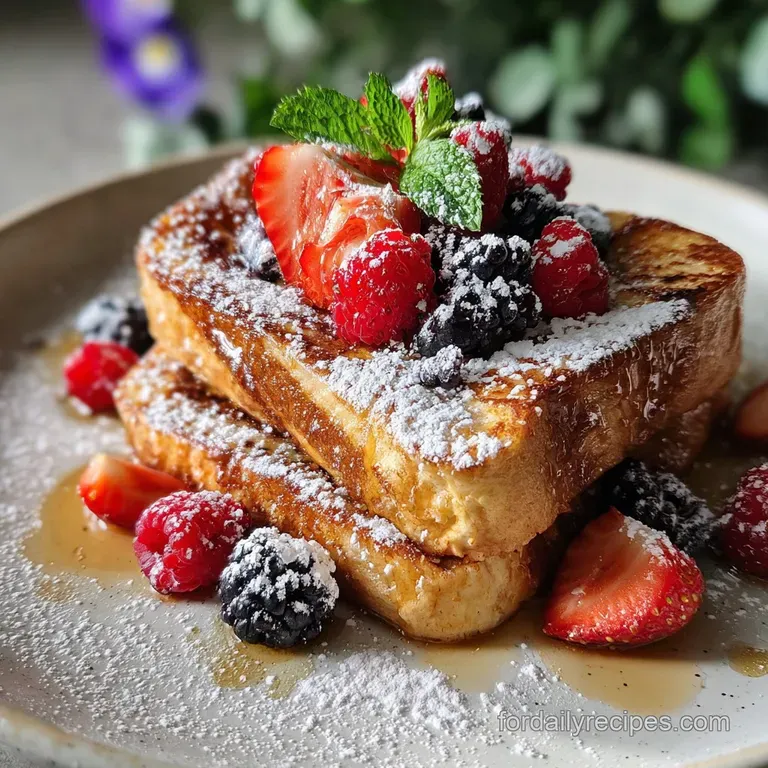
1. Construct the Stuffed French Toast Filling
In a medium bowl, combine the 4 oz softened cream cheese, 1/4 cup Greek yogurt, 1 tbsp honey, and 1/2 tsp lemon zest. Whisk vigorously until the mixture is smooth and velvety. Gently fold in the 1/2 cup diced strawberries.
Note: Mixing the berries last prevents them from bleeding and turning the whole filling pink.
2. Create the "Pocket"
Take your 8 thick slices of brioche. Using a sharp paring knife, cut a slit into the top crust of each slice, swinging the blade side to side to create a 2 inch wide pocket inside. Note: Be careful not to cut all the way through the sides or bottom of the bread.
3. Stuff the Bread
Spoon approximately 1.5 to 2 tablespoons of the strawberry mixture into each pocket. Press the bread gently to seal the opening. Note: If you overstuff, the filling will expand and leak during the cooking process.
4. Prepare the Custard Bath
In your wide, shallow bowl, whisk together the 3 large eggs, 3/4 cup whole milk, 1 tsp vanilla, 1 tsp cinnamon, 1/4 tsp nutmeg, and a pinch of sea salt. Whisk until no streaks of egg white remain. Note: A completely homogenous custard ensures a consistent golden color across the entire slice.
5. The Custard Soak
Place two stuffed slices into the custard. Soak for 20 seconds per side until the bread feels heavy but isn't falling apart. Note: Brioche is very absorbent; don't leave it in too long or it will become impossible to flip.
6. Heat the Skillet
Place your skillet over medium low heat. Add 1 tbsp of the unsalted butter and 1/2 tsp of neutral oil. Wait until the butter foam subsides and begins to smell nutty. Note: The oil raises the smoke point, allowing you to get a better sear without burning the butter solids.
7. The Searing Phase
Carefully place the soaked slices into the pan. Cook for 3 to 4 minutes per side until the exterior is golden brown and the edges feel firm to the touch. Note: Do not crowd the pan; work in batches to maintain a consistent temperature.
8. Final Internal Set
If the bread is browning too fast but the center feels cool, cover the pan with a lid for the final 2 minutes of cooking. Note: This creates a mini oven effect that ensures the cream cheese filling is warmed through.
9. Resting Period
Transfer the finished slices to a wire rack (not a plate!) for 2 minutes before serving. Note: Resting on a rack allows steam to escape, preventing the bottom from becoming soggy.
Mastering the Heat and Avoiding Sogginess
One of the biggest hurdles with Stuffed French Toast is achieving that "shatter" crust while ensuring the cream cheese center isn't an ice cube. It’s all about heat management. If your pan is too hot, the sugars in the brioche will burn before the heat can penetrate the inch thick bread.
I always tell my friends to treat it like a grilled cheese low and slow is your best ally.
Why Your French Toast is Soggy
If you find your toast is limp rather than crisp, the culprit is usually one of two things: the bread was too fresh, or the soak was too long. Fresh bread still has a high moisture content, meaning it can't absorb the custard without collapsing.
| Problem | Root Cause | Solution |
|---|---|---|
| Filling Leaks | Pocket cut too wide or through the side | Keep the slit small and use a piping bag for precision |
| Burnt Custard | Heat is too high or pan is dry | Reduce to medium low and use a butter oil combo |
| Raw Middle | Slices are too thick or center was cold | Cover with a lid during the last 2 minutes of cooking |
Common Mistakes Checklist
- ✓ Pat your berries dry after dicing to prevent extra moisture from thinning the filling.
- ✓ Use day old bread or lightly toast your fresh slices in a 300°F oven for 5 minutes before stuffing.
- ✓ Preheat the pan for at least 3 minutes before adding the butter to ensure an instant sear.
- ✓ Don't skip the salt in the custard; it’s the secret to making the cinnamon and vanilla "pop."
- ✓ Whisk the custard right before each soak, as the cinnamon tends to float to the top.
Guidelines for Scaling the Recipe
Adjusting this recipe for a larger crowd or a solo breakfast is straightforward, but you can't just double everything blindly.
- Scaling UP (8-12 servings): If you are doubling the recipe, only increase the cinnamon and nutmeg to 1.5x the original amount. Spices can become overpowering in large volumes. You will also need to work in batches, wiping the pan clean between each round to prevent burnt butter bits from sticking to your new slices.
- Scaling DOWN (1-2 servings): For a single serving, use 1 large egg and 1/4 cup of milk. Since you can't easily use half an egg, whisk one egg and use about two thirds of it for the custard.
- Baking for a Crowd: If you're making 12+ slices, don't use the stovetop. Lay the soaked, stuffed slices on a greased baking sheet and bake at 375°F (190°C) for 15-18 minutes, flipping once. It saves you from standing over the stove all morning!
Creative Variations for Every Season and Palate
While the strawberry and cream cheese combo is a time honored classic, the beauty of this recipe is its versatility. You can adapt the filling based on what's fresh at the market or what's currently in your pantry.
For a High Protein Savory Twist
If you want to skip the sugar, try stuffing the brioche with a mixture of herbed goat cheese, sautéed spinach, and a thin slice of salty prosciutto. Omit the honey, cinnamon, and vanilla from the custard, and add a crack of black pepper and a teaspoon of fresh thyme instead. It’s a sophisticated brunch option that pairs beautifully with a French Martini recipe if you're hosting a celebratory midday meal.
For a Vegan Friendly Version
You can achieve a similar result by using a thick sourdough bread. Replace the cream cheese with a cashew based spread and the Greek yogurt with coconut yogurt. For the custard, use a mixture of almond milk, a tablespoon of cornstarch (to help it thicken), and a splash of maple syrup.
The cornstarch is the "science" secret here it mimics the thickening properties of egg proteins.
If You Want a Different Texture...
- If you want it crunchier: Dredge the soaked bread in crushed cornflakes or panko breadcrumbs before hitting the pan.
- If you want it softer: Use a "Casserole" style where you tear the stuffed bread into chunks, pour the custard over it, and let it sit overnight before baking.
- If you want it richer: Add a tablespoon of espresso to the custard to deepen the chocolatey notes if you're using a Nutella based filling.
Debunking Morning Cooking Myths
Myth: Searing "seals in" the juices or filling. Actually, searing is purely for the Maillard reaction creating flavor and texture. It doesn't create a waterproof barrier.
The reason the filling stays inside is due to the protein in the eggs coagulating and the starch in the bread swelling, which physically blocks the filling from escaping.
Myth: You must soak the bread for several minutes. If you are using brioche or challah, a long soak will turn your breakfast into a soggy disaster. These breads are already high in fat and moisture.
20 seconds is all you need for the liquid to penetrate the outer third of the bread, which creates the perfect contrast between a custardy edge and a structured center.
Preserving the Crunch for Later Enjoyment
Storage: You can store leftover Stuffed French Toast in the fridge for up to 3 days. Place them in an airtight container with a piece of parchment paper between slices to prevent them from sticking.
Freezing: These freeze surprisingly well! Wrap each cooked and cooled slice tightly in plastic wrap, then place them in a freezer bag for up to 2 months.
Reheating: Never use the microwave if you want to maintain the texture; it will make the bread rubbery. Instead, pop the slices into a toaster oven at 350°F (175°C) for about 6-8 minutes (or 12 minutes if from frozen) until the outside is crisp again.
Zero Waste Tip: Don't toss the leftover custard! If you have a few tablespoons left, whisk in a little more milk and a spoonful of flour to create a quick "pancake" batter, or use it to soak the crusts you trimmed off to make "French toast croutons" for a dessert salad.
Complementary Flavors for a Balanced Brunch Table
To round out the meal, I like to serve this with something that offers a salty or acidic contrast. A few strips of thick cut, maple glazed bacon or a side of crispy breakfast potatoes works wonders.
If you want to keep with the heritage theme, a simple fruit salad tossed with fresh mint and a squeeze of lime juice cleanses the palate between rich bites of the cream cheese filling.
For drinks, a strong dark roast coffee is the traditional choice, but if you're feeling fancy, a French Martini recipe provides a beautiful raspberry and pineapple brightness that mirrors the lemon and strawberry notes in the toast. Whether you're making this for a holiday or just because it's Tuesday, remember that the best recipes are the ones shared with people you love. Happy cooking!

Recipe FAQs
What is the filling in stuffed French toast?
Typically a sweet cream cheese mixture. It often includes cream cheese, yogurt, honey or sugar, and fruit like berries or bananas, plus flavorings like vanilla or lemon zest.
What is the most common mistake when making French toast?
Soaking the bread for too long. This leads to a soggy, mushy interior that can fall apart, especially with richer breads like brioche.
How do you keep stuffed French toast from being soggy?
Use day-old bread and a quick soak. Stale bread absorbs the custard better without becoming saturated. Soak for only 20 seconds per side, and rest cooked toast on a wire rack to allow steam to escape.
Can I eat stuffed French toast during weight loss?
In moderation, yes. While rich, it can be adapted by using lower fat cream cheese and Greek yogurt, focusing on fruit for sweetness, and controlling portion sizes. Consider it an occasional treat rather than a daily staple.
What kind of bread is best for stuffed French toast?
Sturdy, enriched breads work best. Brioche or challah are ideal due to their high fat and egg content, which provides structure and prevents them from falling apart after stuffing and soaking.
How do you prevent the filling from leaking out of stuffed French toast?
Create a secure pocket and don't overstuff. Cut a slit only partway into the bread to form a pocket, and spoon in just enough filling to comfortably fit without forcing it, similar to how you'd prepare a French Dip Sandwich recipe.
Can I make stuffed French toast ahead of time?
Yes, components can be prepped. The cream cheese filling can be made up to 2 days in advance. You can also stuff the bread just before cooking, but it's best to soak and cook it fresh for optimal texture.
Stuffed French Toast
Ingredients:
Instructions:
Nutrition Facts:
| Calories | 511 kcal |
|---|---|
| Protein | 17.4 g |
| Fat | 26.4 g |
| Carbs | 51.7 g |
| Fiber | 2.1 g |
| Sugar | 12.5 g |
| Sodium | 548 mg |
