Salmon Avocado Feta Salsa with Seared Crust
- Time: Active 10 minutes, Passive 0 minutes, Total 22 minutes
- Flavor/Texture Hook: Smoky, seared crust meets velvety, citrus bright avocado
- Perfect for: Weekend dinner parties or a nutritious weeknight reset
- Creating the Ultimate Salmon Avocado Feta Salsa at Home
- The Physics of the Maillard Crust
- Identifying Your Quality Component Analysis
- Sourcing the Finest Ingredients for Maximum Impact
- The Essential Tools for Professional Results
- Detailed Execution for a Flavorful Masterpiece
- Strategies to Avoid Frequent Culinary Missteps
- Creative Adaptations for Every Palate
- Preserving Freshness and Reheating for Best Texture
- Presentation and Flavor Pairings to Impress
- Recipe FAQs
- 📝 Recipe Card
Creating the Ultimate Salmon Avocado Feta Salsa at Home
The first time I dropped a spice rubbed fillet into a scorching cast iron pan, the sizzle was almost deafening, like a standing ovation for the meal to come. As the warm, earthy aroma of smoked paprika and toasted cumin filled my small kitchen, I realized that seafood doesn't need to be complicated to feel extraordinary.
It just needs the right partner and this vibrant, tangy salsa is the one that transcends borders.
We often think of salmon as a heavy protein, but the addition of the cold, citrus heavy avocado feta salsa changes the entire narrative. It transforms a standard piece of fish into a layered experience where every bite offers a contrast between the hot, flaky interior and the sharp, salty punch of the Greek cheese.
Honestly, once you’ve experienced this specific combination, the old "lemon and butter" routine feels a bit uninspired.
I’ve spent years tinkering with the ratio of lime juice to jalapeño to ensure the heat hums rather than screams. This recipe is the result of those experiments a balance of fat, acid, and spice that works every single time.
Whether you’re cooking for friends on a Saturday night or just looking to treat yourself after a long Tuesday, this dish brings a sense of global adventure to your dining table without requiring a passport.
The Physics of the Maillard Crust
over High heat searing triggers a chemical reaction between amino acids and reducing sugars, forming a savory, browned exterior that locks in moisture. This crust provides a structural "shatter" that protects the delicate, fatty interior of the fish while adding deep, complex flavors.
| Cooking Method | Active Time | Resulting Texture | Heat Intensity |
|---|---|---|---|
| Stovetop Sear | 8 minutes | Ultra crispy skin and mahogany crust | High (Direct) |
| Oven Roast | 12 minutes | Evenly tender and buttery flakes | Medium (Ambient) |
| Air Fryer | 10 minutes | Very crispy edges but less browning | High (Convection) |
Choosing your method depends on your craving. If you want that deep, smokey crunch, the stovetop is your best friend. For a more "hands off" experience that keeps the fish incredibly silky, the oven is the way to go. If you are looking for more oven inspiration, you might enjoy this Baked Salmon at recipe for a different flavor profile.
Identifying Your Quality Component Analysis
| Ingredient | Science Role | Chef Secret |
|---|---|---|
| Salmon Fillets | Primary lipid and protein source | Choose center cut fillets for even cooking and consistent texture. |
| Avocado | Provides creamy, healthy fats | Use fruit that gives slightly to pressure but isn't mushy. |
| Greek Feta | Adds acidic tang and salt | Buy a block in brine and crumble it yourself for better moisture. |
| Lime Juice | Denatures proteins and brightens fat | Roll the lime on the counter before squeezing to maximize juice yield. |
Sourcing the Finest Ingredients for Maximum Impact
- 4 (170g) Salmon fillets: Look for skin on, center cut pieces. Why this? The skin protects the flesh from overcooking and provides a crispy contrast.
- Substitute: Steelhead trout. It has a similar fat content and flavor profile.
- 15ml Extra virgin olive oil: Use a high-quality oil for the rub.
- Substitute: Avocado oil. It has a higher smoke point for intense searing.
- 5g Smoked paprika: Adds a deep, woodsy notes to the spice rub.
- Substitute: Chipotle powder if you want a more aggressive, smoky heat.
- 2.5g Cumin: Provides an earthy backbone to the salmon.
- Substitute: Ground coriander for a more citrusy, floral vibe.
- 2.5g Garlic powder: Ensures even flavor distribution without burning like fresh garlic.
- Substitute: Onion powder for a sweeter, milder savory note.
- 2.5g Sea salt & 1.25g Black pepper: Essential for drawing out moisture and seasoning.
- 2 Large avocados: The base of our avocado feta salsa. Why this? The fat in avocado tempers the spice of the jalapeño perfectly.
- Substitute: Firm mango cubes for a sweeter, tropical variation.
- 75g Greek feta cheese: Crumbled.
- Substitute: Queso fresco for a milder, creamier finish.
- 1/2 Red onion: Minced finely.
- Substitute: Shallots for a more delicate, garlicky undertone.
- 1 Jalapeño: Seeded and diced.
- Substitute: Serrano pepper if you want a sharper, more intense bite.
- 15g Fresh cilantro: Chopped.
- Substitute: Flat leaf parsley if you are one of those people who find cilantro soapy.
- 30ml Fresh lime juice: The acid needed to "cook" the salsa ingredients.
- 1 pinch Red pepper flakes: For a final touch of heat.
The Essential Tools for Professional Results
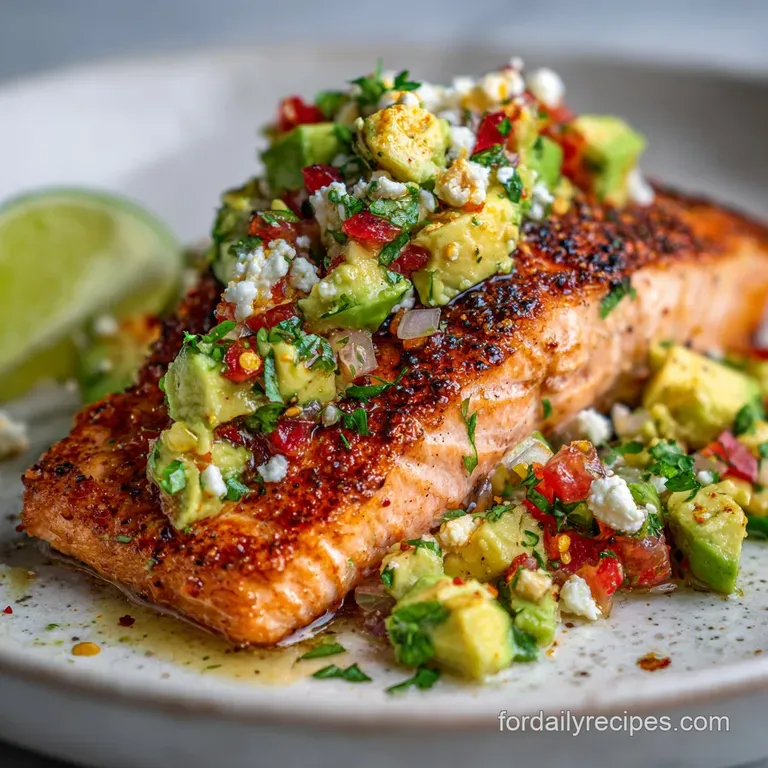
To get that restaurant quality sear on your Salmon Avocado Feta Salsa, you really need a heavy bottomed pan. A cast iron skillet is the gold standard here because it retains heat like nothing else, ensuring that when the cold fish hits the metal, the temperature doesn't plummet.
You will also want a thin, flexible metal spatula (often called a fish spatula) to get under the skin without tearing it.
For the salsa, a sharp chef's knife is non negotiable. You want clean cubes of avocado, not a mashed paste. Using a dull knife will bruise the cilantro and crush the onions, leading to a "watery" salsa rather than a vibrant one.
If you're doubling the recipe for a crowd, a large glass mixing bowl is better than metal, as the acid in the lime juice won't react with it, keeping the flavors pure and bright.
Detailed Execution for a Flavorful Masterpiece
Phase 1: The Spice Infusion
Pat the salmon fillets completely dry with paper towels. Note: Moisture is the enemy of a good sear. Mix the smoked paprika, cumin, garlic powder, salt, and pepper in a small bowl.
Rub the 15ml of olive oil over the flesh side of the fish, then press the spice mixture firmly into the meat until it's fully coated.
Phase 2: The over High heat Roast
Place a large skillet over medium high heat. Once the pan is shimmering, lay the salmon skin side down. Cook 5-6 minutes until the skin is shatter crisp and releases easily from the pan. Flip carefully and cook for another 3-4 minutes.
The internal temperature should hit 52°C (125°F) for medium rare, or 60°C (140°F) for firm flakes.
Phase 3: Hand Crafting the Salsa
While the salmon rests, combine the diced avocado, crumbled feta, minced red onion, jalapeño, and cilantro in a bowl. Pour the 30ml of lime juice and the remaining 15ml of olive oil over the top. Add a pinch of red pepper flakes.
Toss gently with a spoon until the ingredients are coated but the avocado remains in distinct cubes.
Phase 4: The Finishing Touch
Plate each fillet while it’s still warm. Generously spoon the avocado feta salsa over the top, letting some of the lime juice and feta bits spill onto the plate. Serve immediately while the salmon is hot and the salsa is chilled. This contrast is what makes the dish feel like it transcends borders.
Chef's Tip: Freeze your block of feta for 10 minutes before crumbling. This prevents it from turning into a paste and keeps those beautiful, distinct white chunks visible in your salsa.
Strategies to Avoid Frequent Culinary Missteps
Why Your Salmon Is Dry or Rubbery
The most common mistake is overcooking the fish. Salmon continues to cook for a few minutes after you remove it from the heat. If you wait until it "looks done" in the center while it’s still in the pan, it will be dry by the time it reaches the table.
Pull it off the heat when the center is still slightly translucent; the carry over heat will finish the job.
Why Your Salsa Becomes a Mushy Mess
If you stir the salsa too vigorously, the avocado will break down and turn the whole mixture into a green paste. To keep it looking professional, use a folding motion with a rubber spatula.
Also, wait to add the salt and lime until the very last second, as acid and salt start to draw moisture out of the vegetables, which can make the salsa "soupy" if left to sit too long.
| Problem | Root Cause | Solution |
|---|---|---|
| Skin sticks to pan | Pan wasn't hot enough or fish was wet | Preheat pan until oil shimmers; pat fish bone dry. |
| Spice rub burns | Heat was too high for too long | Start on high, then reduce to medium once the sear begins. |
| Salsa is too watery | Onion/Cucumber released juices | Dice onions finely and drain any excess liquid before mixing. |
Common Mistakes Checklist:
- ✓ Never skip the "pat dry" step for the fish; it's the difference between seared and steamed.
- ✓ Let the salmon rest for at least 3 minutes before topping with salsa.
- ✓ Use a heavy pan; thin pans create hot spots that burn the spices.
- ✓ Don't de seed the jalapeño if you want a truly "spicy" avocado feta salsa.
- ✓ Taste your salsa! Avocados and limes vary in intensity; adjust the salt accordingly.
Creative Adaptations for Every Palate
When scaling this recipe down for one or two people, it’s best to make the full amount of spice rub and store the extra in a jar it’s fantastic on roasted chickpeas or chicken. If you are doubling the recipe for a dinner party, don't try to sear eight fillets in one pan. Work in batches to avoid crowding, which drops the pan temperature and prevents that "shatter" crust from forming. For a side dish that complements these flavors, I highly recommend a Mediterranean Chickpea Salad recipe to keep the theme going.
- For a lighter lunch: Serve the salmon cold the next day over a bed of arugula with the leftover salsa used as a dressing.
- For a taco twist: Flake the cooked salmon into charred corn tortillas and top with the avocado feta salsa and a drizzle of crema.
- If you want a Mediterranean twist: Add halved cherry tomatoes and pitted kalamata olives to the salsa for more briny depth.
Preserving Freshness and Reheating for Best Texture
Storage: The cooked salmon will stay fresh in the fridge for up to 3 days in an airtight container. However, the avocado feta salsa is best eaten the day it's made. To keep leftover salsa green, press plastic wrap directly onto the surface of the mixture to eliminate air contact.
Freezing: I don't recommend freezing the salsa; the avocado and feta will lose their structural integrity. You can freeze the spice rubbed raw salmon for up to 2 months. Thaw it completely in the fridge before searing.
Reheating: Never microwave salmon! It turns the fats fishy and the texture rubbery. Instead, place the fillet in a 135°C (275°F) oven for about 10 minutes with a splash of water or broth in the pan, covered with foil.
This gently steams it back to life without losing the moisture.
Zero Waste Tip: Don't throw away those lime rinds! Zest them into a jar of sea salt to create a citrus salt that is amazing on rimmed glasses for margaritas or sprinkled over grilled corn.
Also, if you have extra cilantro stems, chop them finely and add them to a stir fry; they hold more flavor than the leaves.
Presentation and Flavor Pairings to Impress
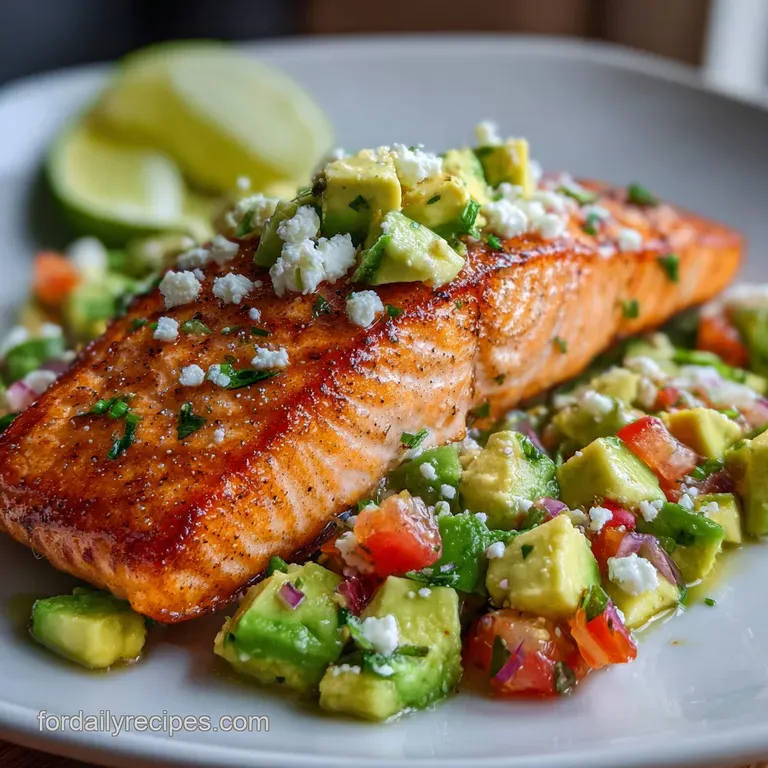
When you serve this Salmon Avocado Feta Salsa, the visual appeal is just as important as the taste. Use a wide, shallow bowl or a large flat plate. The contrast of the orange pink salmon against the bright green avocado and stark white feta is stunning.
I love to finish the plate with an extra squeeze of lime and a few whole cilantro leaves for that "just picked" look.
For a drink pairing, look for something with high acidity to cut through the richness of the salmon and avocado. A crisp Sauvignon Blanc or a dry Rosé works beautifully. If you're staying alcohol free, a sparkling water with muddled cucumber and lime mirrors the freshness of the salsa perfectly. For those who want more umami, our Japanese Mounjaro Diet Recipes offer a completely different but equally fascinating take on salmon. Trust me, once you master the balance of this dish, it will become a permanent resident in your culinary repertoire. It’s simple enough for a Tuesday but sophisticated enough for a celebration a true kitchen win.
Recipe FAQs
Can I substitute the salmon with another flaky white fish?
Yes, but adjust cooking time. Firm, fatty fish like Steelhead Trout recipe or even Orange Roughy with recipe work well, but they cook faster than salmon, so reduce the searing time slightly.
How do I ensure the salmon skin gets crispy instead of soggy?
Ensure the pan is scorching hot before adding the fish. The skin must hit extreme heat instantly to seize up and release naturally; if the pan is cool, the skin will stick and steam.
How long can I safely store the leftover salsa before the avocado browns?
No more than 24 hours for best texture. Press plastic wrap directly onto the surface of the salsa to block oxygen, but the lime juice will eventually start breaking down the texture, so it is best made fresh.
How to incorporate more heat into the avocado feta salsa?
Use the seeds from the jalapeño and substitute the pepper. Skip the seeds and white ribs entirely if you want mild flavor, but to boost heat, use a serrano pepper or add a pinch more red pepper flakes.
Is it mandatory to use feta cheese, or can I use a creamy cheese substitute?
No, feta provides essential salinity and tang. While you could use queso fresco for creaminess, you will lose the sharp, acidic punch that cuts the salmon's fat, unlike the balance achieved in the Feta Pasta Recipe.
How do I prevent the spice rub from burning on the salmon skin side?
Apply the spice rub only to the flesh side of the fillet. The skin should only be seasoned with salt and pepper, as the paprika and cumin in the rub will scorch during the high heat sear.
What technique is crucial for preventing the salsa from becoming watery?
Avoid over mixing the ingredients after adding the lime juice. The acid immediately begins releasing moisture; if you are mastering delicate ingredient handling, see how the same principle of gentle folding applies to ensuring a stable emulsion in our Rockfish Recipes: Crispy Skin Brown Butter Lemon
Fish.
Salmon Avocado Feta Salsa
Ingredients:
Instructions:
Nutrition Facts:
| Calories | 638 kcal |
|---|---|
| Protein | 42 g |
| Fat | 49 g |
| Carbs | 13 g |
| Fiber | 8 g |
| Sugar | 2 g |
| Sodium | 685 mg |
