Low Country Boil: the Coastal Curators Easy One-Pot Southern Jamboree
- The Anatomy of a Perfect Low Country Boil: More Than Just a Meal
- The Science of Flavour: Why Layering the Boil Matters
- Curating Your Ingredients: The Essential Shopping List
- The Coastal Curator's Step-by-Step Guide to Low Country Boil Mastery
- Mastering the Boil: Chef’s Timing Secrets and Troubleshooting
- Post-Jamboree Practicalities: Storing Leftovers
- Elevating the Experience: Serving Your Low Country Boil
- Recipe FAQs
- 📝 Recipe Card
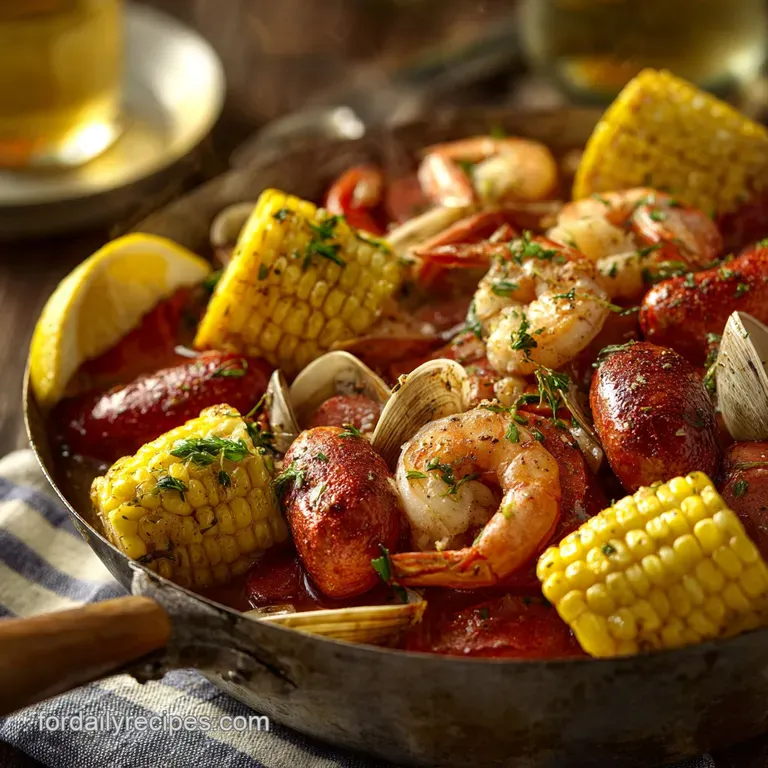
The Anatomy of a Perfect Low Country Boil: More Than Just a Meal
When that massive pot of liquid gold starts steaming, the whole neighborhood knows exactly what’s up. The combined scent of Old Bay, salty brine, garlic, and sweet corn hits you instantly, and it’s truly intoxicating.
That rich aroma makes your stomach rumble before you even manage to drain the pot, announcing a feast is imminent.
This dish is my favorite kind of party trick because it’s ridiculously easy, lightning fast, and feeds a huge crowd without stressing you out in the slightest. You literally throw everything into one enormous bucket of seasoned water and patiently wait.
Cleanup is mostly just peeling the newspaper off the table, which is absolutely brilliant when you are hosting.
Forget those overly complicated seafood recipes that require endless prep work and fussy sauces you'll never perfect. We are going back to the core of Southern coastal cooking, focusing on the essential timing and seasoning tricks that make this classic Low Country Boil (or Frogmore Stew, if you’re a purist) shine.
Let's crack on with the good stuff.
The Science of Flavour: Why Layering the Boil Matters
The secret to a successful boil isn't just the Old Bay; it’s all about the timing hierarchy, friend. Everything goes into the pot based on how long it needs to cook and how much flavour it needs to absorb, ensuring nothing gets mushy or rubbery.
We must build the flavor base first, then layer the ingredients meticulously, moving from the hardest components (potatoes) to the quickest components (shrimp).
Deciphering the Name: Frogmore Stew vs. Low Country Boil
Okay, real talk: Is it a Low Country Boil or Frogmore Stew? They are, functionally, the exact same darn thing! The "Frogmore" name comes specifically from a small town on St. Helena Island, South Carolina, but the ingredients and method are identical.
Call it whatever you want just ensure your pot is big enough to handle the sheer volume of food.
The Essence of Low Country Cooking: History and Heritage
This dish is steeped in coastal South Carolina heritage, evolving from necessity and communal fishing traditions into a celebratory feast. It’s inherently supposed to be shared, enjoyed outside under the sun, and eaten messily with your bare hands no pretense or fussiness allowed here.
That deep tradition is why we embrace serving it directly onto a lined table.
Why This Recipe is the Coastal Curator's Favourite
I love this version because we lean heavily on fresh, bright aromatics like whole heads of garlic and massive halved lemons boiled right in the liquid which really cuts through the richness and brightens the standard seasoning profile.
Plus, my foolproof residual heat shrimp timing means you never, ever end up with rubber bands. That is a huge, game changing win.
The Magic of the Seasoning Blend: Achieving Depth and Spice
We use a lot of seasoning, way more than you think you need. Remember the golden rule: the broth should taste almost too salty and aggressively seasoned before the solids go in.
The potatoes and corn are notoriously bland sponges, and they will soak up every bit of that intense flavour, mellowing the broth substantially.
Optimising the Potatoes and Corn for Perfect Tenderness
Small new potatoes are absolutely key because they hold their shape beautifully under prolonged boiling. We use corn sliced into smaller segments, which cooks faster and allows maximum surface area for seasoning absorption. You never want grainy, undercooked potatoes when everything else is ready, trust me.
The Role of Smoked Sausage in Flavour Infusion
The smoked sausage is absolutely vital, and it’s more than just substance. It acts as the engine that infuses a necessary smoky, fatty depth into the boiling liquid before the delicate seafood is added.
That rendered flavor transfer makes the entire broth richer and far more complex than just spices alone.
Curating Your Ingredients: The Essential Shopping List
| Ingredient | My Recommendation | Viable Substitution |
|---|---|---|
| Shrimp | Large, shell-on, 16/20 count | Peeled, deveined shrimp (reduce cooking time by 1 minute). |
| Potatoes | Small Red (New) Potatoes | Small Yukon Golds; they are waxy and hold shape well. |
| Sausage | Smoked Andouille | Polish Kielbasa or spicy Chorizo links. |
| Seasoning | Old Bay | A DIY blend of celery salt, paprika, mustard powder, and black pepper. |
| Liquid Base | Water (+ Optional Beer) | Seafood stock or clam juice mixed with water for extra depth. |
Selecting the Freshest Seafood: Shrimp, Crawfish, or Crabs?
While shrimp are the most traditional and simplest route, feel free to toss in some live crawfish or even pre-cooked snow crab clusters if you’re feeling ambitious. If using frozen seafood, you must make sure it is completely thawed before it hits the pot.
I learned the hard way that frozen seafood drops the boil temperature instantly, totally messing up the potato timing.
The Great Sausage Debate: Kielbasa vs. Andouille
I always lean towards Andouille because that smoky, spicy heat is non-negotiable for me in a Low Country Boil. However, if you are serving sensitive palates or kids, Kielbasa is a fantastic, milder, and equally effective substitute. Just ensure whatever sausage you choose is fully cooked and pre-smoked for flavor.
Substituting Starches: Beyond the New Potato
Those small red potatoes are traditional for a reason: they are waxy and resist turning into instant mash in the boiling liquid. If you absolutely can’t find new potatoes, use any waxy variety like small Yukon Golds.
Avoid the starchy Russets entirely, as they will turn to grainy mush and cloud up your beautiful broth.
Making Your Own Broth Seasoning Blend
If you are limiting commercial blends or watching sodium intake, making your own seafood seasoning is incredibly simple and highly effective. Focus on celery seed, generous amounts of black pepper, mustard powder, and a touch of paprika for color.
You really need that deep, complex spice profile to properly flavor the otherwise bland starches.
The Coastal Curator's step-by-step Guide to Low Country Boil Mastery
Phase I: Preparing the Seasoned Broth and Boiling the Potatoes
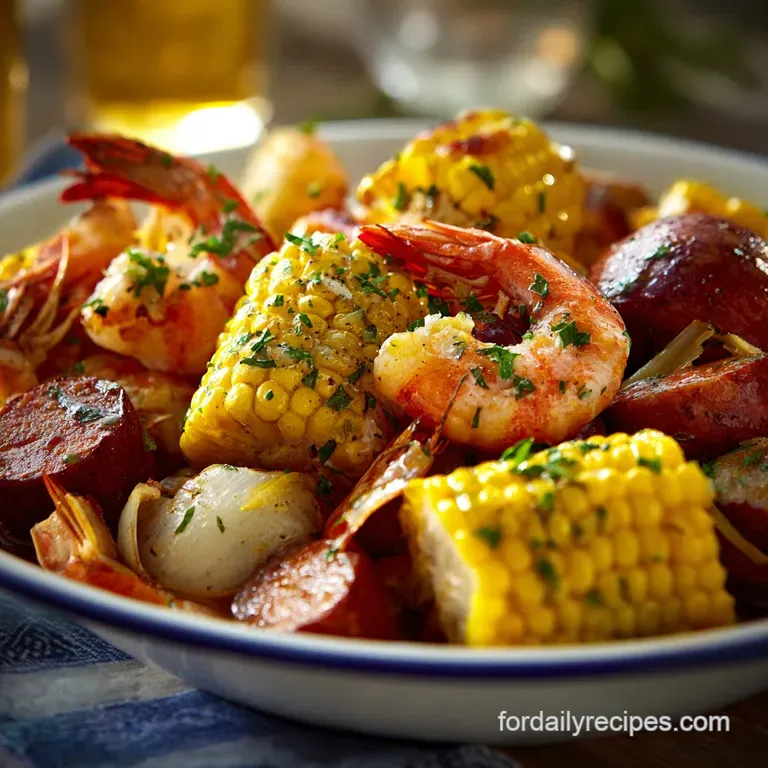
Get that massive pot filled with water (and beer, if using) and crank the heat to high. Add all the Old Bay, salt, halved lemons, onions, and garlic right away, and bring it to a rolling boil. Once it’s bubbling, drop the halved potatoes in first.
Set a timer for 15 minutes right now; these dense little guys need a serious head start.
Phase II: Introducing the Sausage and Corn
Once the potatoes have had their 15 minute soak (they should be almost tender), add the sliced sausage. Let that cook for exactly 5 minutes, allowing the smoky fat to melt and enrich the seasoned water beautifully.
Now toss in the corn segments and boil for another 5 to 7 minutes until they look bright yellow and tender crisp.
Phase III: The Critical Timing for the Seafood Addition
This step is where people mess up the most, so focus up! Add the shell-on shrimp all at once, cover the pot tightly, and immediately turn the heat completely off . The large volume of water already in the pot holds enough heat to gently poach the shrimp to perfection.
The Grand Finale: Draining, Dumping, and Serving
After precisely 3 to 4 minutes of steeping, swiftly pour the entire contents into a massive colander in the sink to stop the cooking immediately. Discard the spent onion and lemon bits.
Then, dramatically dump the glorious heap of seafood, sausage, and veggies right onto your newspaper covered table. Finish with a generous scatter of fresh parsley and serve instantly with massive bowls of melted butter for dipping.
Crucial Chef’s Note: Do not lift the lid during the shrimp's 4 minute steep. You are relying on the trapped steam and residual heat to cook the seafood perfectly. Lifting the lid releases the necessary heat, resulting in unevenly cooked shrimp.
Mastering the Boil: Chef’s Timing Secrets and Troubleshooting
Preventing Mushy Potatoes: The Timing Trick
The biggest failure point is uneven cooking, almost always involving the potatoes. Potatoes need a solid 15– 20 minutes alone in that seasoned bath before anything else joins them. You must test them before adding the corn and sausage; they should feel firm but yield slightly to a fork.
If you rush this step, your potatoes will be disappointingly crunchy.
The Best Way to Handle and Clean Fresh Shellfish
Always rinse fresh shrimp thoroughly in cold water to remove any lingering grit. While I strongly advocate for shell-on shrimp for flavour, if you use peeled shrimp, they need only about 90 seconds in the hot liquid before you pull them out. Shells add a protective layer and a depth of seafood flavour to the boil.
When the Broth Is Too Salty: Quick Fixes
You taste the initial broth and realize you went overboard on the Old Bay and salt. Don't panic! The easiest fix is to add more plain water or, better yet, a can of low-sodium lager to dilute the solution.
If the problem is too much spice (cayenne), add another halved lemon or a splash of cider vinegar; the acid will help cut the intense heat.
Post Jamboree Practicalities: Storing Leftovers
How to Properly Store Cooked Seafood and Sausage
Leftovers must be refrigerated immediately after the boil is complete; don't leave the seafood sitting out for more than two hours. Store the drained shrimp, sausage, corn, and potatoes in separate, airtight containers. They hold their flavour remarkably well in the fridge for up to 3 days.
Reheating the Components: Maximising Flavour and Texture
Never reheat shrimp in the microwave, ever; it makes them tough instantly. The best method is to gently steam the corn and potatoes in a basket over boiling water. Reheat the sausage quickly in a skillet. For the shrimp, put them in a colander and quickly pour a kettle of fresh boiling water over them.
This warms them up perfectly without cooking them further.
Can You Freeze the Boil Components?
But does it freeze well? Not really, truthfully, and I wouldn’t recommend it. The potatoes and corn become mushy and mealy upon thawing due to water crystallization, and the delicate shrimp texture degrades significantly.
While you can freeze the sausage alone, this beautiful dish is truly meant to be eaten fresh. Scale the recipe down if you are worried about massive leftovers.
Elevating the Experience: Serving Your Low Country Boil
A classic Low Country Boil requires minimal garnish and even less formality, which is exactly why I adore it. The goal is easy, messy comfort food that everyone can gather around. Serve it with tons of paper towels or wet wipes and maybe a light, crunchy side like vinegar based coleslaw to offer a cooling contrast.
Don't forget those extra lemons; a fresh squeeze of acid brightens everything up beautifully before you dig in.

Recipe FAQs
How do I ensure the potatoes and corn are cooked perfectly without overcooking the shrimp?
The timing is crucial; since potatoes take the longest, they must go in first with the sausage. Only add the shrimp and corn cobs during the last 3 to 5 minutes of boiling, as shrimp cook very quickly and become rubbery if overcooked.
A good test is tasting the potatoes for tenderness before introducing the final ingredients.
I don't have fresh shrimp; can I use frozen seafood instead?
Absolutely, but proper thawing is essential. Thaw frozen shrimp completely under cold running water immediately before adding them to the boil. Never boil frozen shrimp directly, as they will cool the water excessively and result in uneven cooking and a tough texture.
How can I adjust the spice level without compromising the traditional flavor?
The spice comes primarily from the seasoning packet (like Old Bay or Zatarain's) and often cayenne pepper added to the water. To reduce the heat, use half the recommended seasoning mix and skip the extra cayenne. For more heat, add crushed red pepper flakes or a few sliced jalapeños to the liquid.
What is the best way to store leftovers, and how long will they keep?
Leftover seafood should be refrigerated within two hours of cooking. Store the ingredients separately from the cooking liquid in airtight containers. Properly stored leftovers will maintain quality for up to 3 days, though the shrimp is best eaten the following day.
Why is the soaking/steeping step so important after the boil?
The soaking step, usually lasting 15-20 minutes after the heat is off, is vital for flavor absorption. It allows the hot, salty, and seasoned water to permeate the potatoes and corn fully, ensuring they are deeply flavorful instead of just boiled. Skipping this step often results in bland vegetables.
Can I incorporate other ingredients like crab or mussels into the Low Country Boil?
Yes, this recipe is highly adaptable. Hard shelled additions like Dungeness or Blue Crabs should be added alongside the potatoes and sausage due to their longer cooking time. Mussels or clams should be added in the final 5 minutes, replacing or supplementing the shrimp.
Should I peel the shrimp before boiling them?
It is traditional and highly recommended to boil the shrimp shell-on. The shells add valuable flavor and depth to the cooking liquid, which then absorbs back into the meat, yielding a more savory result. Peeling should be done right before eating, which is part of the communal and messy fun of the boil.
Perfect Low Country Boil Recipe
Ingredients:
Instructions:
Nutrition Facts:
| Calories | 551 kcal |
|---|---|
| Protein | 37.1 g |
| Fat | 14.8 g |
| Carbs | 67.4 g |
