Smoked Ribs: Proper Low-And-Slow St. Louis Style (Weekend Guide)
- Proper Low and Slow Smoked St. Louis Ribs (The Weekend Warrior's Guide)
- The BBQ Science: Achieving Perfect Texture and Flavor Depth
- Essential Components for World-Class Smoked Ribs
- The Low and Slow Method: Step-by-Step Smoked Ribs Execution
- Troubleshooting and Refinements: Expert Smoked Ribs Tips
- Handling Leftovers: Storage, Freezing, and Reheating Ribs
- Perfect Pairings: What to Serve Alongside Your Masterpiece
- Recipe FAQs
- 📝 Recipe Card
Proper Low and Slow Smoked St. Louis Ribs (The Weekend Warrior's Guide)
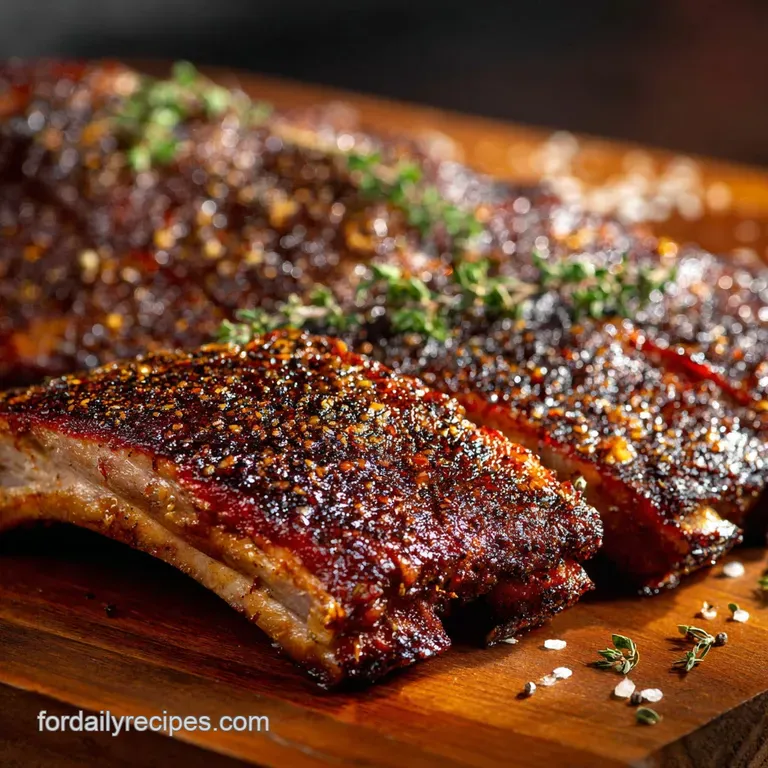
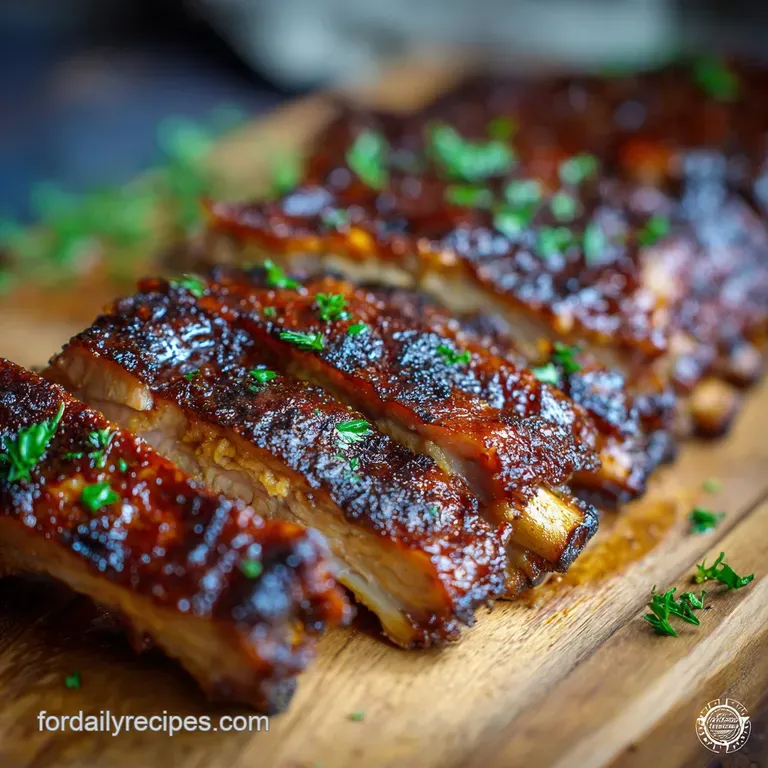
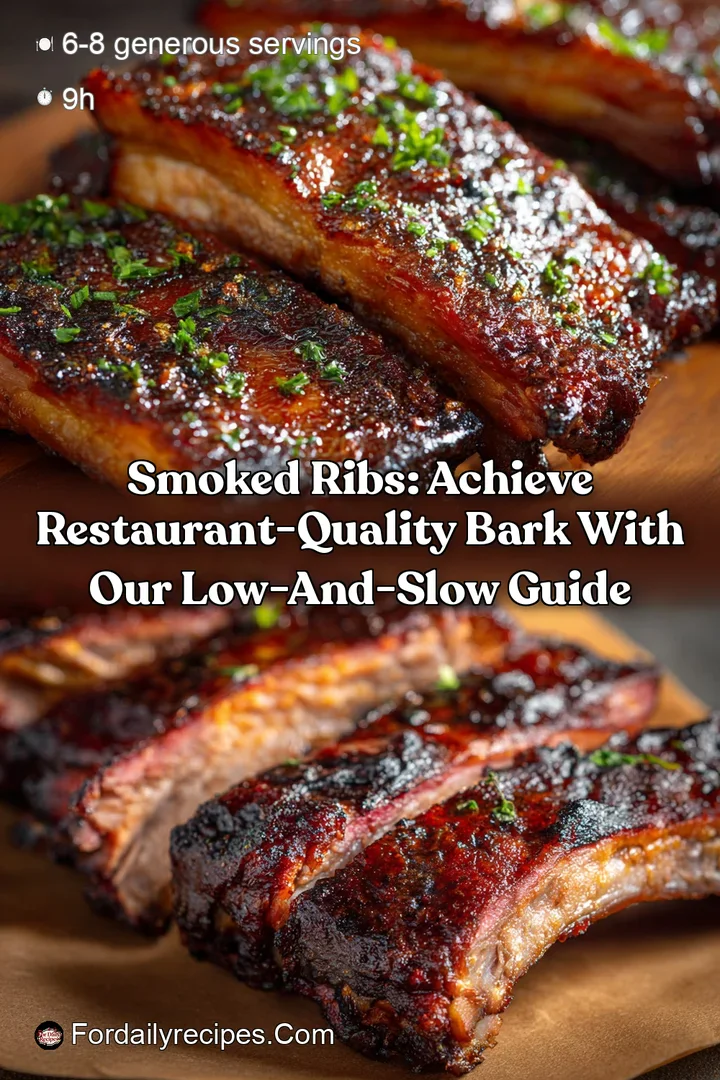
That smell. It hits you hours before dinner, this deep, sweet, hickory haze that wraps around the entire neighborhood. When you finally pull the racks off the smoker, the bark is a dark, crunchy mahogany, and the meat itself is almost vibrating with pure tenderness.
Trust me, learning how to master proper smoked ribs is worth every single minute of the low and slow commitment.
Honestly, people seriously overcomplicate barbecue, throwing around terms like stall and silver skin until you just want to order pizza instead. This isn't a stressful recipe, it’s actually a commitment to patience , not complicated effort.
You spend maybe 20 minutes prepping the night before and then simply babysit the temperature while sipping a cool beverage. It's minimal active work for a truly maximum flavor payoff.
I’ve made all the tragic errors over the years mostly dry ribs or tough, leathery ones and now I only share what actually works. We are going beyond the basic grill brush today. We’re going to get these glorious St.
Louis racks seasoned up perfectly, hit that critical smoked ribs temperature , and achieve genuine barbecue greatness. Let's crack on.
The BBQ Science: Achieving Perfect Texture and Flavor Depth
This recipe works because we force the meat to behave exactly how we want it to, using heat, time, and steam. We achieve three crucial things: a killer, dark bark; the essential smoke ring; and that signature, fall off-the-bone (but not too fall off-the-bone) tenderness.
The science is simple, even if the timing feels long.
Defining St. Louis Style: Why This Cut Excels on the Smoker
If you want the best possible result, you need the right canvas. St. Louis style ribs are simply spareribs that have been trimmed into a nice, rectangular shape by removing the cartilage and uneven ends. This cut has fantastic marbling and a high meat-to-bone ratio.
Baby Back ribs are leaner and cook faster, but St. Louis ribs offer superior richness and flavour because of that fat.
The Low and Slow Philosophy: Patience as a Prime Ingredient
We cook these ribs at a steady 225°F (107°C) for several hours. Why so low? Because high heat melts fat too quickly, leaving the meat dry and tough. Cooking low allows the tough connective tissues (collagen) to slowly break down into gelatin, which lubricates the muscle fibers.
That’s what creates that perfect, juicy, soft texture we crave.
Key Equipment Checklist for Smoking Success
You don't need the most expensive smoker in the world, but you do need tools that ensure temperature accuracy.
- Smoker: Pellet, charcoal, or offset anything that holds 225°F.
- Digital Thermometer: This is non-negotiable. You need a two-probe system: one for the smoker's ambient temperature and one for the internal meat temperature.
- Wood: Hardwood chunks or chips (Hickory is the classic).
The Maillard Reaction and Developing the Mahogany Bark
The ‘bark’ is that dark, crisp exterior that holds all the flavour. It forms during the first few hours of smoking. This is thanks to the Maillard reaction, where the proteins and sugars in the rub react under the gentle heat, causing the surface to polymerize and brown.
The high brown sugar content in our rub accelerates this process beautifully. Pro Tip: Do not spritz the ribs until that beautiful, dark bark has already set, usually around the 90 minute mark.
Smoke Ring Chemistry Explained (And Why It Matters)
That iconic pink ring just below the bark isn't raw meat; it's a badge of honor. It’s caused when the smoke, specifically nitrogen dioxide (NO2) and carbon monoxide (CO), reacts with the myoglobin in the meat. This reaction forms nitroso myoglobin, which gives that lovely pink hue.
If you see a good smoke ring, you know your smoker was doing its job properly and generating clean, blue smoke.
The 'Pull Back' Test: Assessing Tenderness Without Failure
We don't rely solely on temperature for ribs, because texture matters most. The 'pull back' test is simple: look at the meat closest to the bone. When the meat starts pulling back and exposing about a quarter inch of bone tip, they are ready for the final step.
If they look too shrunken, you might be heading toward shoe leather territory.
Essential Components for World Class Smoked Ribs
Choosing the Best Rack: Weight, Marbling, and Cut Specifics
I always opt for St. Louis cut pork ribs, usually around 2.5 pounds per rack. Look for racks that are uniform in thickness so they cook evenly. Avoid ribs with excessive ‘shiners’ (where the bone is visible through the meat) as they will dry out first.
Building the Definitive Dry Rub Formula (Sweet, Heat, and Depth)
Our dry rub is the foundation. It’s a classic sweet and spicy BBQ mix, ensuring we get that great bark and flavour penetration.
| Ingredient | Role in Rub | Viable Substitution |
|---|---|---|
| Dark Brown Sugar | Sweetness, crucial for bark | Pure maple sugar or granulated sugar (use 1/4 cup less) |
| Smoked Paprika | Color, deep smokiness | Mild Hungarian Paprika + 1 tsp Liquid Smoke (if desperate) |
| Kosher Salt | Seasoning, moisture draw | Table salt (halve the quantity) |
| Dried Chilli Powder | Back end heat | Cayenne pepper (use sparingly!) |
Wood Selection for Optimal Smoke Flavor Profiles (Hickory vs. Fruit Wood)
The wood you choose dramatically impacts the final flavour. Hickory is the standard, giving a strong, savory, smoked ribs flavor. If you want something lighter and fruitier, try Cherry or Apple wood. They impart a subtle sweetness and a beautiful red hue to the bark, which looks incredible.
Wetting Agents and Spritz Options for Moisture Control
We use yellow mustard as a binder. Seriously, don’t skip this! It helps the rub stick perfectly, and the pungent mustard flavour completely cooks off during the long smoke. For the spritz, I use a simple 50/50 mix of apple juice and apple cider vinegar.
The vinegar tenderizes slightly, and the juice adds sugar to keep the bark moist.
The Low and Slow Method: step-by-step Smoked Ribs Execution
Preparation Phase: Removing the Membrane and Trimming Excess Fat
This is the most critical prep step and where most people fail initially. Flip the ribs so the bone side is up. Using a dry paper towel for grip, find the corner of that silver membrane (the shiny, thin skin). Peel the entire thing off in one go.
If you leave it on, it turns into tough, unchewable plastic and prevents flavour penetration. Trim any huge, floppy sections of fat as well.
Rub Application: Ensuring Full Coverage and ‘Setting’ the Spice Base
Lightly coat the ribs all over with the binder (mustard). Then, absolutely load up the racks with the dry rub. Press it in firmly you want a thick, even layer, almost like sand stuck to wet cement. Place the rubbed ribs on a wire rack and chill them, uncovered, for 1– 2 hours.
This time allows the salt to draw out a little moisture and the sugars to dissolve, making the rub "set" into a sticky surface that loves smoke.
Maintaining Consistent Temperature for Optimal Smoke Adhesion
Set your smoker to a strict 225°F (107°C) and let it stabilize for 20 minutes before adding the ribs. Place the ribs bone side down on the grates. Keep that lid shut, folks! Every time you peek, you let out heat and valuable smoke, extending your cook time needlessly.
Smoke for 3 hours, opening only to spritz every 45– 60 minutes after the initial bark has formed.
The Butcher Paper Wrap and Glaze Phase (The Texas Crutch)
After 3 hours, it's time for the "Texas Crutch" wrapping the ribs tightly in foil or pink butcher paper. This creates a steaming environment that blows past the dreaded temperature stall and tenderizes the meat rapidly.
Chef's Note: The stall is when the internal temperature hits 150-160°F and stops rising. This is evaporative cooling fighting the heat. Wrapping combats this beautifully. If you are serious about low and slow, similar strategies apply when making something like Burnt Ends: The Ultimate Smoked Brisket Recipe for Meat Candy .
Wrap tightly, maybe adding a couple of tablespoons of apple juice, then return them to the smoker for 2 hours. Unwrap them, brush with your thinned glaze if you want sauce, and cook for a final 30– 60 minutes until the glaze is tacky and the bark has firmed up again.
Troubleshooting and Refinements: Expert Smoked Ribs Tips
Dealing with Stall: When to Wrap and Why
If your ribs hit 155°F and the temperature won't budge for 60 minutes, you are officially in the stall. Don't panic. Wrap them immediately using the Texas Crutch method described above. The stall can sometimes add hours to a cook; wrapping makes sure dinner happens on time.
Common Mistakes: Avoiding the Dreaded 'White Smoke'
If your smoker is puffing thick, billowing white smoke, that means your wood is smoldering poorly, and it will taste bitter. You want thin, almost invisible blue smoke. Adjust the airflow to allow more oxygen to the fire to clean up your combustion.
Thick white smoke will ruin all your hard work!
The Bend Test: Checking for Doneness and Avoiding Overcooking
We aim for the perfect bite: tender, but still offering a slight tug off the bone. Skip the meat thermometer here. Pick up one end of the rack with tongs. If the ribs bend significantly and the surface cracks (the meat should show slight separation), they are done.
If the rack completely flops over and threatens to fall apart, you’ve likely overcooked them slightly, but they will still taste amazing.
Handling Leftovers: Storage, Freezing, and Reheating Ribs
Safe Refrigeration Times for Cooked Ribs
Cooked smoked ribs can be safely stored in the refrigerator for 3 to 4 days. Make sure they are wrapped tightly in aluminum foil or placed in an airtight container immediately after cooling slightly. I usually slice them individually for easier portioning.
Reheating Smoked Ribs Without Drying Them Out (The Foil Method)
Don't even think about microwaving these beauties. To reheat, wrap the cold ribs tightly in heavy duty aluminum foil. Preheat your oven to 250°F (121°C). Place the foil packets on a baking sheet and heat for 20– 25 minutes until steaming hot all the way through.
This gentle steam re-moisturizes the meat without drying out the bark.
Perfect Pairings: What to Serve Alongside Your Masterpiece
Complementary Side Dishes That Cut the Richness
Because these smoked ribs are incredibly rich and savory, you need sides that offer crunch and acidity to balance the palate.
- A sharp, vinegar based coleslaw is non-negotiable.
- Smoky, sweet Baked Beans (you need beans, truly).
- Something simple like creamy potato salad or a light green salad with a tart vinaigrette.
Recipe FAQs
Why are my smoked ribs tough or dry, and how can I fix this?
Dry ribs are usually caused by cooking at too high a temperature or for too long without adequate internal moisture. To combat dryness, ensure your smoker maintains a steady temperature between 225°F and 250°F, and consider implementing the "3-2-1" method (wrapping the ribs tightly in foil with a small amount of liquid like apple juice during the middle phase) to trap steam and promote tenderness.
Do I need to remove the membrane from the back of the ribs?
Absolutely, removing the membrane (the thin, silver sheath on the bone side) is a crucial step for achieving perfect tenderness and maximum flavor. If left on, it becomes tough and rubbery, preventing smoke and rub penetration into the meat, which acts as a barrier to the tender bite you are aiming for.
How do I know when the ribs are truly done should the meat fall off the bone?
The ideal texture is "pull off-the-bone," not "fall off-the-bone"; the latter indicates overcooked, mushy ribs. A reliable test is the "bend test," where the rack is lifted with tongs and should bend significantly, causing the surface bark to crack.
Alternatively, insert a skewer between the bones; it should slide in with little resistance, like soft butter, indicating an internal temperature near 200°F to 205°F.
What is the best type of smoking wood to use for pork ribs?
For pork ribs, milder fruitwoods like apple and cherry are highly recommended as they impart a sweet, delicate smoke flavor that complements the pork and the rub beautifully. Hickory or oak are traditional and excellent choices if you prefer a stronger, more assertive barbecue profile, but use them in moderation to avoid overpowering the meat.
My "bark" isn't forming correctly; it looks soft or wet. What am I doing wrong?
Bark development requires low humidity and excellent airflow, coupled with the sugar and spices in your dry rub reacting to the heat. Avoid basting or spritzing the ribs too early in the smoke cycle, as this introduces moisture that dissolves the surface rub and slows down the bark formation.
Ensure the bark is fully set (usually 2 to 3 hours in) before you start spritzing or wrapping.
Can I use Baby Back Ribs instead of St. Louis style, and how does the cooking time change?
Yes, Baby Back Ribs (Loin Ribs) are a fantastic, leaner alternative, but they require a shorter cooking time due to their smaller size and lower fat content. You should reduce the total smoking time by 1 to 2 hours compared to the St.
Louis cut, making sure to check for tenderness earlier to prevent them from drying out.
How should I store leftover smoked ribs, and what is the best way to reheat them?
Store cooled, leftover ribs wrapped tightly in heavy duty foil or vacuum sealed in the refrigerator for up to four days, or freeze them for up to three months. To maintain moisture when reheating, wrap them tightly again in foil, perhaps with a splash of apple juice, and warm them slowly in a 250°F oven until heated through.
Low And Slow Smoked Ribs Guide
Ingredients:
Instructions:
Nutrition Facts:
| Calories | 427 kcal |
|---|---|
| Protein | 25.7 g |
| Fat | 18.2 g |
| Carbs | 46.5 g |
