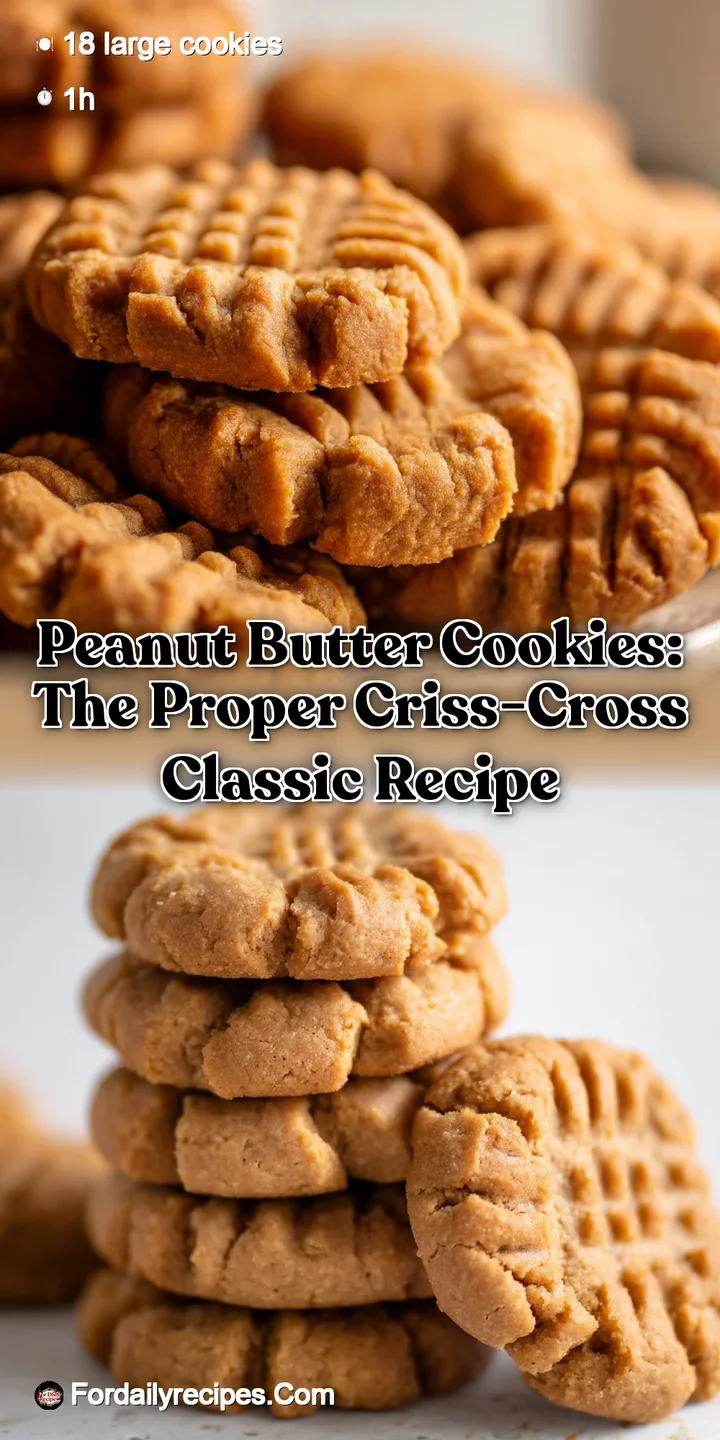
Peanut Butter Cookies: the Proper Criss-Cross Classic
- Captivating Introduction to the Classic Criss-Cross Cookie
- The Science of the Perfect Peanut Butter Cookie Texture
- Essential Ingredients for Flawless Cookies & Substitution Notes
- Detailed Method: Baking the Proper Criss-Cross Classic
- Expert Baking Tips and Troubleshooting Common Issues
- Practical Guide to Storing and Freezing Your Peanut Butter Treats
- Perfect Pairings and Presentation Ideas
- Recipe FAQs
- 📝 Recipe Card
Captivating Introduction to the Classic Criss Cross Cookie
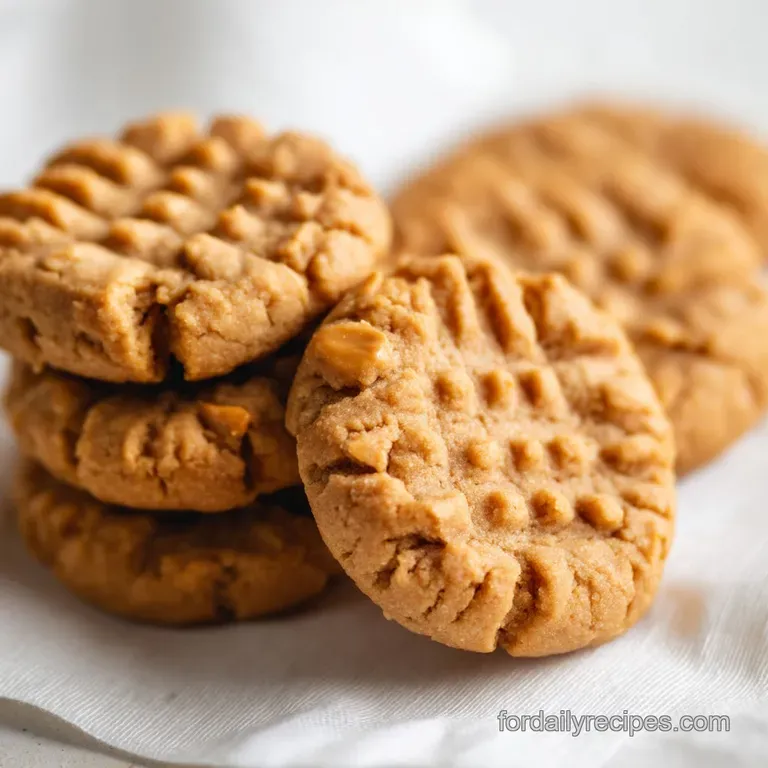
Just picture it: that distinct, warm, roasted aroma of peanuts and molasses hitting you the second the oven door opens. These Peanut Butter Cookies aren't just a treat; they are a sensory experience, delivering an unbelievably satisfying combination of chewy edges, soft centres, and that signature melt-in-your mouth texture.
Nothing else smells quite like real homemade peanut butter baking.
Honestly, if you need a reliable recipe that comes together faster than you can decide what to watch tonight, this is it. It’s cheap, incredibly easy, and involves ingredients you probably already have lurking in the pantry right now.
This is my go-to "lifesaver" bake when unexpected guests arrive or when my inner child throws a legitimate craving tantrum for real, classic Peanut Butter Cookies .
Today, we're cutting through the noise and focusing on the simple, time honored technique that yields absolutely perfect, deeply flavourful Peanut Butter Cookies every single time. Forget the dry, crumbly versions; we are going for soft, rich, and truly irresistible. Let’s get baking.
Defining the Quintessential Salty Sweet Crunch
What makes a truly great Peanut Butter Cookie ? It needs that perfect salty sweet balance, which is surprisingly easy to mess up if you skimp on the salt or use poor quality peanut butter.
These cookies have that rich, roasted depth thanks to the peanut butter combined with the molasses notes from brown sugar, ensuring they taste complex, not just sugary.
Why the Criss Cross Mark is More Than Just Decoration
That iconic cross hatch pattern isn't just for looks, though it certainly makes these cookies instantly recognizable. The classic fork press serves a vital function: it gently flattens the dense dough and promotes even baking.
If you skip this crucial step, the dough balls will barely spread, leaving you with dry, round lumps instead of the chewy, perfectly textured Homemade Peanut Butter Cookies we’re aiming for.
Overview of Difficulty and Required Time Commitment
This recipe is firmly in the "easy" category, relying on standard creaming methods a great choice for beginners looking to master baking basics. The biggest challenge is patience, as the dough requires a 30 minute chill time, which is non-negotiable for achieving that ideal spread and chewiness.
If you’re a fan of quick satisfying bakes, these are certainly faster than trying to tackle a complex layer cake. I’m telling you, the effort-to-reward ratio here is off the charts for these delightful Peanut Butter Cookies .
The Science of the Perfect Peanut Butter Cookie Texture
This recipe is intentionally designed to produce classic, Chewy Peanut Butter Cookies , and the secret lies in the ratio of fats and sugars. We use softened, not melted, butter, which allows us to effectively cream it with the sugars, trapping air for lift and keeping the cookie tender.
Crucially, the high proportion of peanut butter itself acts as both fat and stabilizer.
Peanut butter is thick, sticky, and relatively dry compared to butter, meaning it prevents the dough from spreading excessively in the oven. The result is a richer, more densely packed cookie. My first attempt years ago was a flop because I used too much flour and they came out crumbly a total tragedy!
The correct balance of ingredients makes the difference between mediocre and the Best Peanut Butter Cookies .
Essential Ingredients for Flawless Cookies & Substitution Notes
You only need a handful of pantry staples to make these brilliant Classic Peanut Butter Cookies . While the ingredients are simple, using the right ones (and knowing what to swap if you’re in a pinch) makes all the difference.
Always start with good vanilla extract; cheap stuff tastes synthetic.
| Ingredient | Role in Recipe | Substitution Note |
|---|---|---|
| Creamy Peanut Butter | Flavor & density | Natural PB Warning: Use processed PB (Skippy/Jif style). Natural, separated PB results in flat, oily cookies. |
| Butter | Tenderizer, flavor | Use equal parts vegetable shortening for a slightly puffier cookie. |
| Brown Sugar | Moisture, chewiness | Substitute with granulated sugar + 1 tsp molasses per cup of sugar. |
| Egg | Binder, richness | Use a flax egg (1 tbsp ground flax + 3 tbsp water) for a vegan option. |
| Flour | Structure | Use a 1:1 gluten-free baking blend for a great GF option. |
How the Brown Sugar to Granulated Sugar Ratio Affects Chewiness
We use an equal ratio of brown sugar to granulated sugar here, and that’s intentional for achieving perfect texture in these Homemade Peanut Butter Cookies . Granulated sugar encourages spreading and crisp edges.
Brown sugar, on the other hand, contains molasses, which is hydroscopic (it attracts and retains moisture). This ensures the centre of your cookie stays soft and delightfully chewy even after cooling.
Maximizing Flavor Depth with Quality Peanut Butter
I’m a firm believer that the better your peanut butter, the better your final result. Since the peanut butter is the star, don't use that sad jar that's been sitting in the back of your cupboard since last year. Use a fresh, room temperature, standard creamy processed type.
This guarantees consistency and keeps the fat levels predictable.
Choosing the Right Type of Peanut Butter (Processed vs. Natural)
Listen closely: if you use that beautiful, separated, oily, natural peanut butter that you have to stir for ten minutes, your cookies will spread into sad puddles. I know some recipes promote the use of natural ingredients, but for reliable structure in these Peanut Butter Cookies , you need the emulsified, shelf stable stuff.
Trust me, baking is chemistry, and we need predictable consistency.
Measuring Flour and Leavening Agents Accurately
I cannot stress this enough: please, please use a kitchen scale for your flour! If you use the scoop and sweep method, you risk packing too much flour into the cup, leading to dry, heavy cookies. If you must use cups, remember the "spooned and levelled" technique.
Accuracy is key when dealing with baking soda; it ensures your Easy Peanut Butter Cookie Recipe rises just right.
Vegan and gluten-free Swaps for the Dough
Want to make these Peanut Butter Cookies more accommodating? It’s totally doable! Swap the dairy butter for a vegan butter stick (or solid coconut oil). For the egg, a flax egg works perfectly as a binder. If you need gluten-free, substitute the all-purpose flour with a 1:1 gluten-free baking blend that contains xanthan gum. You might also want to check out my post on Lactation Cookies: Chewy Oatmeal Recipe for Maximum Milk Supply if you're interested in other highly adaptable, chewy cookie recipes!
Detailed Method: Baking the Proper Criss Cross Classic
Phase 1: Preparing and Combining Wet and Dry Ingredients
Start by whisking your dry ingredients (flour, salt, baking soda) thoroughly in a separate bowl. This prevents pockets of unmixed baking soda later. In your stand mixer, cream the softened butter and both sugars until they are visibly lighter in colour and fluffy.
This aeration is essential for the soft texture of your Peanut Butter Cookies . Next, paddle in the peanut butter until smooth, followed by the egg and vanilla extract. Stop mixing as soon as the egg is just combined; overmixing develops gluten and makes cookies tough.
Phase 2: Rolling Dough Balls and Applying Sugar Coating
Once the dough is combined, cover it and chill for 30 minutes. This is critical don't skip it! After chilling, use a medium cookie scoop (about 1.5 tablespoons) to portion out the dough.
Rolling them smoothly between your palms ensures uniform baking and a beautiful, perfectly shaped cookie. If you want extra texture, roll the dough balls in a small bowl of granulated sugar right before the cross hatch.
Phase 3: Executing the Iconic Cross Hatch Technique
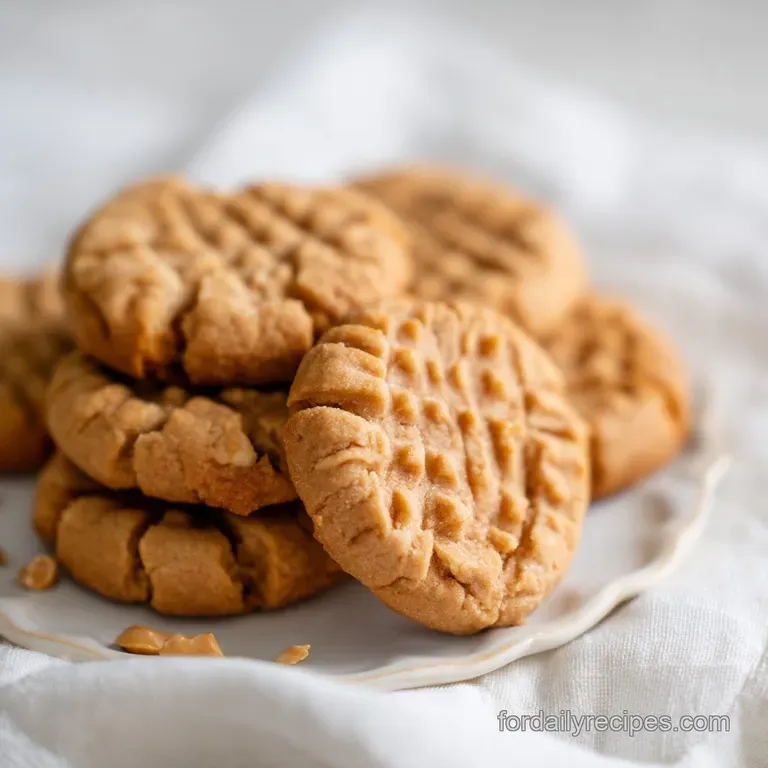
This is the fun part, the step that truly defines the look of these Soft Peanut Butter Cookies . Take a dinner fork and dip the tines in a bit of granulated sugar to prevent sticking.
Press down gently on the dough ball to flatten it about halfway, then lift and rotate the fork 90 degrees and press again. You want a distinct, shallow pattern that breaks the surface tension but doesn't crush the cookie flat.
Phase 4: Monitoring for Optimal Golden Edges
Bake your Homemade Peanut Butter Cookies for 10– 12 minutes at 350°F (175°C). The trick is removing them when the edges are just set and lightly golden, but the centres still look slightly pale and maybe even a little underdone.
They will continue to bake on the hot tray after you pull them out (this is called "carry over baking"). This guarantees that coveted soft, chewy middle.
Expert Baking Tips and Troubleshooting Common Issues
The pursuit of the Best Peanut Butter Cookies sometimes hits a snag. Here are the most common places people stumble and how to avoid them.
Preventing Cookies from Spreading Too Thinly
The main culprit for excessive spreading is using ingredients that are too warm or skipping the crucial chilling step. Always chill the dough for at least 30 minutes.
If your kitchen is extremely hot, try chilling for 45 minutes or placing the formed dough balls in the freezer for 10 minutes before baking. Also, verify that your baking soda is fresh and active.
The Ideal Dough Temperature and Why Chilling Helps
Dough chilling is not punishment; it’s quality control. Cold fat melts slower in the oven, meaning the dough has time to set its structure before the butter fully liquefies. If you bake warm dough, the butter melts immediately, causing the cookies to collapse into flat, greasy discs.
Chilled dough gives you a thicker, chewier final product.
Achieving the Deepest, Most Satisfying Criss Cross Pattern
Make sure you are pressing with sufficient, yet gentle, force. If the dough is too cold, the fork will drag and crack the dough dramatically. If it's too soft, the pattern will quickly melt away. The chilling time noted in the recipe above ensures the dough is firm enough to hold the criss cross definition beautifully.
Practical Guide to Storing and Freezing Your Peanut Butter Treats
Shelf Life and Keeping Baked Cookies Fresh
Store baked Peanut Butter Cookies in an airtight container at room temperature for up to 5 days. Adding half a slice of plain white bread to the container can help keep them wonderfully soft; the cookies absorb moisture from the bread.
Do not store them in the refrigerator, as that tends to dry them out faster, making them hard and crumbly.
Preparing Cookie Dough for Long Term Freezing
These are perfect for stocking up! Form the dough balls and perform the cross hatch as instructed in the recipe. Place the prepared dough balls onto a baking sheet and flash freeze them for 1 hour. Once solid, transfer the frozen balls to a heavy duty freezer bag or container.
They will last perfectly in the freezer for up to 3 months. To bake, simply place the frozen dough balls on a prepared tray and add 2– 3 minutes to the total baking time.
Perfect Pairings and Presentation Ideas
Complementary Beverages (Coffee, Milk, and Tea)
Nothing pairs better with a warm Easy Peanut Butter Cookie Recipe than a glass of ice-cold milk. The richness of the cookie and the cool creaminess of the milk is pure perfection. For the adults, a hot cup of strong black coffee cuts through the sweetness beautifully. If you prefer a lighter sip, try them alongside a comforting Earl Grey tea. They also make a surprisingly lovely dessert alongside the bold flavors of the Steelhead Trout: Crispy Skin Recipe with Lemon Brown Butter if you're hosting a multi course dinner.
These proper criss cross Peanut Butter Cookies are truly a testament to how simple ingredients, combined correctly, can create lifelong memories and one heck of a delicious treat. Go bake a batch!
Recipe FAQs
Why did my cookies come out dry, crumbly, or too dense?
This is most often due to overbaking or incorporating too much flour. Ensure you measure the flour using the spoon and-level method, scooping flour gently into the measuring cup rather than packing it in.
Additionally, remember to remove the cookies when the edges are just golden but the centers still look slightly soft, as they will finish cooking on the hot baking sheet.
My fork keeps sticking when I try to make the criss cross pattern. What should I do?
The fork is sticking because of the butter and sugar content in the dough, which can be tacky when warm. Before stamping each cookie, dip the tines of the fork into a small bowl of granulated sugar or flour to prevent sticking.
You may also benefit from chilling the dough balls for 10 minutes before stamping, as cold dough holds its shape better and resists adhering to the fork.
Can I use natural or organic peanut butter instead of the standard processed variety?
It is strongly recommended to use standard, homogenized peanut butter (like Jif or Skippy) for this recipe to ensure the correct texture. Natural peanut butter, which separates oil, has a higher fat content and can cause excessive spreading in the oven.
Using a non-homogenized peanut butter will likely result in thin, greasy cookies that lose their proper chewy consistency.
How long can I store the baked cookies, and can I freeze the dough?
Baked peanut butter cookies keep well in an airtight container at room temperature for up to one week, maintaining best quality for the first 3 to 4 days.
The unbaked dough freezes excellently for up to three months: roll the dough balls, stamp the criss cross, flash freeze them, and then transfer to a labeled freezer bag. Bake directly from frozen, adding about 2 minutes to the total baking time.
Why does this recipe require both granulated sugar and brown sugar?
The combination of sugars is essential for achieving the classic soft and chewy texture of these cookies. Granulated sugar allows for proper creaming with the butter, promoting some spread and a slight crispness around the edges.
Brown sugar, which contains molasses, contributes moisture and slight acidity, ensuring the center remains wonderfully soft and chewy and adding deeper caramelized flavor notes.
Can I make these Peanut Butter Cookies gluten-free or vegan?
To make them gluten-free, substitute the all-purpose flour with a standard 1:1 gluten-free baking blend that includes xanthan gum; no other adjustments are necessary.
For a vegan version, swap the butter for a high-quality vegan butter substitute (like Miyoko's or Earth Balance sticks) and replace the egg with a flax egg (1 tablespoon ground flaxseed mixed with 3 tablespoons water, allowed to gel for 5 minutes).
Classic Peanut Butter Cookies Recipe
Ingredients:
Instructions:
Nutrition Facts:
| Calories | 190 kcal |
|---|---|
| Fat | 11 g |
| Fiber | 1 g |
