The Only 10 Minute Olive Tapenade Recipe
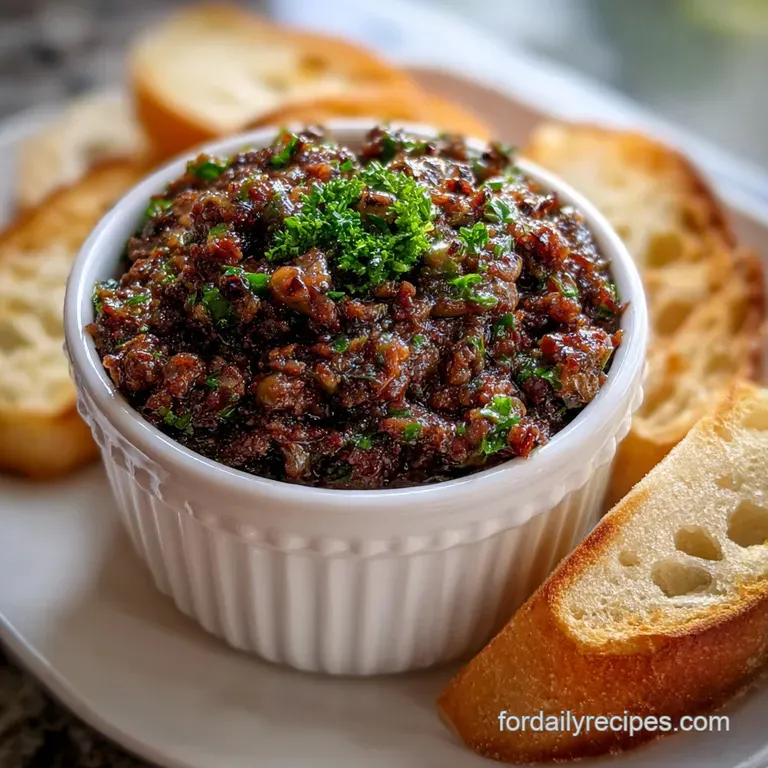
- The Only 10 Minute Olive Tapenade Recipe You'll Ever Need (Mistakes Fixed!)
- What is Olive Tapenade (And Why This Quick Recipe Works)
- The Secret to the Best 10 Minute Tapenade Flavor
- Ingredients for Easy Olive Tapenade & Expert Substitutions
- How to Follow This Quick Olive Tapenade Recipe
- Essential Tapenade Tips, Tricks, and Mistakes to Avoid
- Storage and Freezing Instructions
- Best Ways to Serve Olive Tapenade
- Recipe FAQs
- 📝 Recipe Card
The Only 10 Minute Olive Tapenade Recipe You'll Ever Need (Mistakes Fixed!)
What is Olive Tapenade (And Why This Quick Recipe Works)
Stop everything. Can you hear the sound of the food processor blades whirring for exactly 30 seconds? That’s the only sound barrier between you and the richest, most intensely savory dip you've ever tasted. Forget those bland store-bought jars!
We are making a seriously authentic and fast olive tapenade recipe that delivers deep, complex flavor without having to spend hours chopping.
I messed this up so many times trying to make a smooth paste only to end up with bitter, oily sludge. But this simplified approach solves the biggest problem: balancing the salt and maintaining texture.
You only need about 8 simple ingredients and 10 minutes max, making this the ultimate weeknight appetizer or party snack.
This particular olive tapenade recipe is naturally vegan, skipping the anchovies often found in traditional versions, which means the olive and caper flavors truly shatter through.
Whether you spread it on a crusty baguette or mix it into pasta (trust me on the pasta), this easy olive tapenade recipe is about to become your signature dish.
The Secret to the Best 10 Minute Tapenade Flavor
Origin and History of Provençal Tapenade
Tapenade is a classic Provençal paste from the South of France, traditionally featuring black olives, capers, anchovies, and olive oil. The name itself comes from the Provençal word for capers, tapenas .
While my version skips the anchovies, the core concept remains: creating a salty, savory, intensely Mediterranean spread that cuts through heavy dishes.
Flavor Science: How Acidity Balances Saltiness
The key to a successful, non-sludgy tapenade is controlling the balance between the oil, the salt (from the olives and capers), and the acid (lemon juice). Olives and capers are naturally packed with sodium. If you just blend them with oil, the flavor is intensely, aggressively salty.
Lemon juice and good red wine vinegar introduce a crucial high note. This acidity doesn’t just brighten the flavor; it physically interacts with your palate to neutralize some of the dominant saltiness, making the overall profile feel balanced and complex rather than one-note.
Why This Vegan Tapenade Tastes Better Than the Original
The traditional olive tapenade recipe uses anchovies for that deep umami punch. We achieve a similar, intensely savory depth the umami —by maximizing the ratio of high-quality Kalamata olives and the briney kick from the capers.
Since Kalamata olives naturally possess a robust, almost meaty flavor, skipping the fish doesn’t compromise the richness, and it makes this olive tapenade without anchovies accessible to everyone.
Ingredients for Easy Olive Tapenade & Expert Substitutions
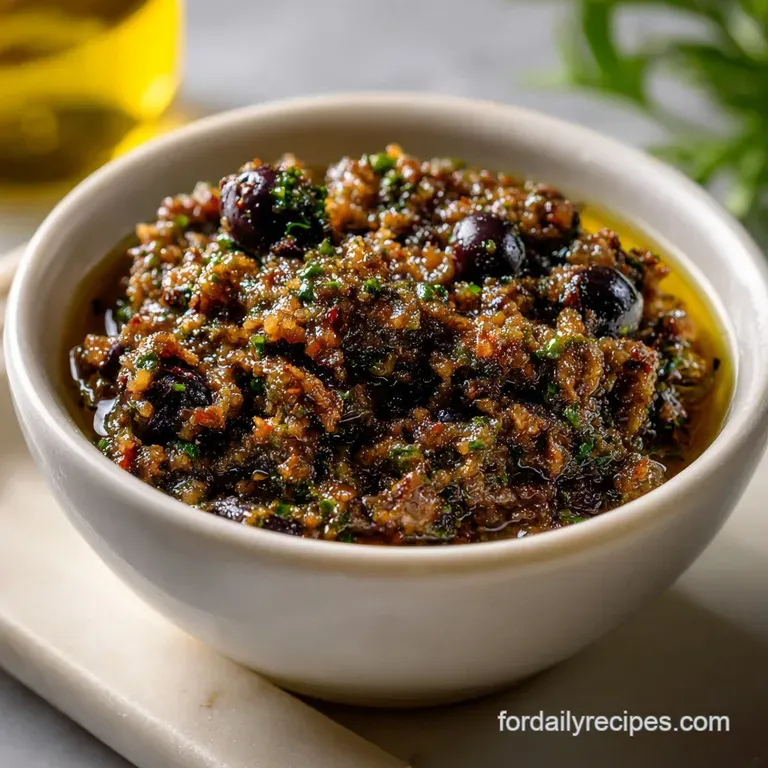
To nail this recipe, you need the right ratio of salty to fatty to acidic. Don't eyeball the lemon juice it’s mandatory!
| Original Ingredient | Quantity | Scientific Function |
|---|---|---|
| Kalamata Olives (pitted) | 1.5 cups | Provides deep, fruity, savory base (Umami/Salt) |
| Capers (drained) | 1/4 cup | Essential sharp, briney texture and salt content |
| Garlic (cloves) | 2 medium | Aromatics; creates pungent, spicy bite |
| Fresh Basil (leaves) | 1/4 cup | Herbaceous top note; freshness |
| Lemon Juice (freshly squeezed) | 1 Tbsp | Acidity; vital for balancing intense saltiness |
| Red Wine Vinegar | 1 tsp | Secondary acid; adds deeper fermentation note |
| Extra Virgin Olive Oil | 1/4 cup | Emulsifier and lubricant; provides velvety texture |
| Black Pepper | 1/2 tsp | Pungency and aromatic lift |
Ingredients Swaps (Don't Skip the Honest Trade Offs!)
| Original Ingredient | Best Substitute | Why It Works |
|---|---|---|
| Kalamata Olives | Niçoise or Mission Olives | Provides primary texture and salinity. Trade Off: Niçoise are milder and less fruity; you may need to add a pinch of salt. |
| Capers | Diced Cornichons (pickles) | Adds necessary brine and crunch. Trade Off: Cornichons are sweeter; drain them well and use slightly less, focusing on the vinegar note. |
| Red Wine Vinegar | Balsamic Vinegar (light) | Adds a darker, more complex acid note. Trade Off: Use half the amount; Balsamic can dominate the flavor profile and color the paste darker. |
| Fresh Basil | Dried Oregano (1 tsp) | Supplies aromatic herbs. Trade Off: Dried herbs are less bright and more concentrated; use sparingly to avoid an "over seasoned" taste. |
How to Follow This Quick Olive Tapenade Recipe
Total Time: 10 minutes. Yield: 12 servings (1/4 cup each).
Essential Prep Before You Start Blending
Make sure your olives are thoroughly pitted. Even if you buy pre-pitted ones, do a quick check a rogue pit can shatter your food processor blade! Also, drain your capers well. Excess moisture will make the final texture runny and dilute the flavor.
step-by-step Instructions for the Food Processor
- Pulse the Core Flavors (5 Minutes): Add the olives, drained capers, garlic, fresh basil, lemon juice, red wine vinegar, and black pepper into the bowl of a small food processor. Pulse in short, 1 second bursts. You want to break down the ingredients but not turn them into a liquid slurry. Stop when the mixture is roughly chopped, like coarse pesto.
- Slowly Add the Oil (3 Minutes): With the food processor running continuously, slowly stream in the olive oil through the feed tube. This slow stream is the secret to proper emulsification! If you dump it all in, the oil won’t bind properly and will separate later.
- Check the Texture and Taste (2 Minutes): Process until the mixture is uniform and thick, stopping frequently to scrape down the sides. I like my tapenade rustic some pieces of olives should still be visible but smooth enough to spread easily.
- Adjust and Serve: Taste the tapenade. If it seems too salty, add a few more drops of lemon juice or a tiny splash of water to "open up" the flavor. Transfer to a serving dish. For a fantastic Mediterranean meal, serve this alongside a juicy Mediterranean Lamb Burger Lamb Burger Recipe Easy: Juicy Flavorful .
Essential Tapenade Tips, Tricks, and Mistakes to Avoid
Achieving the Perfect Tapenade Consistency
The goal is a thick, spreadable paste, similar to coarse hummus or thick pancake batter. If you process it too long, the oil can "break," resulting in a watery bottom layer and a dry top layer. Process just until the mixture holds together.
Troubleshooting/Mistakes Table
| Common Mistake | Root Cause | The Fix |
|---|---|---|
| Tapenade is Too Bitter | Over processing the pits or excessive oil heating; sometimes linked to cheap olives. | Stir in a pinch of sugar (1/4 tsp) or a few tablespoons of warm water to dilute the strong flavor intensity. |
| Tapenade is Too Runny/Oily | Too much oil added too quickly, or too much brine/liquid wasn't drained from the olives/capers. | Add a few tablespoons of toasted pine nuts or walnuts and pulse again. The nuts will absorb the excess oil and thicken the spread. |
| Flavor is Flat/One-Dimensional | Missing the crucial acidic component or using old herbs. | Add 1/2 tsp more fresh lemon juice and a tiny pinch of red pepper flakes for heat and lift. |
Storage and Freezing Instructions
How Long Does Homemade Tapenade Last?
Because this recipe is primarily oil-based and contains strong natural preservatives (salt, capers, lemon juice), it keeps remarkably well. Store the finished tapenade in an airtight container in the refrigerator for up to 10 14 days .
Proper Refrigeration and Oil Layering Techniques
When you store tapenade, you may notice the oil separates and solidifies slightly when chilled. Before serving, pull it out 30 minutes in advance and give it a good stir.
Pro Tip: Pour a tiny, thin layer of fresh olive oil over the surface of the tapenade before sealing the container. This creates an extra protective seal against air and oxidation, keeping your spread vibrant.
Can You Freeze This Olive Tapenade Recipe?
Yes, absolutely! Tapenade freezes beautifully. Portion the tapenade into small, usable airtight containers or even ice cube trays. It holds up well in the freezer for about 3 months. Thaw overnight in the refrigerator.
Note: The texture might be slightly softer after freezing, but the robust flavor of this olive tapenade recipe will remain intact.
Best Ways to Serve Olive Tapenade
This spread is shockingly versatile. Of course, the classic way to enjoy the best olive tapenade recipe is slathered generously onto slices of toasted baguette or served with crudités (carrots, bell peppers, fennel).
Creative Uses for Leftover Spread
- Tapenade Pasta: Thin the tapenade with a few spoonfuls of pasta water and toss it with spaghetti for an instant, intensely flavorful sauce.
- Sandwich Spread: Ditch the mayo! Use this tapenade on turkey, ham, or even veggie sandwiches. For a serious flavor upgrade, use it instead of the typical spread on a burger.
- Olive Tapenade Hummus: Mix 1/4 cup of the tapenade into plain hummus for a vibrant, savory dip twist.
- Savory Baking: Dollop it onto savory scones before baking or swirl it into focaccia dough.
If you are serving guests, make sure you whip up a big batch of this easy olive tapenade recipe —it disappears faster than you think!
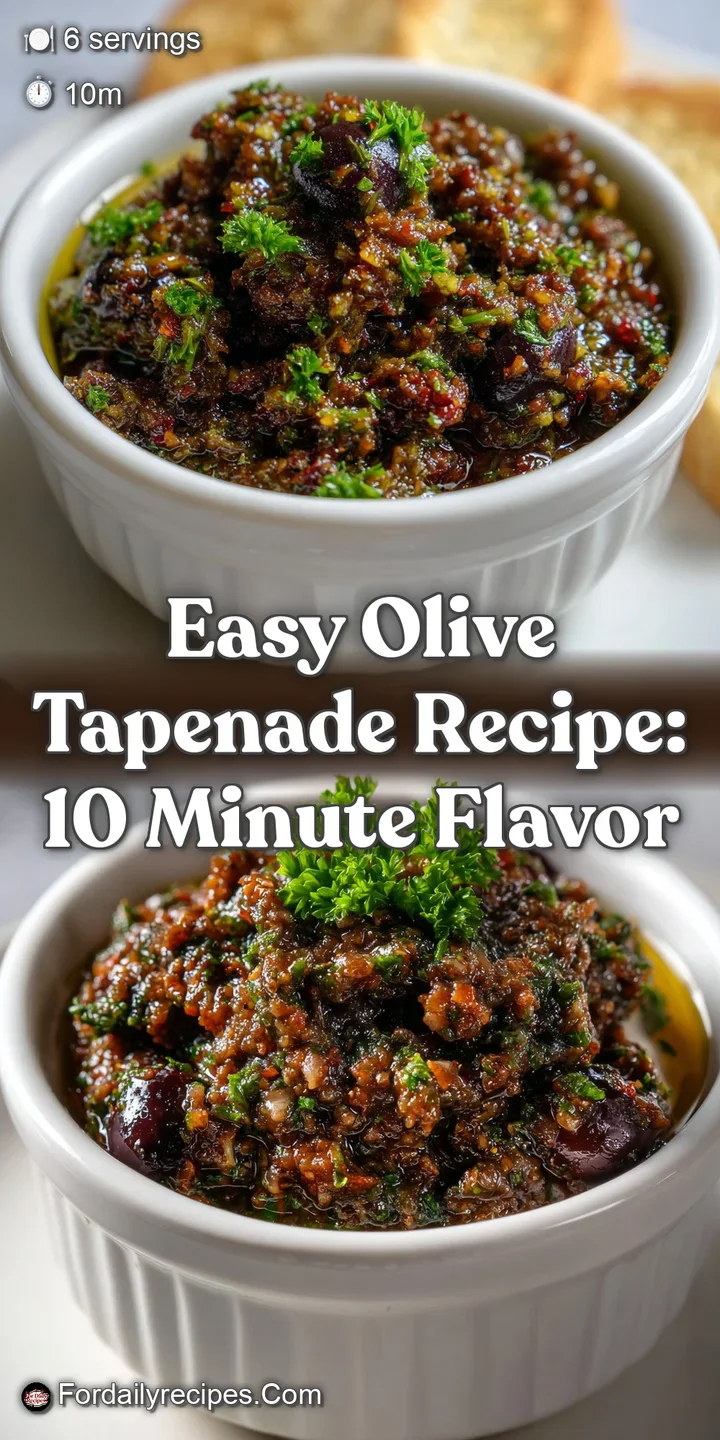
Recipe FAQs
What exactly is olive tapenade?
Olive tapenade is a classic French Provençal spread or dip made primarily from finely chopped or pureed olives, capers, and olive oil. It offers an intensely savory, salty, and complex flavor profile perfect for appetizers.
How long does this quick tapenade recipe actually take to prepare?
This recipe is designed for speed, requiring only about 10 minutes of active preparation time. The majority of the time is spent pulsing the ingredients together in a food processor until the desired texture is achieved.
Can I make the tapenade ahead of time, and how should I store it?
Yes, tapenade stores exceptionally well and often tastes even better the next day as the flavors meld. Store it in an airtight container in the refrigerator for up to two weeks, ensuring you top it with a thin layer of olive oil to prevent discoloration.
What kind of olives are best suited for making authentic tapenade?
Traditionally, Niçoise olives are preferred for their rich, fruity flavor, but Kalamata olives provide an excellent, readily available substitute. Using high-quality, oil-cured or brine cured olives makes a significant difference in the final taste.
What is the best texture to aim for when blending the tapenade?
While some prefer a very smooth paste, the most authentic texture is slightly rustic and coarse, where you can still see small pieces of the olives and capers. Avoid over processing to the point where the ingredients turn into a liquid sauce.
If my tapenade tastes too salty, how can I adjust the flavor?
Since olives and capers are naturally salty, this is a common issue. You can balance the excess saltiness by adding a small amount of fresh lemon juice or a few capers rinsed lightly under water to dilute the salt concentration.
Besides bread, what are some other ways to serve olive tapenade?
Tapenade is incredibly versatile; try spreading it on grilled chicken or fish, mixing it into mayonnaise for a sandwich spread, or tossing it with warm pasta. It also pairs wonderfully with fresh vegetables like celery or bell peppers.
10 Minute Olive Tapenade Recipe
Ingredients:
Instructions:
Nutrition Facts:
| Calories | 174 kcal |
|---|---|
| Protein | 1.0 g |
| Fat | 18.4 g |
| Carbs | 2.6 g |
| Fiber | 1.4 g |
| Sugar | 1.6 g |
| Sodium | 583 mg |
