Beef Stew Recipe Crock Pot: Silky Balsamic Broth
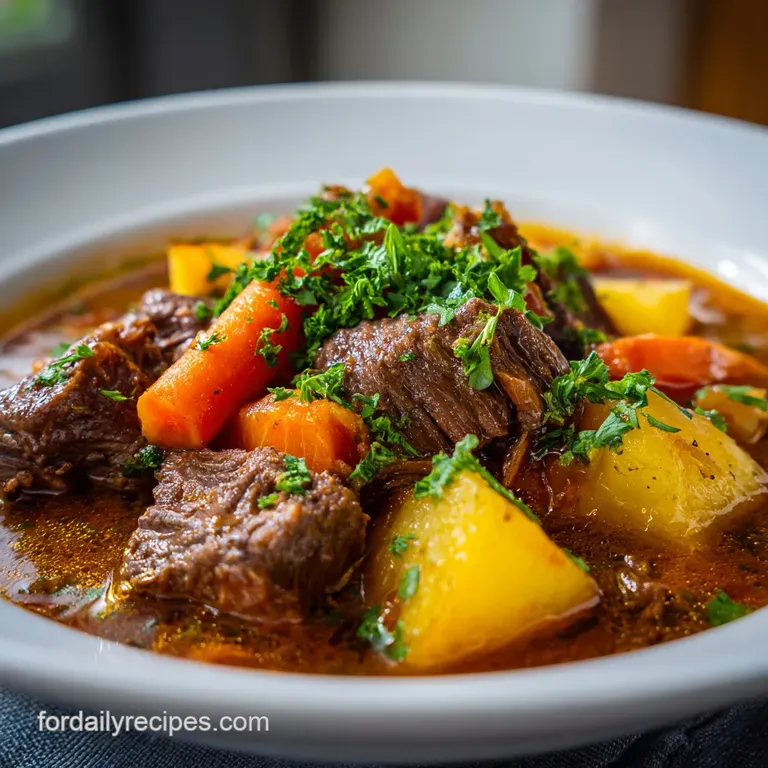
- Time: Active 15 minutes, Passive 8 hours, Total 8 hours 15 mins
- Flavor/Texture Hook: Savory, silky broth with tender, fork crushable beef
- Perfect for: Cold weather weekends and busy weeknight comfort
- Ultimate Hearty Beef Stew Recipe Crock Pot
- Science Behind Low and Slow Cooking
- Deep Dive Into Ingredient Roles
- Components for the Perfect Stew
- Essential Slow Cooking Equipment
- Steps for Meltingly Tender Beef
- Solving Common Stew Texture Issues
- Adjusting Portions for Larger Crowds
- Debunking Common Slow Cooker Myths
- Keeping Leftovers Fresh and Tasty
- Best Sides for Hearty Stews
- Recipe FAQs
- 📝 Recipe Card
Ultimate Hearty Beef Stew Recipe Crock Pot
The kitchen smells like my grandmother’s house on a rainy Tuesday in November. That heavy, savory aroma of browning beef and onions has this way of wrapping around you like a thick wool blanket.
I remember peering over the counter as a kid, watching her sear the meat in a blackened skillet until the edges were nearly charred, a step I once thought was a mistake until I finally tasted that first velvety spoonful of gravy.
We’ve all tried those dump and go recipes that end up tasting like watery shadows of a real meal. This version is different because it respects the heritage of the dish while using the slow cooker to do the heavy lifting.
We are looking for that specific contrast between the bright, acidic pop of balsamic vinegar and the deep, earthy richness of the thyme and beef broth. It is honest, soul warming food that doesn’t cut corners where it matters.
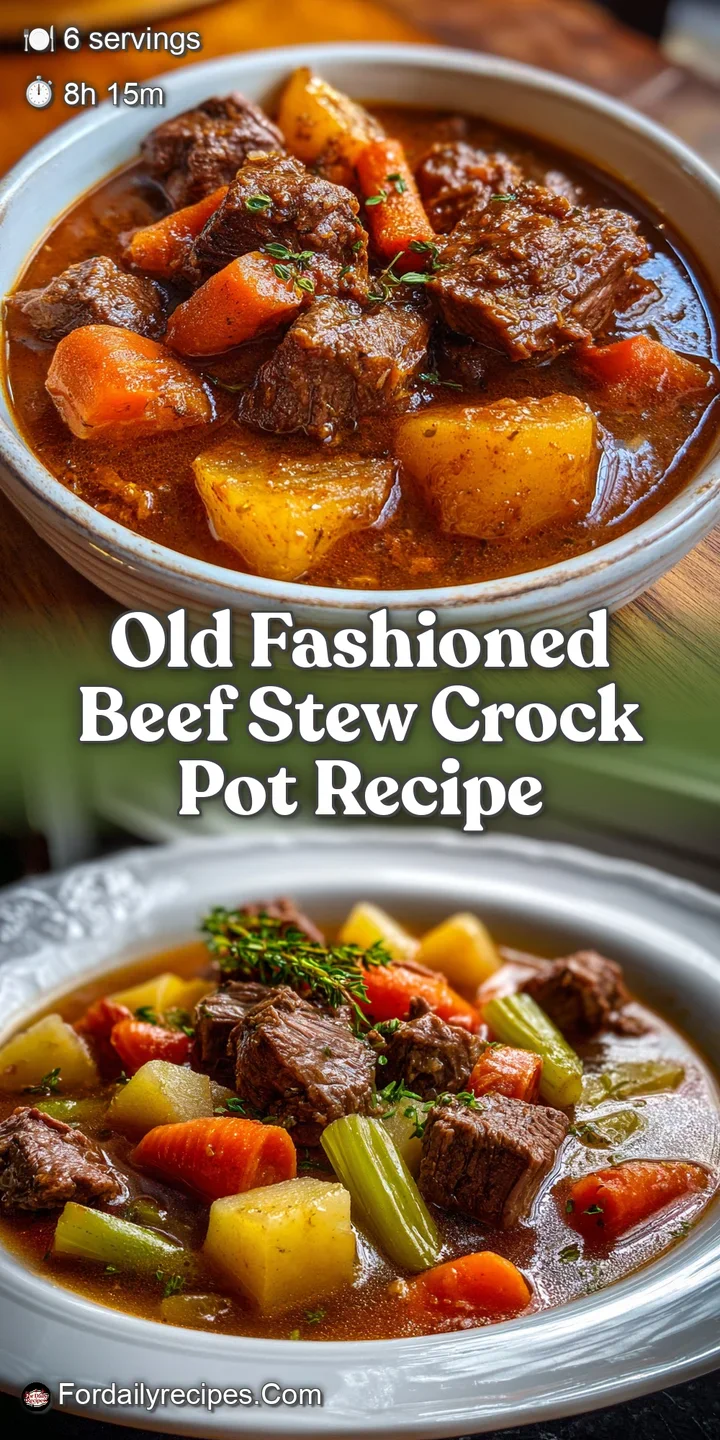
You can expect a bowl filled with potatoes that have soaked up the beef fat and carrots that are soft but still hold their shape. It isn't just a meal; it is a time honored tradition that makes the house feel like a home the second you walk through the door.
Trust me, the extra ten minutes spent at the stove in the morning pays off in dividends once the sun goes down and you’re ready to eat.
Science Behind Low and Slow Cooking
Connective Tissue Conversion: Long, low heat transforms tough collagen within the chuck roast into silky gelatin. This process creates a thick mouthfeel and tender meat that literally falls apart under a fork.
Browning and Maillard Depth: Searing the beef at high heat creates complex sugar protein bonds that cannot develop at slow cooker temperatures. These browned bits, or fond, provide the base for a savory, dark gravy rather than a pale broth.
| Cut of Meat | Ideal Thickness | Internal Temp | Visual Cue |
|---|---|---|---|
| Chuck Roast | 1.5 inch cubes | 195°F - 205°F | Fibers separate easily |
| Stew Meat | 1 inch cubes | 190°F - 200°F | Dark brown exterior |
| Bottom Round | 1.5 inch cubes | 200°F+ | Shreds with a fork |
Choosing the right cut of meat is the difference between a chewy disappointment and a triumph. While pre cut "stew meat" is convenient, it often contains a mix of lean scraps that cook at different rates, so I always recommend buying a whole chuck roast and cubing it yourself for consistency.
Deep Dive Into Ingredient Roles
| Ingredient | Science Role | Pro Secret |
|---|---|---|
| Tomato Paste | Umami Booster | Sauté it until it turns brick red to remove the raw metallic bite. |
| Red Potatoes | Structural Integrity | These waxy skins hold together better than russets during an 8 hour simmer. |
| Balsamic Vinegar | Acid Balance | It cuts through the heavy fat of the beef, brightening the entire flavor profile. |
| Dried Thyme | Aromatic Infusion | Rub it between your palms to release the oils before tossing it into the pot. |
Every component in this pot serves a purpose beyond just filling the bowl. The starch from the potatoes slightly thickens the liquid as it cooks, while the garlic and onions melt into the background to provide a consistent savory hum. If you find yourself wanting a more intense flavor, similar to a Pot Roast Crock recipe, ensure you don't skimp on the searing step.
Components for the Perfect Stew
- 2 lbs beef chuck roast: Cubed into 1.5 inch pieces. Why this? High fat and collagen content for maximum tenderness.
- Substitute: Venison roast (add 1 tbsp extra oil to compensate for leanness).
- 2 tbsp olive oil: Used for the initial sear. Why this? High smoke point for browning.
- Substitute: Avocado oil or beef tallow.
- 1/2 tsp coarse sea salt & pepper: Basic seasoning. Why this? Enhances natural beef flavors.
- Substitute: Kosher salt.
- 1 lb red potatoes: Quartered. Why this? Low starch prevents them from turning to mush.
- Substitute: Yukon Gold potatoes.
- 4 large carrots: Cut into 1 inch rounds. Why this? Provides natural sweetness and color.
- Substitute: Parsnips for an earthier, peppery bite.
- 2 stalks celery: Sliced. Why this? Part of the essential mirepoix flavor base.
- Substitute: Fennel bulb for a slight licorice note.
- 1 large yellow onion: Diced. Why this? Sweetness and depth.
- Substitute: Two large shallots.
- 4 cloves garlic: Minced. Why this? Pungent aromatic foundation.
- Substitute: 1 tsp garlic powder in a pinch.
- 3 cups low sodium beef broth: The braising liquid. Why this? Controls salt levels while providing liquid.
- Substitute: 2 cups broth and 1 cup dry red wine (like Cabernet).
- 2 tbsp tomato paste: For body and color. Why this? Thickens and adds savory depth.
- Substitute: 1/4 cup tomato sauce (reduce broth by 2 tbsp).
- 1 tbsp balsamic vinegar: The "secret" ingredient. Why this? Adds brightness and complexity.
- Substitute: Red wine vinegar or Worcestershire sauce.
- 2 bay leaves & 1 tsp dried thyme: For herbal notes. Why this? Classic French inspired aromatics.
- Substitute: Fresh thyme sprigs (use 3).
Essential Slow Cooking Equipment
You really only need a few basic tools to make this work, but quality matters. A 6 quart slow cooker is the standard size for this volume; anything smaller might overflow, and anything much larger might cook the liquid off too fast.
I also swear by a heavy bottomed skillet, such as a cast iron pan from Lodge, for the searing phase. A thin pan won't hold the heat well enough to get that dark, crusty exterior on the beef. Finally,, a sharp chef's knife is non negotiable for cubing the roast and prepping those root vegetables without a struggle.
Steps for Meltingly Tender Beef
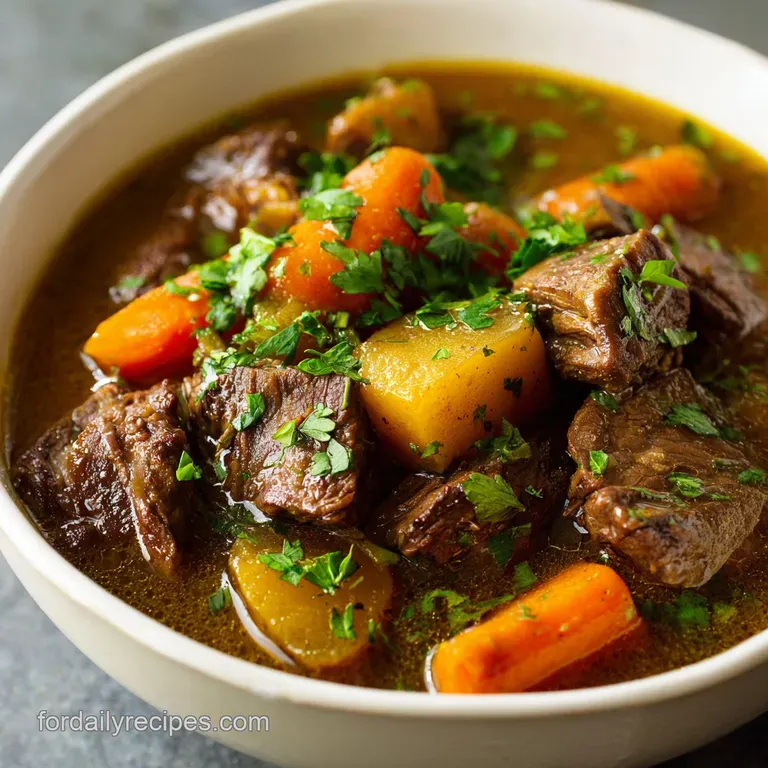
- Prep the beef. Pat the 2 lbs of chuck roast completely dry with paper towels. Note: Moisture on the meat creates steam, which prevents a proper brown crust.
- Season well. Toss the cubes with 1/2 tsp sea salt and 1/2 tsp black pepper until evenly coated.
- Sizzle and sear. Heat 2 tbsp olive oil in a skillet over medium high heat. Brown the beef in batches, until a dark, crispy crust forms on all sides.
- Transfer to crock. Place the seared beef into the slow cooker and top with 1 lb quartered red potatoes, 4 sliced carrots, and 2 stalks of sliced celery.
- Sauté the aromatics. In the same skillet, cook 1 diced yellow onion for 3 minutes. Add 4 minced garlic cloves and 2 tbsp tomato paste, cooking until the paste turns a dark mahogany color.
- Deglaze the pan. Pour 1 cup of the beef broth into the skillet. Scrape the bottom with a wooden spoon until all the browned bits are dissolved into the liquid.
- Combine everything. Pour the skillet mixture into the crock pot. Add the remaining 2 cups of broth, 1 tbsp balsamic vinegar, 2 bay leaves, and 1 tsp dried thyme.
- The long simmer. Cover and cook on Low for 8 hours or on High for 4 hours until the beef shreds easily with a fork.
- The final check. Remove the bay leaves. Taste the broth and add a pinch more salt if the flavors don't "pop" yet.
Solving Common Stew Texture Issues
Why Your Stew Is Thin
A watery stew usually happens if the vegetables release more moisture than expected or if the lid wasn't tight. To fix this, you can whisk 1 tbsp of cornstarch with 1 tbsp of cold water and stir it into the pot during the last 30 minutes of cooking.
Why Your Beef Is Tough
If the meat is still chewy, it simply hasn't cooked long enough. In a slow cooker, the collagen breakdown happens late in the process. Give it another hour on Low; it is almost impossible to overcook chuck roast in a liquid based stew.
| Problem | Root Cause | Solution |
|---|---|---|
| Bland Flavor | Lack of salt or acid | Add a splash more balsamic or a pinch of salt. |
| Mushy Potatoes | Used starchy Russets | Switch to Red or Yukon Gold potatoes next time. |
| Greasy Surface | Excess fat from roast | Skim the top with a wide spoon or use a fat separator. |
Common Mistakes Checklist ✓ Skipping the sear (you lose 50% of the flavor profile without it). ✓ Adding too much liquid (the veggies release their own juice). ✓ Opening the lid frequently (each peek adds 15-20 minutes to the cook time).
✓ Using "lean" beef (stew needs fat to stay moist during the long cook).
Adjusting Portions for Larger Crowds
If you are feeding a big family and need to double this recipe, keep a few things in mind. You will likely need an 8 quart slow cooker to prevent boiling over. Don't simply double the liquids; increase the broth by only 1.5x, as a larger volume of vegetables will release a significant amount of water.
When scaling down for two people, use a 3 quart cooker. You can halve the ingredients exactly, but I suggest keeping the herbs and balsamic vinegar at about 75% of the original amount to ensure the flavors don't get lost in the smaller pot. If you're looking for a simpler variation for a smaller group, this Crock Pot Meal recipe is a fantastic starting point.
| Method | Total Time | Texture | Best For |
|---|---|---|---|
| Classic Low | 8 hours | Most tender beef | Deepest flavor profile |
| Classic High | 4 hours | Firmer vegetables | Quicker weekend meal |
| Instant Pot | 45 mins | Very soft meat | Last minute cravings |
Debunking Common Slow Cooker Myths
Myth: You must submerge everything in liquid. Truth: You only need enough liquid to come about halfway up the ingredients. The vegetables and meat will release plenty of moisture, and too much broth results in a weak, soup like consistency.
Myth: High heat is just "faster" than low heat. Truth: While the final temp is the same, the rapid climb on the High setting can sometimes cause the protein fibers to contract too quickly, making them slightly tougher than the gentle Low setting.
Keeping Leftovers Fresh and Tasty
Storage: This stew is actually better the next day because the flavors have time to marry. Keep it in an airtight container in the fridge for up to 4 days. When reheating, do it gently on the stove over medium low heat to avoid breaking the potatoes.
Freezing: This recipe freezes beautifully for up to 3 months. Just leave about an inch of headspace in your container for expansion. Thaw it in the fridge overnight before reheating.
Zero Waste Tip: Don't throw away those celery leaves! Chop them up and stir them in at the very end like parsley for a fresh, herbal hit. Also, if you have leftover gravy but no meat, use it as a base for a shepherd's pie the next night.
Best Sides for Hearty Stews
The Classic Pairing
You can't go wrong with a thick slice of crusty sourdough or heritage style biscuits. You need something sturdy to mop up every last drop of that balsamic infused gravy. A simple side of buttered egg noodles also works wonders if you want to stretch the meal further.
The Flavor Map
- Sweet: Carrots and yellow onions.
- Savory: Seared beef and tomato paste.
- Bright: Balsamic vinegar and celery.
- Earthy: Dried thyme and bay leaves.
A Modern Twist
For a "Pioneer Woman" style variation, try stirring in a half cup of heavy cream or a few tablespoons of cold butter right before serving. It creates a luxuriously silky finish that feels incredibly indulgent.
If you want a bit of crunch, top each bowl with some homemade garlic croutons or a sprinkle of crispy fried leeks.
Recipe FAQs
What is the secret to good beef stew?
Searing the beef properly is the essential secret. Browning the meat in a hot pan creates the Maillard reaction, developing deep, savory flavors (fond) that form the backbone of the gravy.
Do you have to brown stew meat before crock pot?
Yes, searing is highly recommended for flavor development. Although technically you can skip it, browning the meat first adds a level of robust, rich flavor that cannot be achieved by just slow simmering alone.
What are common mistakes when making beef stew?
The most common mistake is skipping the sear and adding too much liquid. Too much liquid results in a bland, thin broth because the vegetables release their own substantial moisture during the 8-hour cook time.
What enhances the flavor of beef stew?
Adding a touch of acid, like balsamic vinegar, greatly enhances the flavor. The vinegar cuts through the richness of the beef fat, brightening the overall taste, much like how acid balances rich sauces in dishes like Cube Steak with recipe.
How to ensure the beef comes out tender in the slow cooker?
Cook the beef on Low for the full 8 hours, targeting an internal temperature near 200°F. This extended, low heat slowly breaks down the tough collagen in the chuck roast into silky gelatin, yielding fork tender results.
Is it true that you should only use a specific type of potato?
No, this is partially true; you should avoid high starch potatoes like Russets. Use waxy potatoes, like red potatoes, because their lower starch content allows them to hold their shape during the long simmer without completely dissolving into the stew.
How to thicken a beef stew that is too thin at the end of cooking?
Create a slurry by mixing 1 tablespoon of cornstarch with an equal amount of cold water. Whisk this mixture into the simmering stew during the last 30 minutes of cooking until the desired thickness is achieved.
Beef Stew Recipe Crock Pot
Ingredients:
Instructions:
Nutrition Facts:
| Calories | 518 kcal |
|---|---|
| Protein | 31.4 g |
| Fat | 35.2 g |
| Carbs | 21.6 g |
| Fiber | 3.8 g |
| Sugar | 4.2 g |
| Sodium | 485 mg |
